

Have you noticed a tiny crack forming on your acrylic tub? It might seem small now, but even a hairline crack can lead to bigger problems if left untreated.
You might worry about water leaks, costly repairs, or replacing your entire tub. Don’t let a minor issue turn into a major headache. You’ll learn how to spot these cracks early, what causes them, and simple steps you can take to fix the problem before it gets worse.
Causes Of Hairline Cracks
Hairline cracks in acrylic tubs often start as tiny, almost invisible lines. These cracks can grow over time, leading to leaks and costly repairs. Understanding the causes of hairline cracks helps prevent damage and extends your tub’s life. Several factors contribute to these cracks, including the material’s nature, how the tub was installed, temperature changes, and accidental impacts.
Material Stress And Aging
Acrylic is a popular tub material due to its smooth finish and lightweight nature. Yet, like all materials, it changes over time. Material stress and aging play a big role in causing hairline cracks. Acrylic tubs face constant pressure from water weight and daily use. Over years, this stress weakens the material.
Key factors include:
- Continuous weight load: Water and a person’s weight push on the tub’s surface.
- Repeated bending: Small flexes in the tub can create stress points.
- UV exposure: Sunlight can degrade acrylic, making it brittle.
- Chemical exposure: Harsh cleaning agents may weaken the surface.
Improper Installation
Installing an acrylic tub requires skill and attention. Improper installation often causes hidden stress that leads to cracks. Even small mistakes can have big consequences over time.
Common installation errors include:
- Uneven support: If the tub base is not level, pressure points form.
- Poor sealing: Gaps allow water to seep under the tub, causing damage.
- Incorrect fastening: Over-tightening screws can stress the acrylic.
- Skipping manufacturer guidelines: Ignoring instructions weakens the installation.
Temperature Fluctuations
Temperature changes affect acrylic tubs more than some realize. Temperature fluctuations cause the material to expand and contract. Over time, this movement creates stress that may crack the surface.
Important points about temperature effects:
- Hot water: Quickly heating the tub surface causes expansion.
- Cold water: Sudden cooling shrinks the material.
- Room temperature shifts: Seasonal changes impact the tub’s environment.
- Direct sunlight: Can raise surface temperature, adding heat stress.
Impact Damage
Physical hits and bumps cause impact damage to acrylic tubs. Even though acrylic is tough, sharp or heavy objects can create stress points. These points may develop into hairline cracks.
Common sources of impact damage include:
- Dropping heavy items into the tub.
- Striking the tub with hard tools during cleaning or repairs.
- Accidental knocks from furniture or plumbing work.
- Children’s toys or pets accidentally hitting the tub.
Identifying Hairline Cracks

Hairline cracks in acrylic tubs are small, thin fractures that can worsen over time. These cracks may seem harmless at first but can lead to leaks or further damage. Identifying hairline cracks early helps protect your tub and avoid costly repairs. This section guides you through spotting these tiny cracks using simple methods.
Visual Inspection Tips
Start with a careful visual check of your acrylic tub. Use good lighting to catch even the smallest cracks. A flashlight or natural light works best.
- Clean the tub surface to remove soap scum and dirt before inspecting. Dirt can hide cracks.
- Look for thin, jagged lines that differ from the smooth surface. Hairline cracks are usually very narrow.
- Run your fingers gently over the surface. You may feel slight roughness where the crack is.
- Check for discoloration. Cracks sometimes appear darker or lighter than the surrounding area.
Use a magnifying glass for a closer look. Mark any suspicious lines with a waterproof marker for future checks. Regular visual inspections help catch cracks early before they grow.
Common Crack Locations
Hairline cracks often appear in certain weak spots of acrylic tubs. Knowing these spots makes inspection easier and more effective.
| Location | Reason for Cracking | Signs to Watch For |
| Near Drain | Stress from water pressure and usage | Small lines around the drain edges |
| Along Tub Edges | Impact damage or poor installation | Thin cracks following the edge contour |
| Base of the Tub | Uneven weight distribution or aging | Fine cracks spreading outward |
Check these areas regularly, especially if your tub is older or frequently used. Hairline cracks can appear almost invisible at first. Catching them early in these spots can save your tub from bigger damage.
Repairing Hairline Cracks
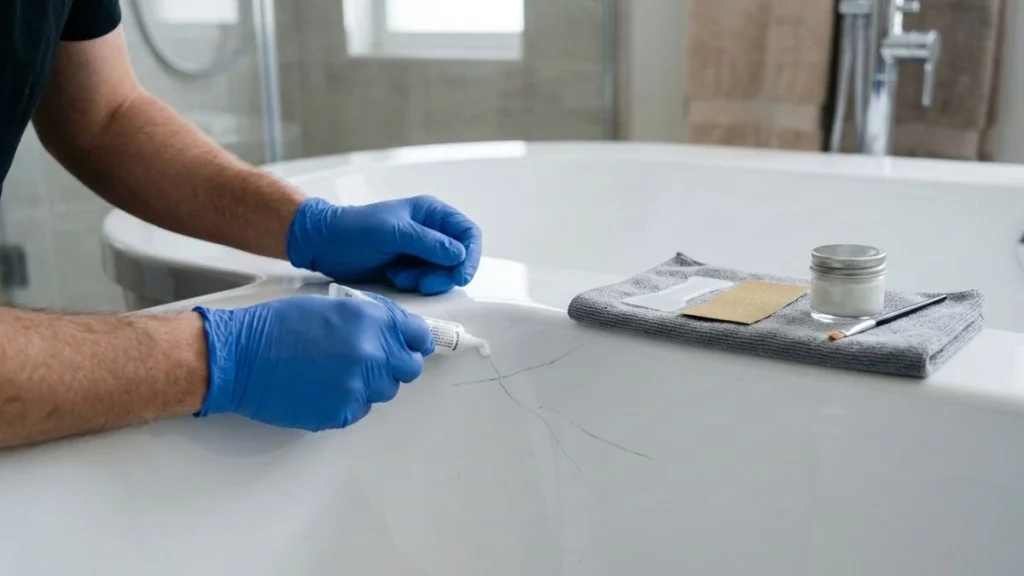
Hairline cracks in acrylic tubs are small but can cause bigger problems if ignored. These thin cracks often appear due to stress, aging, or impact. Repairing hairline cracks quickly helps prevent water leaks and further damage. Several repair methods suit different skill levels and budgets. Knowing how to fix these cracks keeps your tub safe and looking good.
Diy Repair Methods
Many hairline cracks can be fixed at home with simple tools and materials. DIY repairs save money and often restore the tub’s appearance effectively. Start by cleaning the cracked area with soap and water. Dry it completely before applying any repair material.
Common DIY methods include:
- Using acrylic repair kits
- Applying clear nail polish or super glue for very small cracks
- Sanding the crack to smooth rough edges
- Filling the crack with epoxy or acrylic filler
Follow instructions carefully to ensure a strong bond. Work in a well-ventilated space. Wear gloves to protect your skin. Avoid rushing the drying time to get the best results.
| Step | Action | Tip |
| 1 | Clean and dry the crack | Use rubbing alcohol for better cleaning |
| 2 | Apply filler or adhesive | Use a fine brush for control |
| 3 | Let dry fully | Wait at least 24 hours |
| 4 | Sand and polish | Use fine grit sandpaper |
Using Epoxy Or Acrylic Kits
Epoxy and acrylic repair kits are popular for hairline cracks. They contain everything needed to fill and seal cracks effectively. These kits usually include a resin, hardener, applicator, and sometimes sandpaper.
Benefits of epoxy or acrylic kits:
- Strong adhesion to acrylic surfaces
- Waterproof and durable finish
- Easy to use with step-by-step guides
- Can match tub color for a neat look
Steps to use these kits:
- Clean the cracked area well.
- Mix resin and hardener as directed.
- Apply mixture carefully into the crack.
- Allow it to cure fully (usually 24-48 hours).
- Sand lightly and polish for smoothness.
Safety tips:
- Work in a ventilated area.
- Wear gloves and eye protection.
- Dispose of excess material properly.
Sanding And Polishing
Sanding and polishing help improve the tub’s surface after filling the crack. This step removes rough edges and blends the repair with the tub’s finish. Use fine-grit sandpaper (400 to 600 grit) for best results.
How to sand and polish:
- Start with gentle sanding over the crack.
- Use circular motions to avoid scratches.
- Wipe away dust with a damp cloth.
- Apply a polishing compound suitable for acrylic.
- Buff the area with a soft cloth until smooth.
Important notes:
- Avoid sanding too deep, which can damage the tub.
- Polishing restores shine and hides repair marks.
- Repeat polishing several times for better results.
This process improves tub appearance and extends the repair’s life.
Professional Repair Options
Professional repair services offer expert solutions for hairline cracks. They use advanced tools and materials for long-lasting results. Professionals can match colors perfectly and fix cracks that are hard to repair at home.
Advantages of professional repair:
- High-quality, durable repairs
- Color matching for seamless finish
- Quick and efficient service
- Warranty on repair work
Situations to consider professional help:
- Cracks spreading or deepening rapidly
- Multiple cracks or damage areas
- Lack of time or tools for DIY
- Desire for the best aesthetic result
Professionals also inspect for hidden damage. They may recommend tub resurfacing if cracks are extensive. This option renews the entire tub surface, making it look new again.
Also Read: Water under Bathtub Liner Repair
Conclusion
Hairline cracks in acrylic tubs need quick attention. Small cracks can grow and cause leaks. Fixing them early saves money and hassle. Use proper repair kits or call a professional. Regular tub care helps prevent future cracks. Watch for signs like water stains or rough edges.
Taking action soon keeps your tub safe and strong. Don’t ignore even tiny cracks; they matter. Keep your bathroom in good shape with simple steps. Your tub will last longer with timely care.