

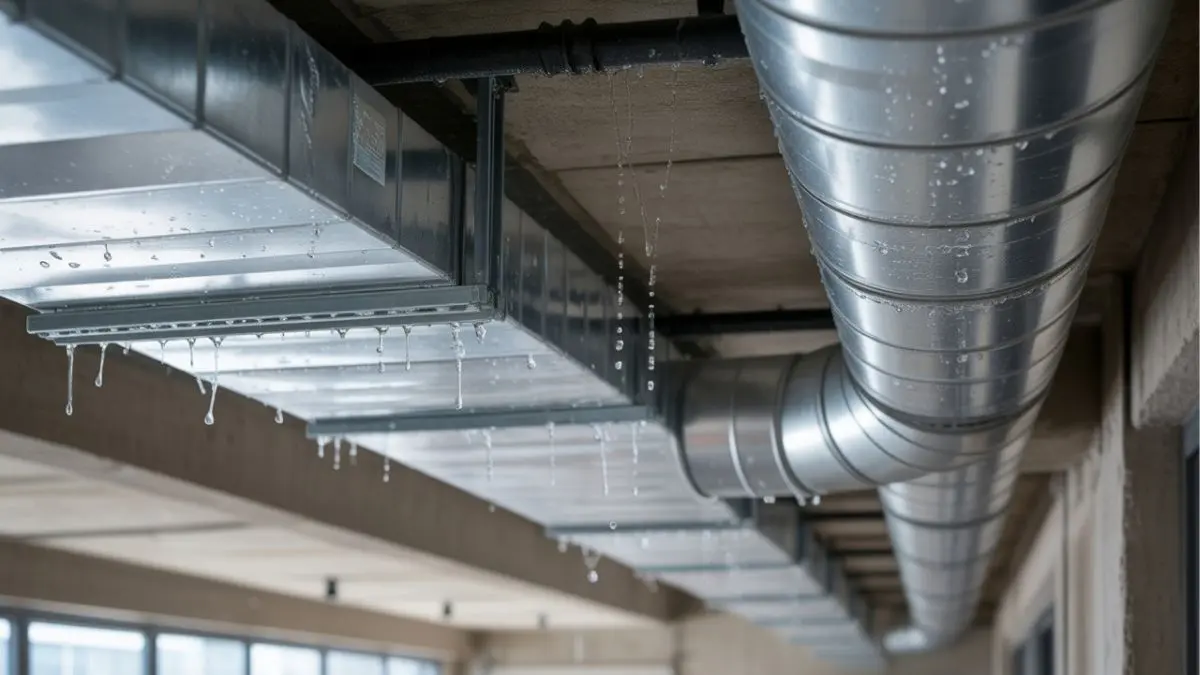
Have you noticed water droplets forming on the ductwork between your floors? That moisture isn’t just annoying—it could be a sign of a bigger problem in your home.
When condensation builds up on your ducts, it can lead to mold, damage, and higher energy bills. But don’t worry, understanding why this happens and how to fix it can protect your home and keep your air clean. Keep reading to learn what causes condensation on ductwork between floors and what steps you can take right now to stop it.
Causes Of Condensation On Ductwork

Condensation on ductwork between floors is a common problem in many buildings. This happens when water forms on the surface of ducts, causing moisture issues. It also improves indoor air quality and reduces energy waste. Three main factors lead to condensation: temperature differences, humidity levels, and poor insulation. Each of these plays a key role in why water collects on duct surfaces.
Temperature Differences
Temperature differences between the air inside the duct and the surrounding environment cause condensation. When cold air moves through warm spaces, the duct surface can cool below the dew point. The dew point is the temperature at which air becomes saturated and water vapor turns into liquid. This causes moisture to form on duct surfaces.
Key points about temperature differences:
- Cold air inside ducts cools the metal surface.
- Warm air outside ducts contains moisture that condenses on cold surfaces.
- Greater temperature gaps increase condensation risk.
For example, air conditioning ducts carrying chilled air through a warm basement often develop condensation. The metal surface temperature drops below the surrounding air’s dew point, creating water droplets.
| Factor | Effect on Condensation |
| Cold duct temperature | Increases surface cooling, leads to water formation |
| Warm ambient air | Raises moisture content, increases dew point risk |
| Airflow speed | Can affect surface temperature and condensation rate |
Humidity Levels
Humidity means the amount of water vapor in the air. High humidity levels raise the chance of condensation on ductwork. When moist air touches a cold duct surface, water vapor changes into liquid. This causes droplets to form and collect.
Important details about humidity:
- Indoor humidity above 60% greatly increases condensation risk.
- High humidity occurs in kitchens, bathrooms, and basements.
- Seasonal changes affect indoor moisture levels.
Humidity levels can be controlled to reduce condensation:
- Use dehumidifiers in damp areas.
- Improve ventilation to remove moist air.
- Seal leaks that allow humid air inside.
Monitoring humidity with a hygrometer helps manage moisture and protect ductwork.
Poor Insulation
Poor insulation around ductwork is a major cause of condensation. Without proper insulation, cold ducts lose their chill to the warm air around them. This drop in surface temperature leads to moisture buildup. Insulation acts as a barrier to keep duct temperature stable and prevent condensation.
Key facts about insulation:
- Missing or damaged insulation exposes ducts to temperature swings.
- Thin insulation may not stop heat transfer effectively.
- Insulation materials vary in quality and moisture resistance.
Common Problem Areas
Common problem areas typically involve places where temperature differences and humidity levels vary greatly. These areas have poor insulation or airflow, making ducts vulnerable to condensation. Knowing these spots helps homeowners and technicians take quick action.
Between Floors
Ducts running between floors often face condensation issues because of the temperature difference between levels. Warm air from the lower floor meets cooler air above, causing moisture to form on duct surfaces. This problem worsens if ducts are not insulated well or if the space is poorly ventilated.
Key factors that increase condensation between floors:
- Inadequate insulation: Bare metal ducts lose cold air rapidly.
- High humidity: Moist air inside the home condenses on cool ducts.
- Air leaks: Gaps in duct joints allow warm, moist air inside.
- Temperature difference: Floors with different heating or cooling levels.
Basements And Crawl Spaces
Basements and crawl spaces often have high humidity and cooler temperatures. Ducts in these areas face condensation because they carry cool air through warm, moist surroundings. This moisture can cause rust, mold, and damage to ductwork.
Common causes of condensation in these spaces include:
- Poor ventilation: Stagnant moist air surrounds ducts.
- Unsealed ducts: Leaks allow humid air inside.
- Cold concrete walls and floors: Increase duct surface cooling.
- Lack of insulation: Ducts exposed to damp air.
Basement and crawl space ducts benefit from the following solutions:
- Seal duct joints tightly to block moist air entry.
- Insulate ducts with moisture-resistant wrap.
- Install vapor barriers on floors and walls.
- Use dehumidifiers or improve ventilation to lower humidity.
Routine checks for leaks and moisture buildup in these spaces prevent long-term damage. Moisture sensors can alert to problems early.
Unconditioned Spaces
Unconditioned spaces such as attics, garages, or unheated rooms cause condensation on ducts. These areas have large temperature swings and high humidity, making ducts cold and prone to moisture buildup.
Factors increasing condensation in unconditioned spaces:
- Extreme temperature differences: Hot outside air meets cold ducts.
- Lack of insulation: Ducts exposed to fluctuating temps.
- Humidity from outside air or leaks: Adds moisture near ducts.
- Air leaks: Allow moist air inside ductwork.
Effects On Building And Air Quality
Condensation on ductwork between floors creates multiple problems for buildings and the air inside them. Moisture collects on cold duct surfaces, leading to damage and health risks. These effects can worsen over time without proper care.
Mold Growth
Condensation provides the perfect environment for mold to grow. Mold thrives in damp, dark places such as the surfaces of wet ducts. Once mold starts, it spreads quickly and becomes hard to remove.
- Health risks: Mold releases spores that can cause allergies, asthma, and respiratory problems.
- Odors: Mold often produces musty smells that affect indoor comfort.
- Visible damage: Mold stains walls, ceilings, and duct surfaces.
Regular inspection and cleaning of ducts help stop mold growth. Using dehumidifiers or insulation around ducts also reduces moisture buildup. Ignoring mold leads to bigger problems and higher repair costs.
Structural Damage
Condensation causes water to drip or collect on building materials near ductwork. This water damages structural elements over time, weakening the building.
Signs of damage include:
- Warped wood framing or flooring
- Peeling paint or wallpaper
- Rust on metal components
- Stained ceilings and walls
Water can seep into insulation and drywall, causing them to lose strength and insulation ability. Wooden beams may rot, increasing the risk of collapse. Metal ducts or supports can corrode, reducing their lifespan.
| Problem | Description | Impact |
| Wood Rot | Decay of wooden structures due to moisture | Loss of strength, risk of collapse |
| Metal Corrosion | Rust formation on metal ducts and supports | Weakening of metal parts, leaks |
| Insulation Damage | Wet insulation loses effectiveness | Higher energy costs, poor temperature control |
Preventing condensation with proper insulation and ventilation protects the building structure. Fixing leaks and moisture sources early saves money and keeps the building safe.
Indoor Air Quality Issues
Condensation on ductwork affects the air inside a building. Moisture encourages mold and bacteria growth, which release harmful particles into the air.
Common indoor air problems include:
- Increased allergens and irritants
- Musty or damp odors
- Higher risk of respiratory issues
Dirty or wet ducts circulate contaminated air throughout the building. This worsens symptoms for people with asthma, allergies, or other breathing problems.
Insulation Solutions

Condensation on ductwork between floors causes moisture problems and can damage building materials. Insulation solutions help control temperature differences on ducts. This reduces moisture buildup and prevents mold growth. Proper insulation keeps ducts dry and improves energy efficiency. Choosing the right insulation and installing it correctly are key steps.
Types Of Insulation
Several insulation types work well on ductwork between floors. Each has its own benefits and best uses.
- Fiberglass Insulation: Common and affordable, fiberglass wraps around ducts easily. It slows heat transfer but must be kept dry.
- Foam Board Insulation: Rigid foam panels provide strong thermal resistance. They are moisture-resistant and fit tightly around ducts.
- Spray Foam Insulation: Expands on application, sealing all gaps. It prevents air leaks and moisture intrusion effectively.
- Rubber Insulation: Flexible and durable, rubber insulation resists condensation and vibration.
Here is a comparison table:
| Insulation Type | Thermal Resistance (R-Value) | Moisture Resistance | Ease of Installation |
| Fiberglass | R-3 to R-4 per inch | Low (needs vapor barrier) | Easy |
| Foam Board | R-4 to R-6 per inch | High | Moderate |
| Spray Foam | R-6 to R-7 per inch | High | Requires professional |
| Rubber | R-4 to R-5 per inch | High | Easy |
Choosing insulation depends on budget, moisture conditions, and duct shape. Proper thickness helps control condensation.
Proper Installation Techniques
Correct installation is critical to stop condensation on ducts. Poor work lets moisture form and damage materials.
Follow these steps for good results:
- Clean the Duct Surface: Remove dust, dirt, and grease before applying insulation.
- Measure and Cut Precisely: Fit insulation snugly around ducts with no gaps.
- Seal All Seams: Use tape or mastic to close joints and prevent air leaks.
- Cover Entire Duct: Insulate all exposed areas, including bends and fittings.
- Protect Insulation: Use a protective jacket or vapor barrier to keep insulation dry.
Proper installation extends insulation life and keeps ducts dry. It also lowers energy costs by improving airflow efficiency.
Vapor Barriers
Vapor barriers stop water vapor from reaching cold duct surfaces. They are essential in controlling condensation between floors.
Key points about vapor barriers:
- Material Types: Plastic sheets, foil-faced insulation, and vapor-retardant paints work as barriers.
- Placement: Vapor barriers should go on the warm side of insulation to block moist air.
- Sealing: Overlap and seal seams with tape to create a continuous barrier.
- Durability: Use materials resistant to tears and punctures.
Without vapor barriers, insulation can absorb moisture and lose effectiveness. Moisture buildup inside walls or floors causes costly repairs.
Use vapor barriers with insulation types prone to moisture absorption, such as fiberglass. For closed-cell foam, vapor barriers might not be necessary.
Ventilation Strategies
Condensation on ductwork between floors causes moisture buildup, leading to mold, rust, and damage. Proper ventilation strategies help control humidity and prevent condensation. These strategies focus on moving air efficiently, reducing moisture in the air, and stopping leaks that let warm, moist air reach cold ducts. Ventilation plays a key role in keeping ductwork dry and maintaining a healthy indoor environment.
Improving Airflow
Good airflow reduces moisture accumulation around ductwork. Stagnant air allows condensation to form on cold duct surfaces. Increasing air movement helps balance temperature and humidity levels. Here are ways to improve airflow:
- Use exhaust fans: Install fans in bathrooms, kitchens, and laundry rooms to remove moist air quickly.
- Open vents: Keep supply and return vents open and unobstructed for better circulation.
- Install air registers: Place registers near duct runs between floors to encourage air mixing.
- Check HVAC system: Make sure the system is sized correctly and maintained for optimal airflow.
Dehumidification Options
Removing excess moisture from the air stops condensation on ducts. Dehumidifiers control indoor humidity levels effectively. Here are common dehumidification methods:
- Portable dehumidifiers: Easy to move, good for targeted areas near duct runs.
- Whole-house dehumidifiers: Installed in HVAC systems, they control humidity throughout the home.
- Ventilation with outdoor air: Controlled fresh air intake can reduce indoor humidity.
Ideal indoor humidity is between 30% and 50%. Use a hygrometer to monitor levels. Below is a comparison of dehumidifier types:
| Type | Best For | Cost | Maintenance |
| Portable | Small spaces, spot treatment | Low to Medium | Empty water tank regularly |
| Whole-house | Entire home, continuous use | High | Professional maintenance needed |
| Ventilation system | Fresh air exchange | Medium | Filter replacement |
Using the right dehumidification method can greatly reduce condensation on ductwork between floors.
Sealing Air Leaks
Air leaks allow warm, humid air to touch cold duct surfaces, causing condensation. Sealing these leaks stops moisture from reaching ducts. Focus on these areas:
- Duct joints: Use mastic sealant or foil tape to close gaps.
- Penetrations through floors/walls: Seal around pipes, wires, and vents with caulk or spray foam.
- Access panels: Ensure panels fit tightly and add weather stripping if needed.
Simple steps to find and seal air leaks:
- Turn on the HVAC system and feel for drafts near ductwork.
- Use a smoke stick or incense to detect moving air.
- Seal any leaks with appropriate materials.
- Inspect and maintain seals regularly.
Maintenance And Monitoring
Condensation on ductwork between floors can cause serious problems like mold growth, rust, and poor air quality. Maintenance and monitoring are key to preventing these issues. Regular care helps spot problems early and keeps your duct system working well.
Regular Inspections
Checking ductwork regularly helps catch condensation issues early. Look for signs like water droplets, rust spots, or damp insulation. These signs mean moisture is building up and needs attention.
- Inspect ducts at least twice a year, especially in humid seasons.
- Check joints and seams for leaks where condensation can form.
- Look inside ducts for mold or mildew growth.
- Examine insulation for wet spots or damage.
Keep a log of inspection dates and findings. Note any changes or damage. This record helps track patterns and plan repairs.
Moisture Detection Tools
Tools help find hidden moisture in ductwork quickly and accurately. Using these tools improves monitoring and prevents bigger problems.
- Moisture meters: Measure moisture levels inside insulation or ducts.
- Infrared cameras: Show temperature differences that reveal wet spots.
- Hygrometers: Check humidity near ducts to spot high moisture areas.
- Thermal imaging: Detect cold surfaces where condensation forms.
Use these tools during inspections or when you notice signs of condensation. Record the readings to compare over time.
Preventive Measures
Stopping condensation is easier than fixing damage. Take these steps to keep ducts dry and safe.
- Seal duct leaks: Use mastic or metal tape to close gaps and joints.
- Improve insulation: Wrap ducts with proper insulation to keep surfaces warm.
- Control humidity: Use dehumidifiers or ventilation to lower moisture in the air.
- Maintain temperature: Keep duct temperatures above dew point to avoid condensation.
- Ensure airflow: Avoid blockages that cause cold air buildup on ducts.
Good preventive care protects your ducts and improves indoor air quality. Regularly update your maintenance plan with these measures.
Conclusion
Condensation on ductwork between floors causes moisture and damage risks. It can lead to mold growth and reduce air quality inside your home. Fixing insulation and sealing leaks help stop this problem. Regular checks keep your ducts dry and working well.
Taking simple steps saves money and protects your living space. Stay aware and act early to avoid bigger issues later. Your home stays safe and comfortable with good duct care.