
Steam heating systems in pre-1950s homes can cost homeowners $3,000–$15,000 to replace steam heating system components — or far less to repair — yet most owners make this decision without knowing which option actually makes financial sense.
The real problem is uncertainty: repair costs compound year after year on aging cast-iron boilers, but full replacement or conversion carries its own risks, permits, and trade-offs that no single contractor will lay out objectively for you.
This guide gives you a clear cost breakdown, a concrete decision framework, and a side-by-side comparison of every major alternative — so you walk into any contractor conversation already knowing what questions to ask and what a fair price looks like.
Should You Replace, Repair, or Convert Your Steam System?
The right choice depends on your boiler’s age, the nature of the failure, and how long you plan to stay in the home. Most owners jump to replacement when a targeted repair would cost a fraction of the price.
When Repair Makes Sense vs. Full Replacement
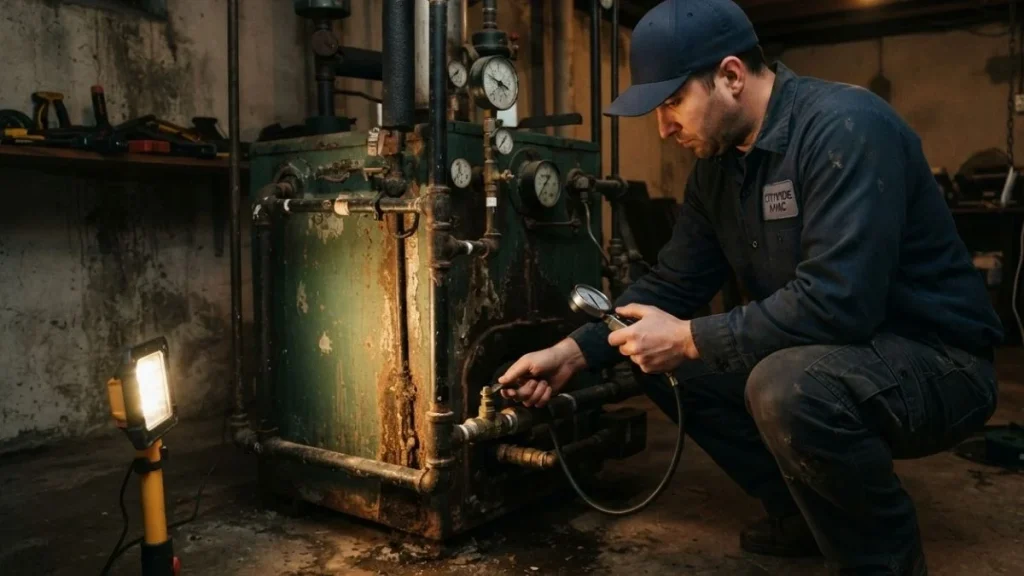
Single component failures almost always favor repair. A failed pressure-relief valve runs $50–$150 to replace. A new thermostat or steam trap costs $100–$400 installed. Even a gas-fired steam boiler control module rarely exceeds $600 in parts and labor.
The standard industry threshold: if a single repair costs more than 50% of a new boiler’s installed price, replacement wins. A properly sized steam boiler costs $3,500–$8,000 installed, so any repair under $1,750–$4,000 on a relatively young system still pencils out.
Cost-Benefit Matrix: Repair, Replace, or Convert
| Option | Typical Cost | Expected Outcome |
|---|---|---|
| Repair (single component) | $150–$1,500 | Extends life 2–5 years |
| Full boiler replacement | $3,500–$8,000 | 20–30 year new lifespan |
| Hydronic conversion | $8,000–$20,000 | Modern efficiency, new infrastructure |
| Ductless mini-split addition | $3,000–$7,000 per zone | Supplements or replaces steam heat |
Financing is available for all three paths. Energy efficiency upgrade loans through programs like the FHA Title I loan or state-level weatherization incentives can offset hydronic conversion costs significantly.
Red Flags That Indicate Replacement Is Needed
Stop repairing and start replacing if you see any of these:
- Boiler age exceeds 25–30 years (manufacturer lifespan for most cast-iron units)
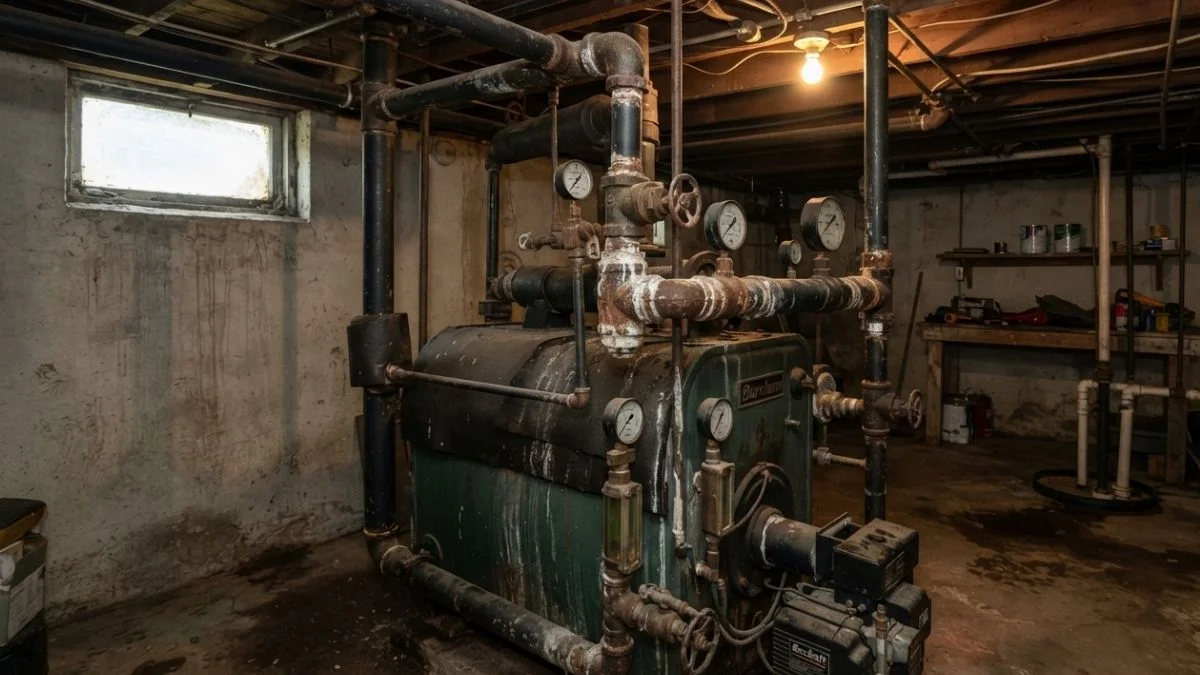
- Visible rust, corrosion, or active leaks in the boiler or steam pipes
- More than 2 service calls per heating season
- Heat output declining despite full radiator maintenance and system flushes
- Failed pressure test or a condemned rating from a licensed inspection
A boiler that fails a pressure vessel safety inspection is not a repair candidate — it is a liability. At that point, the decision shifts entirely to replacement or a full heating system retrofit.
Steam Boiler Replacement Cost Breakdown
Replacing a steam boiler in a pre-1950s home typically costs $4,000–$12,000 all-in, but that number shifts significantly based on fuel type, local labor rates, and what the old system left behind.

Average Replacement Cost
| Fuel Type | Boiler Unit Cost | Installed Total |
|---|---|---|
| Gas-fired steam boiler | $1,500–$4,500 | $3,500–$8,000 |
| Oil-fired steam boiler | $2,000–$5,500 | $4,500–$10,000 |
| Electric steam boiler | $1,800–$4,000 | $3,800–$7,500 |
Labor typically runs $1,500–$3,500 depending on system complexity. Northeast and Pacific Coast markets run 20–35% above the national average due to higher contractor rates and stricter code requirements.
Hidden Costs Beyond the Boiler
The boiler unit is rarely the final number. Budget for these additional line items:
- Steam radiator replacement: $300–$1,000 per unit if cast-iron sections are cracked or leaking
- Condensate line and safety valve updates: $400–$1,200 to meet current code
- Permit and inspection fees: $150–$600, varying by municipality
- Old boiler removal and disposal: $300–$700, more for asbestos-insulated pipe remediation
Asbestos pipe insulation is common in pre-1960s systems. If present, remediation alone can add $1,500–$5,000 to the project.
Timeline and Installation Complexity
A straightforward steam boiler swap takes 1–3 days for an experienced crew. Projects extend to 1–2 weeks when radiator repairs, condensate pipe rerouting, or permit-required inspections are involved.
Plan for at least one heating-free day during cutover. In cold climates, rent electric space heaters rated for the room size — typically 1,500W units covering up to 150 square feet each — as a temporary heating solution during replacement.
Converting Steam: Modern Alternatives
Replacing a failed boiler with an identical unit is the simplest path, but it is not always the smartest one. Three conversion options consistently outperform straight steam replacement on long-term efficiency and comfort.
Hydronic Conversion (Water-Based Closed-Loop)
Converting steam heating to hydronic means replacing the steam boiler with a hot-water boiler and retrofitting the distribution system to circulate water instead of steam. Existing cast-iron radiators are often compatible with hydronic systems after minor modifications, which avoids full steam radiator replacement and cuts conversion costs.
Expect to pay $8,000–$20,000 for a full hydronic conversion, compared to $3,500–$8,000 for a straight boiler swap. The premium buys measurably better steam heating efficiency — modern hydronic systems operate at 90–95% AFUE (Annual Fuel Utilization Efficiency), versus 75–85% for most replacement steam boilers.
Forced-Air Furnace or Heat Pump Switchover
A steam system vs. furnace comparison comes down to one practical factor: ductwork. Installing new ductwork in a pre-1950s home with plaster walls and no existing chases costs $3,000–$8,000 on top of the furnace or heat pump unit itself.
Cold-climate heat pumps from manufacturers like Mitsubishi, Bosch, and Carrier now maintain rated efficiency down to -13°F, making heat pump compatibility a real option in northern climates. The added benefit is central air conditioning — something steam homes have never had built in.
Hybrid Approach: Boiler Replacement + Ductless Mini-Split
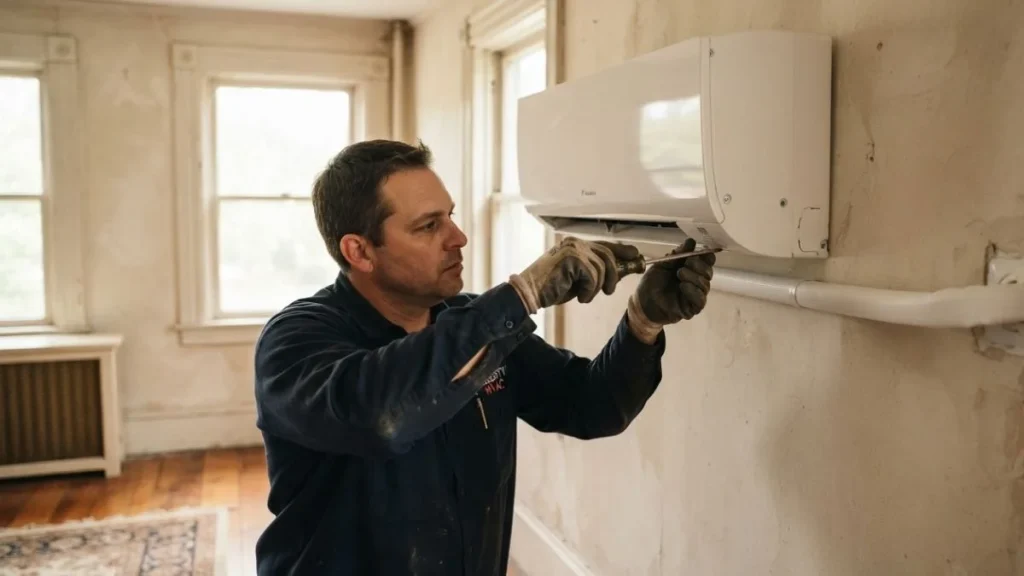
The hybrid strategy pairs a new or existing steam boiler with ductless mini-split units for targeted zones. A single-zone mini-split installation runs $3,000–$5,000, and most systems double as air conditioners, solving the cooling gap without any ductwork.
| System | Upfront Cost | Cooling Included | Efficiency Gain |
|---|---|---|---|
| Steam boiler replacement | $3,500–$8,000 | No | Minimal |
| Full hydronic conversion | $8,000–$20,000 | No | High |
| Furnace + ductwork | $8,000–$15,000 | With AC unit | Moderate |
| Boiler + mini-split hybrid | $6,500–$13,000 | Yes | Moderate–High |
The hybrid path offers the fastest payback for owners who want zoned heating and cooling without committing to a full heating system retrofit. Dual-fuel heating setups — where the mini-split handles mild weather and the boiler handles deep cold — can cut annual fuel costs by 20–35%.
Pros and Cons: Keep vs. Convert
Steam heat has real advantages that modern systems do not automatically replicate. Understanding both sides prevents a costly conversion decision driven purely by contractor preference.
Why Steam Systems Persist (and Still Work)
Cast-iron radiators deliver radiant heat — warmth that transfers directly to objects and occupants rather than just circulating hot air. Many homeowners in Victorian and Craftsman homes specifically cite radiant comfort as a reason to keep the system intact during old house heating system upgrades.
Steam-only boiler replacement also costs 40–60% less upfront than any full conversion. Cast-iron radiators themselves routinely last 50–100 years with basic radiator maintenance — bleeding air, replacing steam traps, and checking vents annually.
Modern Steam Efficiency Improvements
A properly sized steam boiler paired with modern controls closes much of the efficiency gap. Specific upgrades worth prioritizing:
- Modulating gas-fired steam boilers (brands like Burnham and Weil-McLain) adjust output based on demand, reducing short-cycling and fuel waste
- Smart thermostats compatible with steam systems, such as the Nest or Honeywell T6 Pro, improve cycle timing
- Individual radiator vent upgrades using adjustable vents like Hoffman or Varivalve models balance heat distribution across floors
These upgrades collectively can push steam heating efficiency from 75% AFUE to 83–87% AFUE — meaningful, though still below a 95% AFUE hydronic or heat pump system.
Conversion Trade-offs
Here’s the problem with full conversion: the efficiency gains are real, but the payback timeline is long. A $12,000 hydronic conversion saving $600 annually in fuel costs takes 20 years to break even — longer than some homeowners plan to stay.
Forced-air conversions add ductwork disruption to plaster walls and ceilings, which can cost $5,000–$10,000 in finish repairs alone in historic homes. The energy efficiency upgrade pays off fastest for owners with 10+ year horizons and high current fuel costs.
You Should Read Also: Bleeding Radiator Water But No Air
Next Steps: Finding the Right Contractor
The single biggest mistake steam system owners make is getting only one quote — because scope of work varies dramatically between contractors, and a low bid often excludes permit fees, asbestos remediation, or condensate line updates that are legally required. Get at least 3 written quotes from NATE-certified (North American Technician Excellence) HVAC contractors who specifically list steam or hydronic systems in their credentials, and require each quote to itemize removal, permits, and any code-compliance upgrades separately so you are comparing identical scopes.