
Choosing the right wood for your cabinets is one of those decisions that feels simple on the surface — until you’re standing in the lumber yard staring at a dozen different options, each with its own price tag, grain pattern, and list of pros and cons.
Poplar keeps coming up in conversations about cabinet wood — and for good reason. It’s affordable, easy to work with, and widely available. But is poplar actually good for cabinets, or is it a budget shortcut that you’ll regret five years down the road?
The honest answer is: it depends. Poplar can be an excellent cabinet wood when used correctly, but it’s not the right choice for every project. This guide breaks down everything you need to know — from durability and cost to how it compares with oak and maple — so you can make a confident, informed decision before your next kitchen or bathroom remodel.
What Is Poplar Wood? (A Quick Overview)
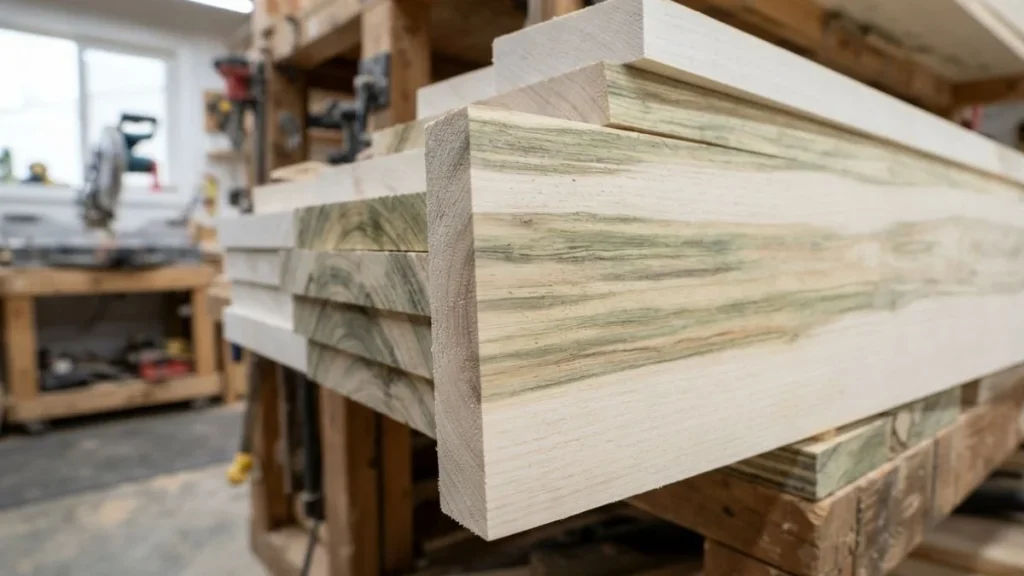
Poplar (Liriodendron tulipifera) is a North American hardwood that grows abundantly across the eastern United States. It’s one of the fastest-growing hardwood trees in North America, which is a big reason why it’s significantly cheaper than slower-growing species like cherry, walnut, or hard maple.
Despite being classified as a hardwood, poplar sits on the softer end of the hardwood spectrum. Its Janka hardness rating is around 540 lbf — compared to red oak at 1,290 lbf and hard maple at 1,450 lbf. That difference matters when it comes to everyday wear and tear on your cabinets.
In terms of appearance, raw poplar has a creamy white to yellowish-brown color with occasional streaks of green, gray, or even purple running through the grain. These color variations are completely natural, but they do create challenges when you’re trying to achieve a consistent stained finish — which is why most professionals strongly recommend painting poplar rather than staining it.
Poplar is widely used across the woodworking and construction industries — not just for cabinets, but also for furniture frames, interior trim, molding, and drawer boxes. Its light weight, straight grain, and smooth texture make it a favorite among cabinet makers who prioritize workability and efficiency.
Is Poplar Good for Cabinets? The Honest Answer
Yes — poplar is a good cabinet wood, but with one important condition: it performs best when painted, not stained.
Professional cabinet makers have been using poplar for decades, particularly for painted cabinet projects and interior cabinet components. It machines cleanly, holds fasteners well, and creates a smooth surface that takes paint beautifully. Many high-end custom cabinet shops use poplar for interior boxes and drawer components even when the visible face frames are made from maple or oak.
Where poplar falls short is in high-impact, high-moisture environments where surface hardness really matters. Because it’s softer than oak or maple, it’s more prone to dents and scratches over time — especially around high-traffic areas like base cabinets near the sink or lower kitchen cabinets that take daily abuse.
The bottom line: if you’re planning a painted cabinet project and working within a budget, poplar is a smart, reliable choice. If you want stained wood cabinets with a rich, consistent grain pattern, you’ll be better served by maple, oak, or cherry.
What Makes Poplar a Popular Cabinet Wood Choice?
- Cost-effective: Poplar is one of the most affordable hardwoods on the market
- Excellent paintability: Its tight, fine grain creates a smooth surface perfect for painted finishes
- Easy to work with: Cuts, routes, and sands cleanly with standard woodworking tools
- Widely available: Found at most lumber yards and big-box home improvement stores
- Dimensionally stable: Properly kiln-dried poplar resists warping and shrinking
Where Does Poplar Fall Short for Cabinets?
- Softer surface makes it more vulnerable to dents and dings than harder species
- Natural color streaks make staining unpredictable and often unattractive
- Requires proper sealing in moisture-prone areas like bathrooms and kitchen sink zones
- May need additional primer coats compared to denser hardwoods
Poplar Wood Cabinets Pros and Cons
Before committing to poplar for your cabinet project, it helps to see the full picture laid out clearly.
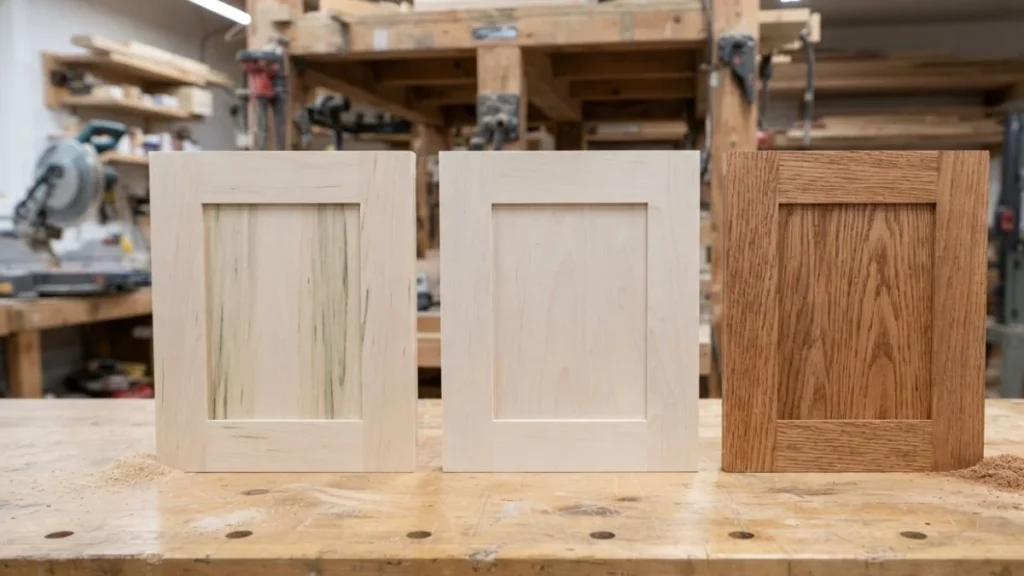
| Feature | Poplar | Oak | Maple |
| Hardness (Janka) | 540 lbf | 1,290 lbf | 1,450 lbf |
| Price per board foot | $2–$5 | $5–$10 | $5–$9 |
| Best for painted finish | ✅ Excellent | ❌ Grain shows | ✅ Good |
| Best for stained finish | ❌ Poor | ✅ Excellent | ✅ Excellent |
| Workability | ✅ Very easy | ✅ Good | ✅ Good |
| Moisture resistance | ⚠️ Moderate | ⚠️ Moderate | ⚠️ Moderate |
Pros of Using Poplar for Cabinets:
- One of the most budget-friendly hardwood options available to homeowners
- Accepts paint and primer evenly for a clean, furniture-quality finish
- Lightweight and easy to handle during installation
- Readily available at most lumber suppliers nationwide
- Fast-growing species with a lower environmental impact than slow-growth hardwoods
- Works well as both a primary and secondary cabinet wood
Cons of Using Poplar for Cabinets:
- Softer surface is more susceptible to everyday scratches and impact damage
- Natural green and purple color streaks make staining results inconsistent and often unattractive
- Not the best standalone choice for high-moisture environments without proper sealing
- Lower perceived value compared to oak or maple — may matter if resale value is a concern
Is Poplar Good for Kitchen Cabinets Specifically?
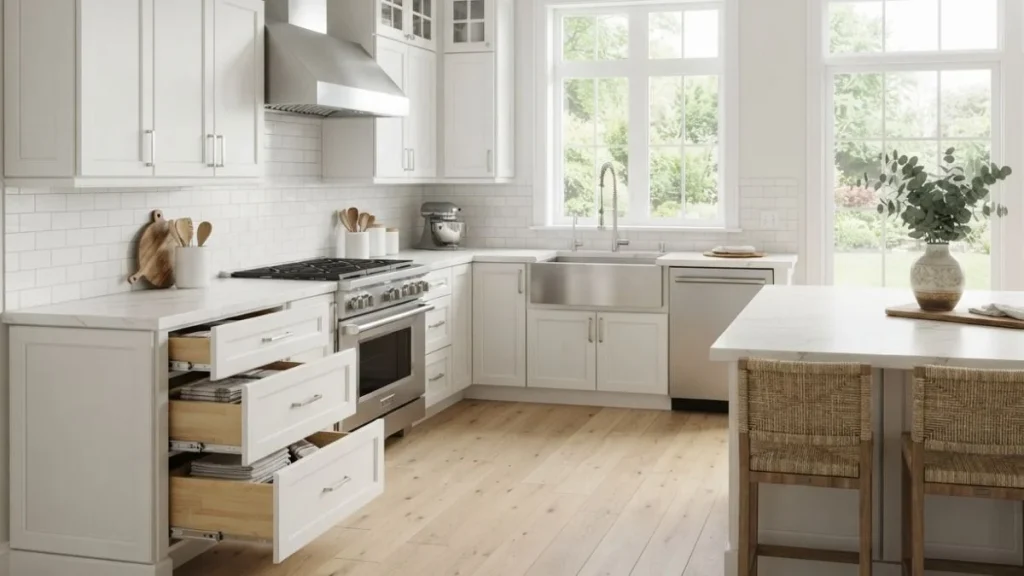
Kitchen cabinets take more daily abuse than almost any other surface in your home. They deal with heat, humidity, grease, and constant opening and closing — so the material you choose needs to hold up under real-world conditions.
Poplar handles kitchen environments well when it’s properly finished and sealed. The key word there is “properly.” Bare or poorly sealed poplar will struggle in a kitchen. But a well-primed, well-painted, and topcoat-sealed poplar cabinet can perform reliably for 15 to 25 years with normal care and maintenance.
One approach many professional cabinet makers use is combining poplar with harder species — using poplar for the cabinet boxes and interior components where appearance matters less, and using maple or oak for the face frames and doors where durability is more critical. This hybrid approach gives you the cost savings of poplar without sacrificing structural integrity in the areas that take the most wear.
Best Uses for Poplar in Kitchen Cabinets
- Cabinet carcasses and interior boxes
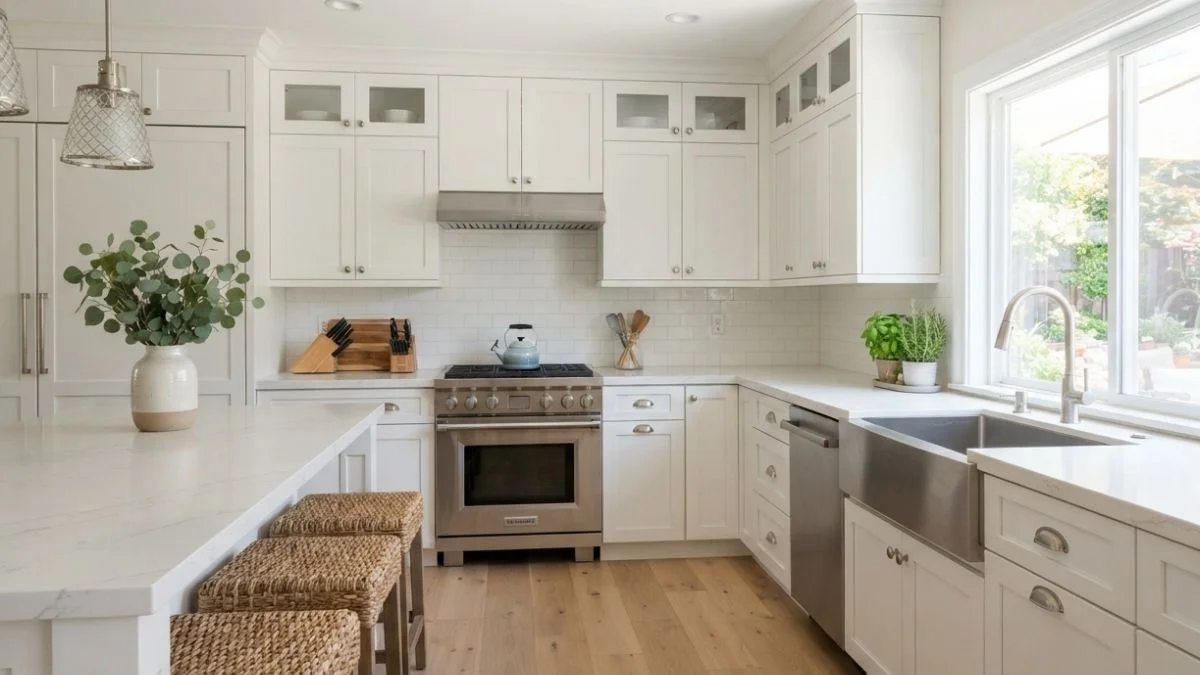
- Painted Shaker-style cabinet doors — a top pick among kitchen designers
- Drawer boxes and interior shelving
- Cabinet face frames in lower-traffic areas
Woods Compared to Poplar for Kitchen Cabinets
Poplar vs. Maple: Maple is harder, more durable, and takes stain much better than poplar. It’s the go-to choice for stained kitchen cabinets. However, maple typically costs $3–$5 more per board foot. For painted cabinets, poplar and maple perform similarly — making poplar the smarter budget choice.
Poplar vs. Oak: Oak has a pronounced grain pattern that looks beautiful when stained but can show through paint more than poplar. If you want painted cabinets, poplar actually gives you a smoother finish than oak. For stained cabinets, oak wins hands down.
Poplar vs. MDF: MDF is cheaper and even smoother than poplar, but it’s heavier, weaker, and far more vulnerable to moisture damage. Poplar is the stronger, more durable option — especially for door construction and face frames.
Poplar vs. Plywood: For cabinet boxes and carcasses, plywood is generally a better choice due to its superior strength-to-weight ratio and moisture resistance. For cabinet doors and face frames, poplar is an excellent option.
Is Poplar Good for Painted Cabinets?
This is where poplar truly shines. If you’re planning to paint your cabinets — and a large percentage of modern kitchen remodels do — poplar is one of the best wood choices you can make at this price point.
Its grain is fine and tight, which means it doesn’t telegraph texture through the paint the way open-grained woods like oak do. With the right prep work, painted poplar cabinets can achieve a smooth, almost furniture-quality finish that looks every bit as polished as cabinets made from more expensive hardwoods.
Professional painters and cabinet finishers consistently rank poplar as one of their preferred species for painted work — not just because of how it looks, but because it’s easy and efficient to work with in a production environment.
How to Paint Poplar Cabinets the Right Way
Getting a great painted finish on poplar comes down to preparation. Skipping steps here is the number one reason painted cabinets look rough or uneven.
- Sand thoroughly — Start with 120-grit sandpaper and finish with 150–180 grit for a smooth surface
- Wipe clean — Remove all dust with a tack cloth before priming
- Apply a quality primer — Use an oil-based or shellac-based primer to block tannins and prevent bleed-through. This step is critical with poplar.
- Light sand between coats — Use 220-grit sandpaper between each coat for a glass-smooth build
- Apply 2–3 coats of cabinet-grade paint — Semi-gloss or satin finish works best for durability and cleanability
- Finish with a protective topcoat — A clear lacquer or polyurethane topcoat adds an extra layer of protection against daily wear
Poplar Cabinet Durability — Will It Last?
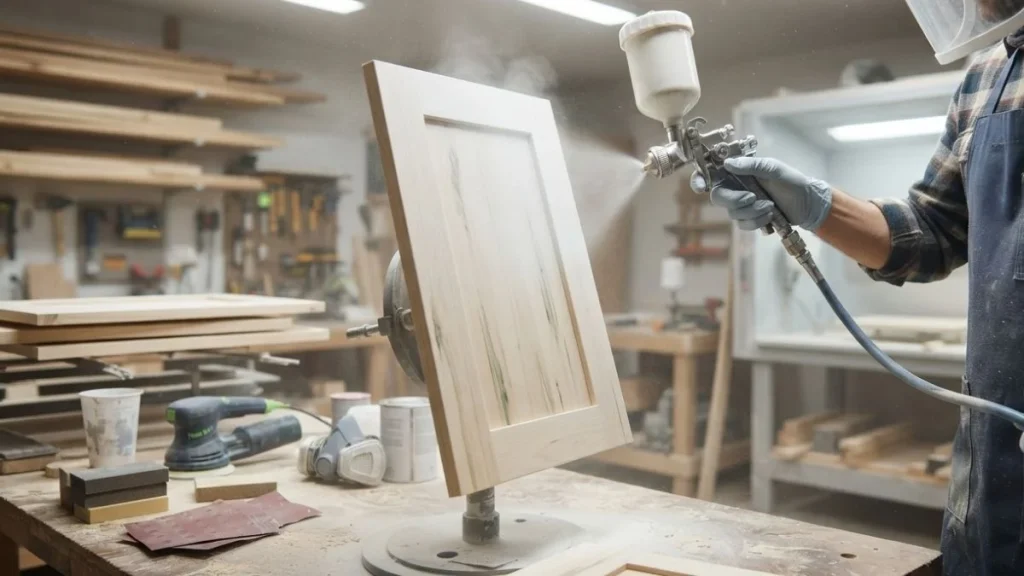
Durability is the most common concern homeowners have about poplar cabinets — and it’s a fair question. Here’s the reality: poplar cabinets can absolutely last 20 or more years, but durability is largely determined by the quality of the finish, not just the wood species itself.
A maple cabinet with a poor finish will fail faster than a well-finished poplar cabinet. The finish is your cabinet’s armor. It protects the wood from moisture, impact, grease, and daily handling. Invest in quality finishing materials and application, and your poplar cabinets will give you years of dependable service.
How to Make Poplar Cabinets More Durable
- Always apply a high-quality primer before any topcoat — this is non-negotiable with poplar
- Use a hard conversion lacquer or catalyzed finish for maximum surface protection
- Install soft-close hinges and drawer slides to reduce impact stress on the cabinet doors and boxes
- Seal all interior surfaces — not just the exterior — to protect against moisture from inside the cabinet
- Touch up any chips or scratches promptly to prevent moisture from penetrating the wood
Cost of Poplar Wood Cabinets
One of the biggest reasons homeowners and contractors choose poplar is the cost savings — and the difference can be substantial on a full kitchen cabinet project.
| Wood Species | Average Price Per Board Foot |
| Poplar | $2 – $5 |
| Soft Maple | $4 – $7 |
| Hard Maple | $5 – $9 |
| Red Oak | $5 – $10 |
| Cherry | $8 – $15 |
| Walnut | $10 – $20+ |
On a full set of kitchen cabinets requiring 100–150 board feet of lumber, choosing poplar over maple or oak can save you $300 to $700 in material costs alone — without compromising build quality when the cabinets are properly constructed and finished.
For homeowners working with a tight remodel budget, those savings can be redirected toward better hardware, countertops, or appliances — areas where the upgrade has a more visible impact on the finished kitchen.
Read Also: Cabinet Face Frame Overhang
Conclusion
So, is poplar good for cabinets? The answer is a clear yes — as long as you use it in the right application. For painted cabinets, poplar is one of the best budget-friendly hardwood options available. It’s easy to work with, takes paint beautifully, and when properly finished, can deliver results that rival far more expensive wood species.
Where you need to be careful is in high-moisture environments, heavy-use applications, or any project where you want a stained wood finish. In those situations, stepping up to maple or oak is the smarter long-term investment.
If you’re planning a kitchen remodel on a budget and want painted cabinets that look clean, professional, and built to last — don’t overlook poplar. Talk to a local cabinet maker or contractor about incorporating poplar into your build. With the right finishing approach, you might be surprised at just how good it looks and how well it holds up.