


If you’ve recently installed Cali Bamboo floating floors — or you’re thinking about it — you’ve probably noticed that the reviews are a mixed bag. Some homeowners swear by it, while others report frustrating issues that nobody warned them about before installation. The truth is, Cali Bamboo makes a quality product, but like any floating floor system, it comes with its own set of challenges.
This article breaks down the most common Cali Bamboo floating floor problems, explains why they happen, and gives you practical solutions so you can protect your investment. Whether you’re dealing with buckling, squeaking, or gaps — or just want to avoid these problems before they start — this guide has you covered.
What Is a Cali Bamboo Floating Floor?
Before getting into the problems, it helps to understand exactly what you’re working with. Cali Bamboo floating floors use a click-lock installation system, meaning the planks interlock with each other and simply “float” over your existing subfloor — no glue, no nails, no adhesive. This makes the installation process more DIY-friendly and significantly reduces labor costs compared to traditional hardwood installation.
Cali Bamboo uses strand-woven bamboo construction, which is denser and harder than traditional bamboo. The brand markets its flooring as highly durable and eco-friendly, which has made it a popular choice among environmentally conscious homeowners. However, durability and proper installation are two very different things — and this is where many of the problems begin.
The floating installation method, while convenient, means the floor has more freedom to move. If humidity, subfloor conditions, or installation steps aren’t handled correctly, that movement can quickly become a real problem.
Most Common Cali Bamboo Floating Floor Problems
1. Buckling and Warping
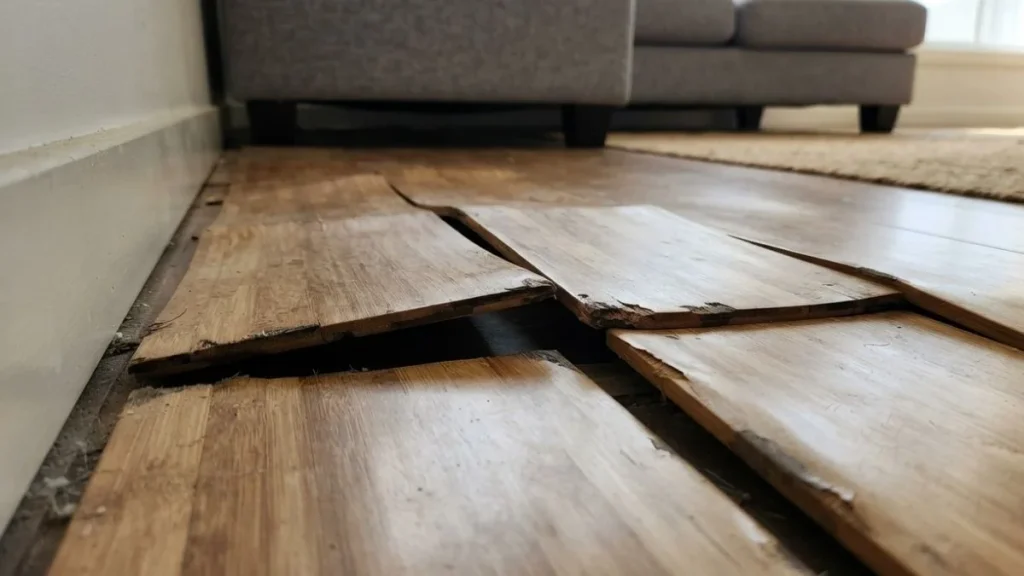
Buckling is one of the most commonly reported Cali Bamboo floating floor problems, and it’s also one of the most alarming to discover. You walk across your floor one morning and notice the planks are lifting, curving upward, or separating from the subfloor. It looks serious — and in some cases, it is.
What causes it?
The number one cause of buckling is moisture. When moisture levels rise — whether from a leak, high indoor humidity, or an improperly sealed subfloor — bamboo absorbs that moisture and expands. Because a floating floor has nowhere to expand outward (especially if expansion gaps were too small), it pushes upward instead.
The second major cause is inadequate expansion gaps. Every floating floor installation requires a gap along the walls — typically around ¼ inch — to allow for natural expansion and contraction. If an installer skips this step or cuts corners, the floor has no room to breathe and buckling becomes inevitable.
How to fix it:
Start by identifying and eliminating the moisture source. If a pipe is leaking or humidity is the issue, fix that first — otherwise, any repair you make will fail again. Once the moisture problem is resolved, allow the floor to dry out completely. In mild cases, the planks may settle back down on their own. In severe cases, affected planks need to be replaced and reinstalled with proper expansion gaps.
2. Gapping Between Planks
Gaps forming between planks is another frequently reported issue — and it’s almost always the opposite problem from buckling. Instead of too much moisture, gapping typically happens when the environment becomes too dry.
Bamboo, like all wood-based products, responds to its environment. In winter months when indoor heating systems dry out the air, bamboo contracts and pulls away from adjacent planks. The result is visible gaps that are not only unsightly but can also collect dirt and debris over time.
What causes it?
The most common cause is skipping or rushing the acclimation period. Before installation, Cali Bamboo flooring needs to sit in the room where it will be installed — in its packaging — for at least 72 hours. This allows the planks to adjust to the room’s temperature and humidity. If installation happens too quickly, the planks haven’t had time to adjust, and gapping becomes almost certain once the seasons change.
An uneven or unlevel subfloor also contributes to gapping, as planks that aren’t fully supported tend to shift and separate more easily over time.
How to fix it:
- Use a humidifier during dry winter months to keep indoor humidity between 40–60%
- For minor surface gaps, a color-matched bamboo floor filler can be applied
- For widespread gapping caused by poor acclimation, the floor may need to be fully removed, allowed to acclimate properly, and then reinstalled
3. Squeaking and Clicking Noises
A squeaky floor is one of the most annoying home problems to live with — and Cali Bamboo floating floors are not immune to it. If every step you take sounds like a chorus of creaks and clicks, something isn’t right.
Squeaking in floating floors is almost always caused by movement between the planks and the subfloor, or movement within the click-lock joints themselves. Common causes include an uneven subfloor that creates high and low spots, debris or grit trapped between the floor and the underlayment, and click-lock joints that have loosened over time due to heavy foot traffic.
The good news is that squeaking is usually fixable without replacing the entire floor. Start by thoroughly cleaning under the planks near the squeak if accessible, or inject a small amount of flooring lubricant into the seams. If the squeak is widespread, the issue is likely an uneven subfloor — and the floor may need to be lifted in sections to address it properly. Adding a higher-quality underlayment with better cushioning can also significantly reduce noise.
4. Moisture and Water Damage
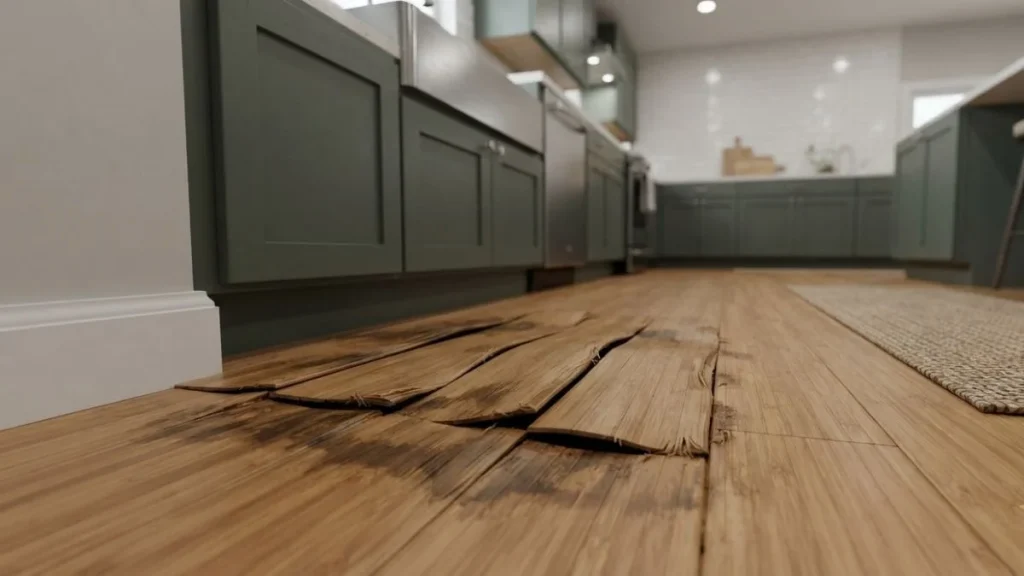
This is a big one — and something homeowners often misunderstand. Cali Bamboo markets its flooring as water-resistant, but water-resistant is not the same as waterproof. There is an important distinction between the two that can save you from a costly mistake.
Water-resistant means the surface can handle minor splashes and spills if cleaned up quickly. Waterproof means the material can withstand prolonged water exposure without damage. Cali Bamboo floating floors are NOT recommended for full bathroom floors, laundry rooms, or below-grade basements without extremely careful moisture management.
When water penetrates the joints or seeps under the planks, it causes the bamboo fibers to swell and deteriorate rapidly. You’ll start to notice staining, warping, soft spots, and in severe cases, mold growth underneath the floor.
Prevention is far more effective than repair:
- Always install an approved moisture barrier or underlayment before laying planks
- Clean up spills immediately — never let water sit on bamboo floors
- Avoid wet mopping; use a barely damp cloth or microfiber mop instead
- In high-risk areas like kitchens, use rugs or mats near the sink
If water damage has already occurred, affected planks must be replaced. There is no effective way to reverse water damage in bamboo flooring once it has set in.
5. Scratching and Surface Wear
Bamboo is often marketed as harder than traditional hardwood, and by the Janka hardness scale, strand-woven bamboo does test harder than most wood species. However, hardness and scratch-resistance are not the same thing — and many homeowners are surprised to find scratches appearing relatively quickly.
The finish on bamboo flooring is what determines scratch resistance, not the bamboo itself. If the factory finish is thin or low-quality, scratches and scuffs will show up faster than expected — especially in high-traffic areas, homes with pets, or households with young children.
Harsh cleaning products are another major culprit. Using steam mops, vinegar-based cleaners, or abrasive scrubbers can strip the finish over time and make the surface even more susceptible to scratching.
To protect your Cali Bamboo floor surface:
- Place felt pads under all furniture legs and replace them regularly
- Use only pH-neutral hardwood floor cleaners approved for bamboo
- Add area rugs in high-traffic zones like hallways and living rooms
- Keep pet nails trimmed to reduce scratching
If the surface has already been scratched, minor scratches can often be buffed out with a bamboo-compatible floor polish. Deeper scratches may require professional refinishing.
6. Installation Mistakes
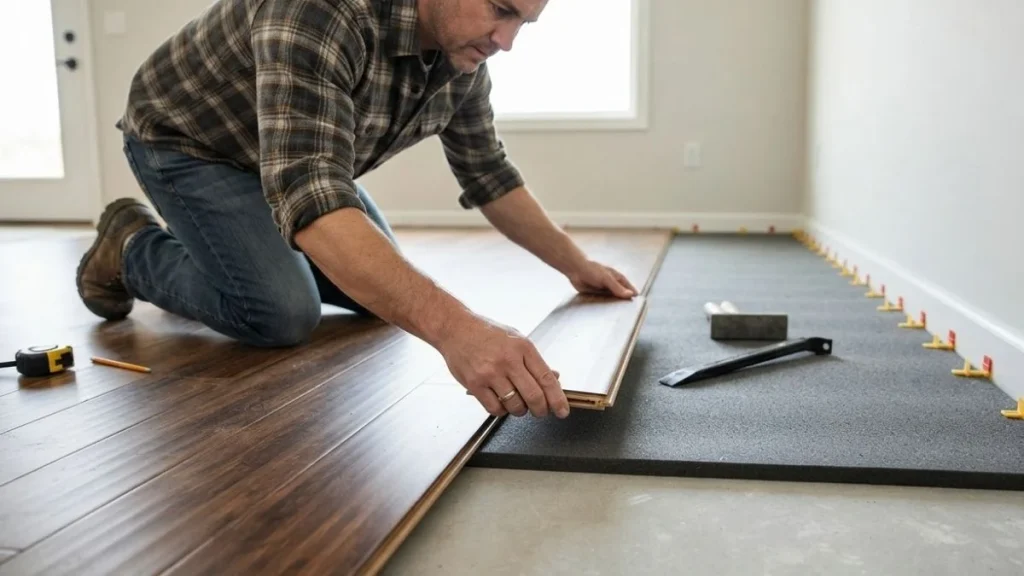
Many of the problems covered in this article trace back to one root cause: improper installation. Cali Bamboo floating floors are DIY-friendly, but “DIY-friendly” doesn’t mean “install it any way you want.” The installation instructions exist for good reason — and cutting corners almost always leads to problems down the road.
The most common installation mistakes include:
- Skipping the 72-hour acclimation period
- Not leaving proper expansion gaps (¼ inch minimum) along all walls and fixed objects
- Installing over a subfloor with more than 3/16 inch variation per 10 feet
- Failing to test the subfloor for moisture before installation
- Using the wrong underlayment or skipping it entirely
If you’re considering a DIY install, take the time to read Cali Bamboo’s full installation guide before you start. A few extra hours of preparation can save you thousands of dollars in repairs.
Are Cali Bamboo Floating Floors Worth It?
Despite these problems, Cali Bamboo flooring remains a strong choice for the right home and the right conditions. When properly installed and maintained, it offers excellent durability, an attractive natural look, and eco-friendly credentials that few flooring options can match. The brand is also competitively priced compared to solid hardwood, making it accessible for more homeowners.
That said, Cali Bamboo floating floors are not the right fit for every situation. Homes with significant humidity swings, high moisture-risk areas, or large pets may encounter more problems than the average household.
| Situation | Recommended? |
| Dry climates with stable humidity | ✅ Yes |
| Main living areas, bedrooms | ✅ Yes |
| Kitchens (with precautions) | ⚠️ With care |
| Bathrooms, laundry rooms | ❌ Not recommended |
| Homes with large dogs | ⚠️ With caution |
| Below-grade basements | ❌ Not recommended |
Pro Tips to Prevent Cali Bamboo Floating Floor Problems
- Always acclimate flooring for at least 72 hours in the installation room
- Keep indoor humidity between 40–60% year-round using a humidifier or dehumidifier
- Test your subfloor for moisture before installation using a moisture meter
- Use the underlayment recommended by Cali Bamboo — not a generic alternative
- Leave proper expansion gaps at all walls, door frames, and fixed objects
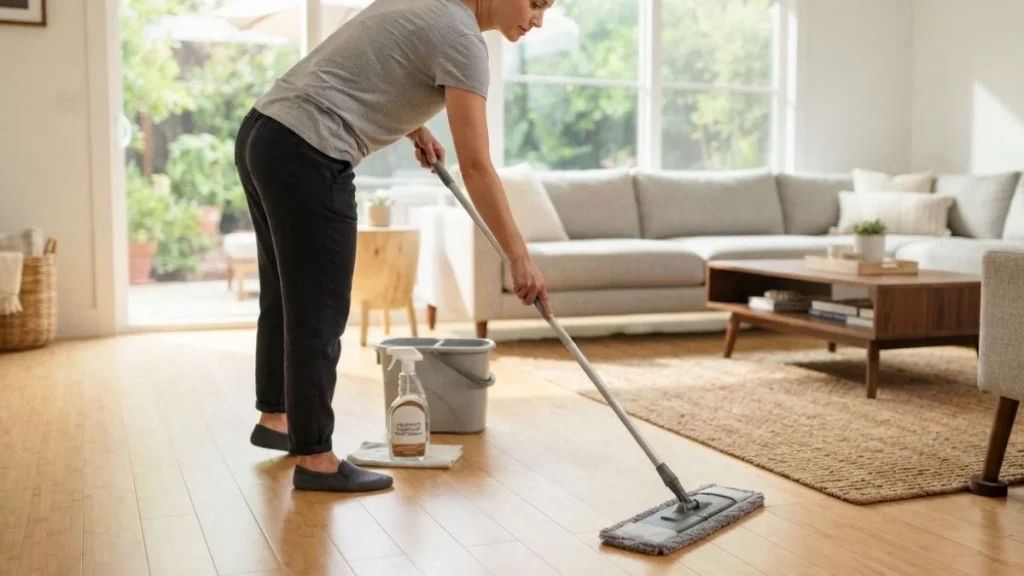
- Never use steam mops or wet mops on bamboo floors
- Address spills immediately and always use bamboo-safe cleaning products
You May Read Also: Dark to Light Hardwood Floor Transition
Conclusion
Cali Bamboo floating floors can be an excellent choice for your home — but going in without knowing the potential problems is a mistake you’ll likely regret. Most of the issues covered in this article, from buckling and gapping to squeaking and water damage, are preventable. Proper acclimation, correct installation, consistent humidity control, and the right maintenance routine are what separate a floor that lasts decades from one that starts failing within a year.
If you’re already experiencing one of these problems, don’t panic. Most issues have straightforward solutions, and when caught early, repairs are far less costly than a full floor replacement. When in doubt, reach out to a certified flooring professional who has experience with bamboo — it’s a worthwhile investment to get an expert opinion before a small problem becomes a big one.