

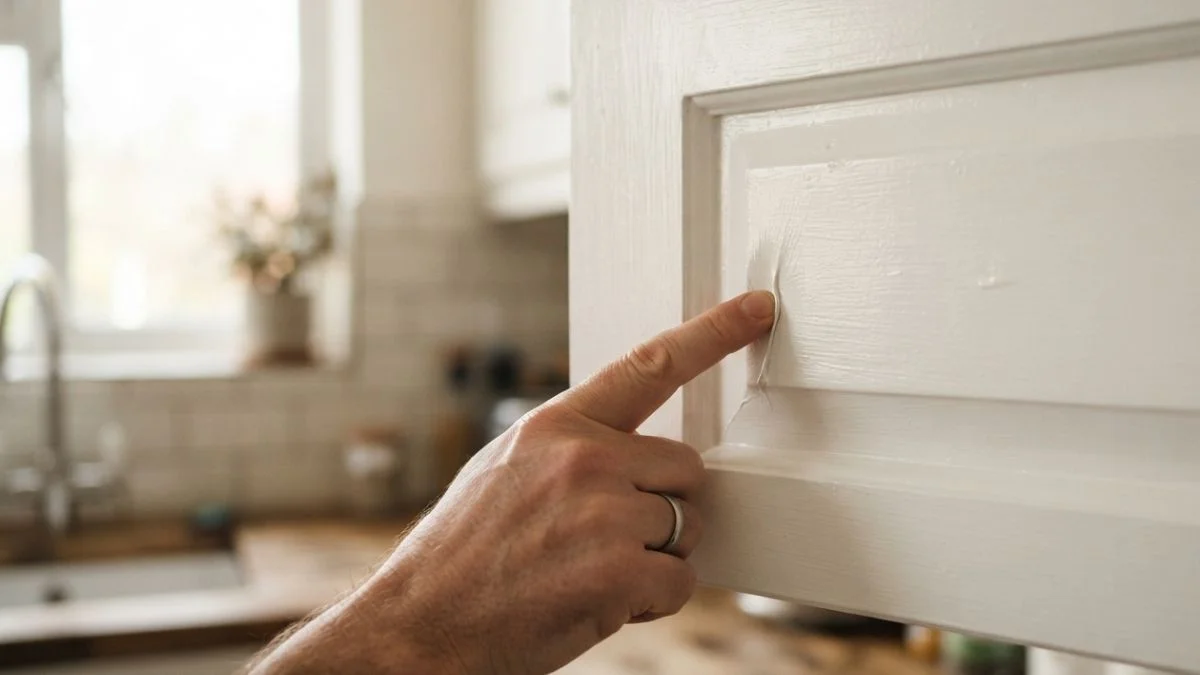
Painted cabinets can stay tacky for weeks — even months — when paint hasn’t fully cured, and knowing how to fix sticky painted cabinets saves you from an unnecessary full repaint.
Most homeowners don’t realize that paint “drying” and paint “curing” are two different things — and that humidity, poor ventilation, or the wrong paint type can keep cabinet surfaces tacky long after they look finished.
This guide gives you 5 concrete fixes to eliminate that stickiness and get your cabinets back in working order fast.
Why Do Painted Cabinets Turn Sticky?
Sticky painted kitchen cabinets almost always trace back to one of two root causes: the wrong paint or the wrong conditions during curing.

Wrong Paint Type or Application
Standard latex wall paint is the most common culprit behind tacky paint on cabinets. Wall paint stays flexible by design — it never fully hardens, which makes it feel sticky to the touch under pressure or heat. Cabinet surfaces need a dedicated cabinet-grade or trim paint, such as Sherwin-Williams Emerald Urethane Trim Enamel or Benjamin Moore Advance, both of which cure to a hard, durable finish.
Improper paint application compounds the problem. Applying coats too thick traps solvents underneath the surface skin, so the paint dries on top but stays wet underneath — a condition painters call “skinning over.” Skipping primer or painting over a greasy, unwashed surface prevents proper adhesion and extends latex paint stickiness for weeks.
Environmental Factors During Cure
High humidity is the single biggest environmental trigger for cabinet paint that won’t dry completely. Paint releases solvents as it cures, and moisture-saturated air blocks that evaporation. Above 85% relative humidity, cure time can more than double.
Poor air circulation traps that moisture directly around the cabinet surface, making the problem worse. Temperature matters too — most latex paints require a consistent 50-85°F to cure properly. Below that range, the chemical cross-linking that hardens the paint simply slows down.
Cure time varies significantly by product. Standard latex paint may cure in 2-4 weeks, while oil-based paint can take 30 days or longer under normal conditions.
4 Quick Fixes for Sticky Painted Cabinets Without Repainting
Before trying any fix, test it on a hidden area — inside a cabinet door edge works well. These methods address the surface tackiness directly and cost very little to try.

Fix 1: Isopropyl Alcohol Wipe-Down
Isopropyl alcohol (70% concentration) cuts through surface stickiness on latex paint without stripping the finish underneath. Dampen a soft cloth lightly — never saturate it — and wipe the tacky surface in a single direction. Let the area dry completely before testing it again. For painted cabinets that feel sticky to the touch but show no other damage, this is the fastest first step to try.
Fix 2: Mineral Spirits for Oil-Based Paint
Mineral spirits cabinet cleaning works best when oil-based paint tackiness is the problem. Wipe a small section with a lint-free cloth dampened with mineral spirits, then let it off-gas fully before closing any doors or drawers. Always ventilate the room — open windows and run a fan during and after application.
Fix 3: Cornstarch or Talcum Powder Dusting
Cornstarch powder for tacky paint acts as a temporary absorbent layer on the sticky surface. Dust a thin, even coat over the affected area, let it sit for 10-15 minutes, then wipe it clean with a dry cloth. This fix works for light surface stickiness only — it won’t solve deep curing failures.
Fix 4: Improve Air Circulation and Reduce Humidity
Running a box fan directed at the cabinets accelerates solvent evaporation and helps cabinet paint that won’t dry completely finish curing. Pair that with a dehumidifier to bring room humidity below 50%. Keep the temperature stable between 65-75°F. Given enough time under these conditions, many tacky paint problems resolve on their own within 5-10 days.
When Quick Fixes Fail: Sanding and Repainting
If your cabinets still feel sticky to the touch after 2 weeks of trying the fixes above, the paint has likely failed at a deeper level and surface treatments won’t solve it.
Assessing Whether You Need to Repaint
Run through this checklist before picking up sandpaper:
- The tackiness covers more than 50% of the cabinet surface
- The paint wrinkles or pulls when you press it firmly
- Quick fixes have been applied twice with no improvement
- The cabinets were painted with standard wall latex paint over unprimed wood
If 2 or more of these apply, sanding and repainting is the right call.
Sanding Tacky Paint Correctly
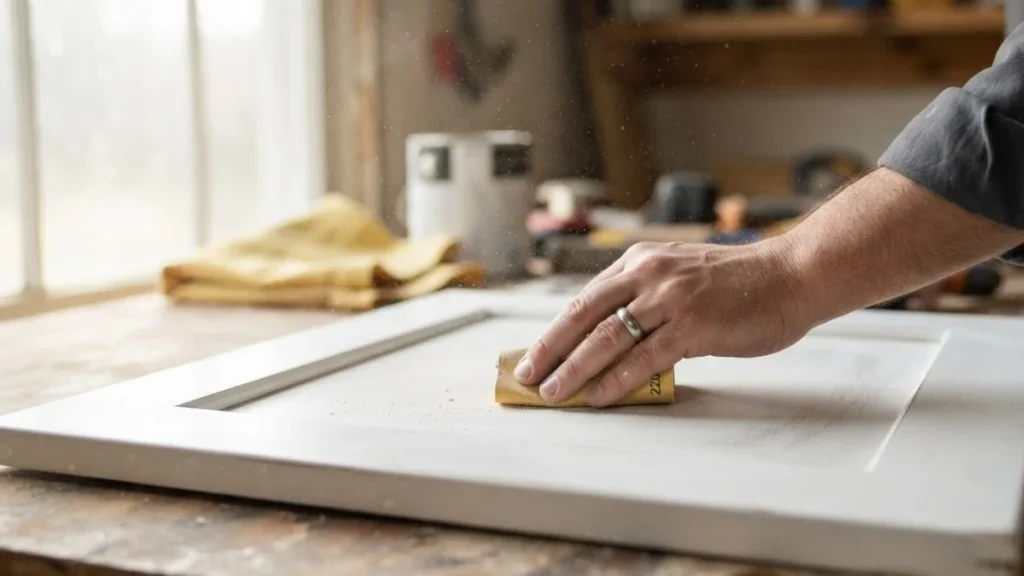
Start with 120-grit sandpaper to cut through the failed latex paint layer without gouging the cabinet surface. Follow with 220-grit to smooth the surface before repainting. Sand lightly and evenly — pressing too hard on tacky paint causes it to ball up and smear rather than sand cleanly. Wipe all dust away with a tack cloth before applying primer.
Choosing the Right Paint the Second Time
This is where most homeowners make the same mistake twice. Use a dedicated cabinet-grade enamel — Sherwin-Williams Emerald Urethane Trim Enamel, Benjamin Moore Advance, or Rust-Oleum Cabinet Transformations are all proven options. Apply thin coats and allow full dry time between each one.
When to Call a Professional
Improper paint application over laminate, previously painted surfaces with unknown chemistry, or cabinets showing peeling alongside tackiness signal problems beyond a DIY fix. A professional painter can assess adhesion failure and strip the surface correctly without damaging the cabinet substrate.
Recommended: How to Paint Kitchen Cabinets Like a Pro
Frequently Asked Questions
Will sticky paint eventually dry on its own?
Sometimes — but only if the cause is slow curing due to humidity or temperature, not an incompatible paint type. Improve ventilation, lower humidity below 50%, and maintain 65-75°F. If the stickiness doesn’t resolve within 2 weeks under those conditions, the paint has likely failed and needs to be sanded off and replaced.
Why are my newly painted cabinets sticky after 2 weeks?
Two weeks of tackiness almost always means either standard wall latex paint was used instead of a cabinet-grade enamel, or the paint was applied too thick and the solvents are still trapped beneath the surface skin. High humidity during the cure window is the third most common cause.
What humidity level causes sticky painted cabinets?
Humidity above 70% significantly slows paint curing, and above 85% it can stop the process almost entirely. Most paint manufacturers, including Sherwin-Williams and Benjamin Moore, recommend maintaining relative humidity between 40-70% during application and throughout the full cure period to prevent latex paint stickiness.
Can I use a hair dryer to fix tacky cabinet paint?
Avoid it. Direct heat from a hair dryer can cause the paint surface to blister, bubble, or skin over faster while the layers underneath stay wet. A fan at room temperature is safer and more effective for accelerating evaporation.
Get Cabinets Back in Action
Most sticky cabinet paint problems trace back to one mistake: using standard wall latex instead of a cabinet-grade enamel. Start today by wiping one tacky door with a 70% isopropyl alcohol solution and running a fan on it for 24 hours — if the stickiness reduces, you have a curing problem you can solve without repainting.


