

A soft spot in your bathroom floor is not just annoying — left unrepaired, it can collapse into the subfloor within months as water rot spreads outward from the damaged area.
Most homeowners who discover a spongy patch near the toilet or sink don’t know whether to call a contractor immediately or grab a toolbox — and that uncertainty costs time while the damage grows.
This guide gives you a clear diagnostic framework and repair options matched to the actual severity of your floor damage.
What Causes Soft Spots and Why They Matter
A soft spot forms when moisture infiltrates the subfloor — the structural layer beneath your visible flooring — and begins breaking down the wood fibers. The longer it sits wet, the worse it gets.

The 3 Most Common Sources of Moisture Intrusion
- Toilet wax ring failure: The wax ring seals the base of your toilet to the drain flange. When it fails, every flush sends a small amount of water directly into the subfloor below. This is the most common cause of a soft spot near the toilet.
- Sink supply line or drain leaks: A slow drip under the vanity can saturate the subfloor for months before you notice any visible damage on the surface.
- Shower pan breaches: Cracks in a shower pan or failed caulk joints allow water to migrate outward, softening areas well beyond the shower footprint.
How Wet Rot Destroys Wood from the Inside Out
Wet rot is a fungal decay that activates when wood moisture content exceeds 20%. It doesn’t just weaken the surface — it hollows out the structural fibers internally. Plywood delaminates (its layers separate), OSB (oriented strand board) swells and crumbles, and solid wood floor joists can lose load-bearing capacity entirely.
Here’s the problem. A floor joist carrying 40 pounds per square foot of live load can fail at a fraction of that once wet rot takes hold. What feels like a slightly spongy bathroom floor today can become a genuine collapse risk within one to two seasons if moisture intrusion continues unchecked.
The damage also spreads laterally. Rot migrates from the initial wet zone outward along the grain, meaning a six-inch soft spot can reflect two to three feet of compromised subfloor beneath the surface.
Diagnosing Severity Before You Repair
Accurate diagnosis determines whether you need a $20 tube of epoxy consolidant or a $1,500 subfloor replacement. Skipping this step is the most expensive mistake DIYers make.
Visual and Tactile Assessment
Start at the surface. Walk slowly across the bathroom and note exactly where the floor feels soft when walking — mark those spots with painter’s tape. Then look for:
- Dark discoloration or staining on vinyl, tile grout, or hardwood
- Visible mold growth along baseboards or at the toilet base
- A persistent musty smell even after cleaning
- Grout cracking in tile floors directly above a soft zone
Press firmly with your heel. A surface-level issue gives slight flex but springs back. Structural damage feels like pressing into wet cardboard — it compresses without resistance and may not fully recover.
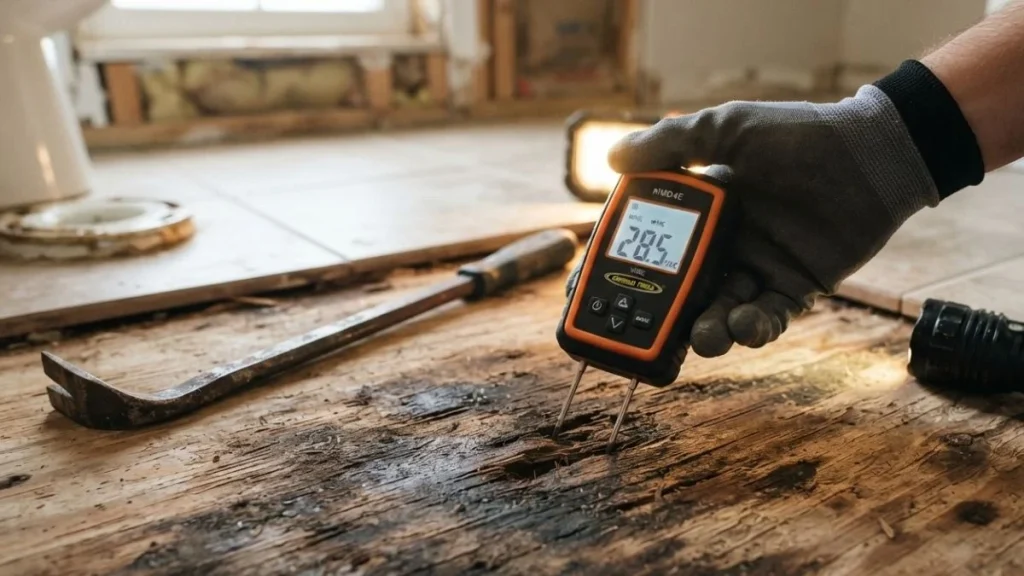
A moisture meter (the Calculated Industries 7440 or similar) gives you a precise reading. Subfloor wood above 19% moisture content has active conditions for wet rot. Anything above 28% means decay is already in progress.
When to Expose the Subfloor
If moisture readings are elevated or the floor gives more than a quarter-inch under pressure, you need to expose the subfloor to assess the actual damage extent.
You’ll need a pry bar, oscillating multi-tool, flashlight, moisture meter, gloves, and an N95 respirator if mold is present.
Remove the finish flooring carefully in the affected zone. Once the subfloor is visible, probe it with a screwdriver. Solid wood resists the tip. Rotted wood lets the screwdriver sink in with light pressure — that’s your true damage boundary. Check whether the rot has reached the floor joists beneath, because joist involvement changes the repair category entirely.
Repair Solutions Matched to Damage Level
The repair method has to match the actual damage — not what you hope the damage is. Using a surface fix on structural rot is like painting over a rusted frame.
Minor Soft Spots (Surface or Shallow Rot)
For soft spots where the subfloor is damp or slightly degraded but the joists are intact and moisture readings are below 25%, two repair options work well.
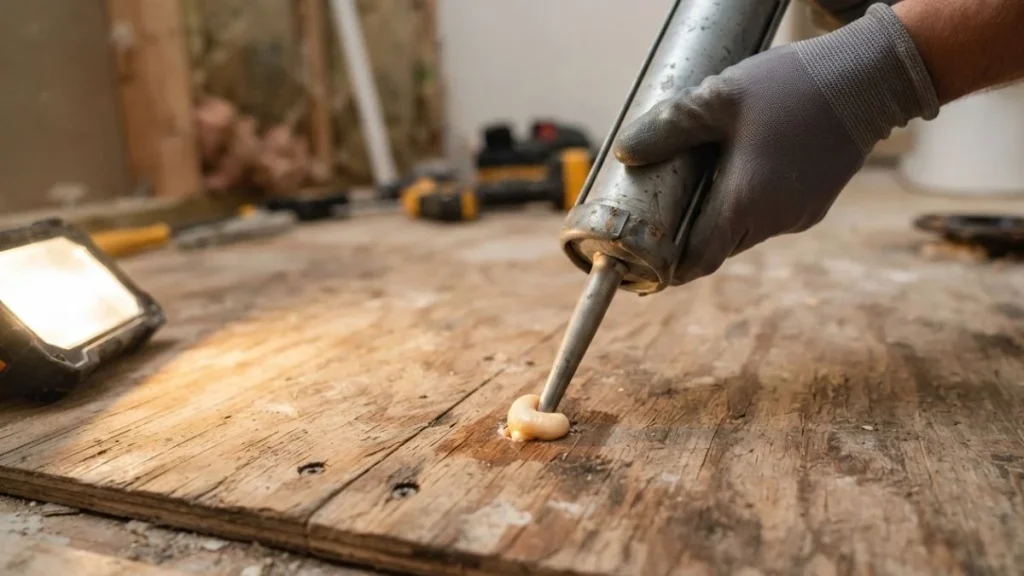
Polyurethane foam injection is the least invasive method. Products like FoamFast 74 (by DAP) or similar two-part expanding polyurethane foams are injected through small drilled holes directly into the void beneath the surface layer. The foam expands, fills gaps, bonds to surrounding wood, and cures rigid within minutes. It won’t restore severely rotted fibers, but it re-establishes a firm substrate for light surface damage. Expect material costs of $30–$80 and a lifespan of 10–20 years in dry conditions.
Water putty or epoxy wood consolidant — products like LiquidWood by Abatron — penetrates softened wood fibers and hardens them from within. This works best on localized spots no larger than six inches in diameter. Material cost runs $25–$60.
Moderate to Severe Damage
When the screwdriver test confirms rot through the full subfloor thickness or into the joists, surface treatments are not sufficient.
Partial subfloor replacement means cutting out the damaged section to the nearest healthy joist on each side, then sistering (attaching a new joist alongside the damaged one) if joist integrity is compromised. Replace with 3/4-inch tongue-and-groove plywood — the IRC (International Residential Code) minimum for bathroom subfloors over 16-inch joist spacing. Material cost for a partial replacement runs $150–$400 depending on area.
Full subfloor replacement becomes necessary when rot covers more than 30% of the bathroom floor area or multiple joists are involved. At that point, DIY becomes genuinely risky and a licensed contractor should assess structural integrity before any work proceeds. Professional subfloor replacement cost for a standard bathroom runs $500–$1,500 in materials and labor.
Stopping Damage and Preventing Recurrence
Fixing the soft spot without stopping the moisture source guarantees the same problem in 12 to 24 months. The repair and the prevention have to happen together.
Immediate Steps Before Any Repair
The moment you confirm a soft spot, stop regular foot traffic on that area. Continued loading accelerates plywood delamination and can push a borderline joist past its failure point.
Then find the moisture source — before touching the floor. Check the toilet wax ring by rocking the toilet base gently; any movement means the seal is broken. Inspect supply line connections under the sink for mineral deposits or corrosion, both signs of a slow chronic leak. Look for failed caulk at the tub or shower surround. Until the water source is eliminated, no floor repair will hold.
Temporary Stabilization
If the repair will take more than a few days to complete, lay a sheet of 3/4-inch plywood over the soft zone and secure it to surrounding solid floor with construction screws. This distributes load and prevents further compression of the damaged subfloor while you source materials.
Post-Repair Moisture Management
Once the repair is complete, three practices prevent recurrence:
- Ventilation: Run the bathroom exhaust fan — minimum 50 CFM per HVI (Home Ventilation Institute) standards for bathrooms under 100 square feet — during every shower and for 15 minutes after.
- Waterproofing: Apply a penetrating silicone sealer to grout lines and around the toilet base annually.
- Inspection schedule: Check moisture meter readings at the subfloor level every 12 months, especially near the toilet flange and under vanity cabinets.
Catching moisture intrusion at 15% wood moisture content costs almost nothing to address. Catching it at 30% costs thousands.
Related Read: How to Fix Soft Spot in Subfloor
Frequently Asked Questions
What’s the difference between water putty and foam repair methods?
Water putty and epoxy consolidants like LiquidWood penetrate softened wood fibers and harden them from within, making them best for small, localized surface rot no larger than six inches across. Polyurethane foam injection fills structural voids beneath the subfloor and re-establishes a rigid base, making it the better choice when the damage has created gaps or separation between layers rather than just fiber degradation.
Can I tile over a soft spot without fixing the subfloor underneath?
No. Tile requires a rigid, deflection-free substrate — any movement in the subfloor will crack the grout within weeks and fracture the tile itself within months. The Tile Council of North America specifies maximum subfloor deflection of L/360, meaning a floor joist span must flex no more than 1/360th of its length under load before tiling is structurally appropriate.
Will a soft bathroom floor spot get worse if I don’t fix it soon?
Yes, and faster than most homeowners expect. Wet rot spreads laterally along wood grain, so a six-inch soft spot can expand to two or three feet of compromised subfloor within a single season if the moisture source remains active.
Stop Guessing, Start Fixing
The moisture source destroys floors — the soft spot is just the symptom, and repairing the floor without fixing the leak guarantees the same failure within two years. Start today by pressing a screwdriver into the soft zone and checking your toilet base for movement — those two tests tell you whether you need a $50 foam repair or a contractor’s phone number. Grab a moisture meter, mark your damage boundary, and buy materials only after you know exactly what you’re dealing with.