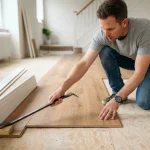


You wake up one morning, walk outside, and notice it — a cracked panel on the side of your house, or maybe storm damage took out a whole section overnight. Your first thought is simple: just replace the damaged pieces. But the moment you start looking into it, you realize finding matching vinyl siding isn’t as straightforward as picking up a few panels at the hardware store.
The color looks slightly off. The profile doesn’t quite line up. And if your home is more than ten years old, there’s a real chance the exact product you need has been discontinued entirely.
This is one of the most common frustrations homeowners face during exterior repairs. Whether you’re patching a small section after storm damage, building an addition, or replacing panels that have cracked over the years, getting a clean, consistent look matters — both for curb appeal and resale value.
The good news is that finding matching vinyl siding is absolutely doable. It just takes a systematic approach. This guide walks you through exactly how to identify your existing siding, locate the right product, and handle situations where a perfect match isn’t available.
Why Matching Vinyl Siding Is More Challenging Than You Think
Most homeowners assume matching vinyl siding is as simple as grabbing a panel from the nearest home improvement store and calling it a day. In reality, several factors work against you — and understanding them upfront saves a lot of time and frustration.
Color Fading and Weathering Over Time
Vinyl siding changes color gradually over time due to constant UV exposure, temperature swings, and general weathering. A panel that was installed five or ten years ago has faded to some degree, even if it doesn’t look dramatically different up close. The problem becomes obvious the moment you hold a brand-new panel next to the existing siding — the new one almost always looks noticeably brighter or slightly off in tone.
This doesn’t mean a match is impossible. It means you need to account for the fading factor when shopping. Some suppliers and contractors have experience selecting shades that will blend more naturally once the new panels weather in. In many cases, choosing a slightly darker or more muted version of the original color gets you much closer to the existing look than buying the exact same color code in a new product.
Discontinued Products and Changing Manufacturers
The vinyl siding industry has gone through significant consolidation over the past two decades. Brands have merged, product lines have been renamed, and many popular styles from the early 2000s and before simply no longer exist. If your home is more than 10 to 15 years old, there’s a reasonable chance your original siding has been discontinued.
This is particularly common with older Georgia-Pacific, Certainteed, and Mastic product lines. The manufacturer may still exist, but the specific profile, color, or product series you need may have been replaced or phased out entirely.
Profile and Texture Variations
Even when the color is close, the profile has to match. Vinyl siding panels vary in width, exposure (the visible face of each panel), thickness, and surface texture. A panel with a smooth finish will look completely different from one with a deep woodgrain texture, even in the same color. Similarly, a panel with a 4-inch exposure will create visible horizontal line mismatches next to a panel with a 4.5-inch exposure.
These small differences add up quickly, especially on a large wall surface. Getting the profile and texture right is just as important as matching the color.
Identify Your Existing Vinyl Siding
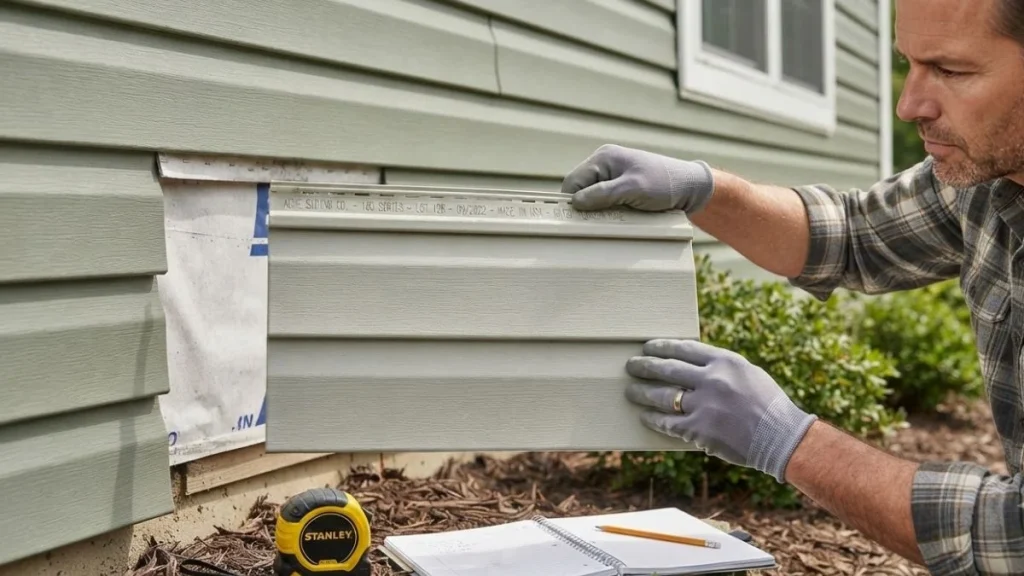
Before you can find a match, you need to know exactly what you’re working with. Most homeowners skip this step and go straight to the store, which almost always leads to wasted trips and wrong purchases.
Check for Manufacturer Markings on the Back of the Panel
This is your first and most reliable move. Most vinyl siding panels have the manufacturer’s name, product line, and color code stamped or printed on the back side. You just need to access it.
To do this safely, carefully remove one damaged or end panel by lifting the locking channel on the panel above it and sliding it free. Once you have it off, flip it over and look for any text or codes printed on the back surface. You’re looking for:
- Brand name (e.g., Alside, Mastic, Royal, CertainTeed)
- Product or series name (e.g., “Ultramax,” “Quest,” “Charter Oak”)
- Color name or code
- Panel width and profile type
Take a photo of everything before putting the panel back. This information is the foundation of your entire search.
Look for Original Installation Records or Receipts
If the home is relatively new or you purchased it recently, there may be existing documentation that identifies the siding. Check with the builder if the home is under ten years old. If you bought the house, the previous owner may have left receipts or warranty cards in a home folder.
You can also contact your local building department and pull the permit records from when the siding was installed. Permit applications sometimes include product specifications. HOA records are another overlooked source — some associations keep documentation of approved exterior materials for the neighborhood.
Use a Siding Sample for In-Store Comparison
If the panel markings are unreadable or missing, remove a clean section of siding and bring it physically to a siding supplier or large home improvement store. A physical sample is far more useful than a photo when comparing profiles and textures side by side. Make sure to take the sample in a size large enough to show the full panel exposure and texture clearly.
Find the Manufacturer and Product Line
Once you have the panel information in hand, the next step is tracking down the source.
Research Common Vinyl Siding Brands
The major players in the vinyl siding market include CertainTeed, Alside, Mastic (now part of Ply Gem), Royal Building Products, and Gentek. Each of these manufacturers maintains product archives and customer service lines specifically to help homeowners and contractors find discontinued or current product matches.
Start by visiting the manufacturer’s website and navigating to their product or color selector. Many brands have online tools that allow you to search by color name, product line, or even a style code. If you can’t find what you need online, the next step is a direct call.
Contact the Manufacturer Directly
Don’t underestimate how helpful a manufacturer’s customer service line can be. Call with your panel markings, photos, and measurements ready. Explain that you’re doing a repair match and ask specifically:
- Is this product still in production?
- If discontinued, what is the closest current equivalent?
- Can you send color swatches or samples for comparison?
Most major manufacturers have dedicated support for exactly this situation. They deal with it constantly and often have internal records of discontinued products and their modern replacements.
Work With a Local Siding Supplier or Distributor
Big-box stores like Home Depot and Lowe’s carry a limited selection of siding products. A local siding distributor or specialty building supply company will carry a much broader range — including products not available in retail stores — and may have access to discontinued inventory or old stock sitting in a warehouse.
Building a relationship with a local supplier is genuinely useful here. Experienced staff at these locations have seen hundreds of matching projects and can often eyeball a close match faster than any online search.
Recommended: How to Identify Vinyl Siding Manufacturer
Match the Color, Profile, and Texture
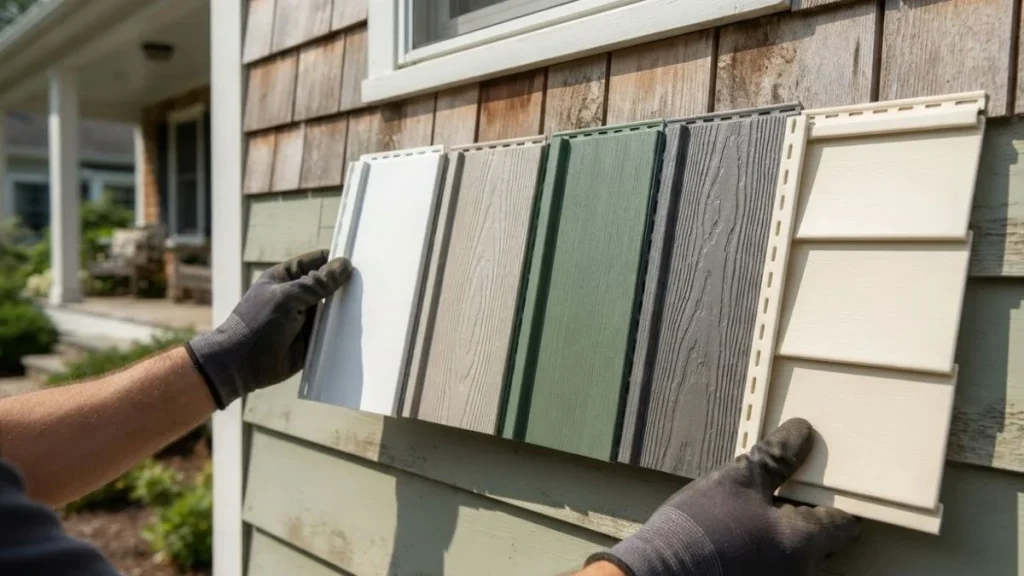
Finding the manufacturer is only half the battle. Getting the actual match right requires careful comparison across three dimensions.
How to Match Vinyl Siding Color Accurately
Always compare color samples outside in natural daylight, not under store fluorescent lighting. Colors look dramatically different indoors, and what appears to be a close match under artificial light can look completely off once installed on the exterior.
When comparing, hold the new sample directly against an existing panel on the wall — not just next to a piece you brought inside. The angle of natural light hitting an installed panel is part of how the color reads visually.
If your existing siding has faded significantly, you may want to go one shade darker in the new product. Over the next year or two, the new panels will weather and the gap will narrow. Some contractors recommend installing new panels in a less visible area first and letting them weather for a season before deciding on the match quality.
Matching the Siding Profile
Measure the exposure width of your existing panels — this is the portion of each panel that’s visible after installation. Common exposures run from 3.5 inches to 5 inches. Even a quarter-inch difference will create a noticeable horizontal line mismatch across a large wall.
Also check the overall panel width, the locking channel style, and the thickness. Thicker panels (around .044 to .046 inches) have a different visual weight than thinner ones, and mixing them on the same wall can look inconsistent.
Matching Surface Texture
Run your hand across your existing siding and note the texture — smooth, light woodgrain, or deep woodgrain. Then do the same with any potential replacement panels. Texture affects how light bounces off the surface, so even panels in the same color family will look mismatched if one is smooth and the other is embossed.
Always do a physical side-by-side comparison before ordering in bulk.
What to Do When You Can’t Find an Exact Match

Sometimes, despite your best efforts, an exact match simply isn’t available. Here’s how to handle it without resorting to a full exterior replacement.
Try Salvage Yards and Leftover Stock Sources
Before giving up on a close match, explore these sources:
- Habitat for Humanity ReStores — Often carry leftover building materials including siding
- eBay and Facebook Marketplace — Homeowners frequently sell unused siding from old renovation projects
- Local contractor surplus — Siding contractors often have leftover stock from previous jobs and may sell or donate it
It’s worth spending a week searching these channels before moving to a workaround solution. The exact product occasionally shows up in unexpected places.
Strategic Panel Placement to Hide Mismatches
If you have a close but not perfect match, placement strategy can minimize how noticeable the difference is. Replace siding on the rear or side walls of the home using the new panels, then relocate original matching panels from those areas to the front-facing wall where visual consistency matters most.
This approach is widely used by experienced siding contractors and works well when the color difference is minor.
Consider a Full Section or Full-Side Replacement
When the mismatch is significant and the affected area is prominent, replacing an entire wall section or full side of the house may be the most cost-effective long-term solution. This eliminates the patchwork appearance and gives you a clean, consistent look. Get a contractor’s assessment before making this call — sometimes what looks like a major project is simpler than expected.
Painting Vinyl Siding as a Last Resort
If nothing else works, painting is an option. Products like Sherwin-Williams VinylSafe or specialty elastomeric paints are formulated to bond with vinyl and flex with temperature changes. Keep in mind that painting requires ongoing maintenance and voids any remaining product warranty. It’s a last resort, not a first choice — but it’s better than living with a visually jarring mismatch.
How to Work With a Contractor to Find Matching Vinyl Siding

If the DIY search isn’t producing results, a professional siding contractor can often open doors that aren’t available to the average homeowner. Contractors have established relationships with distributors, access to trade accounts, and experience identifying products by sight.
Before hiring anyone, share all the information you’ve gathered — panel markings, photos, measurements — and ask specifically whether they’ve handled siding matching projects before. Ask how they plan to source the material and what their backup plan is if the original product can’t be found. Get the matching approach confirmed in writing before any work begins.
Tips to Avoid Siding Matching Problems in the Future
The best time to prepare for a future siding repair is right after your current one. A few simple steps now will save you significant time and money down the road:
- Save at least 5 to 10 leftover panels from any installation or repair project
- Write down your siding brand, product line, color name, and color code and store it somewhere accessible
- Take close-up photos of your siding in natural daylight and keep them with your home improvement records
Conclusion
Finding matching vinyl siding takes more effort than most homeowners expect, but it’s far from impossible. Start by identifying exactly what you have — check the back of a panel, dig up any installation records, and bring a physical sample to a supplier. Once you know the brand and product line, work directly with the manufacturer and local distributors before turning to broader sources.
If an exact match isn’t available, don’t panic. Strategic placement, salvage sourcing, and section replacement are all legitimate solutions that experienced contractors use regularly. And if all else fails, quality vinyl paint can bridge the gap.
The key is to be methodical. Each step in this guide builds on the last, and taking it one stage at a time will get you to a result you can live with — and a home exterior that looks clean, consistent, and well-maintained.