

Is your garage door belt off track? This common problem can stop your garage door from opening or closing smoothly, causing frustration and even safety risks.
You might be wondering how serious it is or how to fix it quickly without spending a fortune. You’ll discover why your belt goes off track, the signs to watch for, and simple steps you can take to get your garage door running smoothly again.
Common Causes Of Belt Derailment
The garage door belt is a crucial part of the door’s lifting system. It moves the door smoothly and quietly. When the belt comes off the track, the door may stop working or make loud noises.
Worn Or Damaged Belt
A belt that is worn or damaged loses its grip and strength. Over time, the belt material can crack, fray, or stretch. This wear causes the belt to slip off the track more easily. Signs of a worn belt include:
- Visible cracks or tears on the belt surface
- Frayed edges or fibers coming loose
- Unusual noises like squeaking or grinding
- Reduced tension or slack in the belt
Misaligned Tracks
Garage door tracks guide the belt and door as they move. If tracks become misaligned, the belt can jump off the rollers. Tracks may shift due to:
- Loose bolts or screws
- Accidental bumps or impacts
- Wear and tear over time
Misaligned tracks cause uneven movement and extra stress on the belt. This stress increases the risk of derailment. Check track alignment by observing the belt path. It should run straight without bending or twisting.
Loose Hardware
Hardware like bolts, nuts, and brackets secure the garage door components. Loose hardware allows movement that misguides the belt. This looseness causes the belt to slip or derail. Common loose parts include:
- Track mounting bolts
- Belt tensioner screws
- Pulleys and rollers attachments
Loose hardware can also cause rattling noises and uneven belt tension. It may lead to faster belt wear or damage to other parts. Regularly check hardware tightness with a wrench or screwdriver.
Obstructions In Track
Foreign objects or debris in the track block the belt’s movement. Dirt, leaves, small stones, or even rust buildup can cause the belt to come off track. These obstructions create friction and stop smooth operation. Common obstructions include:
- Dust and dirt buildup
- Small twigs or leaves
- Loose paint chips or rust flakes
- Tools or items accidentally left in the track
Remove obstructions by cleaning the tracks regularly. Use a soft brush or cloth to wipe away dirt. Avoid using harsh tools that could damage the track surface.
Signs Of A Belt Off Track
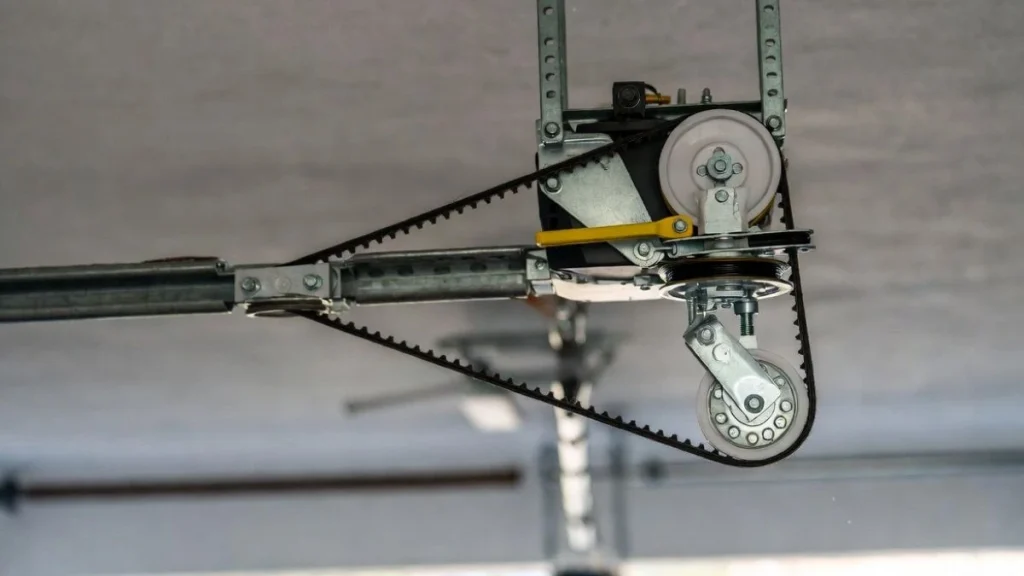
A garage door belt off track can cause serious problems with your door’s operation. Recognizing the signs early helps prevent bigger damage and costly repairs. Knowing the common signs of a belt off track can keep your garage door working smoothly and safely.
Unusual Noises
One of the first signs of a belt off track is strange sounds coming from your garage door opener. These noises often signal that the belt is not running smoothly along the track.
- Squeaking or Squealing: A high-pitched noise may occur when the belt rubs against the pulley or track incorrectly.
- Grinding Sounds: This harsh noise can mean the belt is slipping or caught on a component.
- Thumping or Banging: Irregular impacts may happen if the belt jumps off the track and hits other parts.
Visible Belt Misplacement
One clear sign of a belt off track is seeing the belt out of its proper path. This usually happens along the pulleys or the track where the belt runs.
Look for these visible signs:
- Belt Slipping Out: The belt may hang loose or come off the pulley edges.
- Twisted or Twined Belt: The belt might look twisted or bunched up instead of flat and tight.
- Frayed or Damaged Areas: Fraying or worn spots often appear where the belt rubs wrong parts.
Check the belt position regularly. Use a flashlight to see inside the garage door opener housing. Misplacement indicates the belt needs adjustment or replacement. Leaving it like this causes more damage quickly and can stop your door from working altogether.
Step-by-step Fix For Belt Realignment
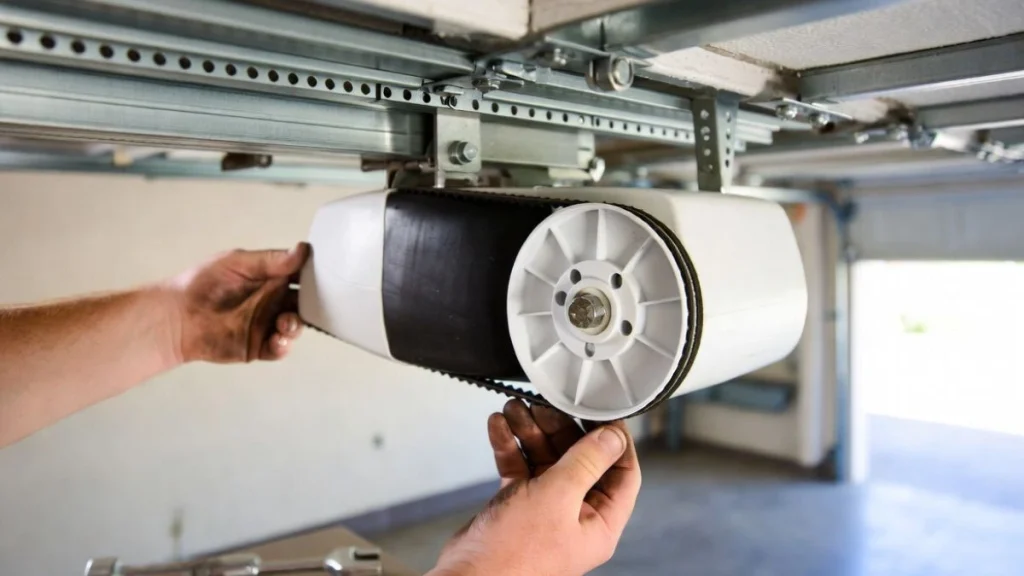
When a garage door belt goes off track, it stops the door from working smoothly. Fixing the belt realignment can get your door running again quickly.
Disconnect Power
Before starting any work, disconnect the power to the garage door opener. This prevents accidents and protects you from electric shock. Follow these simple steps:
- Locate the main power switch for the garage door opener.
- Turn off the switch or unplug the opener from the electrical outlet.
- Double-check to make sure the opener is not receiving power by trying to open the door using the remote or wall button.
Keeping the power off ensures safety while you work on the belt. Remember, even if the door is not moving, the motor can start unexpectedly if power is on.
Inspect Belt And Tracks
Next, carefully inspect the belt and tracks for any damage or misalignment. Look for signs that the belt slipped off or the tracks bent.
Check these points:
- Belt condition: Look for cracks, fraying, or looseness.
- Track alignment: Ensure both tracks run straight and parallel.
- Pulleys: Check if pulleys spin freely and are not damaged.
- Rollers: Verify rollers fit well inside tracks without wobbling.
Use a flashlight for better visibility inside the tracks. If you find any worn parts, consider replacing them to avoid future problems.
Realign Belt On Pulleys
Now, realign the belt on the pulleys carefully. The belt must sit correctly to operate smoothly.
Follow this process:
- Loosen the tension bolt on the belt tensioner to release belt tension.
- Guide the belt back onto the pulleys, making sure it fits snugly in the grooves.
- Check that the belt is not twisted or folded anywhere.
- Tighten the tension bolt slightly to hold the belt in place but still allow adjustment.
Tighten Hardware
After realigning the belt, tighten all hardware related to the belt and tracks. Loose bolts or nuts can cause the belt to slip off again.
Steps to tighten hardware:
- Use a wrench or socket set to tighten bolts on the belt tensioner.
- Secure brackets that hold the tracks firmly to the wall or ceiling.
- Check and tighten bolts on pulleys and rollers.
- Make sure the belt is under proper tension — not too loose or too tight.
Proper tension is important. A belt too tight can wear out quickly, while a loose belt may jump off the pulleys.
Test Door Operation
Finally, test the door operation before finishing the job. Reconnect power to the garage door opener and observe the door closely.
Steps to test:
- Turn on the power or plug in the opener.
- Use the remote or wall button to open and close the door slowly.
- Watch the belt movement and listen for unusual noises.
- Stop the operation immediately if the belt slips or the door moves unevenly.
The door should move smoothly, and the belt should stay on the pulleys without slipping. If problems persist, repeat the realignment and tightening steps.
Preventing Future Belt Problems
Preventing future belt problems is key to keeping your garage door working smoothly. A belt off track can cause noise, damage, or even stop the door from opening. Taking simple steps can help avoid these issues and save money on repairs. Regular care and attention keep the belt strong and aligned.
Regular Maintenance Tips
Keeping the garage door belt in good shape needs regular checks and small fixes. Doing these tasks every few months helps spot problems early. Here are easy maintenance tips:
- Check belt tension: The belt should be tight but not too tight. Too loose or tight belts wear out fast.
- Inspect for wear: Look for cracks, frays, or missing teeth on the belt.
- Clean tracks: Remove dirt and debris from the tracks to keep the belt on track.
- Tighten bolts and screws: Loose parts can cause misalignment or noise.
- Test door balance: Disconnect the opener and move the door by hand. It should move smoothly.
Use this simple checklist every 3-6 months:
| Task | Frequency | Why it matters |
| Check belt tension | Every 3 months | Prevents slipping or snapping |
| Inspect belt condition | Every 3 months | Detects early wear and tear |
| Clean tracks | Every 6 months | Keeps belt running smoothly |
| Tighten hardware | Every 6 months | Prevents misalignment |
| Test door balance | Every 6 months | Ensures smooth operation |
Proper Lubrication
Lubrication helps garage door parts work quietly and last longer. The belt itself usually does not need oil, but other parts do. Proper lubrication lowers friction and stops parts from wearing out fast.
Use a silicone-based lubricant or garage door lubricant. Avoid grease or oil that can attract dirt.
- Lubricate rollers: Rollers run along the tracks and need smooth motion.
- Lubricate hinges: Hinges connect door sections and help them bend easily.
- Lubricate tracks: Apply a light spray to keep the belt moving without sticking.
- Lubricate springs: Springs help lift the door and need regular care.
Professional Inspections
Some problems need expert eyes. A professional garage door technician finds hidden issues and fixes them safely. Schedule inspections once a year to keep the door and belt in top shape.
Professionals can:
- Check belt alignment and tension precisely.
- Inspect opener and electrical parts.
- Test safety features like sensors and auto-reverse.
- Replace worn belts or parts before failure.
- Provide advice on proper care and use.
Professional inspections save money by preventing costly repairs. They ensure your door works safely and lasts longer.
Related Read: Garage Door Not Closing Clicking Sound
Conclusion
A garage door belt off track can cause many problems. Fixing it quickly keeps your door working well. Check the belt and tracks for damage often. Small issues can turn into big repairs if ignored. Always keep your garage door clean and well-lubricated.
This helps parts move smoothly and last longer. If you notice unusual sounds or jerky movements, act fast. Staying on top of maintenance saves time and money. A properly working garage door keeps your home safe and convenient. Don’t let a simple belt problem slow you down.