
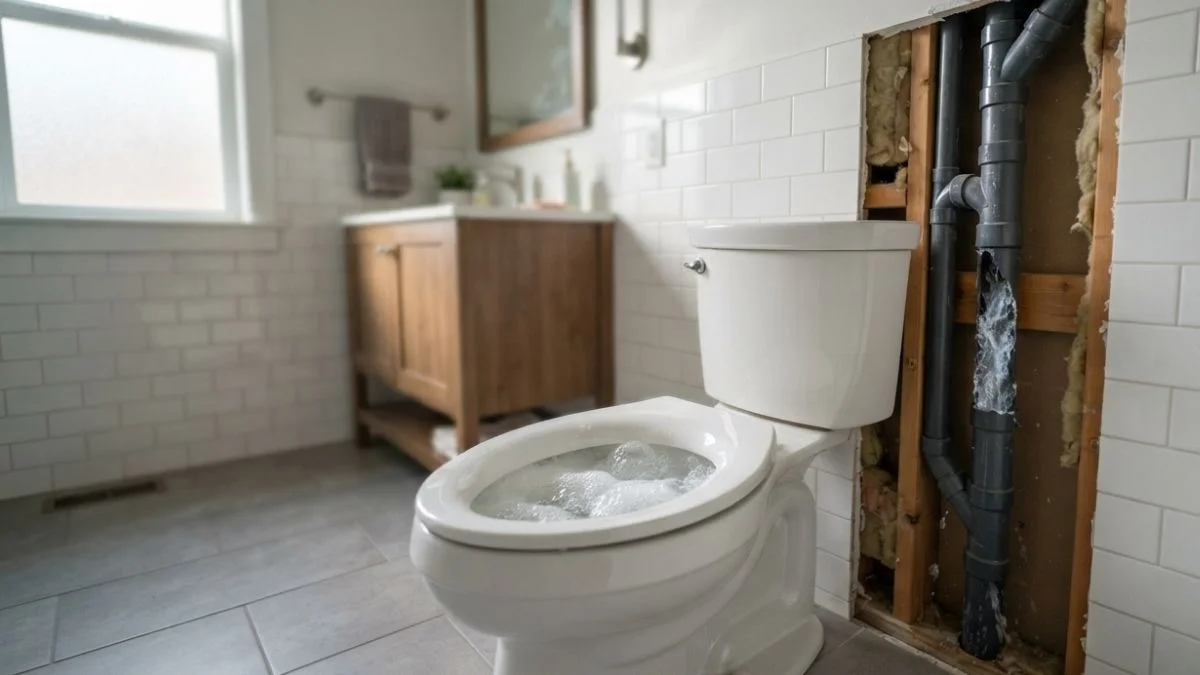
When a downstairs toilet bubbles when upstairs is flushed, it is not a minor quirk — it is a direct signal that your home’s drain or vent system is under stress.
The bubbling means displaced air is being forced through the nearest available water seal, which is your downstairs toilet’s P-trap, and that points to a blockage, a venting failure, or a septic system under strain.
This article tells you exactly what is causing it, how serious it is, and whether you need a plumber or can fix it yourself.
How Your Plumbing Vent System Works
Every drain line in your home needs two things to work: a path for water to flow down and a path for air to flow in. Without air, falling water creates negative pressure — a partial vacuum — that pulls air from wherever it can find it. In a multi-story home, that source is often the nearest water-filled trap.
What a Vent Stack Actually Does
The vent stack is a vertical pipe, typically 3–4 inches in diameter, that runs from your drain lines up through the roof. Its job is to equalize air pressure in the drainage system so water flows freely and trap seals stay intact. Think of it like a straw: cover the top with your finger and liquid clings inside. Leave it open and liquid falls cleanly. Your vent stack is the open top of that straw.
Why Multi-Story Homes Are More Vulnerable
In a two-story home, the waste stack — the main vertical drain pipe — carries water from upstairs fixtures down to the sewer line. When an upstairs toilet flushes, a large volume of water drops fast. That sudden movement creates a pressure wave in the drain line below. If the vent system cannot supply replacement air quickly enough, the system pulls air from the closest available source.
Here’s the problem. The downstairs toilet’s P-trap — the curved pipe that holds a small amount of water to block sewer gas — sits directly in the path of that pressure wave. Negative pressure siphons air through the trap water, producing the bubbling or gurgling you see in the bowl. This is drain line negative pressure in action, and it confirms the vent system is not doing its job.
Four Root Causes of Toilet Bubbling

Blocked Vent Pipes (Most Common)
A blocked vent pipe is the leading cause of a downstairs toilet bubbling after an upstairs flush. Debris accumulates at the roof opening — leaves, bird nests, dead animals, and ice in cold climates all create partial or full obstructions. When the vent is blocked, the drainage system cannot pull in replacement air from above, so it pulls from below, siphoning air through the nearest P-trap. The result is visible bubbling or gurgling in the toilet bowl. Plumbing vent blockage symptoms almost always show up first in the lowest fixtures in the house.
Main Sewer Line or Drain Blockage
A partial sewer line blockage creates a different pressure problem. Instead of air being pulled through traps, water and waste back up against the obstruction and push air ahead of them into branch drain lines. That displaced air escapes through the lowest available opening — typically the downstairs toilet. If you notice water backing up in the lower toilet or gurgling at multiple drains simultaneously, a sewer line blockage is the more likely culprit than a simple vent issue.
Septic Tank Backup
Homes on septic systems face an additional risk. When a septic tank fills beyond its working capacity, incoming waste has nowhere to go. The system pressurizes, and gurgling at multiple fixtures — including toilets on different floors — is one of the earliest warning signs. Symptoms typically worsen after periods of heavy water use, such as back-to-back showers or running laundry and dishwasher simultaneously.
Improper Vent Line Pitch or Installation
The International Plumbing Code requires vent pipes to slope upward toward the roof so condensation drains back into the waste line rather than pooling in the vent. In older homes built before modern IPC standards, vent lines sometimes run flat or even sag over time. A sagging vent traps water, creates an air pocket, and partially blocks airflow — producing the same negative pressure conditions as a physical obstruction. This cause is easy to miss because the pipe looks intact from the outside.
How to Diagnose Your Specific Problem
Pinpointing the cause takes about 10 minutes and requires no tools. The pattern of which fixtures bubble, and under what conditions, tells you almost everything you need to know.
Step 1: Map Which Fixtures Are Affected
Have someone flush the upstairs toilet while you watch the downstairs toilet bowl closely. Also check the downstairs sink and tub drains at the same time. If only the toilet bubbles, the issue is likely isolated to a shared vent line or branch drain. If the sink and tub gurgle too, the problem is further upstream — either the main waste stack, the sewer line, or the septic tank.
Step 2: Test Different Water Sources
Flush the upstairs toilet, then separately run the upstairs shower and sink for 30 seconds each. Note whether all three trigger the downstairs bubbling or only the toilet. A toilet flush moves 1.28–1.6 gallons at once — a much faster pressure event than a running tap. If only the toilet triggers bubbling, a vent restriction is the most probable cause. If the shower and sink also cause air escaping from the toilet bowl, the drain line itself is likely partially blocked.
Step 3: Check the Roof Vent
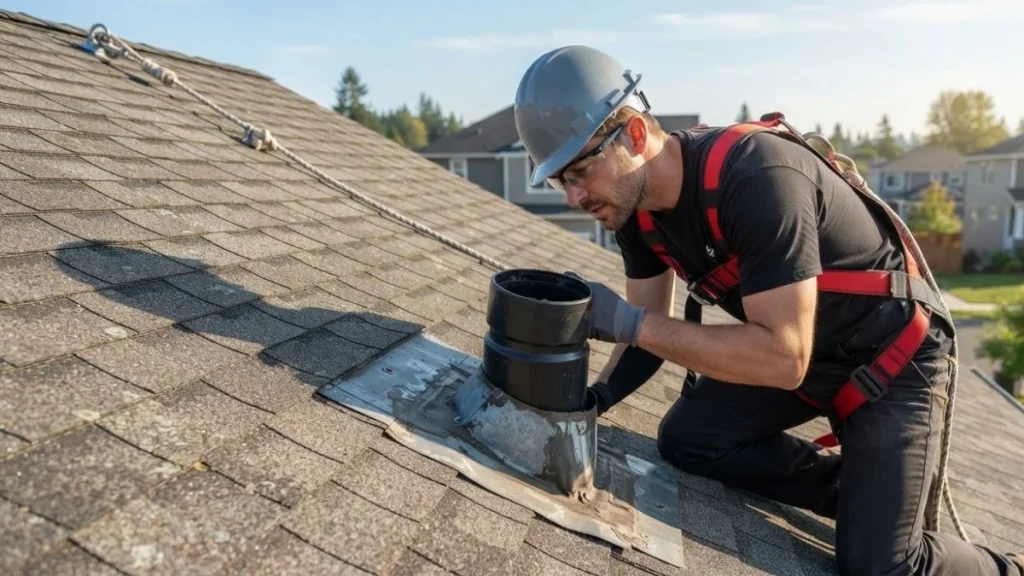
Look at the vent stack opening from the ground or, if safely accessible, from the roof. Visible debris, a bird’s nest, or ice buildup confirms a blocked vent as the cause. In winter, frost closing is common in northern climates and can appear and disappear with temperature changes, making the symptom intermittent.
Step 4: Confirm Your Sewer Type
Check whether your home connects to a municipal sewer line or a private septic tank. If you are on septic and cannot remember the last pump-out — recommended every 3–5 years according to EPA guidelines — a full or failing tank moves to the top of your suspect list, especially if the toilet bubbling with septic tank symptoms worsens after heavy household water use.
Septic vs. Municipal Sewer: Key Differences That Change Your Next Step
The cause of your downstairs toilet bubbling and the correct fix depend heavily on which waste system your home uses. These two systems fail in distinct ways, and treating one like the other wastes time and money.
How a Full Septic Tank Behaves
A septic tank fills gradually over months or years, not overnight. When it reaches capacity, the outlet side has no room to accept new waste, so incoming water and solids back pressure into the drain lines. The critical diagnostic detail: a full septic tank affects all drains relatively equally. You will notice toilet bubbling with septic tank symptoms at multiple fixtures — downstairs toilet, upstairs toilet, and sinks — often at the same time. The problem also worsens predictably after high-volume water use like laundry, dishwasher cycles, or multiple showers in a short window. According to EPA guidelines, septic tanks should be pumped every 3–5 years depending on household size. If you cannot confirm your last pump-out date, schedule one before pursuing other repairs.
How a Municipal Sewer Blockage Behaves
A sewer line blockage on a municipal system behaves differently. Blockages are typically localized — caused by grease buildup, root intrusion, or a collapsed pipe section — and their effects concentrate in the lowest fixtures first. Water backing up in the lower toilet, or gurgling only at ground-floor drains, points to a partial sewer line blockage rather than a system-wide pressure problem.
The important distinction here: the sewer line from your home to the municipal main is your legal responsibility. The city’s pipe begins at the property line. If a camera inspection confirms the blockage is in the city’s section, the repair authority and cost shift to the municipality — but you need documented evidence to make that case.
Fix It Yourself or Call a Plumber?
Not every cause of a bubbling downstairs toilet requires a professional. The decision comes down to where the problem is and whether you can safely access it.
What You Can Reasonably DIY
2 fixes are within reach for most homeowners:
- Clear the roof vent. If you can safely access your roof, removing visible debris from the vent stack opening costs nothing. A garden hose run down the vent pipe can flush out leaves, small nests, or ice. This resolves a large percentage of plumbing vent blockage symptoms in single-obstruction cases.
- Snake a branch drain. A 25-foot hand auger (available at hardware stores for $30–$60) can clear a partial blockage in a branch drain line. Run it through the toilet or a floor cleanout access point. This works when bubbling is isolated to one fixture and is not system-wide.
When to Call a Licensed Plumber
Call a plumber when the problem involves the main waste stack, the sewer line, or the septic system. These require camera inspection equipment, professional-grade augers, or hydro-jetting tools that are not practical for DIY use. Expect to pay $150–$400 for a drain snake service, $300–$600 for a camera inspection, and $1,000–$4,000 for hydro-jetting or sewer line repair, depending on location and access.
Emergency Warning Signs
Stop using your plumbing and call immediately if you notice any of these:
- Sewage smell inside the house
- Water or sewage backing up into a shower or tub
- Multiple fixtures gurgling or backing up simultaneously
- Soft or wet ground near your septic tank or sewer line
These symptoms indicate a full sewer line blockage or septic failure — conditions where continued use risks sewage entering your living space.
You Should Read Also: Air Bubbles in Toilet Tank Fill Valve
When to Stop Waiting and Call a Plumber
A downstairs toilet that bubbles when upstairs is flushed always has a mechanical cause — it does not resolve on its own, and waiting allows a partial blockage to become a full one. If you have cleared the roof vent, snaked the branch drain, and the gurgling persists, the problem is in the main sewer line or vent system and requires a camera inspection to diagnose accurately.
Contact a licensed plumber — find one certified through the National Association of Plumbing-Heating-Cooling Contractors at phccweb.org — and request a drain camera inspection as your starting point.