

If you’ve noticed water stains spreading across your garage ceiling — or worse, water actually dripping down — you already know that sinking feeling. Something is wrong, and you’re not sure where to start.
Here’s the truth: a leak in your garage ceiling is one of those problems that never fixes itself. What starts as a small stain can quietly turn into rotting wood, black mold, and damaged drywall if you ignore it long enough. The good news is that most garage ceiling leaks are very fixable — as long as you act quickly and find the real source.
This guide walks you through exactly how to do that. You’ll learn what causes garage ceiling leaks, how to track down the source, how to fix it, and how to make sure it doesn’t come back.
Why You Shouldn’t Ignore a Leak in Your Garage Ceiling
A small water stain might not look like a big deal. But what’s happening behind and above that stain usually tells a different story.
Water is one of the most destructive forces in a home — not because it hits hard, but because it works slowly and silently. Once moisture gets into your garage ceiling, it starts breaking things down from the inside.
Wood joists soften and weaken. Drywall swells and crumbles. Insulation soaks through and loses its ability to regulate temperature. And if any electrical wiring runs through that ceiling — which it often does — you’re now looking at a potential fire or shock hazard.
Mold is another serious concern. In the right conditions, mold can begin growing on wet materials within 24 to 48 hours. Once it takes hold, you’re no longer dealing with just a leak — you’ve got a mold remediation problem on your hands, which is significantly more expensive and disruptive to fix.
The cost difference between catching a leak early and letting it go is dramatic. A simple roof patch or pipe repair might cost you a few hundred dollars. Wait six months, and you could be replacing ceiling joists, drywall, insulation, and dealing with mold removal — easily running into several thousand dollars.
Common Causes of a Garage Ceiling Leak
Before you can fix anything, you need to understand what you’re actually dealing with. Garage ceiling leaks come from several different sources, and the fix depends entirely on identifying the right one.
Roof Damage Above the Garage
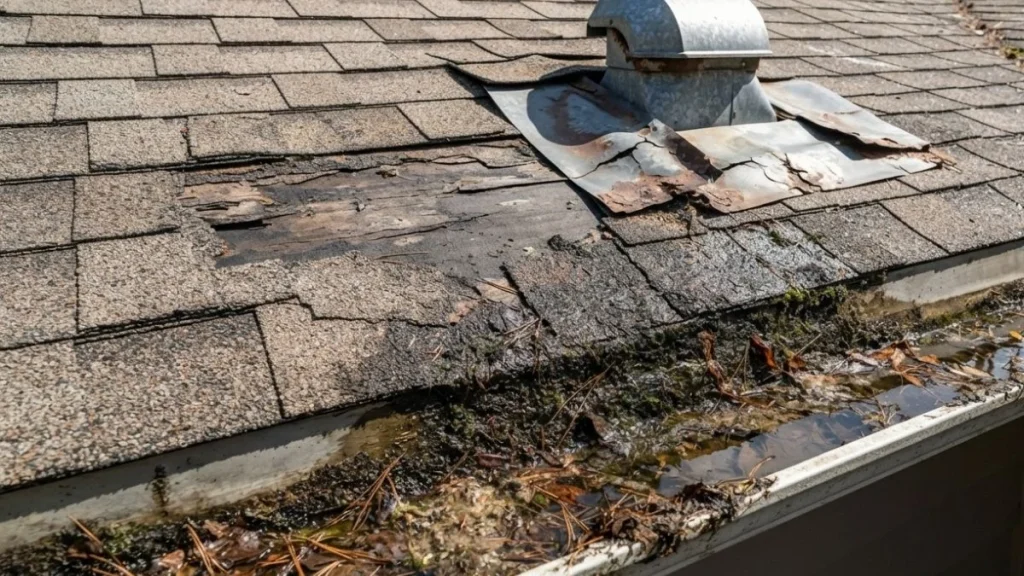
This is the most common cause, especially if your garage has a direct roof above it. Damaged or missing shingles leave the roof deck exposed to rain. Cracked or deteriorated flashing — the metal strips that seal around vents, chimneys, and roof edges — is another frequent culprit. Even a tiny gap in the flashing can let water pour in during a heavy rain.
Clogged gutters are also worth mentioning here. When gutters are blocked, water backs up and can overflow under the roof edge, eventually working its way into the ceiling below.
A Living Space or Bathroom Above the Garage
If there’s a room directly above your garage — a bedroom, bathroom, laundry room, or even just a hallway — the leak might have nothing to do with the roof at all. Plumbing leaks from supply lines, drain pipes, or appliances like washing machines and water heaters can drip through the floor structure and appear on your garage ceiling.
These leaks are sometimes tricky to catch because they can travel along beams and joists before dropping, making the wet spot appear several feet away from the actual source.
Condensation Buildup
Not every drip you see on a garage ceiling is a leak in the traditional sense. In climates with high humidity, or during winter when warm air meets a cold surface, condensation can build up on the underside of the ceiling and drip down — mimicking a roof or plumbing leak almost perfectly.
The key difference is timing. A true leak usually appears during or after rain, or following water usage in a room above. Condensation tends to appear during temperature swings, especially in the morning or evening.
Garage Ceiling Leaking After Rain
If your garage ceiling only leaks during or right after heavy rain, the source is almost certainly roof-related. Water may be entering through damaged shingles, a failed flashing seal, or a clogged gutter system. What makes these leaks tricky is that water rarely drops straight down — it flows along rafters and ceiling joists, sometimes traveling several feet before it finally drips through.
Look at the Ceiling Carefully
Start with what you can see. Water stains, bubbling or peeling paint, sagging drywall, and discoloration around seams are all visual clues. Take note of exactly where the damage is and how large the affected area is. This gives you a starting point for tracing the source upward.
Check the Attic or Roof Space
If your garage has an attic or open rafter space above the ceiling, that’s your next stop. On a dry day, go up there with a flashlight and look for:
- Dark or stained wood on rafters and sheathing
- Wet or compressed insulation
- Visible daylight coming through gaps in the roof
- Trails of dried mineral deposits left by water
Follow any water trails backward — they’ll often lead you to the entry point.
Inspect Plumbing and Appliances Above
If there’s a living space above the garage, run water in the sink, shower, or tub while someone watches the garage ceiling. Check washing machine hoses, water heater connections, and supply lines under sinks for any signs of slow dripping or corrosion.
Perform a Water Test
When you can’t find the source visually, use a garden hose to simulate rain. Have one person run water over a specific section of the roof for several minutes while another person watches the garage ceiling. Work in sections — don’t soak the whole roof at once. This targeted approach can pinpoint the entry point with surprising accuracy.
Bring In a Professional
If you’ve gone through these steps and still can’t identify the source, it’s time to call a professional. Roofing contractors and home inspectors have access to moisture meters and thermal imaging cameras that can detect hidden water behind walls and ceilings without any demolition. This is especially useful when the leak is intermittent or the damage is already hidden behind finished drywall.
How to Fix a Leak in Your Garage Ceiling
Once you’ve found the source, the repair process becomes much more straightforward. Here’s how to handle the most common scenarios.
Fixing a Roof Leak
For minor roof damage, a confident DIYer can handle most repairs.
Replacing damaged shingles involves carefully lifting the surrounding shingles, removing the nails from the damaged one, sliding in a new shingle, and re-nailing and resealing. Roofing cement or sealant applied around the edges adds extra protection.
Resealing flashing is often as simple as cleaning the area and applying a fresh bead of roofing caulk or roofing cement along any gaps or lifted edges. If the flashing itself is cracked or severely corroded, it should be replaced entirely.
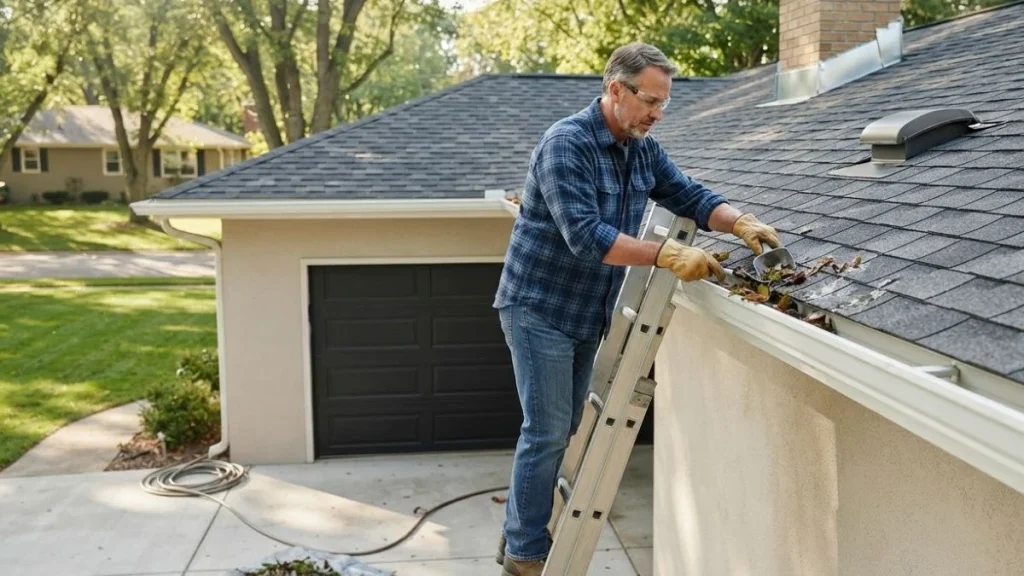
Clearing gutters takes less than an hour with a ladder and a pair of gloves. While you’re up there, check that downspouts are draining water well away from the foundation.
For larger roof damage — widespread shingle loss, major structural issues, or anything involving the roof deck — hiring a licensed roofing contractor is the safer and smarter call.
Fixing a Plumbing Leak Above the Garage
Minor plumbing fixes — tightening a loose fitting, replacing a worn washer, or sealing a small joint — are within DIY range. For anything involving burst pipes, corroded drain lines, or leaks inside walls, call a licensed plumber. Trying to patch a serious plumbing issue with tape or epoxy is a temporary fix at best and can make the underlying problem worse.
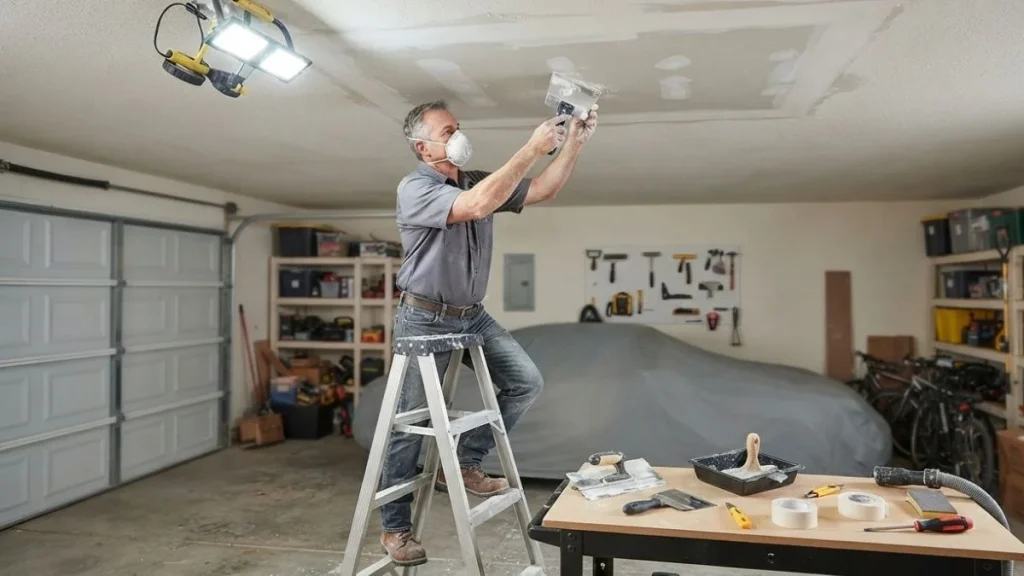
Repairing the Damaged Garage Ceiling
After fixing the source of the leak, you’ll need to address the ceiling itself. This is important — don’t just paint over the stain and call it done.
| Step | What to Do |
| Dry it out | Use fans and a dehumidifier until the area is completely dry — this can take several days |
| Remove damaged drywall | Cut out any sections that are soft, crumbling, or show signs of mold |
| Treat for mold | Apply a mold-killing primer or diluted bleach solution before patching |
| Patch and tape | Install new drywall, apply joint compound, tape the seams, and sand smooth |
| Prime and paint | Use a stain-blocking primer followed by mold-resistant ceiling paint |
Skipping the drying phase is the most common mistake homeowners make. Patching over wet drywall leads to mold growth behind the repair and the problem returning within weeks.
How to Prevent Future Garage Ceiling Leaks
Fixing the current leak is only half the job. Keeping it from happening again is just as important.
Roof Maintenance
Inspect your roof at least twice a year — once in spring and once in fall. Look for cracked, curling, or missing shingles, and check all flashing points around vents, skylights, and chimneys. Clean your gutters every season and make sure downspouts extend at least three to four feet away from your home’s foundation.
Trim back any tree branches that hang over the garage roof. Falling branches and accumulated leaf debris are among the leading causes of shingle damage and gutter blockages.
Improve Garage Ventilation
If condensation is your issue, the fix is improving airflow and reducing moisture levels inside the garage.
- Install a roof vent or exhaust fan to push moist air out
- Add a vapor barrier on the garage ceiling if one isn’t already there
- Use a dehumidifier during humid summer months
- Make sure your garage ceiling insulation is adequate and not compressed or damaged
Annual Plumbing Checks
If there’s a living space above your garage, add a quick plumbing inspection to your annual home maintenance routine. Check supply lines under every sink and behind every appliance. Look for early signs of corrosion — greenish buildup on copper pipes or rust stains on steel fittings. Installing a simple water leak detector near your washing machine or water heater can give you an early warning before a slow drip becomes a flood.
Related Read: Water Leaking from Garage Ceiling
Conclusion
A leak in your garage ceiling is stressful, but it’s not the end of the world — as long as you deal with it promptly. The key is to find the actual source before you start making repairs. Patching the ceiling without fixing what caused the leak is just delaying the inevitable.
Work through the steps: inspect the ceiling, check the attic, examine any plumbing above, and use a water test if needed. Once you’ve identified the source, fix it properly — whether that’s replacing a few shingles, resealing flashing, or tightening a plumbing connection. Then repair the ceiling correctly, using mold-resistant materials and making sure everything is fully dry first.
And once it’s fixed, don’t forget the prevention side. Regular roof inspections, clean gutters, proper ventilation, and annual plumbing checks are the simplest ways to make sure you’re not dealing with this same problem again next year.
When in doubt, call a professional. A qualified roofer or plumber can find what you can’t see — and the cost of a professional inspection is always less than the cost of widespread water damage.