
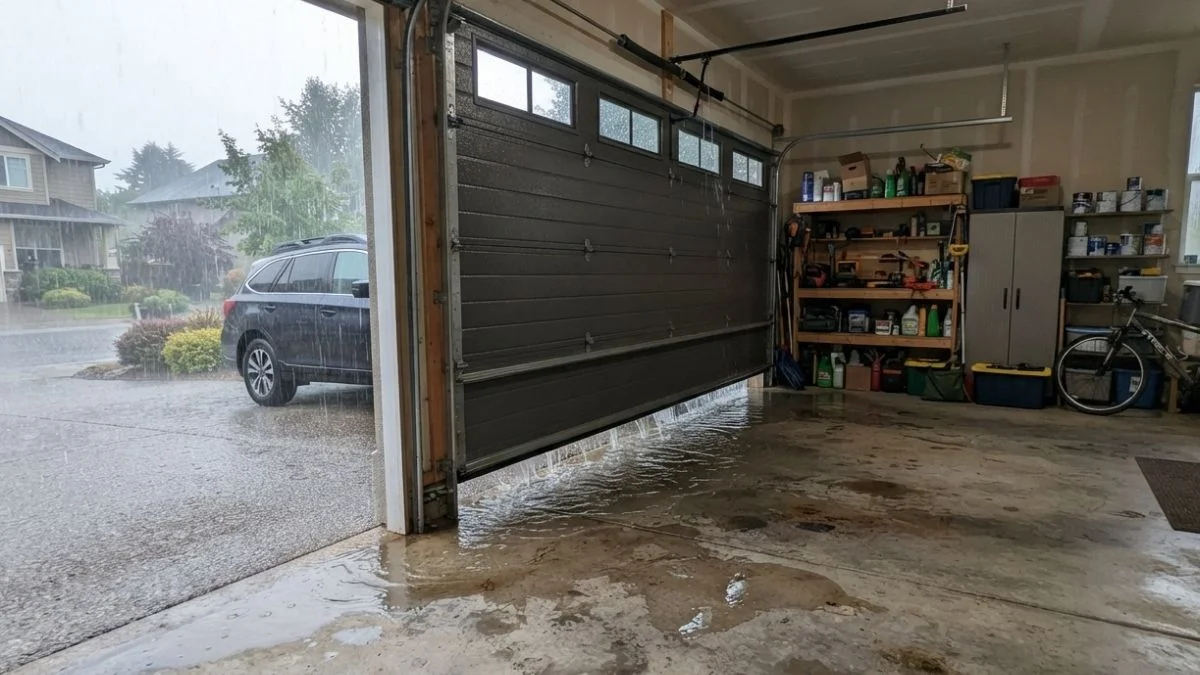
You walk into your garage after a heavy rainstorm and notice it — a puddle of water spreading across the floor, creeping toward your stored belongings, your tools, maybe even your car. It’s frustrating, and if you’ve dealt with it more than once, you already know it doesn’t fix itself.
Water getting under your garage door is one of the most common problems homeowners face, yet it’s also one of the most ignored — until real damage shows up. We’re talking warped flooring, rusted equipment, mold growth, and in serious cases, structural damage to your garage foundation.
The good news? Most causes are fixable. Many are even DIY-friendly and won’t cost you a fortune. In this guide, you’ll learn exactly why water is getting under your garage door, how to find the source, and the best ways to fix it — for good.
Why Does Water Get Under a Garage Door?
Before you spend money on a fix, it helps to understand why this happens in the first place. Garage doors are designed with basic weatherproofing in mind, but they’re not waterproof by default. Over time, wear, shifting ground, and weather conditions all work against the door’s ability to keep water out.
In many cases, it’s not just one problem — it’s a combination of factors hitting at the same time. A worn seal plus a slightly misaligned door plus heavy rainfall can turn a minor drip into a full-blown flood. That’s why understanding each cause separately is so important.
1. Worn or Damaged Bottom Seal
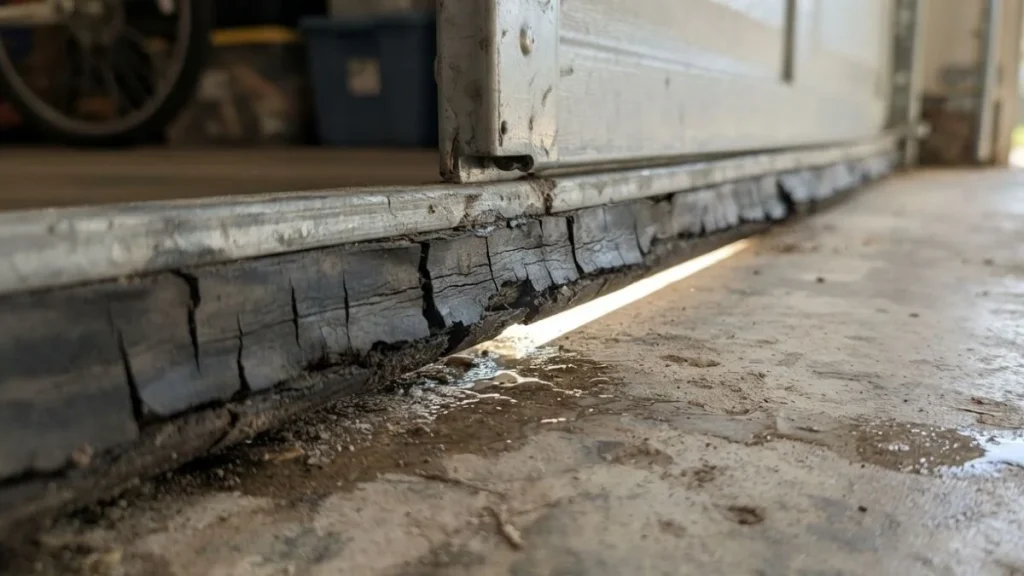
The bottom seal — that rubber strip running along the base of your garage door — is your first line of defense against water. It presses against the floor when the door closes, creating a tight barrier. But rubber doesn’t last forever. Exposure to sunlight, extreme cold, heavy use, and general aging causes it to crack, harden, or compress permanently.
Once the seal loses its flexibility, gaps form — even if the door looks fully closed. Water finds those gaps fast, especially during heavy rain or when water is flowing toward your garage from the driveway.
Signs your bottom seal is failing:
- Visible cracks or brittleness in the rubber
- Daylight visible under the closed door
- Water consistently entering along the door’s bottom edge
- The seal looks flat or uneven when the door is down
This is the most common cause of water intrusion, and thankfully, it’s also one of the easiest and cheapest fixes.
2. Missing or Deteriorated Weatherstripping
While the bottom seal handles the floor contact, weatherstripping seals the sides and top of the door frame. If this stripping is cracked, torn, or missing entirely, wind-driven rain can push water through those gaps — especially during storms.
Many homeowners replace the bottom seal but completely overlook the sides and top. If you’re still getting water after a new bottom seal, this is likely the culprit.
3. Improper Driveway Slope or Drainage
Your driveway’s slope plays a bigger role than most people realize. Ideally, driveways should slope away from the garage. When the grade is flat or tilted slightly inward, rainwater naturally flows straight toward the door rather than draining away.
This is common in older homes where the concrete has settled over time. It’s also something that new construction sometimes gets wrong. No matter how good your seal is, it can only hold back so much water when the entire driveway is channeling it toward your garage.
4. Cracked or Uneven Garage Floor
Concrete floors settle and crack over time. When cracks develop near the garage door threshold, they create a direct path for water to travel inward. Low spots in the floor also act like mini reservoirs that collect and hold water — making the problem look worse than it actually is.
This one is often mistaken for a door seal issue because the water appears right at the base of the door. But if your seal looks fine, check the floor carefully.
5. Clogged or Missing Driveway Drainage
Many driveways — especially those with a downward slope toward the garage — have a trench drain or channel drain installed near the entrance. This drain catches water before it reaches the door. When it gets clogged with leaves, dirt, and debris (which happens fast in fall and after storms), it stops working entirely.
If your garage floods specifically during heavy rain but the door seal looks fine, a clogged drain is often to blame.
6. Garage Door Not Closing Evenly
If your garage door tracks are misaligned or a panel is slightly bent, the door may not press evenly against the floor. One corner might lift by even half an inch — which is more than enough for water to pour through during a heavy downpour.
Check your door from the inside when it’s fully closed. If you see uneven light coming from any section along the bottom, the door isn’t sealing properly against the floor.
How to Tell Where the Water Is Actually Coming From
Jumping straight to a fix without knowing the exact source is a common mistake. You could replace your bottom seal and still end up with the same puddle the next time it rains. Spend 15 minutes diagnosing first — it saves time, money, and frustration.

The Garden Hose Test
This is the simplest and most reliable way to find where water is entering. Have someone run a garden hose along the top and sides of the exterior door frame while you watch from inside. Move the hose slowly from one side to the other, and note exactly where water starts coming through. This tells you whether the issue is the bottom seal, the side weatherstripping, or somewhere in the frame.
Condensation vs. Actual Water Intrusion
Not all garage floor moisture is from outside water. In humid climates, moisture in the air condenses on a cold concrete floor — especially in spring and fall. The water appears near the door simply because that area is coldest.
To tell the difference: tape a piece of plastic sheeting flat to the floor near the door and leave it overnight. If moisture appears under the plastic, it’s coming up through the concrete. If it’s on top, it’s condensation from the air — or actual water intrusion from outside.
Inspect the Bottom Seal and Weatherstripping
Close the garage door and inspect the seal from the inside with a flashlight. Look for visible gaps, areas where the rubber looks compressed or missing, or sections where light shows through. Run your hand along the bottom edge — you should feel consistent resistance. Any soft spots or gaps need attention.
How to Fix Water Coming Under Your Garage Door
Now for the part you’ve been waiting for. Here are the most effective fixes, ordered from simplest to most involved.
Replace the Garage Door Bottom Seal
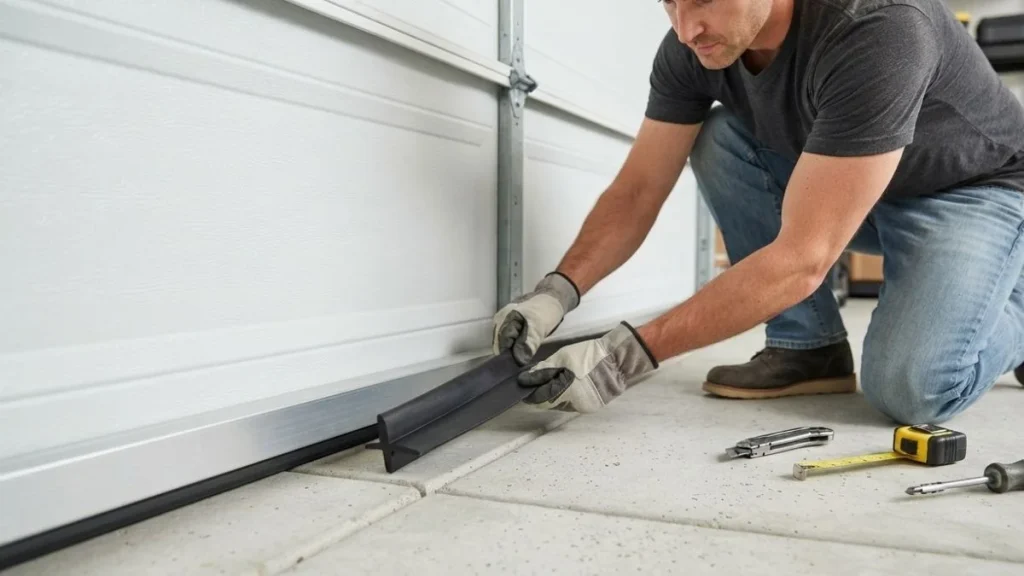
This is the first thing to try and solves the problem in the majority of cases. Bottom seals come in several types: T-style, bulb seal, beaded, and J-type. The right one depends on your door’s retainer channel, so check your door’s bottom rail before ordering.
What you’ll need: Flathead screwdriver, utility knife, measuring tape, replacement seal
How to do it:
- Open the door fully and slide out the old seal from the retainer channel
- Clean the channel with a damp cloth and let it dry
- Slide the new seal in from one end — a little dish soap helps it glide
- Trim any excess with a utility knife
- Close the door and check for even floor contact
The whole job takes under 30 minutes and costs between $10–$40 for the seal itself.
Install a Garage Door Threshold Seal
A threshold seal is a raised rubber strip that adheres to the floor right where the door closes — not the door itself. It creates a dam that water has to get over, which is very effective for driveways that slope toward the garage.
Most threshold seals use industrial adhesive and are completely DIY-friendly. For best results, combine a threshold seal with a fresh bottom seal. Together, they create a two-layer barrier that handles all but the most extreme flooding.
Replace or Repair Weatherstripping
Side and top weatherstripping is easy to replace. Peel off the old strip, clean the surface, and press the new adhesive-backed stripping into place. Vinyl and rubber options both work well — rubber lasts longer in cold climates, while vinyl handles heat better.
Improve Driveway Slope and Drainage
If water pools at your garage entrance due to grading issues, this requires a more involved solution. A concrete contractor can resurface and regrade the driveway apron to slope away from the garage. For a less expensive option, installing a channel drain at the base of the driveway entrance redirects water before it ever reaches the door.
Seal Garage Floor Cracks
Use a polyurethane caulk or epoxy crack filler to seal any cracks in the concrete floor near the door. Clean out the crack with a wire brush first, apply the filler, and let it cure fully before testing. For larger cracks or significant settling, consult a concrete contractor.
How Much Does It Cost to Fix Water Under a Garage Door?
| Fix | DIY Cost | Professional Cost |
| Bottom seal replacement | $10–$40 | $75–$150 |
| Threshold seal installation | $20–$60 | $100–$200 |
| Weatherstripping replacement | $15–$50 | $80–$175 |
| Driveway drainage installation | $200–$500 | $500–$2,000+ |
| Floor crack sealing | $10–$30 | $100–$300 |
| Door realignment | DIY possible | $75–$200 |
The earlier you act, the less you spend. A $25 bottom seal replacement today could save you thousands in water damage repairs — including mold remediation, flooring replacement, and damaged belongings.
How to Prevent Water from Getting Under Your Garage Door Long-Term
Fixing the problem once is great. Making sure it stays fixed is better. A little seasonal maintenance goes a long way toward keeping water out year after year.
Every spring and fall, make a habit of checking your bottom seal and weatherstripping for signs of wear. Look for cracks, hardening, or areas that no longer make full contact with the floor. Clear your driveway drain before the rainy season hits — leaves and debris build up fast and block drainage quietly.
Lubricate your door’s hinges, rollers, and tracks to ensure it closes evenly and maintains consistent floor contact. After extreme cold or heat spells, check the door’s alignment, since temperature changes cause materials to expand and contract in ways that can throw off the seal line.
When to call a professional:
- Water keeps coming back after multiple seal replacements
- You notice cracks in the garage foundation or walls near the door
- The driveway grade is clearly directing water inward
- Mold is already growing along the base of the walls
Read Also: How to Repair Water Damaged Interior Doors
Conclusion
Water under your garage door isn’t just an annoyance — it’s a warning sign that something in your door’s weatherproofing system needs attention. Whether it’s a worn-out bottom seal, a drainage problem on your driveway, or an uneven door that’s not making proper floor contact, the problem has a cause — and a fix.
Start with a thorough inspection before spending any money. The garden hose test and a quick look at your bottom seal and weatherstripping will tell you a lot. In most cases, a $20–$60 DIY repair is all it takes to stop the water for good.
Don’t wait for the next rainstorm to remind you. A small fix today keeps the real damage — mold, rust, and floor repairs — from showing up later.