
A sliding glass door leaking air can add hundreds of dollars to your annual heating and cooling bills — according to the U.S. Department of Energy, drafty doors and windows account for 25–30% of residential heating and cooling energy use.
The frustrating part is that most homeowners can’t tell whether the problem is a worn weatherstrip, a misaligned door panel, or a failed frame seal — so the draft just keeps getting worse while the thermostat keeps working harder.
This guide walks you through a simple, room-by-room diagnostic process and covers the exact low-cost fixes that solve the most common causes of air leaks — no professional required for most repairs.
Why Air Leaks Happen in Sliding Glass Doors
Most patio door air infiltration comes from one of four root causes. Knowing which one applies to your door determines exactly what you need to fix.
Worn Weatherstripping and Seals
Weatherstripping on a sliding glass door compresses and flexes thousands of times per year as the door opens and closes. Over 5–10 years, the material — typically foam, vinyl, or pile (a brush-like fiber strip) — flattens, cracks, or pulls away from the frame. When that happens, there is no longer a tight seal between the door panel and the frame, and conditioned air escapes freely.
Misaligned Door Frames and Bent Tracks
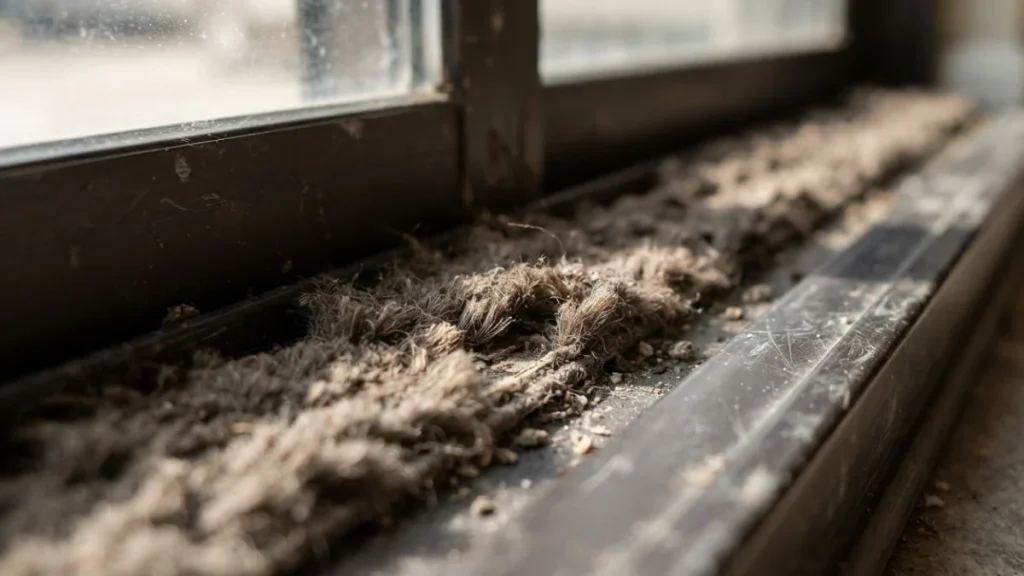
Sliding glass door frame misalignment is common in homes older than 10 years. Seasonal temperature swings cause framing lumber to expand and contract, gradually shifting the door frame out of square. A bent or debris-filled track worsens this by preventing the door panel from sitting flush against the weatherstrip at the fully closed position.
Deteriorating Rollers
The rollers at the bottom of the door panel control how tightly the panel presses against the frame seal. Worn rollers drop the door panel lower on the track, creating a gap at the top and sides. This is one of the most overlooked causes of persistent drafts.
Improper Installation or Foundation Settlement
A door installed out of plumb — or one affected by foundation settlement — will never seal reliably regardless of how new the weatherstripping is. The U.S. Department of Energy recommends that exterior doors meet air infiltration standards of no more than 0.5 cubic feet per minute per square foot, a threshold that a misaligned frame will consistently fail.
Diagnosing the Leak: Where It’s Coming From
Before buying any materials, spend 10 minutes locating the exact source of the air infiltration. Fixing the wrong spot wastes time and money.

Visual Inspection Checklist
Start with a close look at these 4 areas in good daylight:
- Weatherstripping condition — Press the pile or foam strip with your finger. It should spring back. If it stays compressed, is cracked, or is missing sections, it needs replacement.
- Frame gaps — Look for visible daylight between the door panel and the frame at any point when the door is fully closed.
- Roller alignment — Check whether the door panel sits evenly in the track. A door that wobbles or drags on one side has roller problems.
- Track debris — A dirt-packed track holds the door panel away from the frame seal, creating a direct air path.
The Candle or Smoke Test
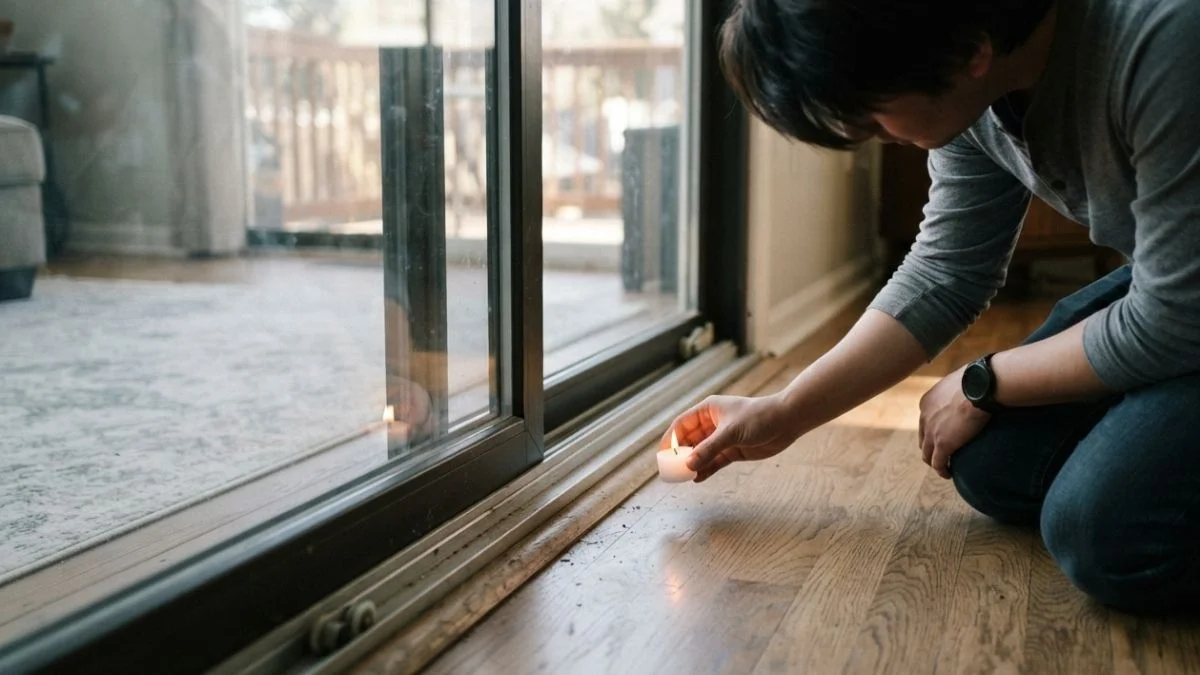
Close all windows and run any exhaust fans to depressurize the interior slightly. Hold a lit candle or incense stick 1–2 inches from the door perimeter and move it slowly around the full frame. Flickering toward the door means outdoor air is pushing in. Flickering away from the door means interior air is escaping. Mark each problem spot with painter’s tape.
Moisture vs. Air Leaks
Condensation on the glass is a thermal insulation issue — warm interior air hitting a cold glass surface — not necessarily a weather sealing failure. If you see water but feel no draft, the glass unit itself may have a broken seal rather than the frame.
Bottom vs. Side and Top Leaks
- Bottom leaks point to worn rollers, a bent track, or a missing door sweep.
- Side and top leaks indicate weatherstripping failure or sliding glass door frame misalignment.
- Corner leaks often mean the frame has shifted and no amount of weatherstrip replacement will fully solve the problem without a door frame adjustment first.
Common Leak Points on a Sliding Glass Door
| Location | Most Likely Cause |
|---|---|
| Bottom edge | Worn rollers, damaged door sweep |
| Latch side (vertical) | Compressed or missing weatherstripping |
| Top rail | Frame misalignment, bent header |
| Corner joints | Frame settlement, caulk failure |
| Center meeting rail | Worn pile weatherstrip |
Repair Solutions: From Quick Fixes to Full Replacement
Most sliding glass door air leaks fall into one of two repair categories: temporary measures you can apply in under an hour, and permanent fixes that solve the root cause.
Immediate Relief: Temporary Measures
Draft blockers — foam tubes or fabric rolls placed at the base of the door — stop bottom-edge air infiltration instantly and cost $5–$15. For side and top gaps, self-adhesive foam weatherstripping tape from brands like Frost King or M-D Building Products compresses into place in minutes and holds through one season.
Rope caulk is another fast option. It presses into visible frame gaps without bonding permanently, so renters can remove it at move-out. It costs roughly $4 per roll and handles gaps up to 1/4 inch.
Here’s the honest trade-off: temporary fixes reduce drafts but do not address the underlying cause. If your door has roller wear or frame misalignment, a foam strip will compress and fail within weeks.
Lasting Repairs: Permanent Fixes
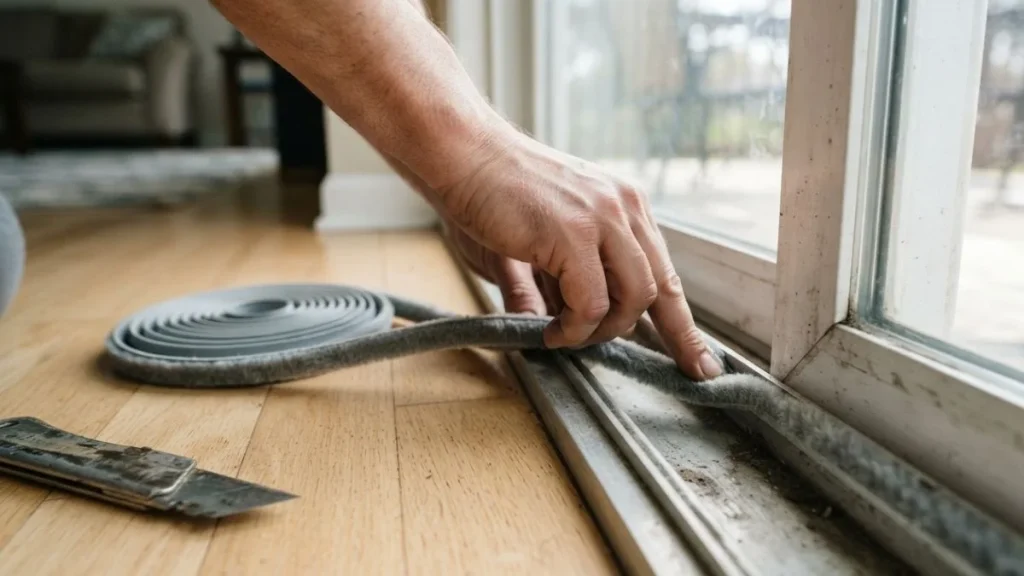
Weatherstripping replacement is the highest-impact permanent repair for most doors. For the stationary panel, use adhesive-backed pile weatherstrip (available at Home Depot or Lowe.s). For the moving panel, use a kerf-in pile strip that slides into the door frame channel — this holds far better than adhesive alone.
Roller adjustment or replacement involves removing the door panel from the track (lift straight up, tilt bottom outward) and accessing the roller adjustment screws on the bottom edge. Turn the screws clockwise to raise the panel and restore contact with the frame seal. Replacement rollers for most standard doors cost $8–$20 per pair.
Track cleaning and door frame adjustment should happen before any weatherstrip installation. Clean the track with a stiff brush and isopropyl alcohol, then check the frame with a carpenter’s level. If the frame is out of plumb by more than 1/4 inch, adjust the door’s threshold screws or add shims behind the frame jamb before resealing.
| Repair Type | DIY Cost | Time Required | Longevity |
|---|---|---|---|
| Draft blocker | $5–$15 | 5 minutes | 1 season |
| Rope caulk | $4–$8 | 15 minutes | 1 season |
| Foam weatherstrip tape | $8–$15 | 30 minutes | 1–2 seasons |
| Pile weatherstrip replacement | $15–$40 | 1–2 hours | 5–10 years |
| Roller adjustment | $0–$20 | 1 hour | 3–7 years |
| Professional frame realignment | $150–$400 | Professional | 10+ years |
Seasonal Maintenance Routine
Pre-winter inspection (October): Check all weatherstripping for compression loss, clean the track thoroughly, and apply a silicone-based lubricant — not WD-40, which attracts dirt — to the track and rollers.
Quarterly track cleaning: Pull debris from the track channel with a vacuum and wipe it down with a damp cloth. A clean track keeps the door panel seated flush against the weather sealing surfaces year-round.
Material-specific care:
- Vinyl frames are low-maintenance but crack in sustained sub-zero temperatures — inspect caulk joints annually.
- Aluminum frames conduct cold readily, making thermal insulation at the frame edges critical — use foam backer rod behind exterior caulk to reduce conductive heat loss.
When DIY Isn’t Enough
Most sliding glass door air leaks respond to DIY repairs. But some problems go beyond weatherstripping and roller adjustments — and attempting to fix them yourself can make the damage worse.
Signs of Structural Frame Damage
Stop and call a professional if you observe any of these:
- The door frame has visible warping, rot, or water-stained wood along the sill or jamb
- The frame gap is uneven — wider at one corner than the other — suggesting foundation movement rather than simple settling
- The door panel no longer closes fully or requires force to latch, even after roller adjustment
- Caulk around the exterior frame is cracked in multiple places and pulling away from the wall surface, indicating the rough opening itself has shifted
These are signs of sliding glass door frame misalignment at a structural level, not a surface-level weather sealing issue.
Professional Adjustment: What It Costs
A door and window specialist can realign a frame, re-shim the rough opening, and reinstall weatherstripping in 2–4 hours. Typical costs run $150–$300 for labor, plus materials. Companies like Renewal by Andersen and local window and door contractors both offer this service. Get at least 2 quotes before committing.
Full Door Replacement: When It’s the Only Option
A full sliding glass door replacement becomes necessary when the frame is rotted, the glass unit has a failed seal causing persistent fogging, or the door is more than 20–25 years old and no longer meets current energy efficiency standards. Expect to pay $2,000–$5,000 installed for a quality replacement unit from manufacturers like Pella, Andersen, or JELD-WEN.
The honest rule: if you have completed roller adjustment, replaced the weatherstripping, and corrected the track alignment — and still feel measurable air infiltration — the problem is structural and requires professional assessment.
Read Also: How to Seal a Sliding Glass Door
Quick Answers to Common Questions
Why Does My Sliding Glass Door Leak Air at the Bottom but Not the Sides?
A bottom-only leak almost always points to roller wear or a damaged door sweep rather than a weatherstripping problem. As rollers degrade, the door panel drops slightly on the track, creating a gap between the bottom rail and the threshold seal while leaving the side seals relatively intact. Adjusting the roller height screws on the bottom edge of the door panel — clockwise raises the panel — often eliminates the draft entirely without replacing any sealing material. If adjustment doesn’t close the gap, a replacement door sweep costs $10–$25 and installs with a screwdriver.
What Is the Most Common Cause of Air Leaks in Sliding Glass Doors?
Worn pile weatherstripping on the meeting rail — the vertical edge where the moving panel meets the stationary panel — is the single most common cause of patio door air infiltration. This strip takes direct contact pressure every time the door opens and closes, flattening faster than any other seal on the door. Most hardware stores stock replacement pile weatherstrip in standard widths, and the repair takes under 90 minutes with basic tools.
How Much Does Weatherstripping Replacement Typically Cost?
DIY weatherstripping replacement costs $15–$40 in materials for a standard sliding glass door, depending on the seal type and door width. Pile weatherstrip and adhesive-backed foam are both available at Home Depot and Lowe’s. If you hire a handyman or window specialist to do the work, expect to add $75–$150 in labor. The full repair — materials plus professional labor — stays well under $200 in most markets, making it one of the highest-value draft prevention repairs available.
Start Diagnosing Today
The majority of sliding glass door air leaks trace back to two fixable problems — worn pile weatherstripping and dropped rollers — both of which cost under $40 and an afternoon to resolve. Start your diagnosis today by running a lit candle around the full door perimeter while interior exhaust fans run, marking every spot where the flame moves with painter’s tape. From there, the leak location tells you exactly which repair to make first.