

Are you wondering whether to choose one blind or two for your double windows? Making the right choice can change how your room looks and feels.
It’s not just about style—it’s about convenience, light control, and even energy savings. Imagine waking up to perfect sunlight or enjoying privacy without sacrificing natural light. In this post, you’ll discover the key differences between one blind and two blinds for double windows.
Let’s find the perfect fit for your windows together.
Choosing Blinds For Double Windows
Double windows are common in many homes. They let in more light and fresh air. Choosing blinds for these windows can be tricky. Should you use one blind for both windows or two separate blinds?
One Blind For Both Windows
Using one blind for double windows creates a clean, simple look. It covers both windows with a single, continuous piece. This option can make the room feel wider and less cluttered.
Benefits of one blind:
- Easy to operate with one control.
- Uniform appearance across both windows.
- Less hardware needed, so it looks neat.
One blind works best when the windows are close together. It fits well in spaces with a shared window frame.
Two Blinds For Each Window
Two blinds allow you to control each window separately. You can open one while keeping the other closed. This gives more flexibility with light and privacy.
Advantages of two blinds:
- Individual control for each window.
- Can match different styles or colors if desired.
- Easier to replace or repair one blind.
This option suits windows that have a gap or a frame between them. It also fits rooms where different lighting is needed on each side.
Comparison Table
| Feature | One Blind | Two Blinds |
| Control | Single control for both windows | Separate control for each window |
| Appearance | Clean, simple, uniform look | More varied, can mix styles |
| Installation | Less hardware, easier install | More hardware, may take longer |
| Flexibility | Less flexible for light/privacy | More flexible for light/privacy |
| Cost | Usually lower cost | Can be higher cost |
Benefits Of One Blind

Choosing between one blind or two blinds for double windows affects both look and function. Using one blind over two windows can create a clean and simple style. It also makes using the blind easier and can save money.
Seamless Appearance
One blind covering two windows looks neat and tidy. It removes the gap between two blinds, creating a smooth and uniform look. This style works well in rooms that need a simple and calm feel.
The seamless appearance has these benefits:
- Cleaner lines make the window area look less busy.
- Better visual flow helps the room feel bigger.
- Easy matching with other window treatments or furniture.
Rooms with large windows or patio doors often use one blind for a balanced look. This style also suits modern and minimalist home designs.
Ease Of Operation
One blind is easier to use than two separate blinds. Only one blind needs to be raised, lowered, or adjusted, which saves time.
Benefits include:
- Simple control with fewer cords or mechanisms.
- Less chance of one blind being uneven compared to the other.
- One action controls light and privacy for both windows.
For people with mobility issues or busy schedules, one blind is a practical choice. It also reduces the work needed to keep blinds aligned and functional.
Cost Efficiency
Using one blind for double windows can save money. Buying one large blind is often cheaper than buying two smaller ones.
| Cost Aspect | One Blind | Two Blinds |
| Purchase Price | Lower total price | Higher total price |
| Installation | Less time, lower cost | More time, higher cost |
| Maintenance | Fewer parts to fix | More parts to fix |
Besides the price, one blind means less work and fewer parts to replace. This lowers long-term costs. Choosing one blind is a smart way to save money while keeping style and function.
Advantages Of Two Blinds
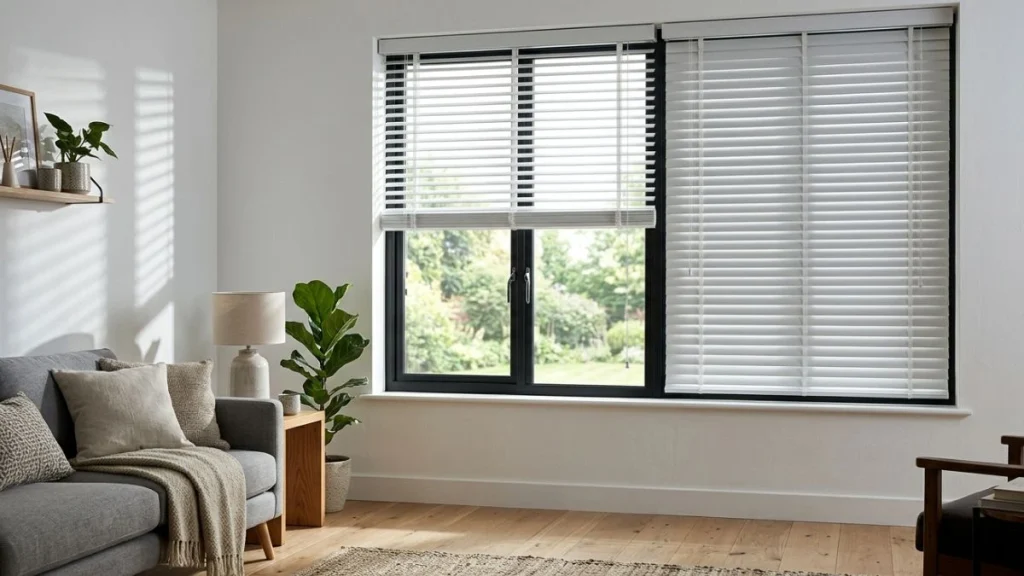
Choosing between one or two blinds for double windows can affect how your room looks and feels. Using two blinds offers more control and suits different needs better. This setup lets you manage light and privacy for each window separately. It also gives more options for style and decoration.
Individual Window Control
Two blinds mean each window works on its own. You can open one blind and keep the other closed. This is great if one window faces the sun and the other does not. It helps keep the room comfortable without changing both windows.
Benefits of individual window control:
- Adjust light for each window. No need to treat both windows the same.
- Control privacy separately. One window can be open while the other stays private.
- Easy to clean and fix. Fixing one blind does not affect the other.
Using two blinds also helps if windows are different sizes. Each blind can fit its window perfectly. This makes the room look tidy and balanced.
Flexibility In Light Management
Two blinds offer more ways to manage sunlight. You can let light in from one window and block it from the other. This helps keep the room bright but not too hot. It also helps reduce glare on screens or books.
Ways to manage light with two blinds:
| Light Setting | With Two Blinds |
| Full sunlight | Open both blinds fully |
| Partial light | Open one blind, close the other |
| Filtered light | Use semi-transparent blinds on one or both windows |
| Dark room | Close both blinds completely |
This setup also helps in the morning and evening. You can block the sun on one side and let light in from the other. This keeps the room comfortable all day.
Style Variety
Two blinds allow more choices in style and color. You can mix and match blinds to suit your room’s look. Different patterns and materials can create a unique design.
Style options with two blinds:
- Different colors: Use one color for each window to add contrast.
- Different materials: Mix wood, fabric, or plastic blinds for texture.
- Matching styles: Use the same style in both windows for a simple, clean look.
- Layering: Combine blinds with curtains for extra style and function.
Changing one blind is easier if you want to update your room. It saves money and effort compared to replacing one big blind. Two blinds give more freedom to refresh your space.
Factors To Consider
Choosing between one or two blinds for double windows depends on several important factors. This choice affects the look, function, and ease of use in your space. Understanding these factors helps in making the right decision that fits your needs and style.
Window Size And Shape
The size and shape of your double windows play a big role in choosing blinds. Large windows might look better with two separate blinds. This allows more control over light and privacy. Small or narrow windows may work well with one blind across both.
Consider these points:
- Wide windows: Two blinds can open separately for better light control.
- Tall windows: One blind may cover the entire height smoothly.
- Irregular shapes: Custom blinds might be needed, often installed as two parts.
Room Functionality
The way a room is used affects which blinds to pick for double windows. In living rooms, light control and style are key. Two blinds can give flexible light settings. Bedrooms need more privacy and darkness. One blind might block light better.
Think about these uses:
- Living room: Two blinds offer more light options.
- Bedroom: One blind helps keep the room dark.
- Kitchen: Easy-to-clean blinds are best, either one or two.
- Office: Adjusting light quickly may need two blinds.
Choosing blinds based on the room helps improve comfort and function.
Privacy Needs
Privacy is important when choosing blinds for double windows. Two blinds can be adjusted separately to allow light in while keeping privacy. One blind may offer a cleaner look but less control.
Consider these privacy points:
- Street-facing rooms: Two blinds help block views from outside.
- Shared walls: One blind may not offer enough privacy.
- Rooms with neighbors close: Two blinds allow partial coverage.
Adjusting blinds in sections gives better control over who can see inside.
Maintenance
Keeping blinds clean and working well is important. Two blinds mean more parts to clean and maintain. One blind is easier to handle but can be heavier and harder to install.
Look at these maintenance facts:
- Two blinds: Easier to remove and clean small sections.
- One blind: Fewer parts but can be bulky.
- Material choice: Some materials need less cleaning, like faux wood or vinyl.
- Mechanism: Simple mechanisms reduce repair needs.
Choosing the right number of blinds can save time and effort in upkeep.
Popular Blind Types For Double Windows
Choosing between one or two blinds for double windows can change the room’s look. Double windows often need blinds that fit well and work smoothly. Some blinds cover both windows with one piece, while others use two separate blinds. Picking the right type depends on style, light control, and ease of use. Popular blind types offer many options for double windows.

Roller Blinds
Roller blinds are simple and clean. They roll up into a small tube at the top. This makes them perfect for a tidy look on double windows. One roller blind can cover both windows, or each window can have its own blind.
Benefits of roller blinds:
- Easy to operate and clean
- Available in many colors and patterns
- Good for blocking sunlight
- Space-saving design
Roller blinds work well in kitchens, bedrooms, and living rooms. They can be made with blackout fabric for full darkness or light-filtering fabric to let soft light in. Using one wide roller blind can give a smooth look, but two smaller blinds allow more control of each window’s light.
Venetian Blinds
Venetian blinds have horizontal slats that can tilt to control light. They come in wood, metal, or plastic. For double windows, choosing two blinds helps control each window separately. One large blind might be harder to use because the slats are wide.
Advantages of Venetian blinds:
- Adjustable light with tilting slats
- Good for privacy and ventilation
- Durable and easy to clean
- Many color options
Venetian blinds suit rooms that need good light control. They can be opened fully or closed tightly. These blinds add a classic, neat look. Using two blinds for double windows lets you open one side while closing the other.
Roman Blinds
Roman blinds fold into soft pleats when raised. They are made from fabric and add warmth to any room. For double windows, using one blind can create a smooth, continuous look. Two blinds give more control but may break the fabric pattern.
Key points about Roman blinds:
- Soft and elegant appearance
- Good for insulation and light control
- Available in many fabrics and colors
- Can be lined for blackout effect
Roman blinds are great for living rooms and bedrooms. Their fabric can help keep heat in or out. They work well if you want a cozy, stylish look. Choosing one or two blinds depends on how much control and style you want.
Cellular Shades
Cellular shades, also called honeycomb shades, have a unique shape that traps air. This helps with insulation. For double windows, one shade can cover both windows if measured wide enough. Two shades give more flexibility in opening and closing.
Benefits of cellular shades include:
- Energy efficiency with air pockets
- Soft light filtering or blackout options
- Good sound absorption
- Clean and modern look
These shades work well in any room, especially where energy saving matters. They come in many colors and can be cordless for safety. Two shades allow you to open one window without disturbing the other. One shade offers a smooth, uniform look.
Installation Tips
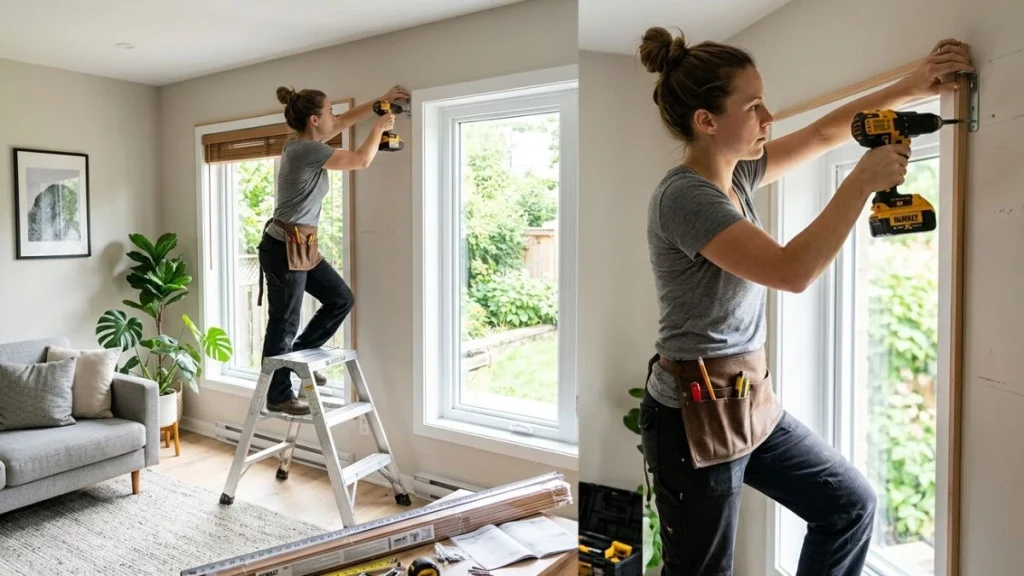
Choosing between one or two blinds for double windows can change the room’s look and function. Installing blinds needs careful planning. Installation tips help make the process smooth and the result neat.
Measuring Accurately
Measuring the window space is very important before buying blinds. Wrong measurements cause poor fit and extra costs. Use a steel tape measure for best results.
Steps for accurate measuring:
- Measure the width inside the window frame at three points: top, middle, and bottom.
- Note the smallest width to ensure the blind fits well.
- Measure the height from the top of the window frame to the sill or desired blind length.
- Record all measurements in centimeters or inches.
Decide if you want the blinds inside or outside the frame. This affects the measurements you take.
| Type of Measurement | Inside Mount | Outside Mount |
| Width | Measure the window frame inside edge to edge | Measure the area you want to cover, adding overlap |
| Height | Measure from the top inside edge to the sill or desired length | Measure from the top outside edge to desired end point |
Mounting Options
Choosing how to mount blinds affects their look and function. There are two main ways: inside mount and outside mount.
Inside mount means fixing the blind inside the window frame. It looks neat and shows the window shape. It needs precise measuring. It fits well for shallow windows.
Outside mount means fixing the blind outside the window frame. It covers the whole window and some wall. It hides window trim and can make windows look bigger. It is easier to install on imperfect frames.
Other mounting tips:
- Check if the wall or frame can hold the weight of the blinds.
- Use proper screws and anchors for secure fixing.
- Consider space for blind operation, like cords or wands.
- Make sure blinds do not block vents or heaters.
Professional Vs Diy
Deciding to install blinds yourself or hire a professional depends on skills and tools. Both options have pros and cons.
DIY installation saves money. It works well for simple windows and standard blinds. You control timing and work at your pace. But it needs careful measuring and following instructions exactly.
Hiring a professional ensures expert fitting. Professionals avoid mistakes and fix problems quickly. They have tools and experience. It costs more but saves time and effort.
Consider these points:
- How confident are you with tools and measurements?
- Is your window shape standard or unusual?
- Do you have time for careful installation?
- What is your budget for installation?
Clear communication with professionals helps get the best result. Ask about guarantees or follow-up services. This helps avoid future issues.
Conclusion
Choosing one or two blinds for double windows depends on your style and needs. Two blinds give more control over light and privacy. One blind can look cleaner and simpler. Think about how you use the room and what feels right.
Measure your windows carefully to avoid mistakes. Both options can look great and work well. Take your time to pick blinds that fit your space and life. Small details make a big difference in the end.