

Is there an annoying gap between your dishwasher and cabinet that’s ruining the look of your kitchen? You’re not alone.
That small space can collect crumbs, dust, and even pests, making your kitchen feel less clean and tidy. But don’t worry—fixing this problem is easier than you think. You’ll discover simple and effective ways to hide that gap, so your kitchen looks seamless and polished.
Common Causes Of Dishwasher Gaps
Gaps between the dishwasher and cabinets are a common kitchen problem. These spaces not only look unattractive but can also collect dirt and debris. Many factors lead to these gaps, and knowing them stops the issue from happening again.
Cabinet Measurement Errors
One major cause of dishwasher gaps is incorrect cabinet measurements. Cabinets must fit the dishwasher’s size perfectly. Even small errors can create noticeable gaps.
Here are key points about cabinet measurement errors:
- Measuring the cabinet opening too large or too small creates space issues.
- Not accounting for cabinet trim or molding affects the fit.
- Ignoring the dishwasher’s installation instructions can lead to wrong sizing.
- Sometimes, cabinets settle or shift after installation, changing the space.
Dishwasher Size Variations
Dishwashers come in different sizes and shapes. Even models labeled the same size can vary slightly. This causes gaps between the dishwasher and cabinets.
Reasons for size variations include:
- Different brands have unique designs and dimensions.
- Custom or compact dishwashers may not fit standard cabinets.
- Older dishwashers may not match modern cabinet sizes.
- Adjustable feet or trim kits may change the dishwasher’s final size.
Before buying a dishwasher, compare the product’s exact dimensions with your cabinet space. Use the following tips:
- Check height, width, and depth on the manufacturer’s website.
- Look for adjustable features that affect size.
- Consider buying a trim kit to fill small gaps.
- Choose a dishwasher model designed for your cabinet size.
Small size differences might seem unimportant but can cause gaps of up to 1 inch or more. This space allows dust and crumbs to collect, creating cleaning challenges. Proper selection reduces this risk.
Floor Leveling Issues
Uneven floors are a hidden cause of dishwasher gaps. If the kitchen floor is not level, the dishwasher might tilt or sit unevenly. This creates visible gaps between the appliance and cabinets.
Signs of floor leveling problems:
- Dishwasher rocks or moves when pushed.
- Uneven gaps on one side of the dishwasher.
- Difficulty closing dishwasher door smoothly.
Proper floor leveling prevents gaps and improves dishwasher performance. It also stops rattling noises during cycles.
Adjusting Dishwasher Position
Adjusting the dishwasher position is an important step to hide the gap between the dishwasher and cabinet. A dishwasher that sits unevenly or too far out can create unwanted spaces. Proper adjustment ensures a snug fit, improves appliance stability, and makes your kitchen look neat. This process involves leveling the appliance and carefully sliding it into place. Both actions work together to close gaps and align the dishwasher perfectly with surrounding cabinets.
Leveling The Appliance
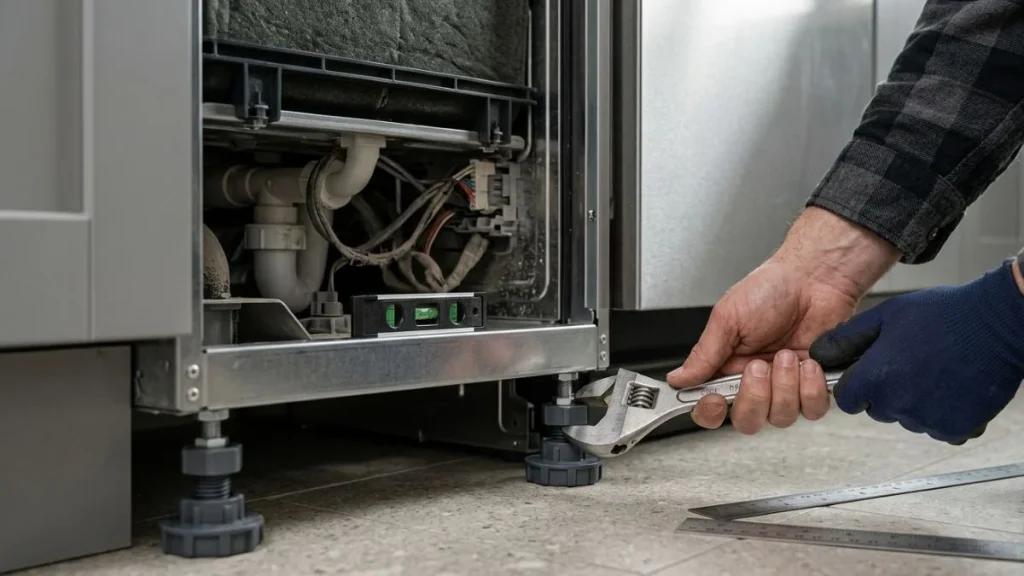
Leveling the dishwasher is the first step to reduce gaps and avoid future problems. An uneven dishwasher can cause leaks, noise, and poor door alignment. Use a spirit level on the top front edge of the dishwasher to check if it sits flat.
Follow these steps to level your dishwasher:
- Locate the leveling legs: Most dishwashers have adjustable legs under the front corners.
- Turn the legs: Rotate them clockwise to raise the dishwasher or counterclockwise to lower it.
- Check both sides: Ensure the dishwasher is level from left to right and front to back.
- Recheck with the spirit level: Place it again after adjustments to confirm.
Sliding And Aligning Techniques
Sliding the dishwasher carefully into its space is the next key step. Proper alignment closes the gap between the dishwasher and the cabinet side. Move the dishwasher slowly to avoid damaging flooring or cabinet edges.
Use these techniques for best results:
- Measure the gap: Check the space on each side before sliding the dishwasher.
- Hold the dishwasher firmly: Use both hands to control the movement.
- Slide slowly: Gently push the dishwasher into place to avoid scratching surfaces.
- Adjust side-to-side: Slightly shift the dishwasher left or right to close any visible gaps.
- Check the front alignment: Make sure the dishwasher front is even with the cabinet doors.
Sometimes small spacers or shims help fill narrow gaps. Use thin pieces of wood or plastic to fill space if sliding alone does not close the gap fully.
Remember, the dishwasher should not be forced into place. Stop if it gets stuck and recheck the leveling or cabinet measurements. Proper sliding and aligning make your kitchen look tidy and improve dishwasher performance.
Using Trim And Filler Strips
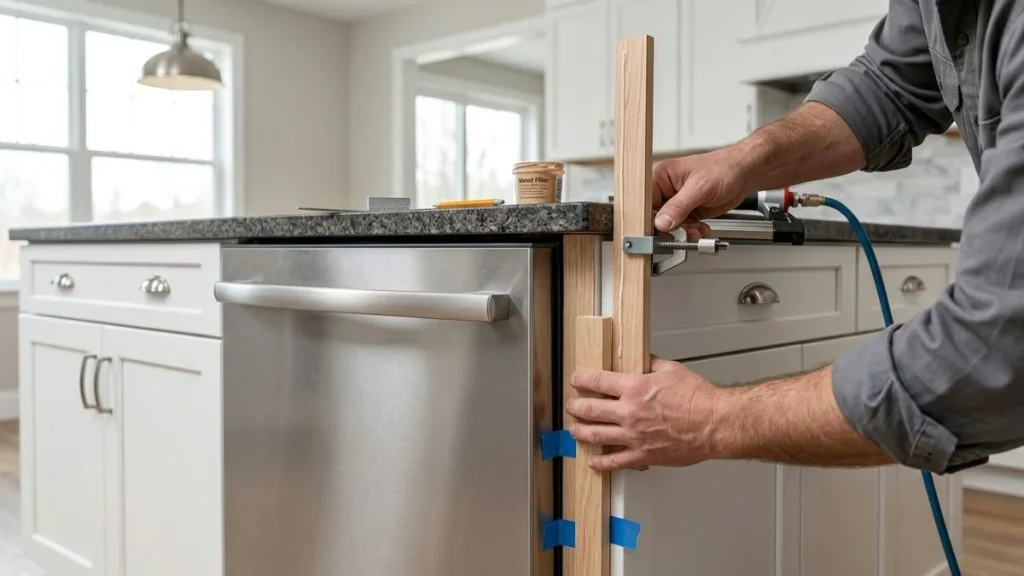
Gaps between a dishwasher and cabinet can make your kitchen look unfinished. Using trim and filler strips is a simple way to cover these spaces. These strips create a neat, clean line that hides any empty space. They also help protect the sides of your dishwasher from dust and moisture. This method is affordable and easy to do without professional help. Trim and filler strips come in different materials and styles to fit your kitchen decor and dishwasher model.
Types Of Trim Kits
Trim kits come in several types to match your dishwasher and cabinet style. Choosing the right one depends on the size of the gap and the look you want.
- Side Trim Kits: These attach to the sides of the dishwasher to fill gaps between the appliance and cabinet. They are usually made of metal or plastic.
- Filler Strips: Thin strips that fit into small spaces. They can be wood, metal, or plastic and are painted or finished to match cabinets.
- Custom Trim Panels: Made from wood or laminate, these panels match your cabinetry exactly for a built-in look.
- Universal Trim Kits: Adjustable kits that fit most dishwasher brands and sizes. They provide flexibility if your gap size is unusual.
Installation Steps
Installing trim and filler strips is straightforward and does not require special tools. Follow these steps for a smooth finish:
- Measure the Gap: Use a tape measure to find the width and height of the gap between the dishwasher and cabinet.
- Choose the Right Trim: Pick a trim kit or filler strip that fits your measurements and matches your kitchen style.
- Prepare the Surface: Clean the edges of the dishwasher and cabinet to remove dust and grease. This helps the trim stick better.
- Cut the Trim: Use a saw or utility knife to cut the trim or filler strips to the correct length.
- Attach the Trim: Use screws, nails, or adhesive tape depending on the trim type. Follow the manufacturer’s instructions for best results.
- Check Alignment: Make sure the trim sits flush with the dishwasher and cabinets. Adjust if necessary.
- Paint or Finish: If needed, paint the trim to match your cabinets for a polished look.
Taking time during installation ensures the gap is well hidden and your kitchen looks tidy. Trim and filler strips protect your dishwasher and improve kitchen design with minimal effort.
Custom Cabinet Modifications
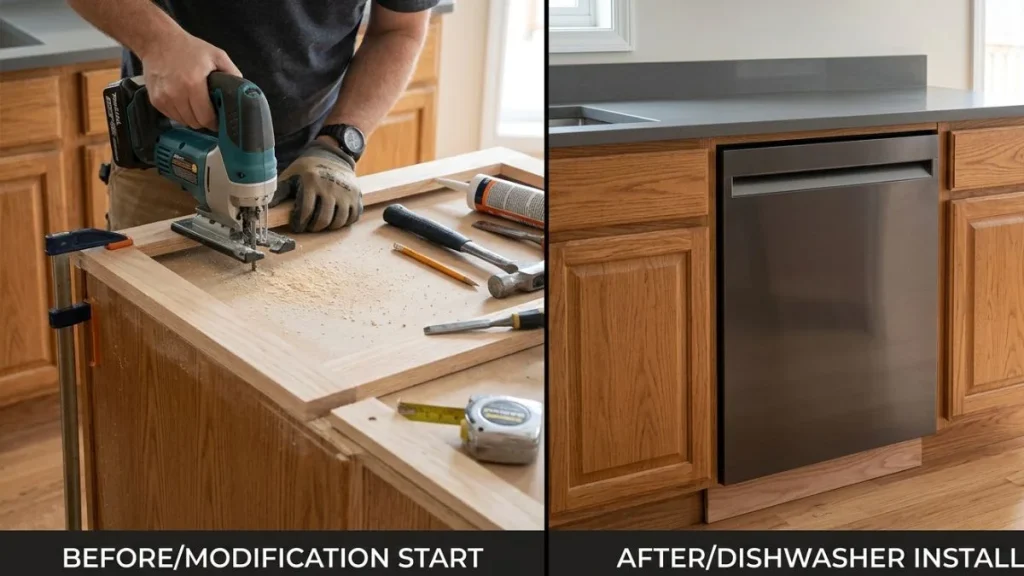
Gaps between the dishwasher and cabinets can spoil the kitchen’s neat look. Custom cabinet modifications offer simple ways to hide these gaps. These changes improve the kitchen’s appearance and help keep dirt from collecting in open spaces. Customizing cabinets can be done with basic tools and materials, making it a smart choice for many homeowners.
Adding Side Panels
Side panels are a popular method to cover gaps next to dishwashers. These panels fit between the dishwasher and the cabinet, hiding the empty space and giving a finished look. Side panels can be made from wood, MDF, or laminate that matches the kitchen cabinets.
To install side panels, follow these steps:
- Measure the width and height of the gap between the dishwasher and cabinet.
- Cut the panel material to fit the measurements.
- Sand the edges for a smooth finish.
- Paint or stain the panel to match the cabinets.
- Attach the panel using screws or strong adhesive.
Installing Shims
Shims are thin wedges used to fill small gaps and level appliances. Installing shims between the dishwasher and cabinet can reduce or hide gaps without major changes. Shims are inexpensive and easy to use.
Steps to Install Shims:
- Identify the size of the gap or uneven space.
- Choose shims made of plastic, wood, or composite material.
- Slide the shims into the gap carefully.
- Adjust the shims to level the dishwasher if needed.
- Trim any excess shim material using a utility knife.
Using shims helps keep the dishwasher stable and prevents it from moving during use. It also stops the gap from getting larger over time.
Sealing And Finishing Touches
After fitting your dishwasher snugly, the final step is sealing and finishing touches. This step hides the gap between the dishwasher and cabinet, giving your kitchen a clean and polished look. Proper sealing stops moisture, dust, and pests from entering the gap.
Applying Caulk Or Sealant
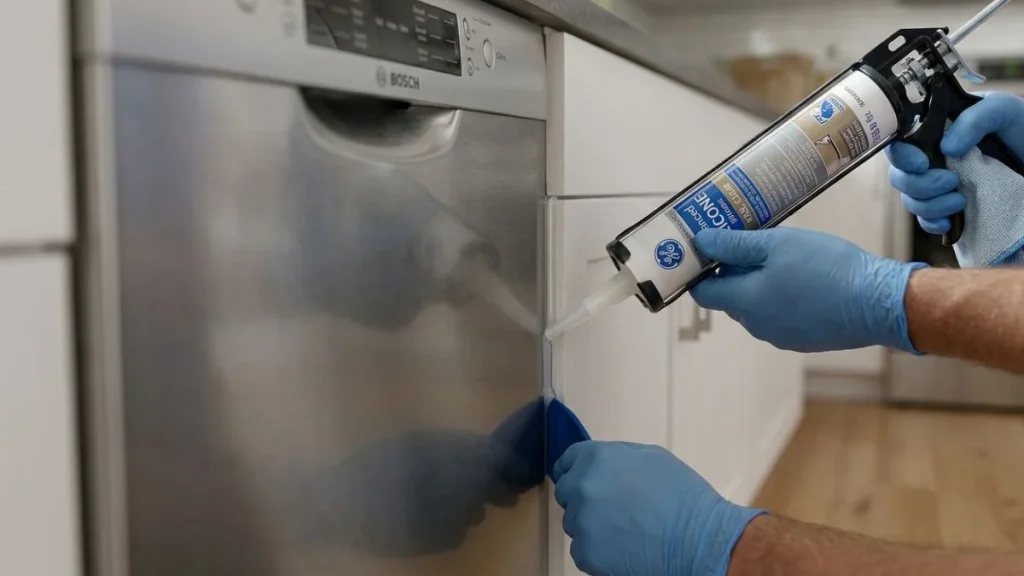
Caulk or sealant helps close the small gap between the dishwasher and cabinet edges. It creates a smooth, waterproof barrier that keeps out water and dirt. Use a silicone-based or acrylic latex caulk designed for kitchens and bathrooms. These are flexible and resist moisture well.
Steps to apply caulk:
- Clean the area thoroughly. Remove dust, grease, and old caulk if present.
- Cut the caulk tube tip at a 45-degree angle for controlled flow.
- Apply a steady bead of caulk along the gap, moving slowly.
- Use a caulk smoothing tool or your finger dipped in water to smooth the bead.
- Wipe away excess caulk immediately with a damp cloth.
- Let the caulk dry fully, usually 24 hours, before using the dishwasher.
Tips for best results:
- Choose a caulk color that matches your cabinet or dishwasher trim.
- Work in a well-ventilated area to avoid inhaling fumes.
- Wear gloves for cleaner application and skin protection.
- Test a small section first to practice smooth application.
Matching Paint Or Stain
After sealing the gap, matching paint or stain blends the dishwasher edges with the cabinet. This step makes the repair less visible and keeps the kitchen looking uniform. Choose paint or stain that matches your cabinet’s finish and color. For wood cabinets, use a wood stain or paint designed for kitchen use. For metal or laminate surfaces, use appliance paint or a durable finish.
Steps to match paint or stain:
- Clean the surface around the gap to remove dust and grease.
- Lightly sand the area if the cabinet finish is rough or glossy.
- Test the paint or stain on a small hidden spot to check color match.
- Apply thin layers with a small brush, allowing each coat to dry.
- Add extra coats if needed until the color blends smoothly.
Painting and staining tips:
- Use painter’s tape to protect dishwasher edges and surrounding surfaces.
- Work in a well-lit space for accurate color matching.
- Choose low-VOC paints for better indoor air quality.
- Allow full drying time before using the dishwasher or cleaning the area.
Matching color and finish perfectly can be challenging. Consider asking for small sample pots of paint or stain from the store. Compare samples in your kitchen lighting before final application. The effort pays off with a seamless, professional look.
You May Read Also: How to Hide Dishwasher Air Gap
Conclusion
Hiding the gap between your dishwasher and cabinet is simple. Use filler strips or trim kits for a clean look. Caulk or foam can seal small spaces easily. Measure carefully before buying materials to avoid mistakes. A neat kitchen looks better and feels more organized.
Small fixes make a big difference in your home. Try these tips to improve your kitchen’s style today. Your dishwasher will blend in perfectly with the cabinets. Easy and affordable ways keep your kitchen tidy and nice.