
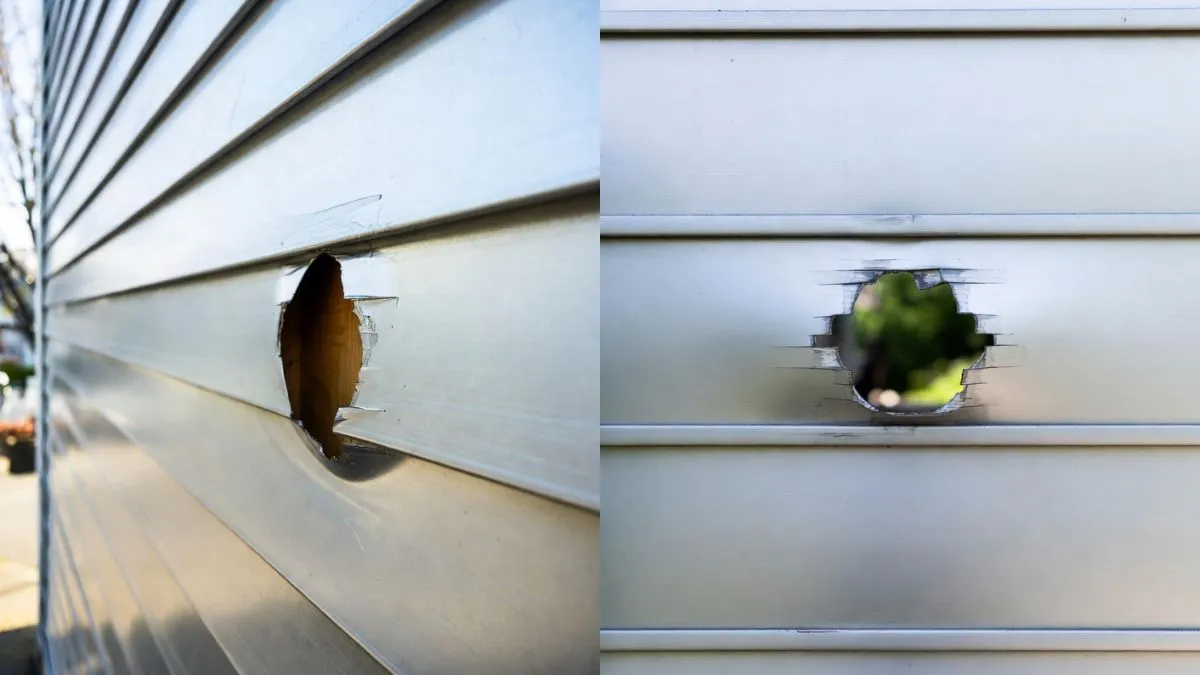
Have you noticed a hole in your aluminum siding? It can be more than just an eyesore.
That small gap might let in moisture, pests, or even cause energy loss in your home. You might be wondering how serious the damage is or what you should do next. You’ll learn why holes in aluminum siding happen, how to spot the problem early, and simple steps you can take to fix it before it gets worse.
Causes Of Holes In Aluminum Siding
Holes in aluminum siding can cause serious problems like water leaks and energy loss. Understanding the causes of holes in aluminum siding helps homeowners protect their homes better.
These holes often appear because of different reasons, including weather, physical damage, corrosion, and installation mistakes. Knowing these causes aids in quick repair and prevents bigger issues.
Weather Damage
Weather plays a major role in damaging aluminum siding. Strong winds, hail, heavy rain, and extreme temperatures can all cause holes. Over time, repeated exposure weakens the siding material.
- Hailstorms can create dents that turn into holes.
- Wind-driven debris may strike the siding hard, causing cracks or punctures.
- Freezing and thawing cycles cause expansion and contraction, stressing the metal.
- Sun exposure leads to fading and brittleness, making siding easier to break.
Physical Impact
Physical impact is another major cause of holes in aluminum siding. Objects hitting the siding can create punctures or cracks. Common causes include:
- Falling tree branches during storms
- Accidental hits from lawn equipment like lawnmowers or trimmers
- Sports balls, such as baseballs or soccer balls
- Animals climbing or scratching the siding
Corrosion And Rust
Aluminum siding is designed to resist rust, but corrosion can still happen. Corrosion weakens the metal and causes holes over time. Causes of corrosion include:
- Exposure to salt air in coastal areas
- Constant moisture from rain or humidity
- Scratches or chips that expose bare metal
- Contact with dissimilar metals causing galvanic corrosion
Installation Issues
Improper installation causes many holes in aluminum siding. Mistakes during setup lead to weak spots and gaps where damage can start. Common installation problems include:
- Fasteners driven too tightly, bending or breaking siding
- Panels not aligned properly, causing stress points
- Insufficient sealing at joints and edges
- Using wrong nails or screws that rust or damage metal
Identifying The Damage
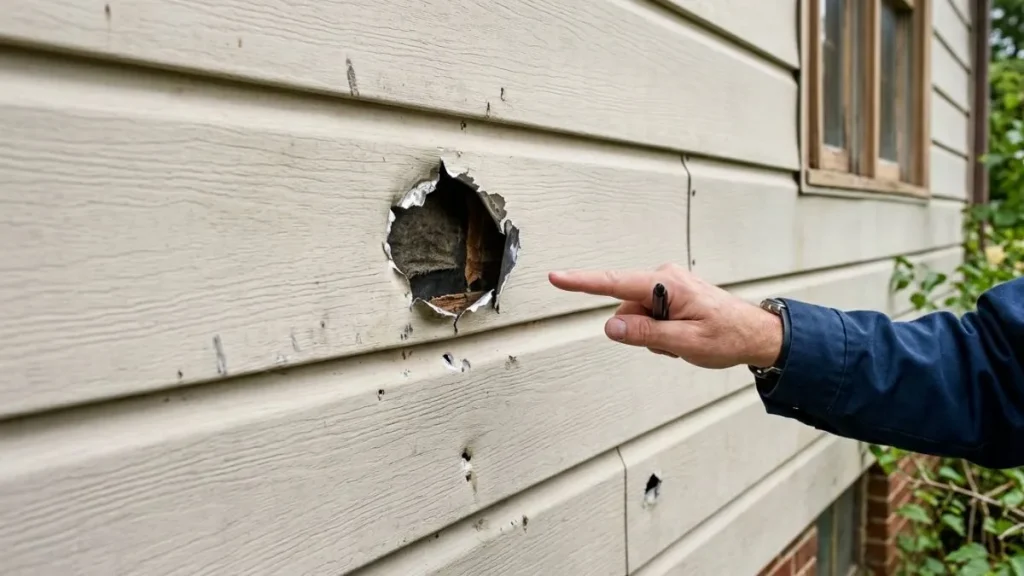
Identifying damage in aluminum siding is the first step in protecting your home. Small holes can let in water, pests, and air, causing bigger problems over time. Spotting these holes early helps avoid costly repairs. Understanding what to look for makes the process easier and faster.
Signs Of Holes
Holes in aluminum siding may not always be obvious at first glance. Look closely for these common signs:
- Visible punctures or cracks: Small dots or splits on the siding surface.
- Rust spots: Brown or orange discoloration near holes, showing metal corrosion.
- Peeling or bubbling paint: Moisture trapped under paint often causes these effects.
- Water stains: Dark streaks or damp patches on or below the siding.
- Insect activity: Presence of nests or insect trails around damaged areas.
Use a flashlight to inspect shaded parts of the siding. Shine it at an angle to reveal small holes. Sometimes, holes are hidden under dirt or paint, so clean the siding gently before inspection.
Assessing The Size And Severity
After spotting a hole, check its size and how deep the damage goes. These factors determine repair methods and urgency.
Classify holes into three categories:
| Size | Description | Impact |
| Small (less than 1 inch) | Pinholes or tiny cracks | Minor leaks, easy to fix |
| Medium (1 to 3 inches) | Noticeable punctures or tears | Possible water entry, moderate repair needed |
| Large (over 3 inches) | Big holes or missing panels | Severe risk of water damage, immediate repair required |
Check if the hole exposes the insulation or wood underneath. Damage to inner layers worsens the problem. Also, look for bent or loose siding near the hole. This may indicate impact damage or structural issues.
Checking For Underlying Problems
Holes often signal deeper issues beneath the siding. Inspect the area carefully to find hidden problems.
- Water damage: Look for mold, mildew, or soft wood behind the siding.
- Pest infestation: Termites and rodents may enter through holes.
- Structural decay: Rotten wood or rusted nails weaken siding support.
- Improper installation: Gaps or misaligned panels can cause holes over time.
Use a screwdriver to gently probe the siding edges. Soft spots mean wood rot. Check inside your home near the damaged siding for damp walls or musty smells. These signs confirm moisture problems.
Early detection helps protect your home’s structure and saves money on repairs. Regular siding checks prevent small holes from turning into big troubles.
Temporary Fixes For Aluminum Siding
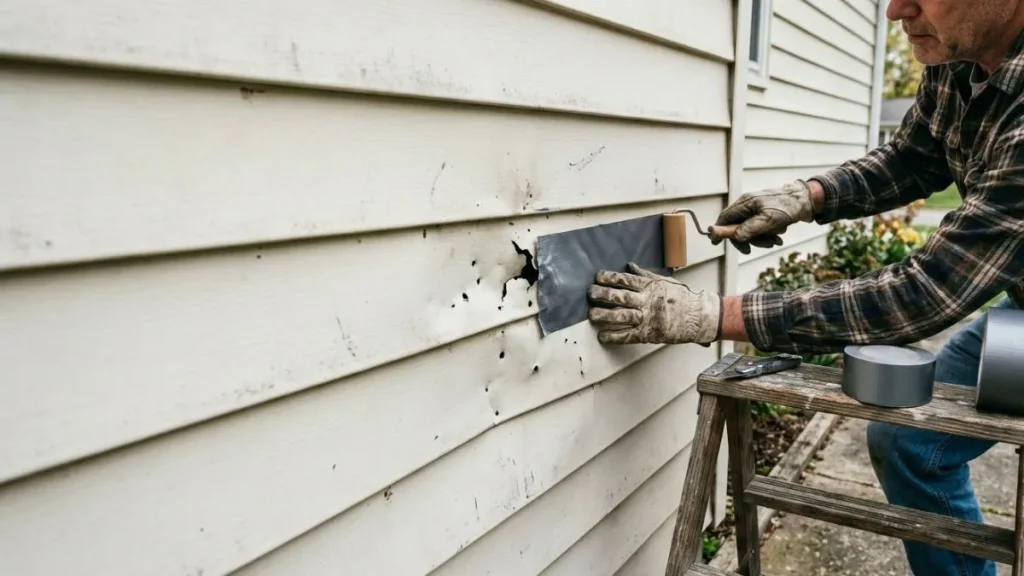
Holes in aluminum siding can cause water leaks, drafts, and damage to the home’s exterior. Temporary fixes help protect the siding until a permanent repair can be made. These quick solutions prevent further harm and keep your home safe from the elements.
The methods include using aluminum tape, applying sealants, and patching small holes. Each technique offers a simple way to reduce damage and maintain the siding’s appearance for a short time.
Using Aluminum Tape
Aluminum tape is a strong and easy option for covering holes in aluminum siding. It sticks firmly and resists weather, making it ideal for temporary repairs. This tape matches the siding’s metal surface, helping it blend in better than other tapes.
- Clean the area: Remove dirt and dry the surface before applying tape.
- Cut the tape: Make it larger than the hole, covering extra space around it.
- Apply the tape: Press firmly to avoid air bubbles and ensure a tight seal.
This method works well for small to medium holes. It keeps water and insects out temporarily. Aluminum tape resists UV rays and rain, lasting several months. It also prevents the hole from getting bigger by keeping the siding stable.
| Step | Action | Tips |
| 1 | Clean surface | Use rubbing alcohol for best results |
| 2 | Cut tape | Leave 1 inch extra around the hole |
| 3 | Apply tape | Press firmly and smooth out bubbles |
Applying Sealants
Sealants provide a flexible and waterproof layer over holes in aluminum siding. They are easy to apply and help stop leaks and drafts. Common sealants include silicone and polyurethane. These materials stick well to metal and remain flexible as the siding expands and contracts with temperature changes.
- Clean the damaged area to remove dust and loose paint.
- Apply the sealant using a caulking gun or a putty knife.
- Smooth the sealant to cover the hole completely and create a neat finish.
Sealants work best on small holes and cracks. They fill gaps to stop water and air from entering. Sealants dry quickly and can last several months. To improve the appearance, paint over the sealant after it dries. Choose a paint that matches the siding color.
| Sealant Type | Best For | Drying Time |
| Silicone | Waterproof and flexible sealing | About 30 minutes |
| Polyurethane | Strong adhesion and durability | 2-3 hours |
Patching Small Holes
Patching is a simple way to fix small holes in aluminum siding. It uses a piece of metal or siding patch that covers the damaged area. This method adds extra strength and protects the hole from expanding. Patching works well for holes less than 2 inches wide.
- Cut a patch: Use aluminum or siding material slightly larger than the hole.
- Prepare the surface: Clean and dry the damaged area before patching.
- Attach the patch: Use metal screws or adhesive designed for metal siding.
- Seal the edges: Apply sealant around the patch to stop water leaks.
This technique creates a durable temporary fix. It stops pests and moisture from entering through the hole. Painting the patch helps it blend with the rest of the siding. Make sure the patch fits tight to avoid gaps that let water in.
Permanent Repair Methods
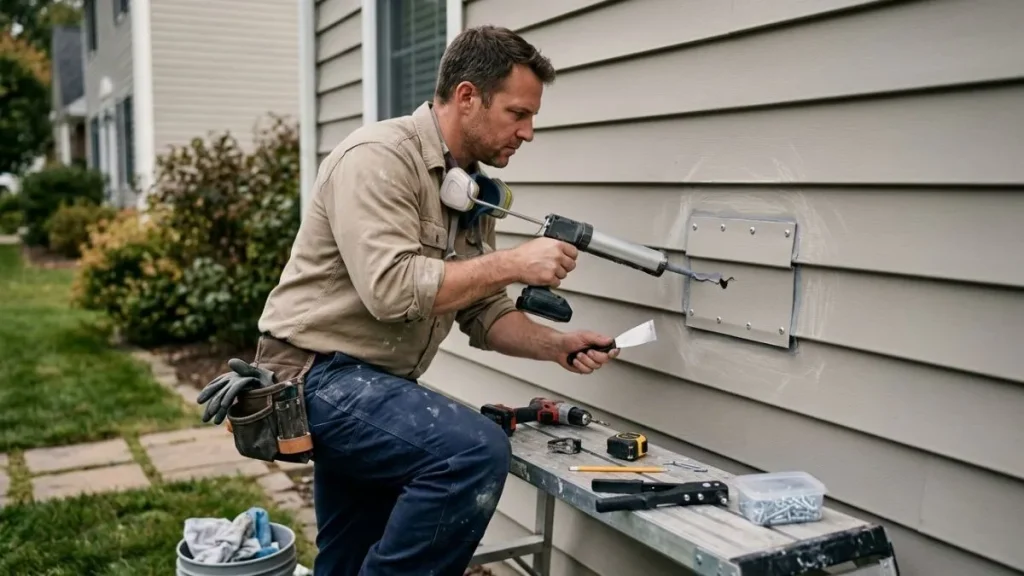
Holes in aluminum siding can let moisture and pests inside walls. This causes damage and lowers home value. Permanent repair methods fix the problem thoroughly. These methods stop leaks and restore siding strength. Choosing the right repair ensures the siding looks good and lasts long. Below are key permanent repair ways to fix holes in aluminum siding.
Replacing Damaged Panels
Replacing the damaged panels is the most effective permanent repair. It removes the hole completely and installs a new piece of siding. This method restores the siding’s full protection and appearance.
Steps for panel replacement:
- Remove the damaged panel carefully using siding removal tools.
- Measure the area to cut a new panel to the right size.
- Attach the new panel securely using nails or screws designed for aluminum siding.
- Seal edges with weatherproof caulk to prevent moisture entry.
Professional Repair Services
Professional repair services offer expert solutions for holes in aluminum siding. Skilled technicians have the right tools and knowledge. They handle repairs safely and neatly.
Advantages of hiring professionals:
- Accurate damage assessment and repair planning.
- Use of specialized tools for clean removal and installation.
- Guarantee on repair quality and lasting results.
- Help with hard-to-reach or large damaged areas.
Professionals can repair by panel replacement or advanced patching. They also check for hidden damage inside walls.
Costs vary by job size and materials. Here is a sample cost breakdown:
| Service | Typical Cost | Details |
| Small hole patch | $100 – $200 | Quick fix, minor damage |
| Panel replacement | $250 – $500 | Includes materials and labor |
| Large repairs | $500+ | Multiple panels or structural damage |
Choosing professionals reduces repair errors. They ensure siding looks seamless and protects well.
Matching Paint And Finish
After fixing the hole, matching the paint and finish is key to a neat look. Aluminum siding often has a unique color and texture. Proper matching hides repairs from view.
Tips for matching paint and finish:
- Use paint made for metal surfaces and outdoor use.
- Test paint on a small hidden area first.
- Apply primer before painting to improve adhesion.
- Spray or brush paint evenly for smooth coverage.
- Match the finish type: matte, satin, or gloss.
Paint matching options:
| Method | Pros | Cons |
| Custom mixed paint | Exact color match | May cost more |
| Touch-up paint kits | Easy application | Limited color options |
| Professional painting | High quality finish | Higher cost |
Proper paint matching extends siding life by protecting it from rust and sun damage. It also keeps your home looking attractive and well cared for.
You May Also Like: Replacing Windows With Aluminum Siding
Conclusion
Holes in aluminum siding can cause many problems fast. Water can get inside and damage walls or insulation. Small holes grow bigger if you do not fix them soon. Repairing siding keeps your home safe and dry. Use simple tools or call a pro for help.
Check your siding often to catch holes early. A little care now saves big costs later. Keep your house strong and looking nice. Don’t let a small hole turn into a big mess. Act quickly and protect your home today.