

Have you ever thought about adding a folding door at the bottom of your stairs? It might sound simple, but this small change can make a big difference in your home.
Whether you want to save space, improve safety, or add a stylish touch, a folding door could be just what you need. You’ll discover why this clever solution works so well, how it fits into different spaces, and what to consider before making the switch.
Benefits Of Folding Doors
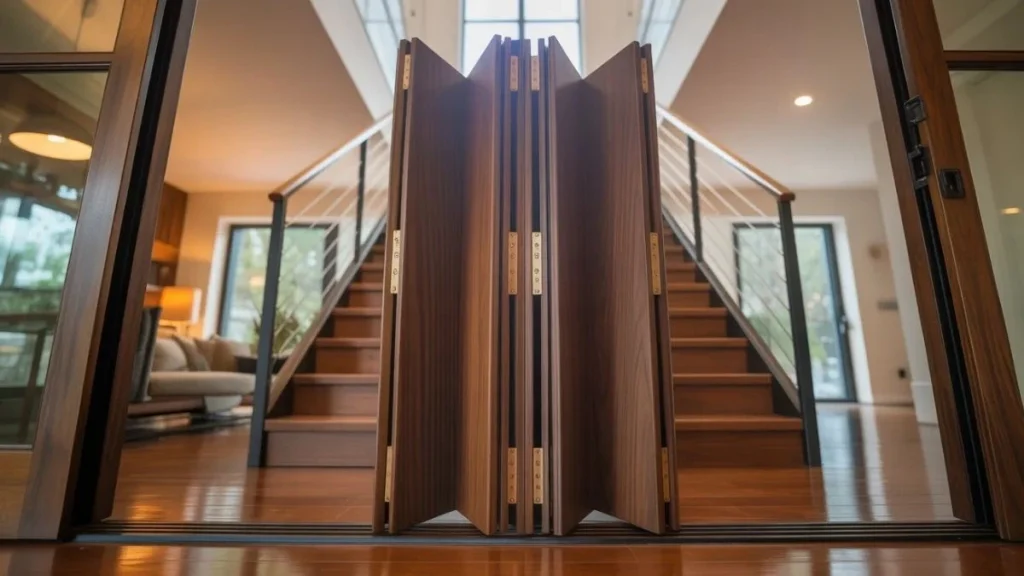
Below are key benefits of folding doors that make them ideal for staircases.
Space-saving Design
Folding doors are perfect for saving space at the bottom of stairs. Unlike traditional doors that swing wide open, folding doors fold neatly to one side. This feature frees up valuable floor space for other uses. In small hallways or cramped corners, this makes a big difference.
- Compact when open: Folding doors take up less room than swing doors.
- Flexible installation: They fit well in narrow spaces where regular doors won’t.
- Multi-panel design: Panels fold smoothly, stacking neatly without blocking pathways.
Here is a simple comparison of door types and their space needs:
| Door Type | Space Needed to Open | Best For |
| Swing Door | Full door width | Wide hallways or large rooms |
| Sliding Door | Wall length | Rooms with long walls |
| Folding Door | Minimal, folds beside opening | Tight spaces, stairs, closets |
Choosing a folding door at the stair bottom keeps the area clear for movement and furniture. It also adds a neat, organized look.
Enhanced Accessibility
Folding doors improve accessibility near stairs by providing a wide, easy-to-use opening. Their design allows the door to fold back fully, creating a large passageway. This helps people carry items up and down stairs without obstruction.
Key accessibility benefits include:
- Wide openings: Multiple panels fold to open fully.
- Smooth operation: Hinges and tracks make opening and closing effortless.
- Adjustable panels: Panels can be folded partially or fully for different needs.
People with mobility aids find folding doors easier to use than narrow or swinging doors. The door’s flexible opening size accommodates wheelchairs, walkers, or strollers.
Improved Safety
Safety is a major concern near staircases. Folding doors help by creating a secure barrier while remaining easy to open in emergencies. Their design minimizes sharp edges and hard-to-reach parts that can cause injury.
Benefits related to safety include:
- Controlled access: Keeps children and pets away from stairs.
- Sturdy construction: Strong panels resist damage from impact.
- Easy exit: Opens quickly to allow fast movement if needed.
Folding doors reduce tripping hazards since they do not swing into pathways. Their smooth edges prevent cuts or bruises if bumped. Some models come with childproof locks for extra protection.
Types Of Folding Doors
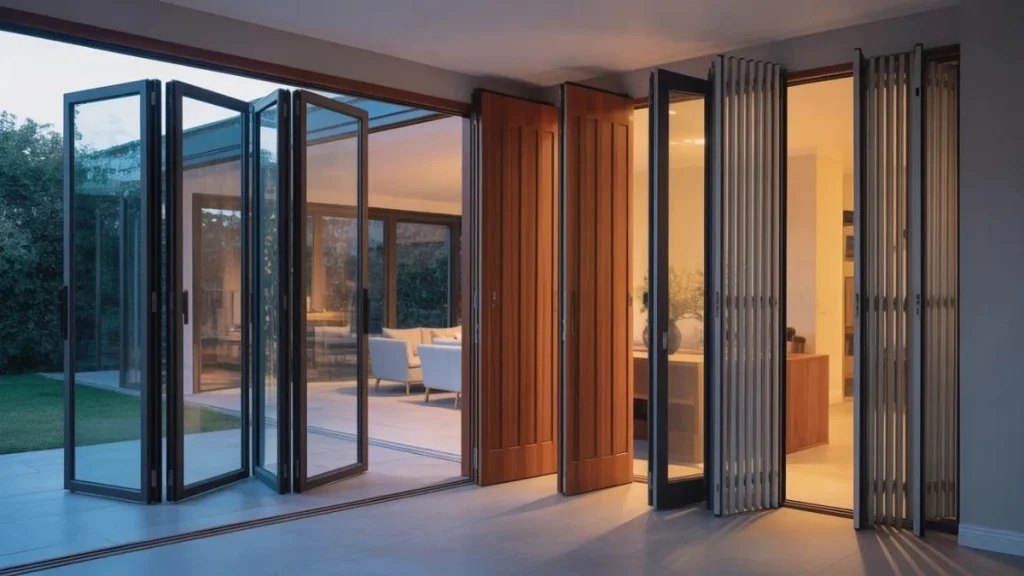
Folding doors at the bottom of stairs are a smart way to save space and improve safety. They help separate areas while letting light pass through. There are several types of folding doors. Each type works differently and suits different needs.
Bi-fold Doors
Bi-fold doors are popular for narrow spaces like the bottom of stairs. They consist of two panels connected with hinges. These panels fold together when opened, taking up minimal space.
Key features of bi-fold doors:
- Panels fold to one or both sides
- Easy to open and close
- Can be made from wood, glass, or metal
- Good for small spaces with limited clearance
Accordion Doors
Accordion doors fold into many narrow panels. They fold like an accordion and stack neatly to one side. These doors offer a smooth, space-saving option at stairs.
Features of accordion doors include:
- Multiple narrow panels connected with hinges
- Fold fully to open large spaces
- Usually made of vinyl, wood, or PVC
- Can be used as room dividers or closet doors
Accordion doors work well in tight spots because they fold compactly. They also allow easy movement between rooms.
Sliding Folding Doors
Sliding folding doors combine sliding and folding actions. Panels fold together but slide along a track to open. This type fits well at stairs with limited space.
Key benefits of sliding folding doors:
- Panels fold and slide smoothly
- Save space by sliding along walls
- Can be made from glass, wood, or metal
- Offer wide openings without blocking space
Sliding folding doors suit areas where space is tight on one side. They allow wide access without blocking the stairwell or hallway.
Materials And Finishes
Choosing the right materials and finishes for a folding door at the bottom of stairs affects both style and durability. This door must handle daily use and fit well with your home’s design. The material impacts how the door looks, feels, and how long it lasts. Finishes protect the door and add character.
Wood Options
Wood is a classic choice for folding doors. It offers warmth and natural beauty. Different types of wood provide various looks and strengths. Here are common wood options:
- Pine: Affordable, light, and easy to paint or stain.
- Oak: Strong with a pronounced grain, ideal for a traditional look.
- Maple: Smooth texture and light color, suits modern styles.
- Mahogany: Rich color and durable, perfect for a luxurious feel.
Metal Choices
Metal folding doors offer a modern look and strong structure. They suit homes needing extra security or a sleek design. Metals resist wear and tear better than wood, especially in busy areas.
Popular metals include:
- Aluminum: Lightweight, rust-resistant, and low maintenance.
- Steel: Very strong and secure but heavier and may rust without coating.
- Iron: Classic and sturdy, often used with decorative designs.
Finishes for metal doors protect against rust and improve appearance:
- Powder coating: Durable and available in many colors.
- Galvanizing: Adds zinc layer to prevent rust.
- Anodizing: Enhances corrosion resistance, mainly for aluminum.
Metal folding doors provide a clean, durable option. They require less upkeep than wood but may feel colder to touch.
Glass Panels
Glass panels add light and openness to folding doors. They create a bright, airy feel at the bottom of stairs. Glass works well alone or combined with wood or metal frames.
Types of glass used include:
- Clear glass: Shows full view and allows maximum light.
- Frosted glass: Provides privacy while letting light through.
- Textured glass: Adds design and diffuses light softly.
- Tempered glass: Stronger and safer, breaks into small pieces.
- Laminated glass: Holds together when broken for extra safety.
Installation Considerations
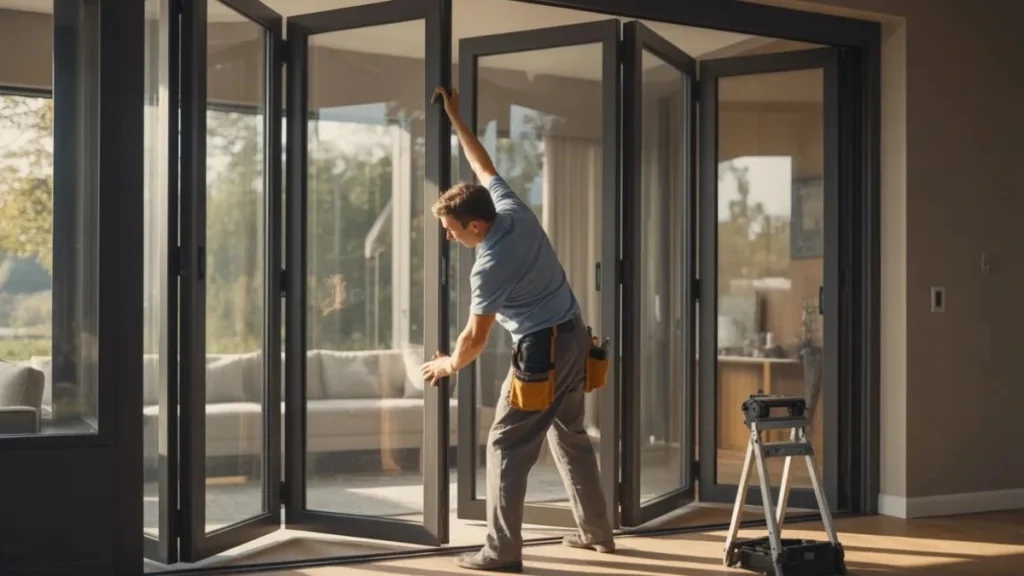
Installing a folding door at the bottom of stairs improves space use and adds safety. It creates a barrier that controls access or blocks drafts without using much room. Careful planning is key to a smooth installation.
Measuring The Space
Accurate measurements are the first step for fitting a folding door perfectly. Measure both the width and height of the stair opening. Use a steel tape measure for best results. Take these points into account:
- Width: Measure at the top, middle, and bottom of the opening. Use the smallest width for the door size.
- Height: Measure from the floor to the ceiling or the lowest obstruction above the doorway.
- Depth: Check the wall thickness and space for the door panels to fold back.
Structural Requirements
Strong support is essential for a folding door to work well. The door frame and wall need to handle the door’s weight and movement. Consider these structural elements:
- Wall strength: Ensure the wall can hold the door track and hinges securely.
- Headroom: There must be enough space above the doorway for the door to fold and slide.
- Floor level: The floor should be even to allow smooth door operation.
- Support beams: Sometimes, extra beams or reinforcements are needed for heavy doors.
Check for wiring, pipes, or vents inside the wall where the door will go. Avoid damaging these during installation.
Professional Vs DIY
Choosing between professional installation and DIY depends on skills, tools, and budget. Both have pros and cons to consider:
| Aspect | Professional Installation | DIY Installation |
| Expertise | Experienced with folding doors and structural needs | Requires reading instructions and some carpentry skills |
| Tools | Has all necessary tools and equipment | May need to buy or rent specialized tools |
| Time | Usually faster and more efficient | Takes more time; risk of mistakes |
| Cost | Higher cost due to labor | Lower cost but risk of errors and delays |
| Warranty | Often includes installation warranty | No warranty on installation work |
DIY suits those comfortable with tools and basic construction. Professionals fit complex spaces and ensure safety. Choose based on confidence, time, and budget.
Safety Features
Folding doors at the bottom of stairs offer a practical way to separate spaces and improve safety. Their design includes several safety features that protect children and adults alike. These features reduce the risk of accidents and make stairways safer to use.
Childproof Locks
Childproof locks are essential for folding doors near stairs. They prevent young children from opening the door and accessing the staircase unsupervised. These locks are designed to be strong yet easy for adults to use.
Key benefits of childproof locks include:
- Secure locking: Keeps the door firmly closed to block stair access.
- Simple adult operation: Adults can open the door quickly in emergencies.
- Durable materials: Made to withstand repeated use and tampering.
- Visible indicators: Some locks show clearly if the door is locked or unlocked.
Smooth Operation Mechanisms
Folding doors must open and close smoothly to avoid accidents. Smooth operation helps prevent fingers from getting caught and reduces the chance of the door slamming shut. This feature is critical near stairs where sudden door movements can cause falls.
Important aspects of smooth operation mechanisms include:
- Quality hinges: Strong, rust-resistant hinges allow easy folding and unfolding.
- Soft-close technology: Doors close gently without sudden force.
- Guide rails: Keep the door aligned and stable during movement.
- Low friction materials: Reduce wear and noise for smooth use.
Non-slip Surfaces
Non-slip surfaces near folding doors at the bottom of stairs enhance safety by reducing slips and falls. These surfaces provide better grip for feet, especially in areas that may get wet or dusty.
Common non-slip features include:
- Textured floor mats: Placed near the door to improve traction.
- Anti-slip coatings: Applied to stair edges and floors.
- Rubber strips: Attached to door edges to prevent slipping when opening.
Advantages of non-slip surfaces:
| Feature | Purpose | Benefit |
| Textured Mats | Increase foot grip | Reduce fall risk |
| Anti-slip Coating | Protect floor surface | Long-lasting traction |
| Rubber Strips | Secure door edges | Prevent slips during door use |
Installing non-slip surfaces near folding doors ensures safer movement around stairs. It helps all users maintain balance and avoid accidents in busy areas.
Design Ideas And Inspirations
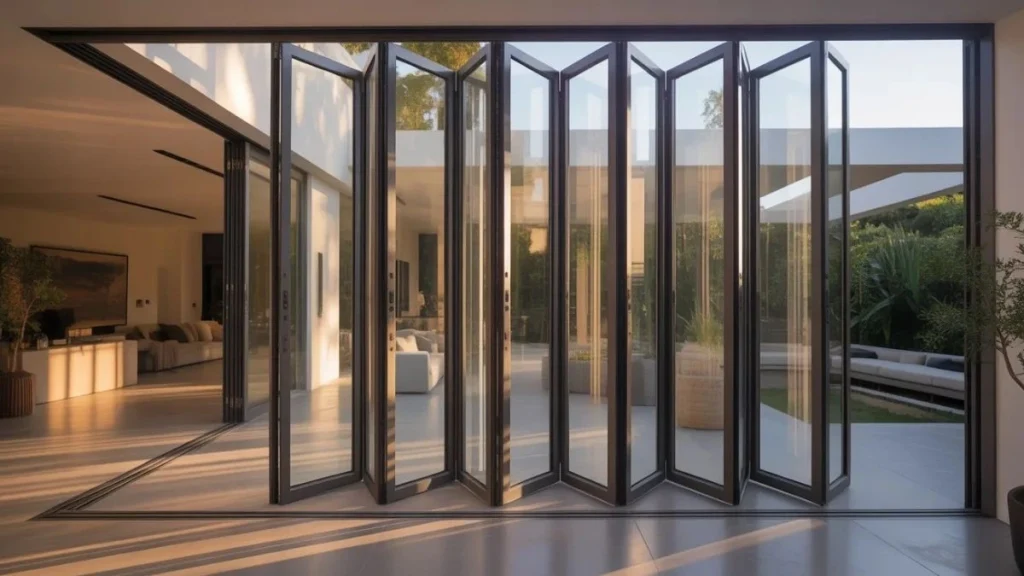
Folding doors at the bottom of stairs offer a smart way to save space and add style. They create a neat separation between floors while letting light flow freely. Many design ideas and inspirations exist to suit different home styles and personal tastes. Choosing the right folding door can enhance your home’s look and functionality.
Modern Minimalist Styles
Modern minimalist folding doors focus on clean lines and simple shapes. They often use materials like glass, metal, and smooth wood finishes. These doors create an open, airy feel and help make small spaces look bigger.
- Frameless glass panels: Let light pass through and keep the area bright.
- Matte black or white aluminum frames: Offer a sleek, modern look.
- Flat wooden panels: Painted in neutral colors for a calm, uncluttered appearance.
Minimalist folding doors often use hidden tracks to keep the design smooth. Their subtle design blends well with modern furniture and décor. They suit homes that prefer less decoration but want stylish elements.
| Feature | Benefit |
| Clear Glass | Maximizes natural light and visibility |
| Neutral Colors | Creates calm, spacious feel |
| Simple Hardware | Keeps focus on clean lines |
Traditional And Rustic Looks
Traditional and rustic folding doors bring warmth and charm to staircases. They use natural wood and classic designs. These doors fit well in country homes or spaces with a cozy, lived-in feel.
Common materials include oak, pine, and reclaimed wood. The wood may have a distressed or weathered finish to add character. Panels often feature raised or recessed details, adding depth and texture.
- Wrought iron handles and hinges: Add vintage style.
- Natural wood grains: Highlight the beauty of real wood.
- Decorative moldings: Enhance the traditional look.
Rustic folding doors also work well with warm color palettes, such as browns, creams, and deep reds. They help create a welcoming atmosphere and blend with farmhouse or cottage décor.
Custom Color Options
Custom colors give folding doors a unique touch. They allow homeowners to match doors with walls, floors, or furniture. This makes the door a design feature rather than just a divider.
Popular color choices include soft pastels for a gentle look or bold shades for a statement piece. Glossy, matte, or satin finishes can change the door’s style and feel.
- Soft gray or beige: Neutral and elegant.
- Deep blue or forest green: Rich and eye-catching.
- Bright red or yellow: Adds energy and personality.
Custom colors work with many materials such as wood, metal, or composite. Paints and stains designed for durability ensure long-lasting beauty. Personalized folding doors help express style while fitting perfectly in any home.
Recommended: A Door at the Bottom of Basement Stairs
Conclusion
A folding door at the bottom of stairs saves space and adds style. It helps keep rooms separate without blocking light or air. These doors are easy to open and close, making daily use simple. You can choose different colors and materials to match your home.
Installing one can make your stairs safer and your space more organized. A smart choice for small homes or busy families. Consider a folding door to improve both function and look in your house.