

There’s nothing quite as frustrating as walking across your living room and hearing that sudden pop under your feet. It’s distracting, a little unsettling, and easy to ignore — until it starts happening every single time you take a step.
The good news? A floor popping sound under carpet is one of the most common complaints homeowners deal with, and in most cases, it’s completely fixable without a full floor replacement. But here’s the thing — the fix depends entirely on the cause. And not all popping sounds come from the same place.
This guide breaks down exactly why your floor is making that noise, how to find where it’s coming from, and which repair method will actually solve the problem for good.
What Causes a Floor Popping Sound Under Carpet?
Understanding the root cause is the first step toward a real fix. There are several reasons your floor might be popping under the carpet, and each one has a different solution.

1. Subfloor Movement and Separation
The subfloor is the structural layer of wood panels that sits directly beneath your carpet and padding. Over time, these panels shift, warp, or pull away from the floor joists underneath them. When you step on a spot where the subfloor has separated from the joist, the panel flexes down and then snaps back — and that’s exactly the popping sound you hear.
This is the most common cause of carpet floor popping, and it tends to get worse over time if left untreated. You’ll usually notice it in specific spots rather than across the entire floor. It can also be more pronounced during winter months when the wood contracts due to dry air.
2. Loose or Worn Floor Joists
Floor joists are the horizontal beams that run beneath your subfloor and support the entire floor structure. When a joist becomes loose — whether due to age, moisture damage, or heavy loads — the subfloor above it starts to move more than it should. This extra movement creates friction, which produces that familiar popping or creaking noise.
Joist problems are more common in older homes and can sometimes point to a bigger structural issue, especially if the popping is accompanied by a bouncy or spongy feeling when you walk.
3. Seasonal Wood Expansion and Contraction
Wood is a natural material, and it responds to changes in temperature and humidity. In the summer, wood absorbs moisture from the air and expands. In the winter, dry indoor air causes it to shrink. This constant movement creates small gaps between the subfloor panels and the joists, which then rub against each other and pop when pressure is applied.
If your floor only pops during certain seasons and then quiets down, this is likely the cause. It’s not necessarily dangerous, but it does mean your home’s humidity levels need some attention.
4. Nail or Screw Popping
When floors are installed with nails instead of screws, those nails can loosen over time. A loose nail sitting between two pieces of wood will rub and pop every time the floor above it moves. This type of popping has a very specific, sharp sound and is especially common in homes built before the 1990s when nail-down installation was the standard method.
5. Carpet Padding Deterioration
Old or compressed carpet padding loses its ability to cushion the floor evenly. When padding breaks down in certain areas, your foot makes more direct contact with the subfloor when you step — sometimes creating a popping or crunching sensation that feels like it’s coming from deeper in the floor. This cause is frequently overlooked because most homeowners assume the problem is structural.
6. Pipes or HVAC Ducts Beneath the Floor
Sometimes the noise isn’t coming from the floor at all. Plumbing pipes expand when hot water runs through them, and HVAC ducts flex when your heating or cooling system kicks on. Both can create popping or ticking sounds that travel through the floor and seem like they’re coming from beneath the carpet. If the sound happens at predictable times — like when you turn on the heat — this is likely the cause.
Is a Floor Popping Sound Under Carpet Something to Worry About?
Not every popping floor is a crisis. But it’s important to know the difference between a minor inconvenience and a real warning sign.
It’s probably not a big deal if:
- The popping only happens in one small area
- The sound correlates with seasonal changes
- Your home is newer and still settling
- There’s no soft or spongy feeling when you walk over it
You should take it more seriously if:
- The floor feels soft, spongy, or bouncy in the popping area
- The popping is spreading to multiple rooms
- You notice a musty smell near the affected area
- There’s visible sagging or dipping in the floor
Call a structural engineer if:
- Doors or windows near the area are suddenly sticking
- You see new cracks forming in nearby walls or ceilings
- There are visible gaps between the floor and your baseboards
- The floor feels unstable when you stand still on it
These latter signs can point to foundation movement or serious structural deterioration — issues that go well beyond a simple flooring repair.
How to Find Exactly Where the Popping Is Coming From
Before you start any repair, you need to pinpoint the source. Here’s how to do it properly.
The Walk Test: Walk slowly across the affected area and pay attention to where the pop happens. Have someone mark each spot with painter’s tape so you can create a map of the problem zones. This helps you identify whether it’s a localized issue or something more widespread.
The Press and Listen Method: Get down on your hands and knees and press firmly on the floor in the problem area. If you can recreate the pop by pressing, the issue is likely in the subfloor or padding — not in the joists below.
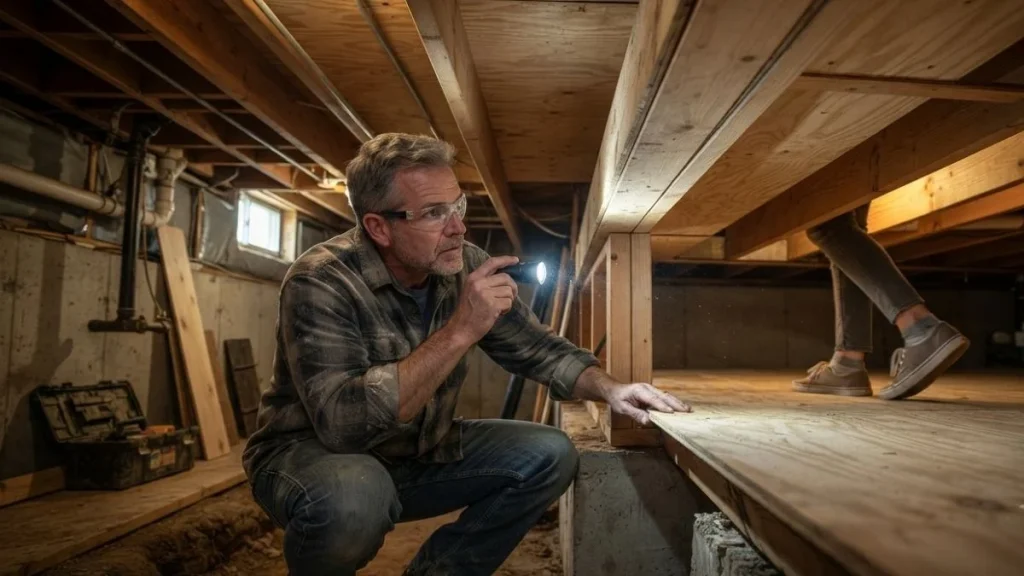
Check from Below: If you have a basement or crawl space, this is your best option. Take a flashlight and look for gaps between the subfloor and the joists, any signs of moisture or rot, or joists that look cracked or warped. Have someone walk on the floor above while you watch from below — you’ll be able to see exactly where the movement is happening.
Use a Moisture Meter: A moisture meter is a simple, affordable tool that tells you if there’s elevated moisture in your subfloor. Ideal moisture levels in a wood subfloor should be between 6% and 12%. Anything higher suggests water damage that needs to be addressed before any flooring repair.
How to Fix a Floor Popping Sound Under Carpet
Once you’ve identified the cause, here’s how to fix it — starting with the simplest solutions.
Re-Securing the Subfloor with Screws
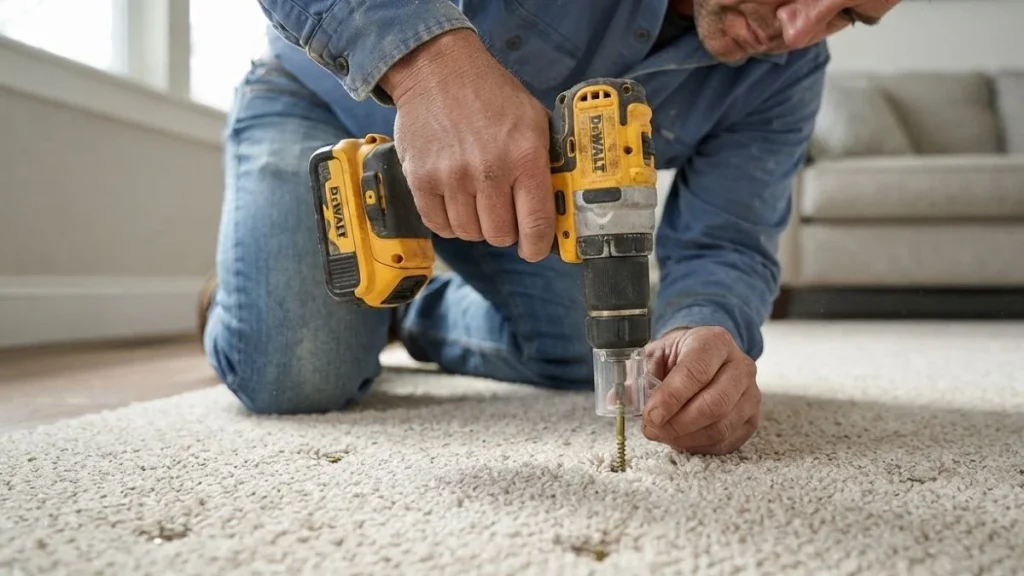
This is the most effective and most commonly used fix for subfloor popping. Screws create a much tighter hold than nails and pull the subfloor back down firmly against the joist, eliminating the gap that causes the noise.
What you need: Power drill, 2-inch subfloor screws, stud finder, depth-setter bit
How to do it:
- Use a stud finder to locate the floor joist beneath the popping area
- Drive screws through the carpet and padding directly into the joist
- Use a depth-setter bit to countersink the screws just below the carpet surface so they don’t snag fibers
- Test the area by walking over it — the pop should be gone immediately
This fix costs less than $20 in materials and takes about 30 minutes. It’s the first thing most flooring professionals try.
Using a Squeak Relief Kit
Products like the Squeeeeek No More kit are designed specifically for fixing floor noise without removing carpet. They use a specially designed screw that snaps off just below the carpet surface after being driven in, leaving no visible trace and no snag risk.
These kits are ideal for renters or homeowners who want a clean, low-effort solution. They retail for around $20–$40 and come with everything you need.
Injecting Construction Adhesive from Below
If you have access to a basement or crawl space, injecting construction adhesive into the gap between the subfloor and joist is an extremely effective fix. The adhesive fills the void permanently, eliminating all movement and sound.
Use a flexible-nozzle adhesive gun to get into tight spaces. Apply the adhesive while someone stands on the problem area above to keep the gap as narrow as possible. Let it cure for 24 hours before walking on it.
Shimming Loose Floor Joists
If a joist has pulled away from the subfloor and created a larger gap, shimming fills that space permanently. Wood shims are thin tapered pieces of wood that you tap gently into the gap between the joist and the subfloor until snug — not tight enough to push the floor up, just enough to eliminate the movement.
This is a fix best done from a crawl space or basement and requires some comfort working in tight spaces.
Replacing Damaged Subfloor Sections
If your subfloor is rotted, waterlogged, or structurally compromised, no amount of screws or adhesive will fix it permanently. In this case, the damaged section needs to be cut out and replaced.
| Repair Type | DIY Cost | Professional Cost |
| Screw fix | $10–$20 | $100–$200 |
| Squeak kit | $20–$40 | N/A |
| Adhesive injection | $15–$30 | $150–$300 |
| Subfloor section replacement | $50–$150 | $500–$2,500+ |
| Full subfloor replacement | $200–$500 | $1,500–$4,000+ |
Replacing Old Carpet Padding
If your carpet is more than 10 years old and the padding feels flat or crunchy underfoot, replacing the padding alone — without touching the carpet — can eliminate surface-level popping entirely. New padding costs between $0.50 and $1.50 per square foot and can make your floor feel completely new again.

How to Prevent Floor Popping Sounds in the Future
Fixing the problem is only half the job. Here’s how to make sure it doesn’t come back.
Control indoor humidity: Keep your home’s humidity between 35% and 55% year-round. Use a humidifier in winter and a dehumidifier in humid climates. This single step prevents the majority of seasonal wood movement.
Fix water leaks immediately: Even a slow drip under a sink or around a toilet can saturate a subfloor over months. Check appliances and plumbing connections regularly and address any moisture issue right away.
Choose screws over nails: If you’re installing a new subfloor or doing any renovation, always use screws. They hold longer, don’t back out over time, and virtually eliminate the nail-pop problem.
Use quality subfloor materials: Tongue-and-groove subfloor panels interlock with each other, reducing independent movement between panels. Thicker panels (3/4 inch) are also significantly more stable than thinner options.
Read Also: Floor Popping Sound at Night
Conclusion
A floor popping sound under carpet is annoying — but it’s almost never something that should send you into a panic. In the vast majority of cases, it comes down to subfloor movement, loose fasteners, or worn padding, and all of these are fixable without tearing up your entire floor.
Start by identifying where the pop is coming from and what’s causing it. If it’s a simple subfloor separation, a few well-placed screws will solve the problem in under an hour. If the issue runs deeper — moisture damage, structural movement, or rotted subfloor — that’s when you bring in a professional.
The worst thing you can do is ignore it. Small floor problems have a way of becoming expensive ones when moisture or movement goes unchecked. Deal with it early, and your floor will be solid and silent for years to come.