
Andersen double-hung windows built before the 1990s use a cord-and-weight balance system — and when those cords fray or snap, the fix is more straightforward than most homeowners expect.
When a sash drops or won’t stay open, the instinct is to assume the whole window is done. The real issue is usually a broken sash cord, which is a repairable mechanical failure, not a sign the window needs replacement.
This guide walks you through diagnosing the problem, sourcing the correct Andersen replacement parts, and completing the repair yourself — plus the honest indicators that tell you when a professional makes more sense than a weekend project.
Cord vs. Balancer: Which System Do You Have?
Before ordering parts or picking up tools, you need to confirm which balance mechanism your Andersen double-hung window actually uses. The repair process is completely different depending on the answer.
Traditional Rope Sash Cords in Older Andersen Windows
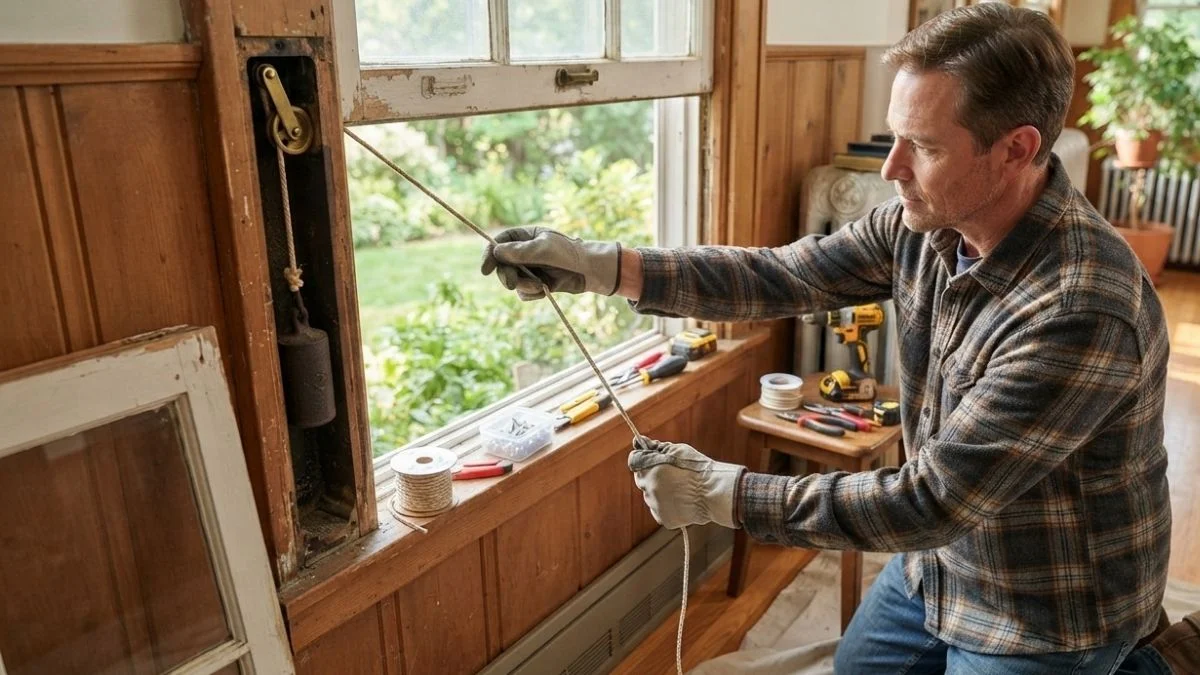
The cord-and-weight system uses a cast-iron counterweight hidden inside the wall cavity on each side of the window frame. A rope — the sash cord — runs from the sash, up and over a pulley mounted at the top of the jamb channel, then down to that counterweight. When everything works, the weight offsets the sash weight and holds it at any height.
These cords are typically made of braided cotton or nylon. In a 30-year-old Andersen window, expect fraying where the cord bends over the pulley, or a clean snap from years of repeated stress. The clearest sign of failure: the lower sash drops the moment you release it, or won’t lift at all.
Spring-Loaded Sash Balancers in Modern Andersen Windows
Windows manufactured after the mid-1990s replaced the weight pulley system with an enclosed spiral spring balance mechanism, often called a jamb liner balancer. There is no visible rope. The spring tension is built into a plastic cartridge that runs inside the jamb liner on each side of the frame.
To identify your system, check two things:
- Look at the window’s age — pre-1995 production strongly suggests cords and weights
- Open the lower sash and inspect the side channels — a visible rope and metal pulley confirms the cord system; a plastic track with no rope confirms a spring-loaded balance
Andersen double-hung window repair differs significantly between these two systems, so confirming this before you start saves both time and the wrong parts.
Step-by-Step Sash Cord Replacement
This process assumes you have confirmed a cord-and-weight system in an older Andersen double-hung window. Work on one side at a time to keep the opposite cord intact as a threading reference.
Removing the Window Sash Safely
Raise the lower sash to mid-height before the cord fails completely — a sudden drop can crack the glass or damage the frame. Unlock the sash latch, then grip both stiles (the vertical side rails) firmly. On most older Andersen models, the sash tilts inward once lifted past the jamb liner stops. Support the full sash weight as you extract it; these sashes are heavier than they look, especially with double-pane glass.
Accessing and Removing the Old Cord
With the sash out, examine the jamb liner — the plastic or wood channel running vertically inside the frame. Look for screws or snap-fit clips holding it in place. Remove fasteners carefully and pull the liner straight out without twisting. Behind it, you will find the sash cord channel, the pulley at the top, and a small access panel or removable block near the sill that opens to the weight cavity. Extract all frayed cord remnants from both the channel and the cavity.
Threading the New Sash Cord
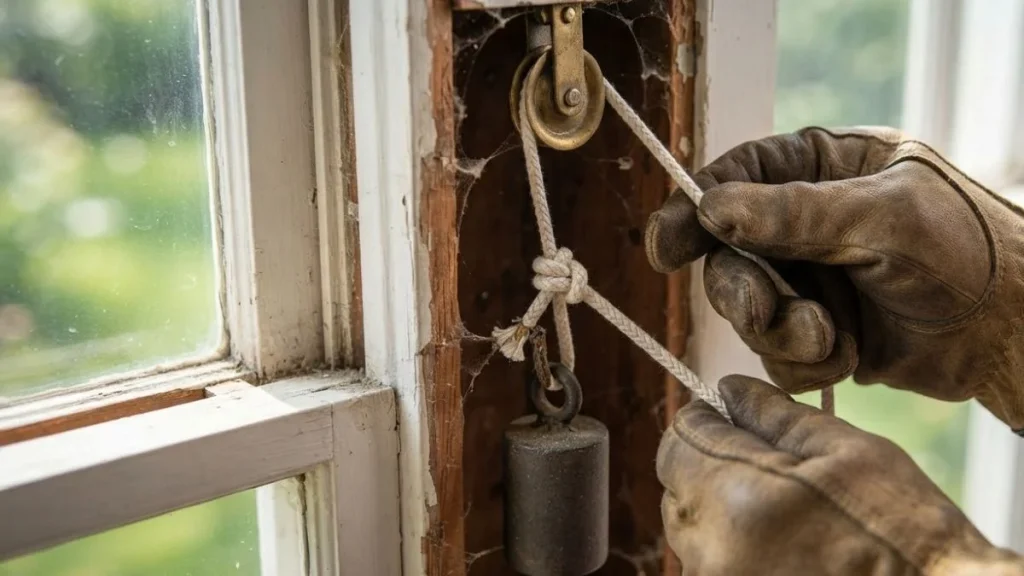
Andersen recommends 5/32-inch braided sash cord for most pre-2000 double-hung models. Feed one end down through the pulley and into the weight cavity, then tie it to the counterweight using a figure-eight knot — this knot resists slipping under load. Pull the cord taut, cut it to length at the sash groove, and tie another figure-eight knot there.
Reinstalling the Jamb Liner and Sash
Seat the jamb liner back into its channel and confirm every clip or screw fastener is fully engaged — a loose liner causes binding. Tilt the sash back into the frame top-first, press it into the jamb liner tracks, and release slowly. The sash should hold at any height with light resistance. Raise and lower it 3-4 full cycles to verify smooth, balanced operation before considering the job complete.
Repair vs. Replacement Decision
A broken sash cord does not automatically mean the window needs to go. But it does give you a natural stopping point to assess whether the repair investment makes sense against the window’s remaining useful life.
What the Numbers Actually Look Like
DIY sash cord replacement materials — cord, pulleys if worn, basic tools — run $50 to $150 depending on what needs replacing. A professional window repair service typically charges $200 to $400 for the same job, covering labor and parts. Full Andersen window replacement starts around $1,000 per window installed, and often runs higher for larger units or custom configurations.
The math favors repair in most cases, provided the window frame and glass seal are still sound.
The 30-Year Threshold
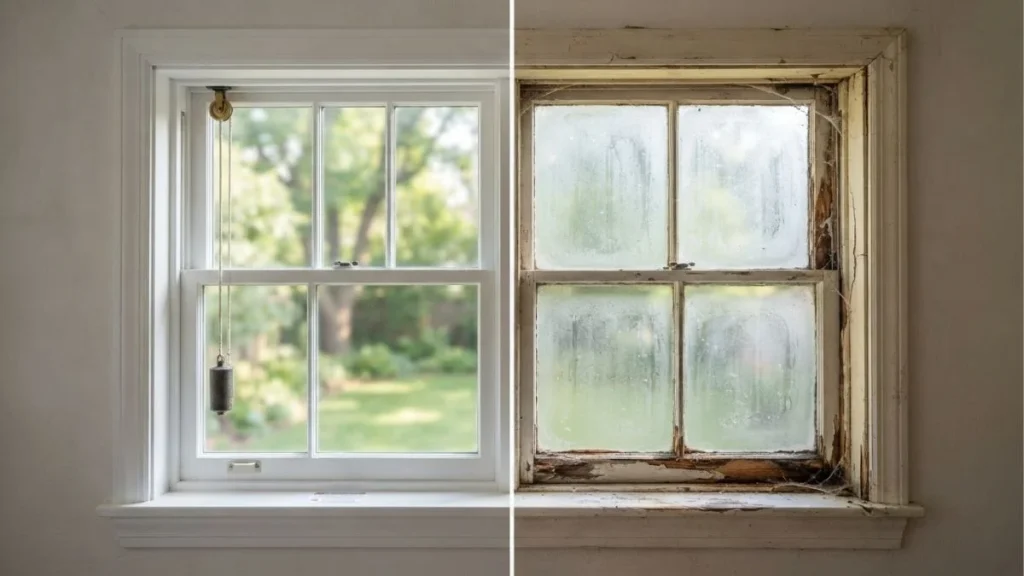
Windows past 30 years of service carry cumulative wear beyond cord fraying. Check the glazing compound around the glass, the wood frame for soft spots or rot, and the weatherstripping along the jamb liner. If two or more of these show significant deterioration alongside the broken cord, a single cord repair buys limited additional life.
Signs the Cord Isn’t the Real Problem
Some issues look like cord failure but point to deeper faults:
- Visible condensation or fogging between panes signals a failed insulating seal — cord replacement won’t fix this
- A sash that binds or sticks even with a intact cord suggests frame warping or swollen wood
- Cracked or crumbling jamb liner channels mean the double-hung window mechanism itself is compromised
In these cases, consult an Andersen-certified window contractor before committing to repair parts.
Read Also: Filling Gaps Around Window Frames
Frequently Asked Questions
Can You Replace Just the Sash Cord, or Does the Whole Balancer Need Replacement?
In older Andersen double-hung windows with a cord-and-weight system, you can replace the cord alone without touching the counterweight or pulley — provided the pulley spins freely and the weight itself is intact. Only replace the full assembly if the pulley is seized or the weight cavity is damaged.
How Do You Access Sash Cords in Modern Andersen Windows With Casing?
Most post-1990s Andersen windows use a spring-loaded jamb liner balancer rather than a rope-and-weight system, so there is no sash cord to access. If your window has visible trim casing over the jamb, remove the interior stop bead first, then slide out the jamb liner to reach the balance mechanism underneath.
Is It Better to Repair Old Cords or Replace the Entire Window?
Cord repair makes sense when the frame, glass seal, and jamb liner are all still structurally sound — materials cost $50 to $150 versus $1,000 or more for full window replacement. If the frame shows rot, the insulating seal has failed, or the jamb liner is cracked, replacement delivers better long-term value than repeated repairs.
Your Window’s Second Life Starts Here
A broken sash cord in a 30-year-old Andersen double-hung window is a mechanical failure with a mechanical fix — not a reason to spend $1,000 on replacement. Start today by confirming your system type: open the lower sash, inspect the jamb channel for a visible rope and pulley, and order 5/32-inch braided sash cord if you find one. If the frame is solid and the glass seal is clear, you have everything you need to complete this repair in a single afternoon.