

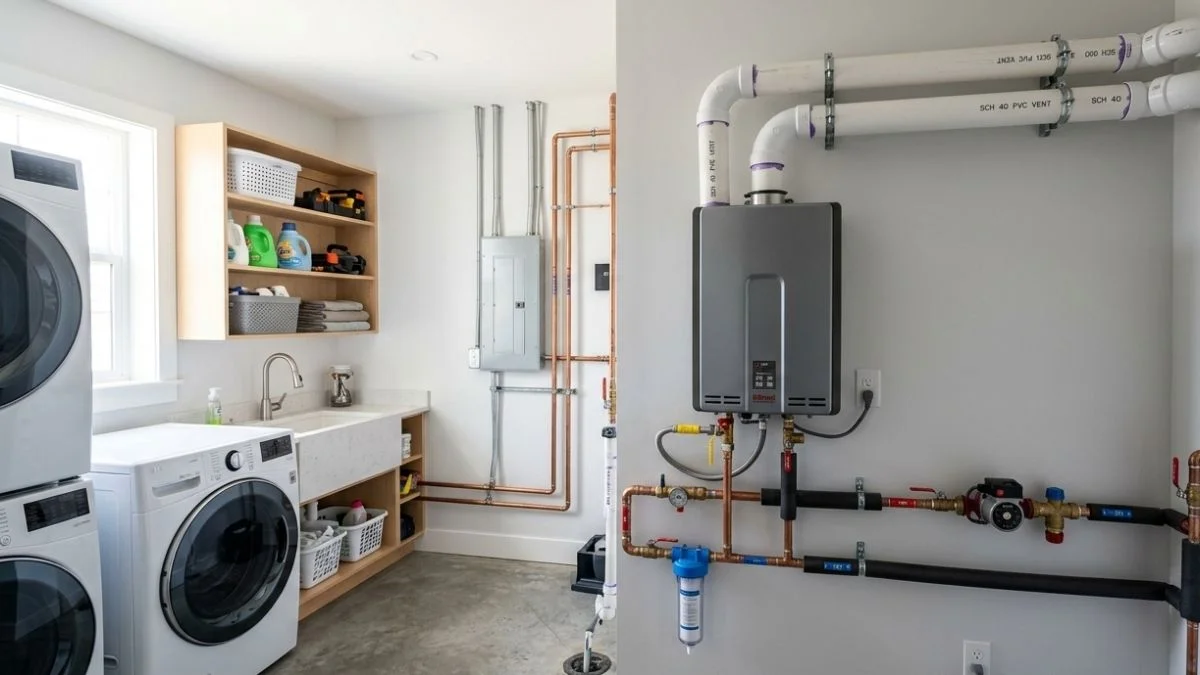
If you’ve decided to switch to a tankless water heater, you’ve already made a smart move. No more running out of hot water, lower energy bills, and a unit that lasts nearly twice as long as a traditional tank. But here’s the part most homeowners don’t think about until it’s too late — the air intake setup.
When you install a tankless water heater inside your home, the unit needs a steady supply of air to burn fuel properly. Get this wrong, and you’re looking at poor performance, unexpected shutdowns, error codes, and in worst-case scenarios, a real safety hazard. Before your installation day arrives, you need to understand exactly how indoor air intake works, what the code requires, and what mistakes to avoid.
This guide covers everything you need to know — from venting types to pipe sizing, common problems, and safety best practices.
What Is a Tankless Water Heater Air Intake and Why Does It Matter?
A gas-powered tankless water heater burns natural gas or propane to heat water on demand. For that combustion process to work safely and efficiently, the burner needs a constant supply of oxygen-rich air. That’s exactly what the air intake system provides — it draws fresh air into the unit so the burner can do its job.
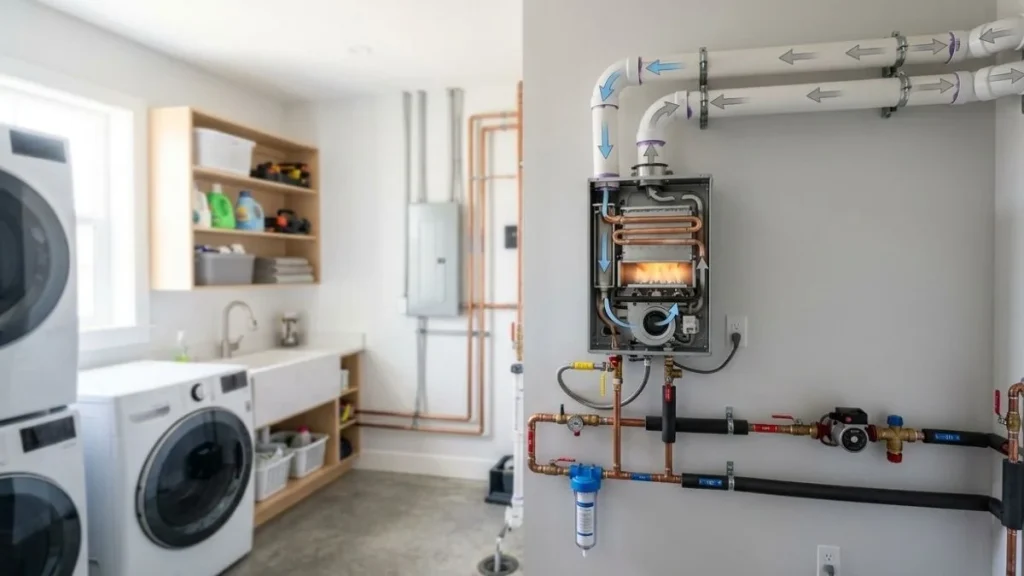
When the air intake is working correctly, you get clean combustion, consistent hot water, and a heater that runs efficiently. When it’s blocked, undersized, or improperly installed, the unit struggles. It may run lean on oxygen, produce carbon monoxide, throw error codes, or shut down completely to protect itself.
How Indoor Air Intake Is Different From Outdoor Units
Outdoor tankless water heaters don’t need a dedicated air intake pipe because they’re already sitting in open air. Indoor units are a different story. They’re enclosed inside your home, which means they need a carefully planned air supply — either pulled from the room itself or ducted in from outside through a dedicated pipe.
The challenge with indoor installations is that modern homes are well-sealed for energy efficiency. That’s great for your heating and cooling bills, but it works against gas appliances that need combustion air. In a tightly sealed home, an indoor tankless heater can actually depressurize the room it’s installed in, which creates a dangerous backdrafting risk.
This is why choosing the right venting and air intake system before installation isn’t optional — it’s a code requirement and a safety necessity.
Types of Venting Systems for Indoor Tankless Water Heaters
Not all indoor tankless water heaters are vented the same way. The type of venting system determines how the unit gets its combustion air and how it expels exhaust gases. Choosing the wrong one for your home can lead to installation headaches and safety issues.
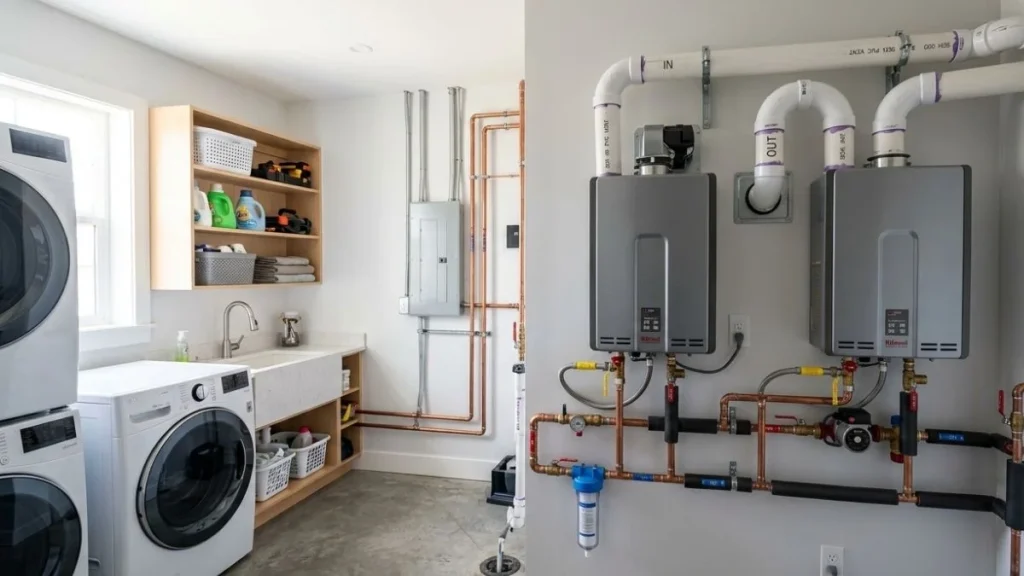
Direct Vent Systems (Sealed Combustion)
A direct vent system uses two separate pipes — one to pull fresh air in from outside and one to push exhaust gases out. Because the combustion air comes directly from outdoors, the unit is completely sealed off from the indoor air. This is the safest option for indoor installation, especially in tightly built homes.
Direct vent units are also less likely to be affected by negative pressure from exhaust fans or fireplaces because the combustion air supply is independent of the indoor environment. Most HVAC professionals and manufacturers recommend direct vent systems as the go-to choice for interior installations.
Power Vent Systems
Power vent units use a built-in fan to draw air from inside the room for combustion and then force the exhaust gases out through a single pipe. These are simpler to install because you only need one pipe running outside, but they rely on the indoor space having adequate air volume.
If the room is too small or too tightly sealed, a power vent unit won’t get enough combustion air. These systems work best in larger utility rooms, basements with good air circulation, or spaces that meet the minimum air volume requirements set by your local building code.
Concentric Venting (Two-in-One Pipe System)
Concentric venting uses a single pipe assembly with one pipe inside another — the inner pipe exhausts gases out while the outer pipe brings fresh air in simultaneously. It’s a clean, space-saving solution that’s popular in tight installation areas where running two separate pipes isn’t practical.
| Venting Type | Air Source | Pipes Required | Best For |
| Direct Vent | Outdoor air | 2 pipes | Tight homes, all climates |
| Power Vent | Indoor air | 1 exhaust pipe | Larger rooms, mild climates |
| Concentric Vent | Outdoor air | 1 combo pipe | Space-limited installations |
Indoor Air Intake Requirements — What the Codes Say
Before any installation begins, you need to understand what the building codes require. Installing a tankless water heater without meeting combustion air requirements can result in failed inspections, voided warranties, and serious safety risks.
National Fuel Gas Code (NFPA 54) Standards
The National Fuel Gas Code, published by NFPA, sets the baseline requirements for combustion air in indoor gas appliance installations across the U.S. According to these standards, the space where a gas appliance is installed must have sufficient air volume to support complete combustion.
For standard installations, the general rule is 50 cubic feet of space per 1,000 BTUs of the appliance’s total input rating. So if your tankless water heater runs at 180,000 BTUs, the installation room needs at least 9,000 cubic feet of space — or you need to bring in outdoor air through a dedicated intake system.
Local Building Code Considerations
National codes set the floor, but local jurisdictions can and often do require more. Some cities and states have stricter rules around combustion air, especially in areas with high-efficiency construction standards. Always check with your local building department before installation, and pull the required permit. Skipping the permit isn’t worth the risk — it can affect your home insurance coverage and create problems when you sell the house.
Manufacturer Specifications
Every tankless water heater brand has its own installation requirements built around the specific unit’s design and BTU output. Brands like Rinnai, Navien, Rheem, and Noritz each publish detailed installation manuals that cover minimum clearances, pipe sizing, maximum pipe lengths, and approved materials. These specs are not suggestions — violating them can void your warranty, even if the installation otherwise meets code.
How to Set Up an Indoor Air Intake for a Tankless Water Heater
Once you understand the requirements, proper setup comes down to four key decisions: location, pipe sizing, pipe material, and pipe length.
Choosing the Right Location
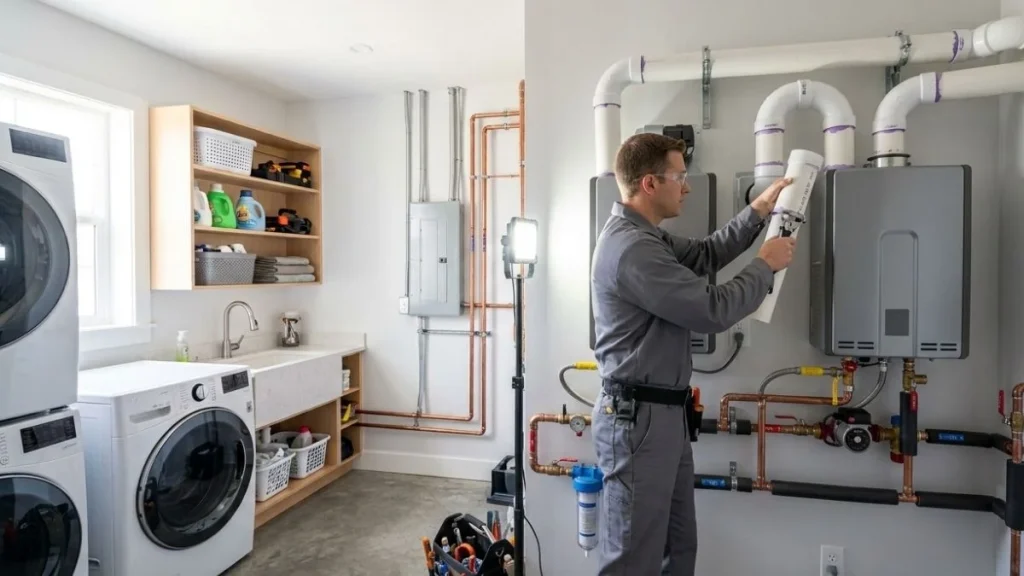
The best locations for indoor tankless water heater installation are utility rooms, basements, and attached garages. These spaces typically offer enough air volume and easier access to exterior walls for venting. Avoid installing in fully enclosed closets or small bathrooms without proper air supply ducting.
Key clearance requirements to keep in mind:
- Minimum 12 inches of clearance on each side for most units
- At least 12–18 inches in front for service access
- Keep away from flammable materials and direct water spray areas
Sizing the Air Intake Pipe Correctly
Pipe diameter directly affects how much air the unit receives. Most residential tankless water heaters require either a 3-inch or 4-inch intake pipe, depending on the BTU rating and pipe run length. Always follow the manufacturer’s sizing chart rather than guessing — an undersized pipe starves the burner of air, while an oversized pipe can cause backdraft issues.
Air Intake Pipe Materials
- PVC (Schedule 40): Acceptable for most direct vent systems with flue temps under 140°F. Always verify with your manufacturer.
- CPVC: Handles slightly higher temperatures than standard PVC.
- Stainless Steel: Required for high-temperature exhaust pipes; sometimes used for intake in premium installations.
- ABS: Approved by some manufacturers but not universally accepted — check your local code.
How Long Can the Air Intake Pipe Run?
Most manufacturers allow a maximum of 50 to 100 feet of equivalent pipe length for the air intake. However, every 90-degree elbow you add typically counts as 5 feet of equivalent length, and 45-degree elbows count as about 2.5 feet. Keep the pipe run as short and straight as possible for best performance.
Common Indoor Air Intake Problems and How to Fix Them
Even well-installed systems can develop problems over time. Knowing what to look for helps you catch issues before they become expensive repairs.
Insufficient Combustion Air
Warning signs:
- Unit shuts off mid-cycle
- Error codes related to combustion or flame failure (e.g., Navien Code 10E, Rinnai Code 11)
- Visible yellow or flickering burner flame instead of blue
- Increased exhaust smell near the unit
Fix: Verify the room air volume meets code, check for newly added weatherstripping or sealing that may have reduced air supply, or upgrade to a direct vent system with a dedicated outdoor intake pipe.
Blocked or Restricted Air Intake Pipe
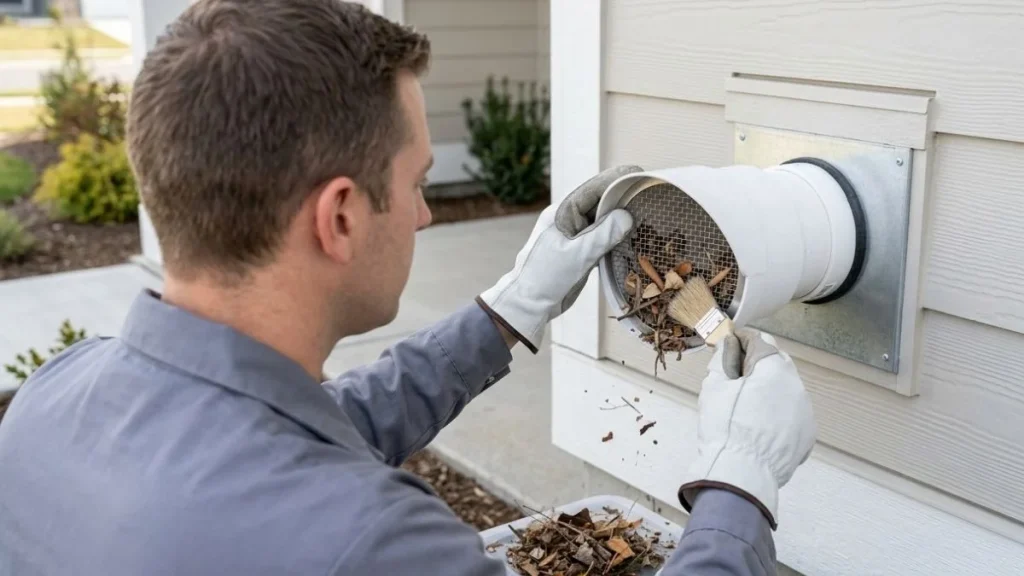
Over time, the outdoor termination of the air intake pipe can get blocked by debris, bird nests, or ice in cold climates. A blocked intake immediately reduces combustion air and triggers shutdowns.
Fix: Install a proper intake termination cap with a screen to block pests and large debris. Check and clean the termination point at least twice a year — once before winter and once in early spring.
Backdrafting
Backdrafting happens when exhaust gases are pulled back into the home instead of being expelled outside. It’s most common in tightly sealed homes where kitchen exhaust fans, bathroom fans, or fireplaces create negative pressure that overpowers the venting system.
Fix: Switch to a sealed combustion direct vent system, which is completely isolated from indoor air pressure. Alternatively, install a makeup air vent in the utility room to balance indoor pressure. Always install a carbon monoxide detector within 10 feet of any gas appliance.
Safety Tips for Indoor Tankless Water Heater Air Intake
Safety isn’t something to cut corners on with gas appliances. Follow these non-negotiable practices:
- Use sealed combustion whenever possible — it eliminates backdraft risk entirely
- Install a CO detector within 10 feet of the unit and test it monthly
- Never install in a completely sealed room without proper air ducting
- Schedule annual inspections with a licensed technician to check intake and exhaust integrity
- Use only manufacturer-approved pipe materials — wrong materials can off-gas or fail under heat
- Hire a licensed plumber or gas fitter for the gas line connection — this is not a DIY step
Indoor vs. Outdoor Installation — Which One Is Right for You?
| Factor | Indoor Installation | Outdoor Installation |
| Climate suitability | All climates | Mild climates (risk of freezing) |
| Air intake needed | Yes — dedicated system required | No — uses ambient outdoor air |
| Installation cost | Higher (venting + intake pipes) | Lower (simpler setup) |
| HOA restrictions | Usually not visible | May conflict with HOA rules |
| Freeze protection | Not needed | Required in cold climates |
If you live in a cold climate where outdoor units risk freezing, or if your home’s exterior doesn’t allow for easy unit mounting, indoor installation is the smarter choice — just make sure your air intake setup is done right.
Read Also: Is An Expansion Tank Required For A Water Heater
Conclusion
Installing a tankless water heater inside your home is an excellent long-term investment — but only when the air intake is set up correctly. Skipping this step or underestimating its importance is one of the most common and costly mistakes homeowners make during this upgrade.
Before your installation day, confirm your venting type, verify that your setup meets both national and local code requirements, and follow your manufacturer’s specifications to the letter. When in doubt, bring in a licensed professional — the cost of a proper installation is always less than fixing a problem after the fact.
Get the air intake right, and your tankless water heater will deliver reliable hot water and efficient performance for 20 years or more.