


You walk outside on a clear, sunny afternoon and notice water dripping from your gutter. You look up at the sky — not a cloud in sight. No rain last night. No rain for the past two days. So where is that water coming from?
If this sounds familiar, you’re not alone. Homeowners across the country deal with this confusing situation every year, and most have no idea what’s causing it. The good news? It’s almost always fixable. The not-so-good news? It’s never something you should just ignore. Water dripping from a gutter with no rain is always telling you something — and your job is to figure out what.
We’ll walk through every possible cause, show you how to find the source, and cover the best fixes to protect your home before the problem gets expensive.
Is It Normal for Gutters to Drip When It’s Not Raining?
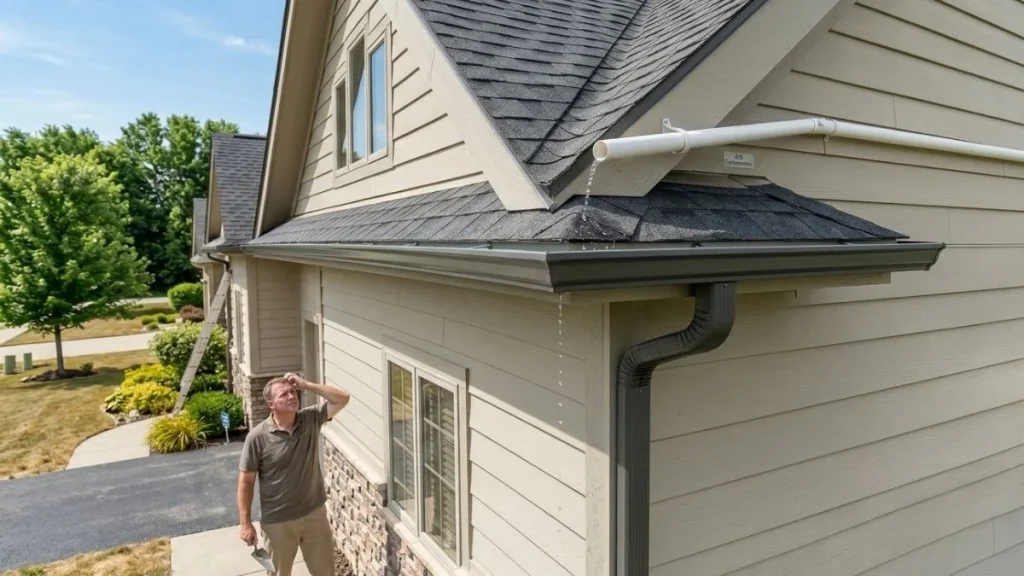
The short answer is no — it’s not normal. Gutters have one job: to collect rainwater from your roof and direct it safely away from your home’s foundation. When it’s not raining, your gutters should be completely dry. If water is dripping from them on a clear day, something is off.
That said, “not normal” doesn’t automatically mean “call a contractor immediately.” Some causes are harmless and easy to fix yourself in an afternoon. Others are signs of a bigger problem developing quietly behind your fascia boards or inside your roof structure.
The key is to figure out which situation you’re dealing with. Letting it go without investigation is what turns a $20 fix into a $2,000 repair.
7 Most Common Reasons Your Gutter Is Dripping Without Rain
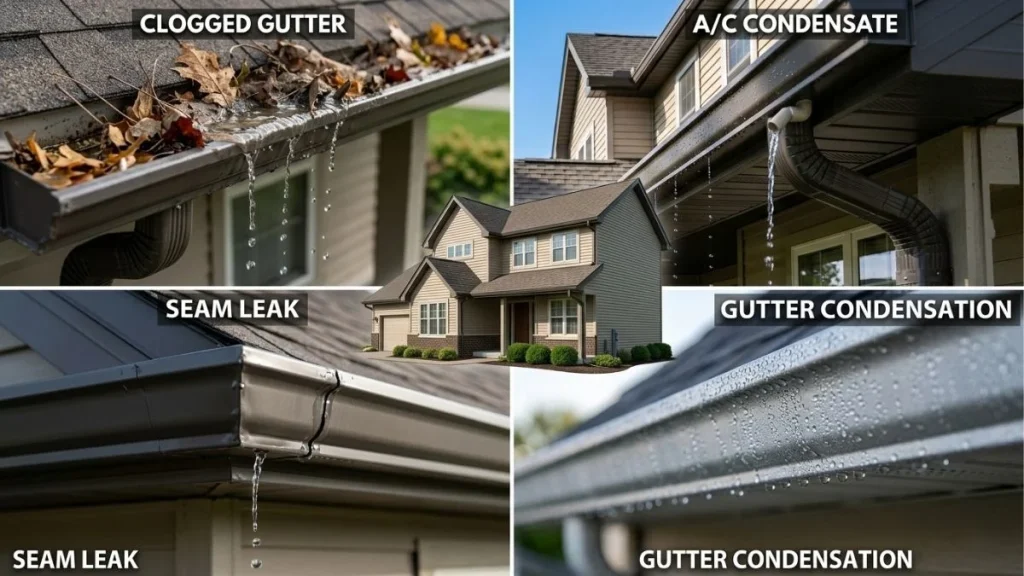
1. Condensation Buildup on the Gutter Surface
This is one of the most misunderstood causes — and also one of the most harmless. Condensation happens when the metal surface of your gutter is significantly cooler than the warm, humid air surrounding it. Moisture from the air settles on the gutter’s surface and eventually drips off, just like water forms on the outside of a cold glass of lemonade on a summer day.
You’re most likely to see this in the early morning hours, during humid summer weather, or in regions where temperature swings between night and day are dramatic. The dripping is usually light and stops once the gutter warms up.
How to tell it’s condensation: The dripping is minimal, occurs mostly in the morning, and there’s no visible source of water entering the gutter from above.
While condensation itself won’t damage your gutters, consistent moisture on the fascia boards behind them can lead to wood rot over time. Keep an eye on it and make sure your gutters are properly ventilated.
2. Trapped Water from a Previous Rainstorm
If it rained a few days ago and you’re still seeing drips, standing water inside the gutter is likely the culprit. Gutters are designed to slope slightly toward the downspout so water flows out naturally. But if the slope (also called the pitch) is off — even slightly — water pools inside the gutter and sits there until it eventually drips through seams or low spots.
This is more common than most homeowners realize. Over time, gutter hangers can loosen, the wood fascia board behind them can warp, or sections can sag under the weight of debris. Any of these can throw off the slope enough to create standing water.
How to tell this is your problem: The dripping slows and eventually stops after a few days of dry weather. You may also notice the gutter sagging slightly in the middle when you look at it from the ground.
The fix: Check the pitch of your gutters using a level. The correct slope is roughly ¼ inch of drop for every 10 feet of gutter run toward the downspout. If it’s off, you’ll need to re-secure the hangers at the correct angle.
3. Your AC Unit Is Draining Through or Near the Gutter
This one surprises a lot of homeowners. Central air conditioning systems produce a significant amount of condensate water as they cool your home — sometimes several gallons per day during hot weather. Most HVAC systems route this water out through a PVC drain line. Where that line exits matters a lot.
In some homes, especially older ones, the condensate line was routed toward the roofline or directly into the gutter system. This means your AC is essentially pumping water into your gutters all day long while the sun is shining and there’s not a cloud in the sky.
How to tell your AC is the cause: The dripping is consistent, occurs only when your air conditioner is running, and stops completely when you turn the AC off. The drip point is usually close to where the condensate line exits the house.
The fix: Have an HVAC technician reroute the condensate drain line to discharge at ground level, away from your home’s foundation and gutter system. This is a straightforward, inexpensive job for a professional.
4. Ice or Snow Melting on the Roof
If you live in a colder climate and it’s late winter or early spring, the culprit might be right above you — on your roof. Snow and ice accumulate on the roof’s surface during cold weather, and when daytime temperatures rise above freezing, that snow and ice begins to melt. The meltwater flows down the roof and into the gutters, where it drips out on what is otherwise a perfectly clear, dry day.
This is completely normal in cold climates during seasonal transitions. However, there’s a more serious version of this problem worth knowing about: ice dams. An ice dam forms when heat from inside your home warms the upper portion of the roof, melting snow there. That water flows down to the colder eaves and refreezes. As the dam grows, it traps water behind it, which can back up under your shingles and into your home.
Warning signs of ice dams: Icicles forming along the roofline, water stains on interior ceilings or walls near the eaves, and dripping that seems to come from behind the gutter rather than inside it.
If you suspect ice dams, address the root cause — inadequate attic insulation and ventilation — before next winter.
5. A Leaking or Failing Gutter Joint or Seam
Sectional gutters are installed in pieces that connect at seams. These seams are sealed with caulk or gutter sealant, but that sealant doesn’t last forever. Sun exposure, temperature fluctuations, and the constant weight of water and debris cause the sealant to crack and pull away over time. When this happens, even a small amount of trapped water can drip through.
This is one of the most common causes of mystery gutter drips and one of the easiest to fix yourself.
Signs of a failing seam: Rust stains running down the outside of the gutter below the joint, visible gaps or cracks at the connection point, or sealant that looks dried out, cracked, or missing entirely.
The fix: Clean the inside of the joint thoroughly with a wire brush, let it dry completely, and apply a fresh bead of waterproof gutter sealant. For larger gaps or corrosion, you may need to replace the damaged section entirely.
6. Animal or Debris Blockage Causing Water Backup
Gutters clogged with leaves, twigs, shingle grit, or animal nests don’t drain properly — even after the rain stops. Water gets trapped behind the blockage and slowly finds its way out through the weakest point in the system, whether that’s a loose seam, a crack, or a low spot in the gutter.
Bird nests are a surprisingly common cause. Birds are drawn to the sheltered channel of a gutter, especially in spring. A single nest can completely block a section and cause significant water backup.
Signs of a blockage: Visible debris or vegetation growing from the gutter, water dripping from an unusual mid-section point rather than a joint, or the gutter looking saggy under extra weight.
The fix: Clean your gutters at least twice a year — once in late spring and once in late fall after the leaves have dropped. Installing a quality gutter guard system can significantly reduce debris buildup between cleanings.
7. A Roof Leak or Plumbing Vent Issue Redirecting Water
This is the least common cause but the most serious. In some cases, a leak in the roof or a problem with a plumbing vent stack can allow water to travel along the roof deck or rafters and eventually appear near or behind the gutter. From the outside, it looks like the gutter is dripping. But the actual source is higher up.
Warning signs this might be your problem: Water stains on the fascia board or soffit, a damp or musty smell near the roofline, peeling paint on exterior walls near the gutter, or interior ceiling stains near the eaves.
If you’re seeing any of these signs alongside the dripping, skip the DIY approach and call a roofing professional for a full inspection.
How to Figure Out Exactly Where the Drip Is Coming From
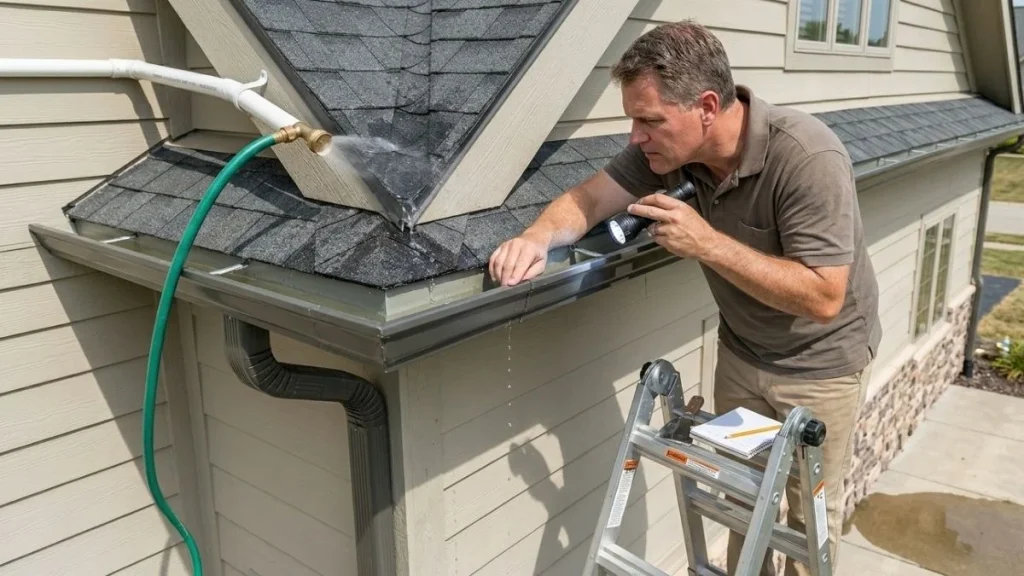
Before you spend a dime on repairs, take 20 minutes to do a proper visual inspection. Here’s how to approach it:
Start at the drip point and work upward. Where exactly is the water coming from? Is it dripping from a seam? From the middle of a gutter section? From behind the gutter near the fascia? The location tells you a lot.
Check the gutter interior. If you can safely get on a ladder, look inside. Is there standing water? Debris? Visible cracks or holes in the bottom?
Inspect the fascia and soffit. Look at the wood behind and below the gutter. Any staining, soft spots, peeling paint, or visible rot indicates persistent moisture — a sign the problem has been going on longer than you realize.
Test with a garden hose. On a dry day, run water slowly into the gutter from the end farthest from the downspout. Watch where water appears on the outside. This helps you pinpoint exact leak locations that might not be visible to the eye.
Check whether your AC is running. Turn your AC off for 30 minutes and watch whether the dripping stops. If it does, you’ve found your answer.
How to Fix a Gutter That’s Dripping Without Rain
| Problem | DIY or Pro? | Estimated Cost |
| Gutter seam leak | DIY | $5–$20 (sealant) |
| Improper slope/pitch | DIY | $0–$50 (hardware) |
| Clogged gutters | DIY | $0–$30 (tools) |
| AC condensate rerouting | Pro | $75–$200 |
| Gutter section replacement | DIY/Pro | $50–$250 |
| Roof leak or ice dam damage | Pro | $300–$1,500+ |
DIY Fixes You Can Handle This Weekend
Resealing a gutter joint: Remove old sealant with a putty knife or wire brush. Clean the area with a dry cloth. Apply a generous bead of waterproof gutter sealant (silicone or rubberized) along the inside of the seam. Smooth it with your finger and let it cure for 24 hours before testing.
Adjusting the gutter slope: Use a level to check the current pitch. If water is pooling, the hangers need to be adjusted. Remove the gutter screws or spikes holding the sagging section, reposition the hanger so the gutter slopes ¼ inch per 10 feet toward the downspout, and re-secure.
Clearing a blockage: Scoop debris out by hand or with a plastic gutter scoop. Flush the gutter with a garden hose from the far end toward the downspout. If the downspout is clogged, use a plumber’s snake or a high-pressure hose attachment to clear it.
Read Also: How to Install Gutter Guards on Metal Roof
When to Call a Professional
Some gutter problems are beyond the average DIY weekend project. Call a professional if:
- You find soft, rotted wood on the fascia or soffit boards
- The gutter is pulling away from the roofline along multiple sections
- You see water stains on interior ceilings near the eaves
- You suspect a roof leak is involved
- The entire gutter system is more than 20 years old and failing in multiple places
How to Prevent Gutter Dripping Problems in the Future
The best fix is the one you never have to make. A consistent maintenance routine keeps your gutters flowing properly year-round.
Seasonal Gutter Maintenance Checklist
- Spring: Clear out winter debris, check for damage caused by ice or heavy snow, inspect and reseal any open joints
- Summer: Check that AC condensate lines aren’t draining into the gutter system; inspect after major storms
- Fall: Clean leaves and debris before they compact and create blockages; consider installing gutter guards before winter
- Winter: Remove ice buildup promptly; check for sagging caused by snow weight
Smart Long-Term Upgrades Worth Considering

If your gutters are giving you repeated trouble, it may be time to think about a longer-term solution rather than patching the same problems every year.
Seamless gutters are cut from a single piece of aluminum to the exact length of your roofline, eliminating most of the seams where leaks develop. They cost more upfront but dramatically reduce maintenance.
Micro-mesh gutter guards are the most effective type of debris protection on the market. They allow water in while blocking leaves, seeds, and pine needles. Expect to pay $10–$20 per linear foot installed.
Heated gutter cables are a smart investment for homes in cold climates. They prevent ice dams from forming and eliminate the freeze-thaw cycle that destroys gutter seams over time.
Conclusion
Water dripping from your gutter on a dry day is never something to just shrug off and forget about. It always has a cause — and left alone, most of those causes get worse and more expensive over time. The good news is that the majority of gutter dripping problems are completely fixable without a major investment, especially if you catch them early.
Take 15 minutes this weekend to inspect your gutters. Look for the signs covered in this guide. Run a hose test if you’re not sure where the water is coming from. And if you find something beyond a simple seam seal or cleaning job, don’t hesitate to bring in a professional before minor water damage turns into a structural problem.
Your gutters protect your roof, your walls, and your foundation every time it rains. A little attention on a dry day goes a long way.