
When it’s time to install hardwood floors, most homeowners hit the same wall — should you glue it down or nail it down? It sounds like a simple question, but the answer can make or break your entire flooring project. Choose the wrong method for your subfloor type, and you could end up with squeaky boards, adhesive failures, or floors that shift and gap over time.
Both glue down and nail down installations have their place. Each method works beautifully — but only under the right conditions. This guide breaks down everything you need to know so you can walk into your flooring project with confidence, not confusion.
Glue vs Nail Hardwood Floor — A Side-by-Side Comparison
Installation Process
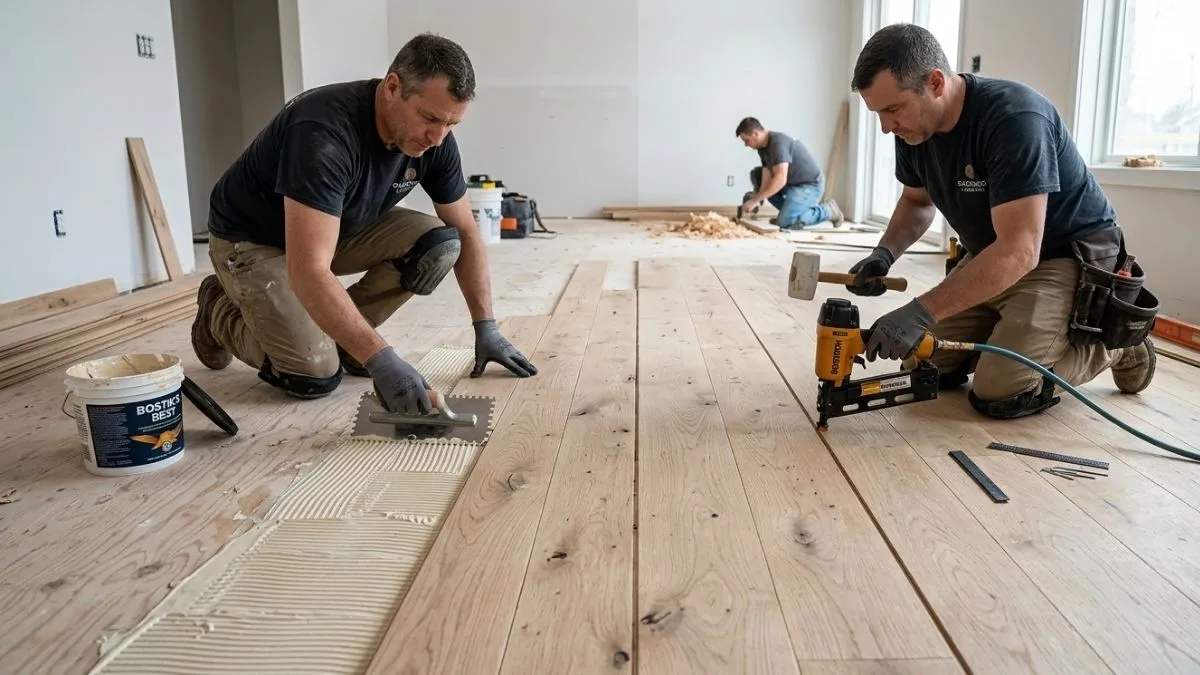
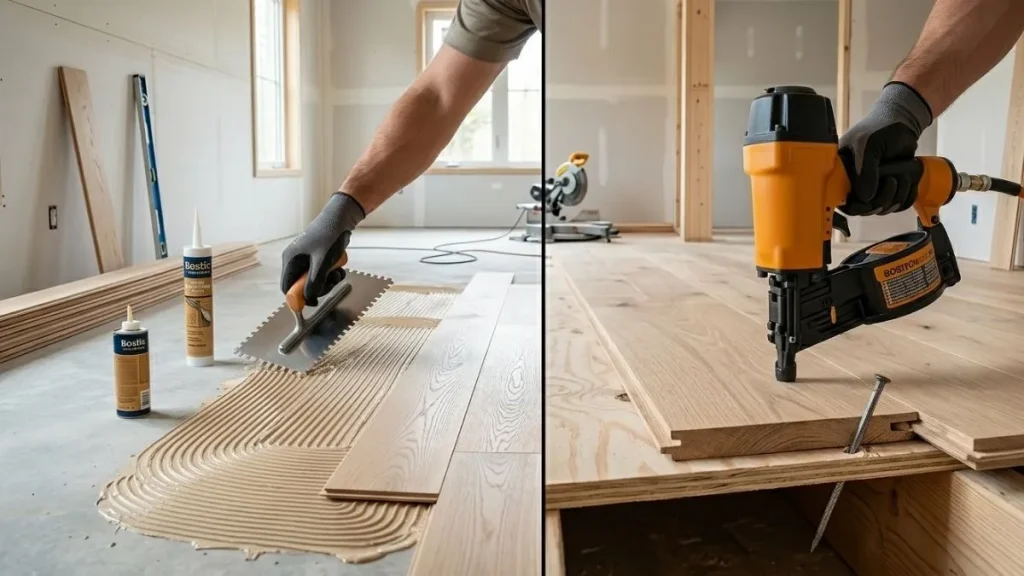
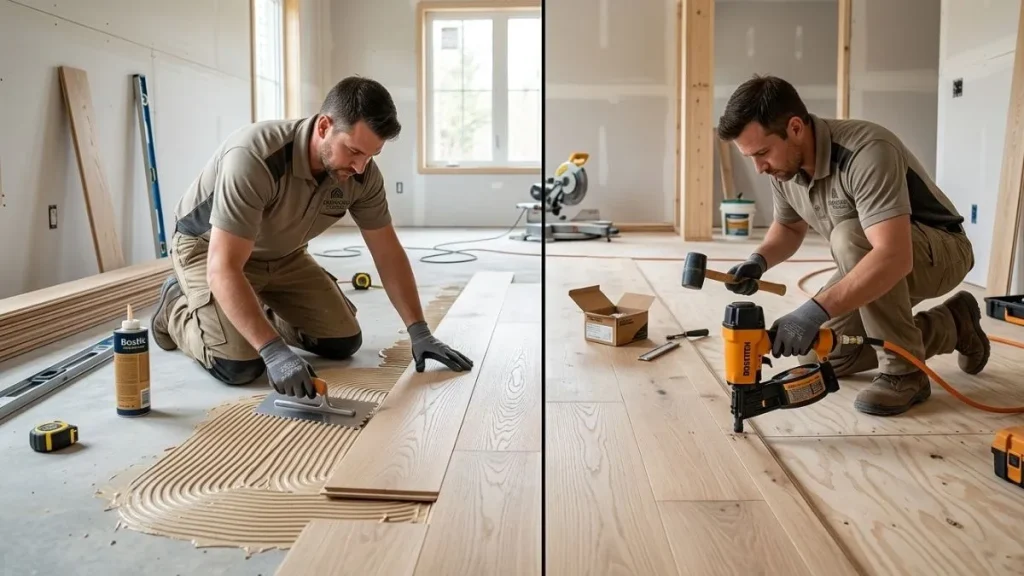
The nail down process moves quickly once the subfloor is prepped. A flooring nailer drives cleats or staples through the tongue of each board at a 45-degree angle, locking it snugly against the previous plank. Experienced installers can cover 200 to 300 square feet in a single day with minimal downtime.
Glue down installation is more involved. The installer spreads adhesive in sections using a notched trowel, lays each plank carefully into the wet adhesive, and uses a rubber mallet to ensure full contact. The process is slower, and the floor needs adequate cure time before furniture can be moved back in.
Subfloor Compatibility
| Subfloor Type | Nail Down | Glue Down |
| Plywood / OSB | ✅ Ideal | ✅ Works well |
| Concrete Slab | ❌ Not suitable | ✅ Best method |
| Radiant Heat System | ⚠️ Limited use | ✅ Recommended |
| Existing Hardwood | ✅ Possible | ✅ Possible |
Subfloor type is the single most important factor in choosing your installation method. If you have a concrete slab, glue down is essentially your only solid hardwood option.
Cost Comparison
Nail down installation tends to be more affordable overall. Labor costs run between $3 to $5 per square foot, and the fasteners themselves are inexpensive. The biggest tool investment is renting or buying a pneumatic flooring nailer, which runs $40 to $60 per day to rent.
Glue down installation costs slightly more — typically $4 to $7 per square foot for labor — largely because the process takes longer and quality adhesive isn’t cheap. A single gallon of urethane flooring adhesive covers roughly 40 to 50 square feet and costs $30 to $50.
Durability and Long-Term Performance
Both methods deliver excellent long-term durability when installed correctly. Nail down floors are slightly more forgiving of seasonal wood movement because the fasteners allow micro-movement without breaking the bond. Glue down floors, on the other hand, tend to feel more solid underfoot because every square inch of the plank is bonded to the subfloor — there’s no flex or bounce.
Sound and Comfort Underfoot
This is where glue down has a clear edge. Because the boards are fully bonded to the subfloor, there’s no hollow space for sound to reverberate — the floor feels dense and quiet. Nail down floors can sometimes develop squeaks over time if fasteners loosen slightly or if there’s any subfloor movement. Proper installation minimizes this, but it’s a more common complaint with nail down floors than glue down.
When to Choose Nail Down Hardwood Floor Installation
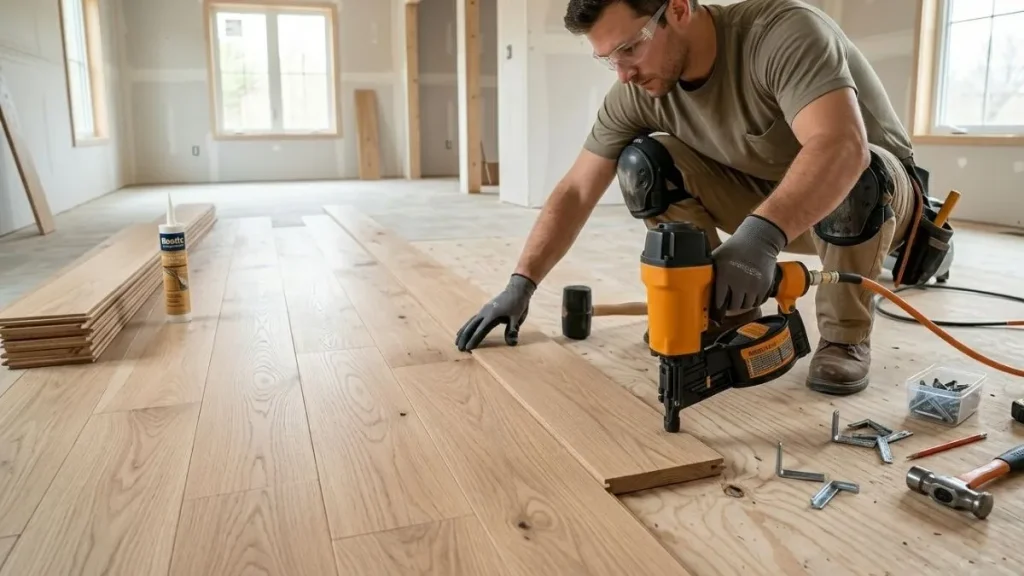
Nail down is the right call in most standard above-grade installations. If your home has a plywood subfloor on the main level or upper floors, nail down is likely the faster, more cost-effective, and more straightforward choice.
Nail down works best when:
- You’re installing solid hardwood (¾ inch thick) over plywood or OSB
- The installation is on the ground floor or above (not below grade)
- You want an easier board replacement process if damage occurs later
- Budget is a consideration and you want to keep labor costs lower
Pros of Nail Down Installation:
- Faster installation with less downtime
- No adhesive cure time — floors are usable sooner
- Individual boards can be replaced more easily
- Lower material costs overall
Cons of Nail Down Installation:
- Cannot be used on concrete subfloors
- Requires a pneumatic nailer — not truly hand-tool friendly
- Small risk of squeaking if subfloor has soft spots or movement
- Subfloor must be clean, flat, and structurally sound
When to Choose Glue Down Hardwood Floor Installation
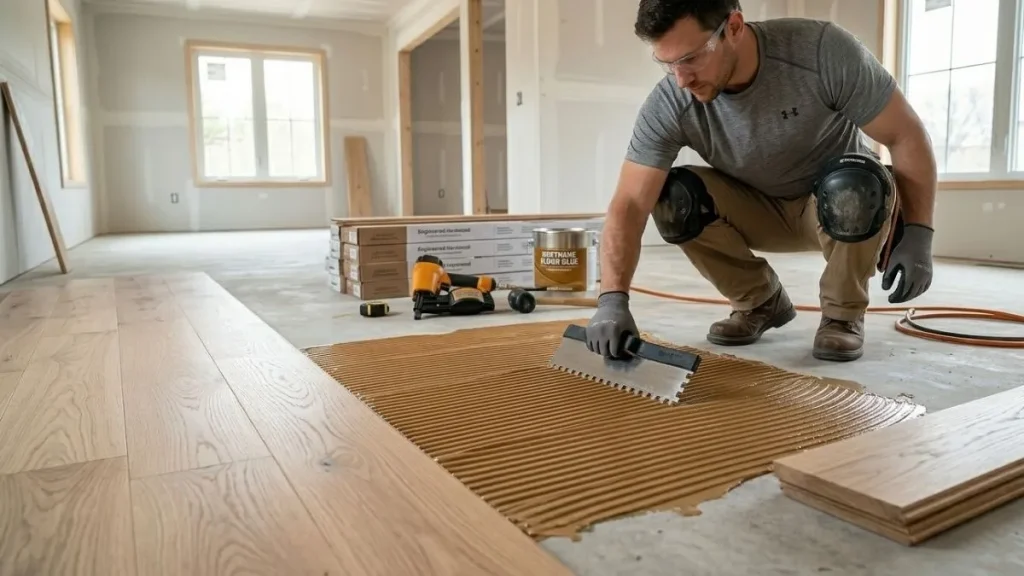
Glue down is the method of choice when concrete is involved — full stop. It’s also the preferred option for engineered hardwood installations in high-traffic areas or rooms where sound transmission between floors is a concern.
Glue down works best when:
- Your subfloor is a concrete slab (common in basements, ranch homes, and condos)
- You have a radiant floor heating system installed beneath the subfloor
- You’re installing engineered hardwood in a high-traffic area
- You want maximum stability and a solid, quiet feel underfoot
Pros of Glue Down Installation:
- Works on concrete — expands your installation options significantly
- Superior sound dampening and underfoot feel
- Ideal for radiant heat systems
- Reduces board movement and gapping over time
Cons of Glue Down Installation:
- Adhesive is messy and requires careful, experienced application
- Longer installation timeline due to cure time
- Board replacement is difficult — adhesive bonds are hard to break cleanly
- Higher material and labor costs compared to nail down
Key Factors to Consider Before Choosing Your Installation Method
Your Subfloor Type
Start here — always. Identify whether your subfloor is wood-based (plywood or OSB) or a concrete slab. If you’re unsure, tap the floor with your knuckles. A hollow sound typically indicates a wood subfloor with a crawl space or basement below. A dense, solid thud usually means concrete. You can also check your home’s blueprints or ask a flooring professional to inspect it before you buy materials.
The Type of Hardwood You’re Installing
Solid hardwood — the classic ¾ inch thick planks — is almost always installed using the nail down method on wood subfloors. Engineered hardwood, which has a plywood core and a real wood veneer on top, is more dimensionally stable and works well with both glue down and floating methods. If you’re working with wider planks (over 5 inches), glue down is often recommended regardless of subfloor type, because wide planks are more prone to cupping and movement if not fully bonded.
Your Home’s Climate and Humidity Levels
Wood expands and contracts with changes in humidity — this is a fact of nature you can’t avoid, but you can plan for it. In humid climates like the American Southeast, engineered hardwood with glue down installation handles moisture-driven movement better than solid nail down floors.
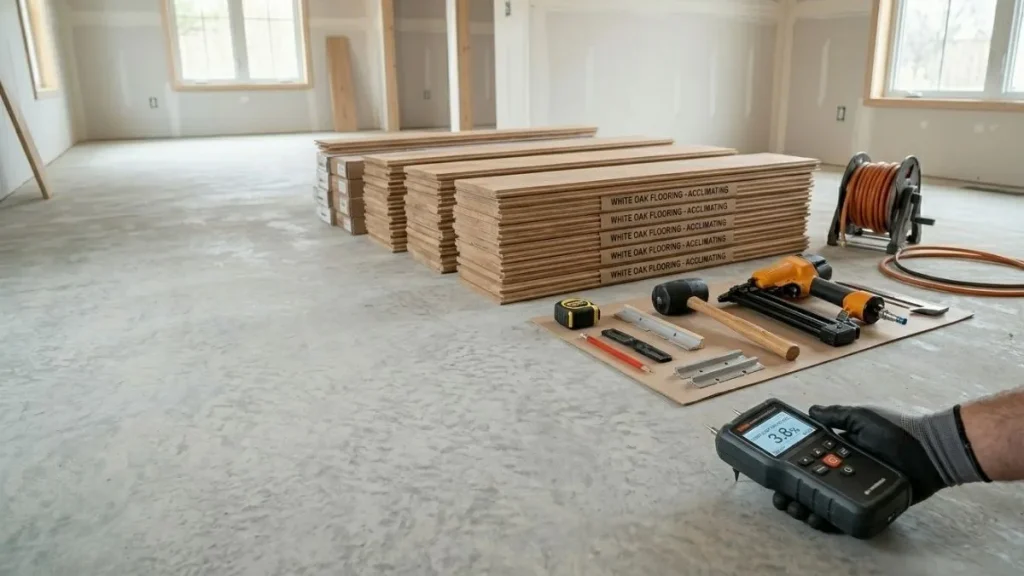
In dry climates, both methods perform comparably well. Always test subfloor moisture levels before installation — a reading above 4% in wood subfloors or 75% relative humidity at slab level is a red flag that needs to be addressed before any flooring goes down.
DIY vs. Hiring a Professional
Nail down installation is more beginner-accessible than glue down — if you’re comfortable using a pneumatic nailer and have done basic home improvement projects before, it’s a manageable weekend job for smaller rooms. Glue down installation, however, has a steeper learning curve.
Spreading adhesive evenly, working in sections before it sets, and ensuring full board contact requires experience. One wrong move with adhesive can mean a permanently uneven board or a floor that delaminates within a few years. For glue down projects, hiring a licensed flooring contractor is money well spent.
Expert Tips for a Successful Hardwood Floor Installation
Prepare Your Subfloor Properly
No installation method can compensate for a bad subfloor. Before you lay a single plank, the subfloor must be clean, flat (within 3/16 inch over a 10-foot span), dry, and structurally sound. Any high spots should be sanded down; low spots should be filled with a floor-leveling compound. Skipping this step is the number one reason hardwood floors fail prematurely — regardless of whether they were glued or nailed.
Acclimate Your Hardwood Before Installation
Hardwood needs time to adjust to the temperature and humidity of its new environment before installation. Stack the planks in the room where they’ll be installed — with spacers between rows for airflow — for at least 3 to 5 days. Solid hardwood may need up to 7 days in climates with significant humidity. Installing wood that hasn’t acclimated properly leads to post-installation expansion, gapping, and buckling.
Choose the Right Adhesive for Glue Down Floors
Not all flooring adhesives are created equal. For most hardwood installations over concrete, a moisture-cure urethane adhesive is the professional standard — it bonds strongly, handles minor moisture vapor transmission from concrete, and provides a slight cushion that improves underfoot comfort. Avoid cheap, solvent-based adhesives — they tend to off-gas, degrade over time, and offer weaker long-term bonds.
Prevent Squeaks from Day One with Nail Down Floors
The best way to prevent squeaky nail down floors is to ensure proper fastener spacing — typically every 8 to 10 inches along the length of each board — and to verify that the subfloor is screwed down tightly before you start. Any existing squeaks or soft spots in the subfloor should be fixed with screws driven into the joists before installation begins. Silencing a squeak before the floor goes down takes 30 seconds; silencing it after takes an afternoon.
Glue vs Nail Hardwood Floor — Which One Should You Choose?
Here’s the straightforward answer most homeowners are looking for:
Choose nail down if you have a plywood or OSB subfloor, you’re installing solid hardwood, and you’re working on the main or upper level of your home. It’s faster, less expensive, and easier to repair over time.
Choose glue down if you have a concrete slab subfloor, you’re installing over radiant heat, or you want the quietest, most solid-feeling floor possible. It costs more and takes longer, but in the right situation, nothing beats it for stability and sound quality.
When in doubt — especially for large-scale projects, unusual subfloor conditions, or high-end hardwood — consult a certified flooring professional before you buy materials. A one-hour consultation can save you thousands in mistakes..
Conclusion
Choosing between glue down and nail down hardwood floor installation doesn’t have to be overwhelming. Start with your subfloor, factor in your hardwood type, consider your budget and comfort with DIY work, and the right method usually becomes clear. Both approaches deliver beautiful, long-lasting results — but only when matched to the right conditions.
Whether you go with glue vs nail hardwood floor installation, the most important thing is getting the prep work right, choosing quality materials, and not rushing the process. Your floors are a long-term investment — treat them like one.