
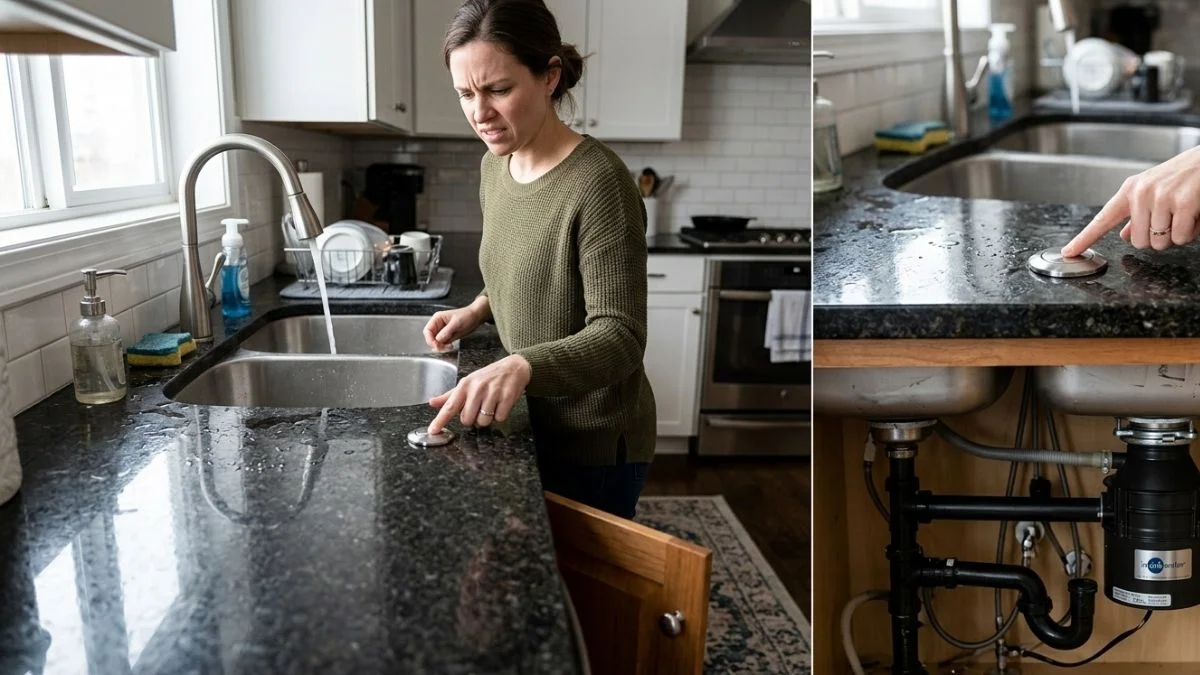
You press the air switch button on your countertop, and nothing happens. The garbage disposal just sits there, completely silent. It’s frustrating — especially when you’re in the middle of cleaning up after a meal. The good news? In most cases, a garbage disposal air switch that stops working is not a sign of a serious problem. It’s usually something simple, and you can fix it yourself without calling a plumber or spending money on a brand-new unit.
This guide walks you through everything you need to know — from understanding how the air switch works to diagnosing the exact problem and fixing it step by step.
What Is a Garbage Disposal Air Switch and How Does It Work?
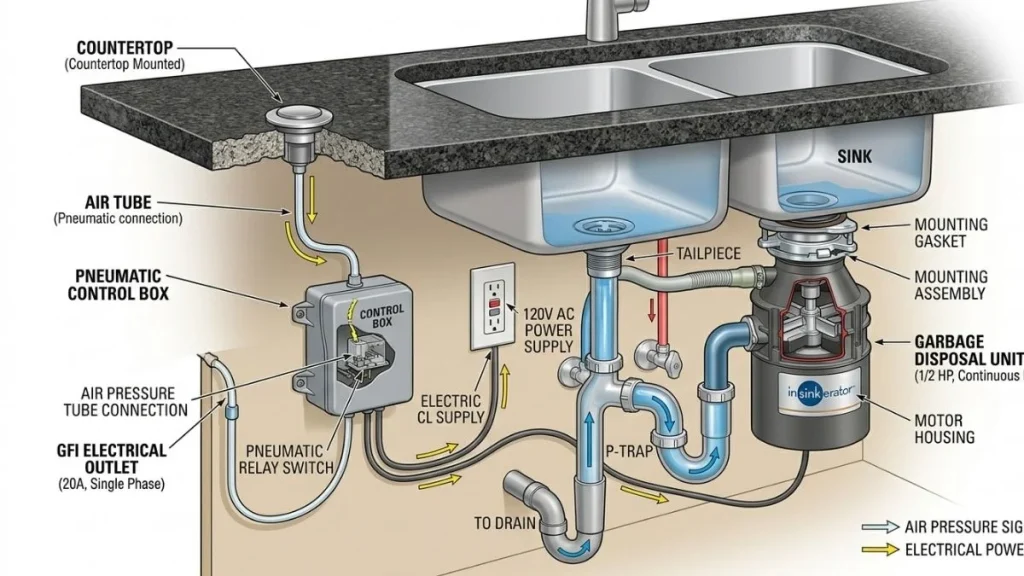
Before jumping into fixes, it helps to understand what you’re actually dealing with. A garbage disposal air switch is a countertop button that controls your garbage disposal — but it doesn’t carry any electrical current. That’s what makes it different from a standard wall switch.
The Basic Mechanics Behind an Air Switch
When you press the button on your countertop, it sends a small puff of compressed air through a thin rubber or plastic tube. That tube runs from the button, under your countertop, and down into the cabinet below the sink — where it connects to a small device called a control box. The air pressure triggers a relay inside the control box, which then sends electricity to the garbage disposal and turns it on.
So the button itself is just a pneumatic trigger. No electricity passes through it at all, which is exactly why it’s considered a safer and more code-friendly option near the sink than a traditional wall switch.
Why Homeowners Prefer Air Switches Over Wall Switches
- Safety: No electrical wiring runs through the countertop button — it’s completely safe near water
- Convenience: It sits right at the sink, so you don’t have to reach for a wall switch
- Clean aesthetics: Looks modern and built-in rather than tacked-on
- Easy installation: No electrician required for the button itself
- Universal compatibility: Works with almost every major garbage disposal brand
Common Reasons Your Garbage Disposal Air Switch Is Not Working
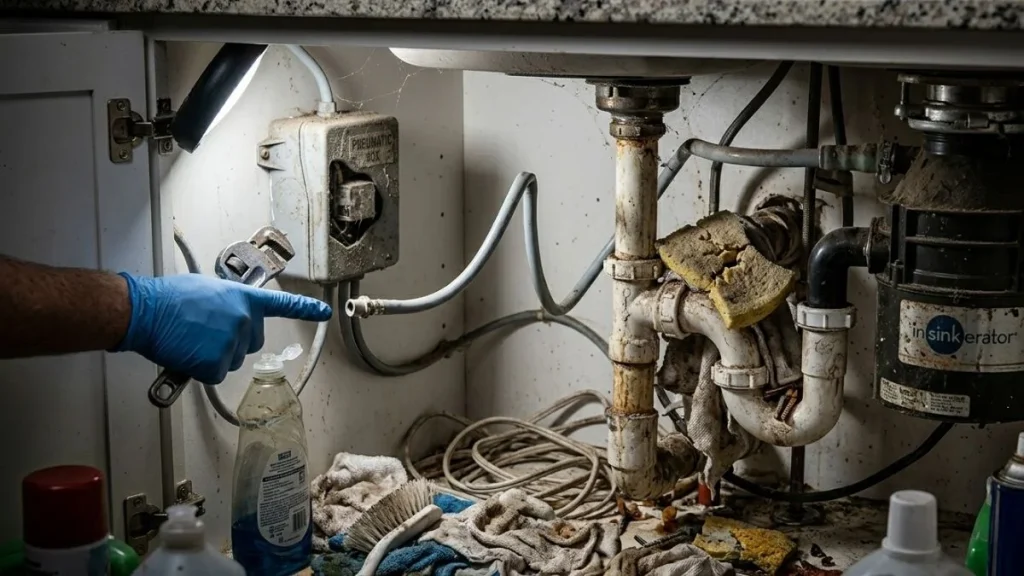
There are six main reasons an air switch stops working. Knowing which one applies to your situation will save you a lot of time and guesswork.
The Air Hose Is Kinked, Disconnected, or Damaged
This is the single most common cause of air switch failure. The small rubber or plastic tube that connects the countertop button to the control box can easily get kinked, pinched, or pulled loose — especially if something is stored under the sink and pushes against it. Even a slight kink in the hose is enough to block the airflow completely, which means the control box never receives the signal to turn on the disposal.
The Control Box Has Lost Power
The control box plugs into a standard outlet under the sink. If that outlet loses power — whether because it’s a tripped GFCI outlet, a loose plug, or a tripped circuit breaker — the disposal won’t respond no matter how many times you press the button. This is one of the easiest problems to overlook because homeowners assume the air switch button is the issue when the real problem is simply a dead outlet.
The Air Switch Button Is Worn Out or Cracked
Air switch buttons take a beating over time. With daily pressing, the internal mechanism that compresses air can wear down or break. If the button feels mushy, doesn’t spring back after pressing, sits unevenly in the countertop hole, or has visible cracks, it’s likely not generating enough air pressure to trigger the control box relay. Replacement buttons typically cost between $10 and $20 and are easy to swap out.
The Control Box Itself Is Faulty
Inside the control box is a small relay — an electrical switch that flips when it receives the air pressure signal. After years of use or following a power surge, this relay can burn out or fail completely. When that happens, the outlet will have power and the button will work fine, but the disposal still won’t turn on. A faint clicking sound when you press the button is a good sign the relay is still working. No click at all often means the control box has failed.
Loose or Incorrect Wiring Connections
If the air switch was recently installed or the control box was moved around, wiring connections inside the box may have come loose. Incorrect wiring during a DIY installation is also a fairly common issue. Loose wires mean the electrical circuit between the control box and the disposal is broken — even if everything else is functioning properly.
The Garbage Disposal Itself Is the Problem
Sometimes the air switch is working perfectly and the real culprit is the disposal. A jammed motor, a tripped reset button, or a disposal that’s reached the end of its lifespan can all make it look like the air switch has failed. If you hear a humming sound when the button is pressed, the disposal is receiving power — the motor is just stuck or jammed. That’s not an air switch issue at all.
How to Troubleshoot a Garbage Disposal Air Switch: Step by Step
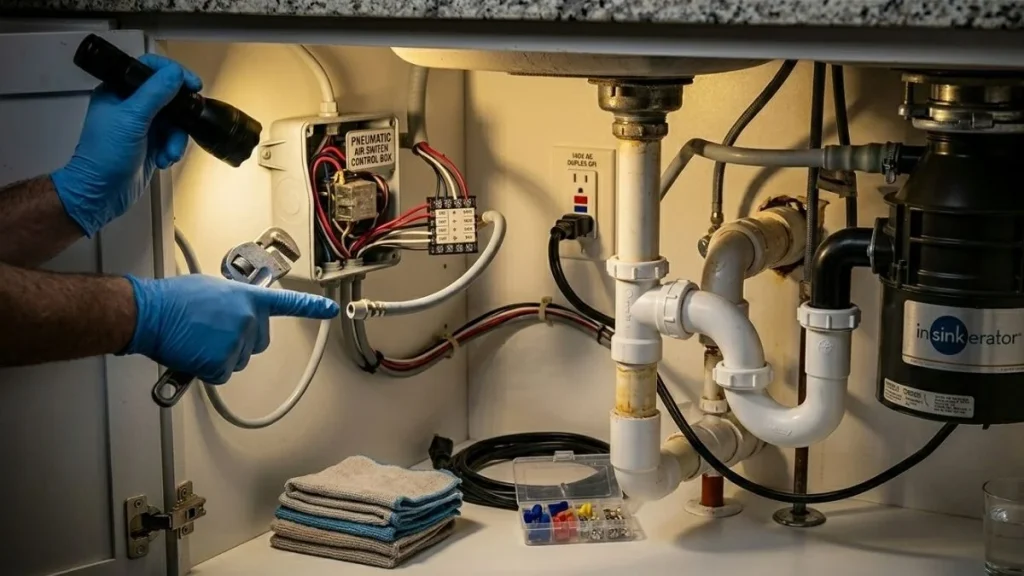
Work through these steps in order. Start with the simplest checks before moving on to more involved inspections.
What You’ll Need Before You Start
- Flashlight or phone light
- Flathead and Phillips screwdrivers
- Multimeter (optional, for advanced testing)
- Replacement air hose, button, or control box (if needed)
Safety Note: The countertop button carries no electricity. However, always unplug the disposal from its outlet before inspecting the control box or touching any wiring inside it.
Check the Power Source First
Open the cabinet under your sink and locate the control box outlet. Unplug something from a nearby outlet or plug a phone charger into the same outlet to confirm it has power. If the outlet is dead, locate the nearest GFCI outlet — usually found in kitchens and bathrooms — and press the Reset button firmly. Also check your home’s circuit breaker panel for any tripped breakers. Restore power and try the air switch again before moving on.
Inspect the Air Hose for Damage
With a flashlight, trace the thin rubber or plastic tube from the underside of the countertop button all the way down to the control box. Look carefully for:
- Kinks or sharp bends
- Pinching from stored items under the sink
- Cracks or holes along the tube
- Disconnected ends at either the button or the control box
If the hose is kinked, straighten it out and make sure nothing is pressing against it. If it’s disconnected, push it firmly back onto the fitting. If it’s cracked or has a hole, replace it — replacement hoses are inexpensive and universally available at hardware stores.
Test the Air Switch Button
Press the button firmly and feel for air movement at the control box end of the hose. You can also disconnect the hose from the control box and press the button — you should feel a small puff of air at the open end of the tube. If there’s no air movement at all, the button itself is the problem. Replacement air switch buttons are sold individually and usually snap directly into the same countertop hole as the original.
Inspect and Test the Control Box
Make sure the control box is fully and firmly plugged into its outlet. Press the countertop button and listen for a quiet clicking sound from the control box — that click is the relay engaging. If you hear the click but the disposal doesn’t turn on, the issue is downstream (wiring or the disposal itself). If there’s no click at all, the control box relay has likely failed and the unit needs to be replaced.
How to Test a Control Box with a Multimeter
If you’re comfortable using a multimeter, this gives you a definitive answer:
- Set the multimeter to AC Voltage
- Test the input terminals on the control box — you should read standard household voltage (120V in the US)
- Press the countertop button and test the output terminals
- If you read input voltage but zero output voltage when the button is pressed, the control box is faulty and needs replacement
Check the Garbage Disposal Reset Button
If the control box appears to be working fine, check the disposal itself. On the underside of your garbage disposal unit, there’s a small reset button — usually red or black. Press it firmly until you feel or hear it click into place. This button trips automatically when the disposal overheats or gets overloaded. After resetting it, try the air switch again.
If the disposal hums when activated but doesn’t spin, the motor is jammed. Insert a 1/4-inch hex wrench into the hole on the underside of the unit and manually turn the motor back and forth to free whatever is jamming it. Then press the reset button once more and try the switch again.
Inspect All Wiring Connections
If everything above checks out and the disposal still won’t work, inspect the wiring inside the control box. Unplug the control box from the outlet before doing this. Open the box and check that:
- All wire connections are tight and secure
- No wires have come loose from their terminals
- There are no burned, scorched, or corroded wires
Burned wiring indicates a more serious electrical issue — at that point, it’s worth calling a licensed electrician rather than attempting a DIY repair.
How to Replace a Garbage Disposal Air Switch
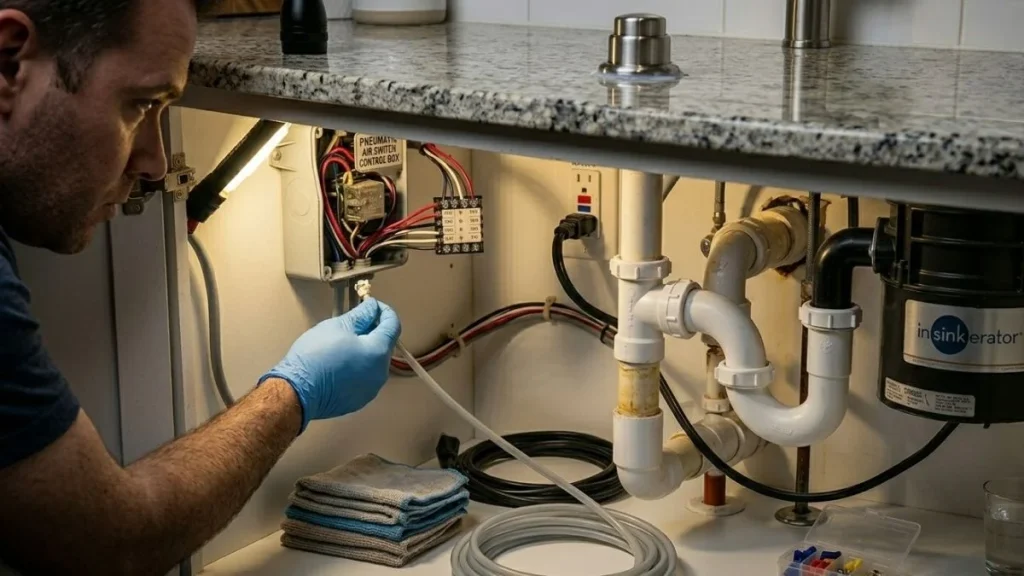
If troubleshooting confirms that the button or control box is beyond repair, replacing the unit is a straightforward job most homeowners can handle in under 30 minutes.
When Should You Replace Instead of Repair?
- The button is cracked or fully unresponsive after testing
- The control box shows no output voltage even with power confirmed
- The air hose is cracked and too short to reconnect after trimming
- The unit is more than 7 years old and has had repeated issues
How to Choose the Right Replacement Air Switch
| Feature | What to Look For |
| Button hole size | Most standard countertop holes are 1-3/8 inches |
| Control box type | Single outlet (disposal only) or dual outlet (disposal + dishwasher) |
| Finish | Match your existing faucet or sink hardware |
| Budget | Full replacement kits run $15–$60 |
| Trusted brands | Waste King, InSinkErator, Moen, Hydrosis |
Step-by-Step Replacement Process
- Turn off the disposal’s circuit breaker at your electrical panel
- Unplug the control box from the outlet under the sink
- Remove the old button cap by unscrewing or unclipping it from the countertop
- Pull the old air hose up through the countertop hole
- Disconnect the old control box and remove it
- Install the new control box and plug it into the outlet
- Route the new air hose from the control box up through the countertop hole
- Snap or screw the new button into the countertop
- Restore power at the breaker and test the switch
How to Prevent Garbage Disposal Air Switch Problems in the Future
Most air switch problems are preventable with a little routine attention. None of these maintenance steps take more than a couple of minutes.
- Check the air hose every 6 months. Open the cabinet under the sink and make sure the hose isn’t being pressed against or kinked by stored items.
- Keep under-sink storage organized. Cleaning products, trash bags, and other items stored under the sink are the most common cause of hose kinking.
- Test your GFCI outlet monthly. Press the Test and Reset buttons on any GFCI outlet near the sink to confirm it’s working properly.
- Don’t force the countertop button. Pressing hard repeatedly won’t make a faulty switch work — it just wears out the button faster.
- Know when to call a pro. If the disposal’s wiring is burned, if the control box fails repeatedly, or if the disposal itself needs replacement, a licensed plumber or electrician is the right call.
Conclusion
A garbage disposal air switch that stops working is almost always fixable — and in most cases, the fix costs under $30 and takes less than an hour. Start with the basics: check the power outlet, inspect the air hose, and test the reset button on the disposal itself. Work through each step before assuming the worst.
If the control box or button needs replacing, don’t hesitate. Replacement kits are affordable, widely available, and easy to install. With a little patience and the right diagnosis, you’ll have your garbage disposal running again without ever picking up the phone to call a plumber.