

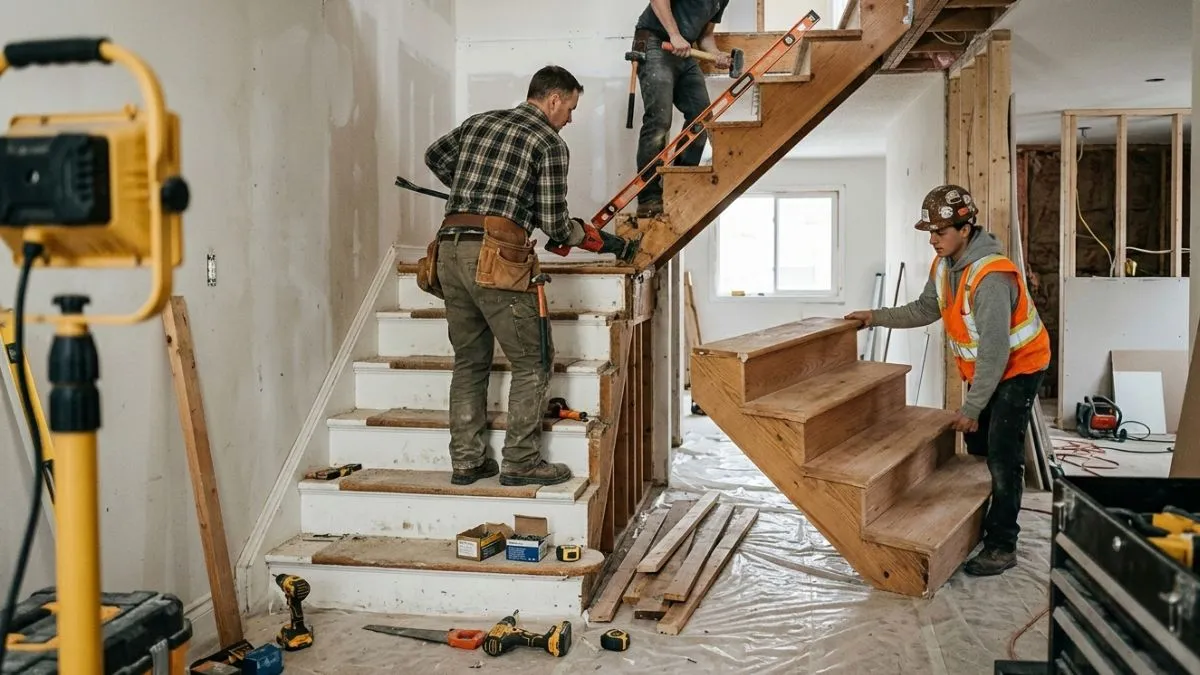
Thinking about moving your stairs but worried about the cost? You’re not alone.
Changing the location of your stairs can be a big project, and knowing how much it will cost is the first step to making the right decision. Whether you want to improve your home’s layout, add value, or create more space, understanding the expenses involved will help you plan better and avoid surprises.
You’ll discover the key factors that affect the cost to move stairs and get tips to keep your budget on track. Keep reading to find out what you really need to know before starting this important home improvement.
Factors Affecting Stair Moving Costs
Moving stairs in a home or building involves many costs that vary widely. Several factors affect how much you will pay for stair relocation. Understanding these factors helps plan your budget better and avoid surprises. Costs can change based on the stair’s design, the distance they must move, labor required, and legal rules. Each factor plays a key role in the total price.
Type Of Stairs
The kind of stairs you have greatly impacts the cost to move them. Different stair styles need different work and materials, which changes the price.
- Straight stairs: The simplest type to move. Usually costs less because they are easier to dismantle and rebuild.
- Spiral stairs: More complex shape. Moving them requires special skills and tools, raising the cost.
- L-shaped or U-shaped stairs: These stairs have landings and turns, which add difficulty to the move.
- Custom or ornate stairs: Stairs with decorative elements or made from special materials are expensive to move. Extra care is needed to avoid damage.
Distance And Location
The distance the stairs need to move affects the cost significantly. Moving stairs within the same room costs less than moving them to another floor or building.
Location also influences price:
- Urban areas often have higher labor and transport costs.
- Remote areas may add travel fees for workers.
- Access to the site matters. Narrow hallways or tight corners make the job harder and cost more.
Labor And Time
Moving stairs is labor-intensive. The number of workers and hours needed influence the total price. Skilled labor costs more but ensures safety and quality.
Key points affecting labor cost:
- Complex stair design requires more time and experts.
- Removing and reinstalling stairs involves careful handling to prevent damage.
- Unexpected issues during the move can extend work time and increase costs.
Example of labor cost factors:
- Hourly rates: Skilled workers typically charge $50-$100 per hour.
- Project duration: Simple moves may take a day; complex ones several days.
- Team size: Larger teams speed up work but raise total labor cost.
Efficient planning reduces labor hours, saving money.
Permits And Regulations
Local building codes and permits affect stair moving costs. Some cities require permits before altering stairs. Failing to get permits can lead to fines or forced removal of work.
Points to consider about permits:
- Permit fees vary by location but add to the budget.
- Inspections may be needed to ensure safety standards.
- Compliance with fire and building codes is mandatory.
Here is a checklist for permits and regulations:
- Check with local building department for permit requirements.
- Submit plans and pay fees before starting work.
- Schedule inspections as required during or after the move.
Cost Breakdown By Stair Type

Moving stairs involves several factors that impact the overall cost. One key factor is the type of stairs being moved. Different stair designs require different levels of labor, materials, and time.
Straight Stairs
Straight stairs are the simplest design to move. They run in a straight line without turns or curves. This simplicity means lower labor and material costs compared to other types.
Cost factors for moving straight stairs:
- Length and height of the staircase
- Material type (wood, metal, concrete)
- Wall removal or reinforcement needed
- New stair placement and foundation work
On average, moving straight stairs costs between $2,000 and $6,000. The range depends on the complexity of the move and the materials involved.
| Cost Component | Estimated Price |
| Labor | $1,000 – $3,000 |
| Materials | $500 – $1,500 |
| Structural Work | $500 – $1,500 |
Straight stairs offer a straightforward moving process. Less design complexity means fewer surprises in cost.
Spiral Stairs
Spiral stairs are compact and stylish, curling around a central pole. Moving spiral stairs costs more due to their unique design.
Factors affecting spiral stair moving costs:
- Careful dismantling to avoid damage
- Reassembly around new central support
- Possible custom fabrication for parts
- Space constraints in the new location
Typical costs range from $4,000 to $10,000. The higher price reflects the need for skilled labor and precision.
Curved Stairs
Curved stairs have smooth, flowing designs that add elegance. Moving them is often the most expensive option.
Reasons for higher costs with curved stairs:
- Complex shapes require custom work
- More time needed for removal and reinstallation
- Special tools and skills needed
- Potential for damage during move
Costs usually fall between $7,000 and $15,000. The price depends on size, materials, and design complexity.
Floating Stairs
Floating stairs appear to “float” without visible support. This modern design needs special care during moving.
Key cost factors for floating stairs:
- Delicate balance and support system
- Custom brackets and mounting hardware
- Precision installation for safety
- Potential for high material costs
Moving floating stairs can cost between $8,000 and $18,000. The price reflects the technical challenges.
Additional Expenses To Consider
Moving stairs involves more than just the physical relocation. Several additional expenses can affect the total cost. These costs depend on the stair type, home structure, and local labor rates.
Disassembly And Reassembly
Stairs are often complex structures made of many parts. Moving them requires careful disassembly at the original site and reassembly at the new location. This process can be time-consuming and requires skilled labor.
Key points about disassembly and reassembly costs:
- Labor intensity: More steps or intricate designs increase labor time.
- Type of stairs: Wooden stairs may take more care; metal or concrete stairs may need special tools.
- Hardware reuse: Some bolts and screws may need replacement, adding material costs.
- Precision: Proper alignment is vital to avoid safety risks, requiring expert handling.
Structural Modifications
Moving stairs often requires changes to the house’s structure. These modifications ensure the stairs fit securely and comply with building codes. Costs vary depending on the home’s design and the stair placement.
Common structural changes include:
- Framing adjustments: Adding or removing wall studs or beams.
- Floor reinforcement: Strengthening floors to support the new stair load.
- Opening creation: Cutting or enlarging holes in floors or walls.
- Drywall repair: Fixing walls after structural work.
Material Handling And Disposal
Old stair materials must be removed and disposed of properly. Material handling and disposal costs depend on the stair size and material type. Some materials require special disposal methods.
Expenses include:
- Loading and transport: Labor and equipment to move heavy parts.
- Disposal fees: Charges for dumping waste at landfills or recycling centers.
- Hazardous materials: Lead paint or treated wood may need special handling.
Tips To Lower Stair Moving Costs

Moving stairs can be one of the more complex parts of a home renovation or relocation. The cost varies based on many factors, such as size, material, and labor. Reducing these costs requires smart planning and strategy. These tips help save money without compromising quality or safety. Simple actions can make a big difference in your final bill.
Planning Ahead
Good planning is key to lowering stair moving costs. Start by knowing exactly what you want and how the stairs fit into your space. This helps avoid extra charges later.
- Measure carefully: Take precise dimensions of the stairs and the area they will move to.
- Clear the path: Remove furniture and obstacles before movers arrive to save time.
- Prepare materials: Have packing materials ready if parts of the stairs need protection.
Here is a simple checklist to plan your stair move:
| Step | Action | Benefit |
| 1 | Measure stairs and space | Avoid surprises in size and fit |
| 2 | Clear moving path | Speeds up the move |
| 3 | Protect stairs with padding | Prevent damage and repair costs |
Start early to avoid rush fees. Planning saves time and money. It also reduces stress on moving day.
Getting Multiple Quotes
Comparing prices from several movers helps find the best deal. Don’t settle for the first price you get. Prices can vary widely.
Ask each company for a detailed quote that includes:
- Labor costs
- Material fees
- Additional charges for difficult access or stairs size
Use this table to compare quotes easily:
| Company | Labor Cost | Materials | Extras | Total |
| Company A | $300 | $50 | $75 | $425 |
| Company B | $280 | $60 | $90 | $430 |
| Company C | $320 | $40 | $80 | $440 |
Ask about discounts or package deals. Some movers offer lower prices for combining services or booking early.
Read reviews and check credentials. Choose a company with good reputation and fair pricing.
Choosing The Right Time
Timing affects moving costs a lot. Moving during busy seasons or weekends usually costs more. Pick less busy times to save money.
Consider these tips:
- Move in the off-season: Winter months or weekdays can have lower rates.
- Book early: Early reservations often get better prices.
- Avoid holidays: Demand is higher, so prices rise.
Use this table to see how timing can affect costs:
| Time Period | Cost Impact | Reason |
| Weekdays (Off-season) | Lower | Less demand for movers |
| Weekends (Peak season) | Higher | Many people move then |
| Holidays | Highest | Limited availability, high demand |
Plan your stair move at a quiet time. This cuts costs and ensures more mover availability.
You May Also Like: How Much Does It Cost to Move a Staircase
Conclusion
Moving stairs costs depend on several key factors. Size, materials, and labor affect the final price. Planning ahead helps avoid unexpected expenses. Getting multiple quotes ensures a fair deal. Quality work lasts longer and adds value to your home. Take your time to choose the right option.
This way, you get the best results without overspending. Moving stairs can be simple with proper research and care.