
When it comes to protecting your home from moisture and drafts, choosing the right house wrap is crucial. Tyvek house wrap is a popular choice for many homeowners and builders because it offers excellent protection and durability.
But you’re probably wondering—how much does Tyvek house wrap cost? Understanding the price can help you decide if it fits your budget and needs. You’ll get clear answers about Tyvek house wrap cost and learn what factors might affect the price.
Tyvek House Wrap Basics
Tyvek house wrap is a popular material used in building construction. It protects homes from air and water damage. The cost depends on different factors like size, quality, and installation.
What Is Tyvek House Wrap?
Tyvek house wrap is a thin, strong sheet made of polyethylene fibers. It acts as a barrier against water and air. This helps keep the inside of the house dry and energy efficient. Builders use it under siding and other exterior materials.
How Tyvek Works
Tyvek allows water vapor to pass through but blocks liquid water and air. This means moisture can escape from the walls, preventing mold and rot. At the same time, it stops rain and wind from getting inside.
Benefits Of Using Tyvek House Wrap
- Protects against water damage by keeping rain out.
- Reduces air leaks, improving energy efficiency.
- Prevents mold and mildew by allowing walls to breathe.
- Lightweight and easy to install for faster construction.
Common Sizes And Packaging
| Roll Size | Coverage Area | Weight | Price Range |
| 9 ft x 100 ft | 900 sq ft | 10-12 lbs | $70 – $90 |
| 6 ft x 150 ft | 900 sq ft | 8-10 lbs | $60 – $85 |
Factors Affecting Cost
Tyvek house wrap cost depends on several key factors. Understanding these helps plan your budget better. The main elements influencing price include roll size and thickness, brand variations, and purchase location. Each factor changes the overall cost in different ways. Knowing about them ensures you choose the right product without overspending.
Roll Size And Thickness
The size and thickness of Tyvek rolls greatly affect the price. Larger rolls cover more area, which can reduce cost per square foot. Thicker wraps offer better protection but usually cost more. Consider these points:
- Roll length: Common sizes range from 100 to 300 feet long.
- Roll width: Typically 9 to 10 feet wide, wider rolls cover more wall space quickly.
- Thickness: Measured in mils (thousandths of an inch), thicker wraps provide stronger barriers.
Here is a simple comparison table showing typical prices based on size and thickness:
| Roll Size (Width x Length) | Thickness (mils) | Approximate Cost |
| 9 ft x 100 ft | 5 | $30 – $45 |
| 9 ft x 150 ft | 5 | $45 – $60 |
| 9 ft x 150 ft | 7 | $55 – $70 |
| 9 ft x 300 ft | 7 | $100 – $130 |
Choosing larger rolls often lowers cost per square foot. Thicker wraps add durability but increase upfront cost. Balance size and thickness based on your project needs.
Brand Variations
Tyvek is a well-known brand, but other brands offer house wraps too. Brand affects price due to quality, reputation, and warranty. Tyvek often costs more but offers trusted performance. Other brands may be cheaper but vary in durability and breathability.
Consider these brand-related points:
- Tyvek: High-quality, strong, widely used by professionals.
- Other brands: May include Typar, Barricade, or generic wraps.
- Warranty: Tyvek usually includes better warranty coverage.
- Performance: Breathability and water resistance differ between brands.
Here is a brief price comparison by brand for similar roll sizes:
| Brand | Roll Size | Approximate Cost | Warranty |
| Tyvek HomeWrap | 9 ft x 150 ft | $55 – $70 | Limited 10 years |
| Typar HouseWrap | 9 ft x 150 ft | $40 – $55 | Limited 5 years |
| Barricade Wrap | 9 ft x 150 ft | $35 – $50 | Limited 5 years |
Brand choice impacts cost and product reliability. Tyvek remains popular for quality assurance. Other brands suit budget projects but check product reviews before buying.
Purchase Location
The place you buy Tyvek house wrap changes the price significantly. Local stores, big-box retailers, and online shops all have different pricing models and availability. Shipping costs, taxes, and regional demand also affect final price.
Key purchase location factors include:
- Local hardware stores: Convenient but prices may be higher.
- Big-box retailers: Often competitive pricing and bulk discounts.
- Online retailers: Wide selection and sometimes lower prices, but watch for shipping fees.
- Wholesale suppliers: Best for large projects, offering volume discounts.
Compare prices from different sources to save money. Here is a general cost range by purchase location:
| Purchase Location | Price Range for 9 ft x 150 ft Roll | Additional Costs |
| Local Hardware Store | $60 – $75 | Usually none |
| Big-Box Retailers | $50 – $65 | Possible bulk discounts |
| Online Retailers | $45 – $60 | Shipping fees vary |
| Wholesale Suppliers | $40 – $55 | Volume discounts available |
Buying in bulk from wholesalers lowers cost per roll. Online options offer convenience and variety. Local stores provide instant pickup but may charge more.
Average Price Range
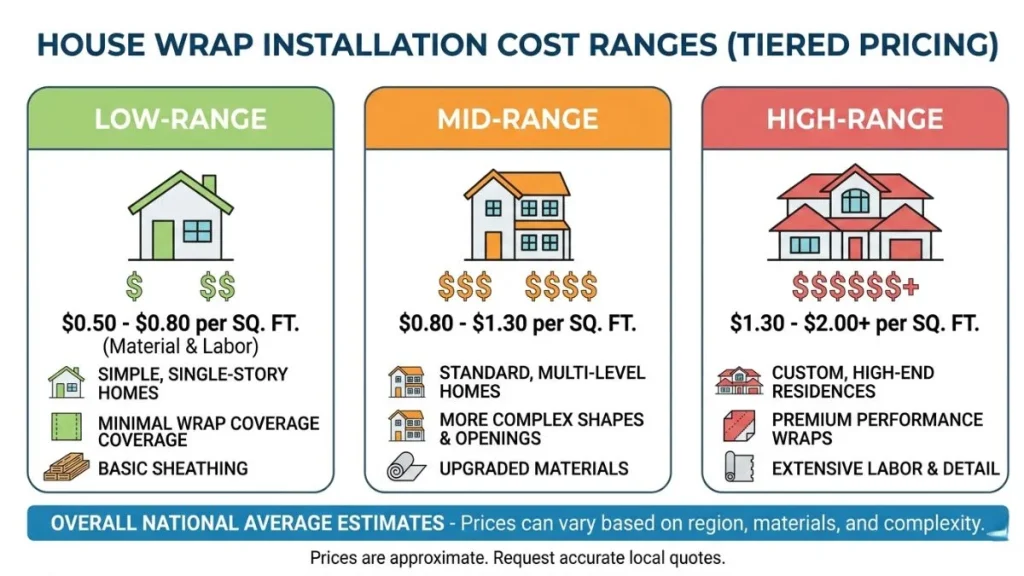
Tyvek house wrap is a popular material for protecting homes from moisture and air leaks. The average price range for Tyvek house wrap depends on the size of the project and the type of wrap used.
Cost Per Roll
Tyvek house wrap usually comes in rolls. Prices vary by the roll size and quality. Here is a simple guide:
| Roll Size | Coverage Area | Average Price |
| 9 ft x 100 ft | 900 sq ft | $80 – $120 |
| 10 ft x 150 ft | 1,500 sq ft | $120 – $180 |
Installation Costs
Installing Tyvek wrap adds to the total cost. Labor charges differ by region and complexity.
- DIY installation: Only the cost of the wrap needed
- Professional installation: $0.50 to $1.00 per sq ft
Factors Affecting Price
Several factors change the cost of Tyvek house wrap:
- House size: Larger homes need more material.
- Type of Tyvek: Some versions cost more due to extra features.
- Local labor rates: Prices vary by location.
- Additional materials: Tape, fasteners, and tools add costs.
Installation Expenses
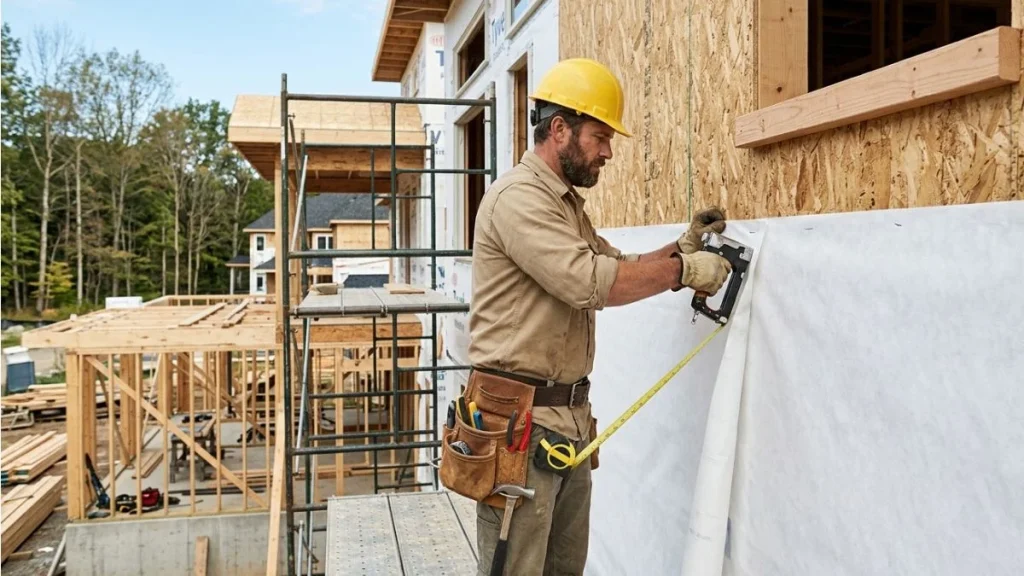
Installation expenses for Tyvek house wrap include more than just the material cost. Labor, tools, and preparation work all affect the total price.
Labor Costs
Installing Tyvek requires skill and time. Professionals usually charge between $0.50 and $1.50 per square foot for labor. This rate depends on the project’s complexity and location.
- Simple walls cost less to cover.
- Multiple corners or irregular shapes raise costs.
- Large projects may get discounts.
Additional Materials
Besides Tyvek wrap, other materials add to the expense:
| Material | Purpose | Estimated Cost |
| Staples or fasteners | Secure the wrap to the wall | $20 – $50 |
| Tape | Seal seams and edges | $30 – $70 |
| Flashing | Protect windows and doors | $50 – $100 |
Preparation And Cleanup
Preparation work includes removing old wrap or cleaning the surface. It may take extra time and cost more. Cleanup after installation also adds to expenses.
- Check walls for damage.
- Remove debris and old materials.
- Dispose of waste properly.
All these steps ensure a smooth installation and better performance.
Comparing Alternatives
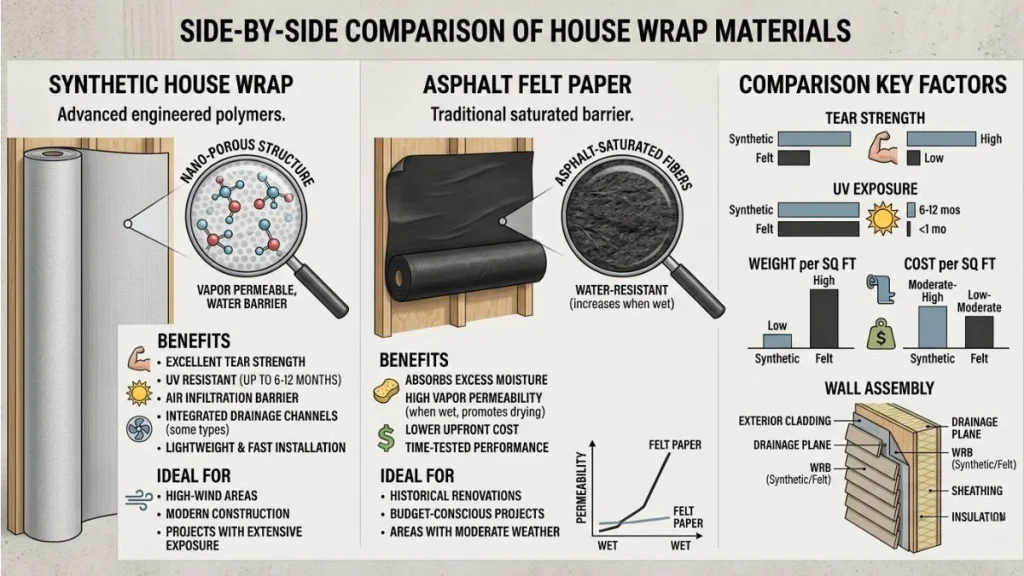
Tyvek house wrap is a popular choice for protecting homes from moisture and air leaks. Its cost is an important factor for many homeowners and builders. Comparing Tyvek with other house wrap options helps find the best value for the price. Each alternative has its own price, durability, and performance.
Tyvek Vs. Other House Wrap Brands
Tyvek is known for its balance of price and quality. Other brands may cost less or more, but they differ in features. Here is a simple comparison:
| Brand | Cost per Square Foot | Durability | Water Resistance | Air Barrier Quality |
| Tyvek | $0.12 – $0.15 | High | Excellent | Very Good |
| Typar | $0.10 – $0.14 | Moderate | Good | Good |
| GreenGuard | $0.08 – $0.12 | Moderate | Fair | Fair |
| HomeGuard | $0.07 – $0.11 | Low | Fair | Fair |
Cost Vs. Performance
Lower price often means lower durability and protection. Cheaper wraps may save money upfront. They might wear out faster or let moisture in. Tyvek offers a good mix of cost and long-lasting protection. This reduces repair costs later. Spending a little more on quality wrap can protect your home better.
Environmental Impact And Material Quality
- Tyvek uses high-quality materials with some recycled content.
- Other brands may use less durable or less eco-friendly materials.
- Check if the wrap is recyclable or made from sustainable resources.
- Better materials often mean better protection and longer life.
Installation And Warranty Differences
Installation ease can affect overall cost. Tyvek is lightweight and easy to handle. Other wraps might require more care or special tools. Warranty length varies by brand:
- Tyvek: Up to 10 years warranty.
- Typar: Around 5-7 years.
- GreenGuard and HomeGuard: Usually 3-5 years.
Longer warranty means confidence in product quality. Installation time and warranty impact total project cost.
Saving Tips
Tyvek house wrap is a popular choice for protecting homes from moisture and air leaks. The cost can add up, especially on large projects. Saving money on Tyvek house wrap requires smart choices and careful planning. Here are practical tips to reduce costs without lowering quality.
Buy In Bulk For Better Prices
Buying Tyvek house wrap in large rolls often costs less per square foot. Stores and suppliers usually offer discounts for bulk purchases. Calculate your project size before buying to avoid extra trips and costs.
Compare Local And Online Prices
Prices vary between local stores and online shops. Check both options to find the best deals. Sometimes online sellers offer free shipping, which saves money overall.
Use Leftover Material Wisely
Keep leftover Tyvek for small repairs or future projects. Using scraps reduces waste and saves money on new purchases.
Choose The Right Thickness
Tyvek comes in different thickness levels. Pick the thickness that fits your climate and building needs. Avoid paying extra for thicker wrap if it is not necessary.
Hire Experienced Installers
Proper installation prevents damage to the house wrap. Skilled workers reduce waste and save on replacement costs. Ask for quotes from multiple contractors to find a fair price.
Seasonal Discounts And Sales
Buy during off-peak seasons or sales events. Many retailers offer discounts in winter or early spring when construction slows down.
| Saving Tip | Benefit |
| Buy in Bulk | Lower price per square foot |
| Compare Prices | Find best deals locally and online |
| Use Leftovers | Reduce waste and extra costs |
| Choose Correct Thickness | Pay only for what is needed |
| Hire Experienced Installers | Less damage and waste |
| Buy in Off-Season | Take advantage of discounts |
Conclusion
Tyvek house wrap offers good protection at a fair price. It helps keep your home dry and energy-efficient. Costs vary by size and installation needs. Choosing the right product saves money over time. Simple to install for those who like DIY projects.
A smart choice for long-lasting home comfort. Consider your budget and home size carefully. Durable and reliable, Tyvek adds value to your house. Investing in quality wrap pays off in the end.