
When you’re remodeling your staircase, every detail matters — and one of the biggest decisions you’ll face is whether or not to install a skirt board. Some homeowners love the clean, minimal look of a staircase without one. Others worry it’ll look unfinished or cheap. So which is it?
The truth is, there’s no one-size-fits-all answer. A staircase without a skirt board can look absolutely stunning — or it can look like something got left undone. The difference comes down to design intent, execution quality, and whether it actually fits your home’s overall style.
We’ll break down everything you need to know — from what a skirt board actually does, to what your staircase will look like without one, to smart alternatives and finishing tips that make it work.
What Is a Skirt Board on a Staircase?
Before deciding whether to skip it, it helps to understand what a skirt board actually is and why it became a standard part of staircase construction in the first place.
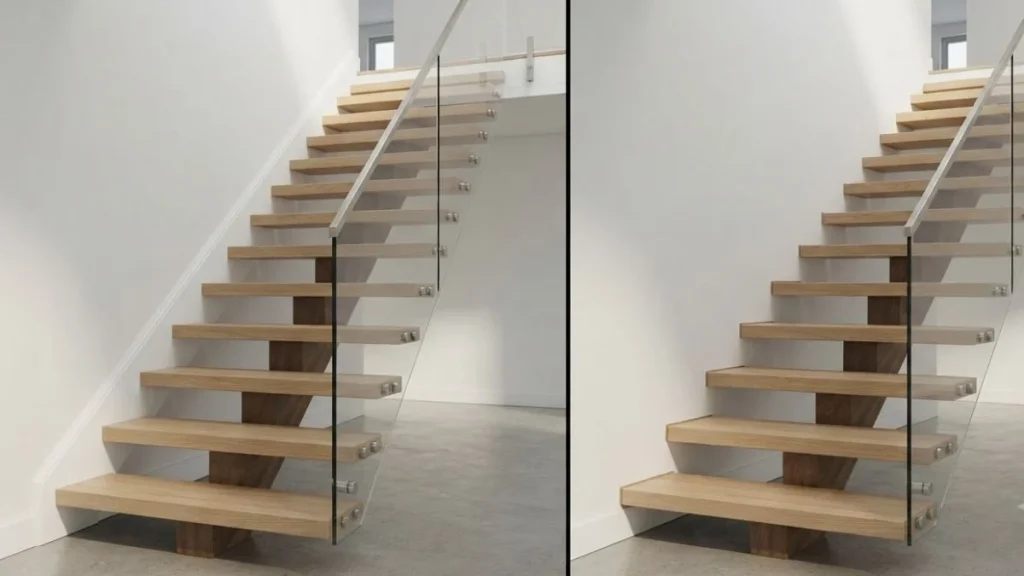
A skirt board — sometimes called a stair skirt or stringer board trim — is a long, flat piece of trim that runs diagonally along the wall beside your staircase. It sits between the stair treads and risers and the finished wall, covering the joint where the two meet. Traditionally, it’s made from MDF or solid wood, painted white or stained to match the surrounding trim.
The Purpose of a Skirt Board
The skirt board serves two main functions: aesthetic and protective.
On the aesthetic side, it creates a clean visual boundary between the staircase and the wall. Without it, the raw edge of the drywall meets the stair framing — and unless that junction is finished flawlessly, it tends to look rough or incomplete.
On the protective side, the skirt board shields your drywall from the daily abuse a staircase wall takes — shoes scuffing the wall, furniture being moved, kids running their hands along the edge. Drywall is soft and vulnerable. A skirt board acts as a buffer.
Types of Skirt Boards
| Type | Description | Best For |
| Flat Skirt Board | Simple, straight panel along the wall | Modern & traditional homes |
| Routed Skirt Board | Cut to follow the tread/riser profile | High-end custom staircases |
| Painted MDF | Affordable and smooth finish | Budget-friendly remodels |
| Stained Solid Wood | Rich, natural appearance | Craftsman & colonial styles |
What Does a Staircase Without a Skirt Board Actually Look Like?
This is the question most homeowners really want answered — and honestly, it depends on two things: your home’s design style and how well the wall is finished.
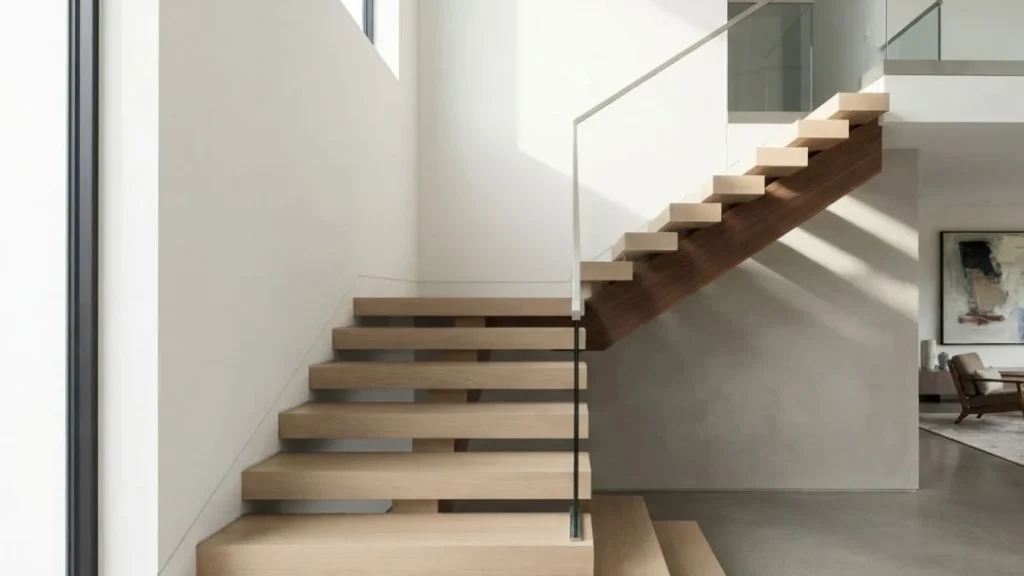
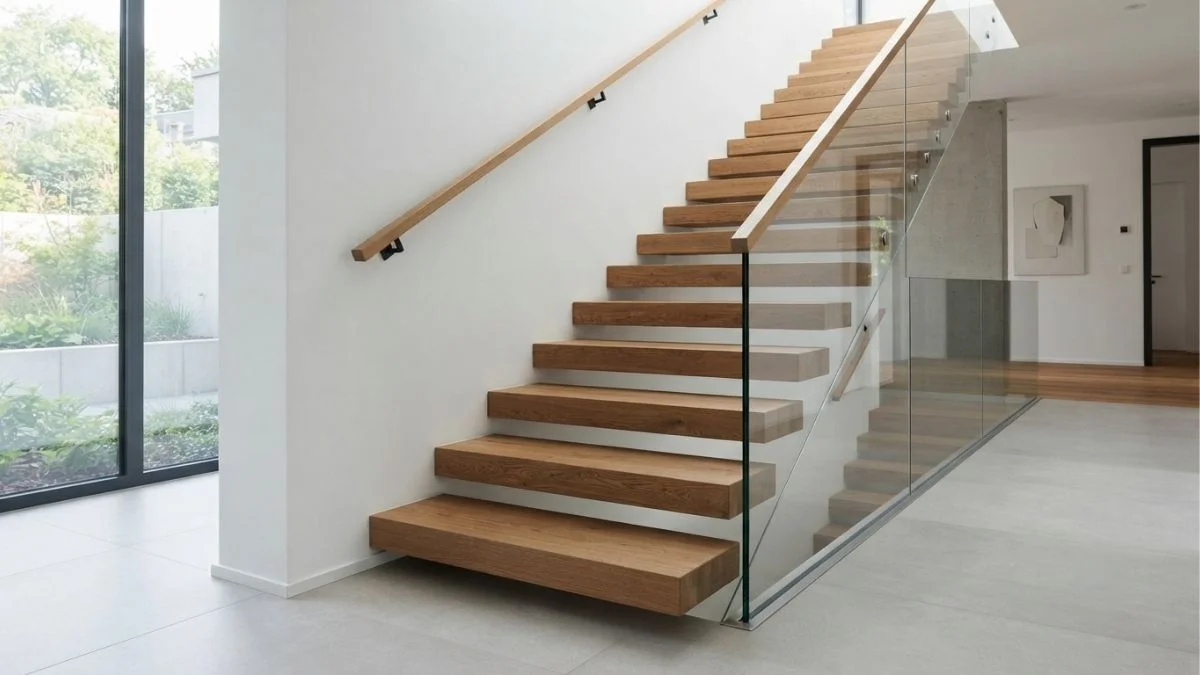
In a modern or minimalist home, a staircase without a skirt board can look intentional, sleek, and even architectural. When the wall is perfectly smooth, the paint is flawless, and the transition between the stair edge and the wall is tight and clean, it creates a seamless look that feels very current. You’ll see this approach often in new construction homes, open-concept designs, and spaces that favor clean lines over decorative trim.
On the other hand, in a traditional, craftsman, or colonial-style home where heavy molding and trim are everywhere else, skipping the skirt board creates a jarring visual inconsistency. It’s like wearing a tailored suit with no belt — technically fine, but something feels off.
Design Styles Where It Works
- Modern and contemporary interiors
- Industrial-style homes
- Floating staircase designs
- Open-concept floor plans with minimal trim
Design Styles Where It May Struggle
- Traditional or craftsman-style homes
- Colonial or Victorian architecture
- Homes with detailed crown molding and baseboards throughout
- Spaces where trim continuity is expected
The bottom line: the look can absolutely work — but it needs to make sense within the context of the whole home.
Is Skipping the Skirt Board a Design Mistake?
Let’s be direct: skipping the skirt board is only a mistake if it looks like an accident. When it’s clearly an intentional design decision backed by quality workmanship, it’s a perfectly valid choice. When it looks like someone ran out of time or budget, that’s when it becomes a problem.
When It Works
The key factor is execution. A staircase without a skirt board demands near-perfect wall finishing. The drywall edges need to be straight and smooth. The joint between the wall and the stair framing needs to be tight and properly caulked. The paint needs to be applied cleanly with no ragged edges or visible gaps.
When all of that comes together, the result can actually look more sophisticated than a traditional skirt board installation. It feels deliberate. It feels architectural. Interior designers who favor minimalist aesthetics will often recommend skipping the skirt board precisely because it removes visual clutter and lets the staircase itself take center stage.
When It Becomes a Problem
The most common issue homeowners run into when skipping the skirt board is the gap problem. Where the wall meets the stair framing, there’s almost always a slight gap — and without a skirt board to cover it, that gap is on full display. If your drywall finishing isn’t perfect, every imperfection becomes visible.
There’s also the durability issue. Drywall isn’t designed to take direct abuse, and a staircase wall gets a lot of it. Without the protection of a skirt board, you’ll likely be patching and repainting that wall more often than you’d like.
Pros and Cons of a Staircase Without a Skirt Board
| With Skirt Board | Without Skirt Board | |
| Aesthetic | Traditional, finished look | Modern, minimal feel |
| Wall Protection | High | Low |
| Installation Cost | $300–$700 extra | Savings on materials/labor |
| Maintenance | Occasional repainting | More frequent wall repairs |
| Design Flexibility | Works in most styles | Best for modern homes |
| Resale Impact | Neutral to positive | Style-dependent |
What to Use Instead of a Skirt Board
If you’ve decided to skip the traditional skirt board, that doesn’t mean you have to leave the wall completely bare and unprotected. There are several smart alternatives that give you a finished look without the bulk of traditional trim.
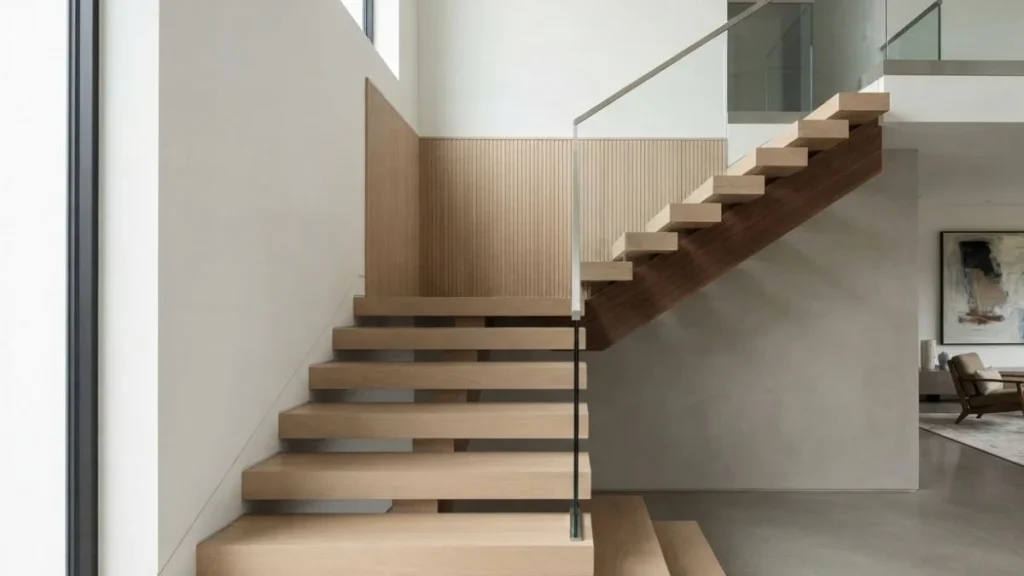
Baseboard Along the Staircase Wall
A slim baseboard running along the bottom of the staircase wall is one of the simplest alternatives. It doesn’t follow the diagonal of the stairs the way a full skirt board does, but it adds a clean boundary at the floor level and protects the most vulnerable part of the wall. This works especially well in transitional design styles where you want minimal trim without going completely bare.
Caulk and Paint Finish
For truly minimalist staircases, a tight caulk line between the wall and the stair stringer — followed by a smooth, quality paint finish — can create a seamless built-in look. This is the most cost-effective approach and works beautifully when done well. The key is using paintable latex caulk, applying it in a single clean line, and finishing with a semi-gloss or satin paint that holds up to daily wear.
Wall Paneling or Shiplap
Board and batten, shiplap, or other wall paneling styles along the stair wall are growing in popularity as skirt board alternatives. They add visual texture and character while also providing more wall protection than bare drywall. This works particularly well in farmhouse, transitional, and even some modern design schemes.
Tile or Stone Cladding
In higher-end renovations, tile or stone along the staircase wall is a striking alternative. It’s durable, easy to clean, and creates a dramatic visual statement. You’ll see this most often in contemporary and luxury home renovations where the staircase is meant to be a focal point.
Exposed Stringer Design
In open-riser or floating staircase designs, the stringer itself can be finished and exposed as an architectural feature. Instead of hiding it behind a skirt board or covering the wall, the clean lines of the stringer become part of the design. This is particularly popular in modern and industrial-style interiors.
How to Finish a Staircase Without a Skirt Board the Right Way
If you’re going to skip the skirt board, you need to commit to doing the wall finishing properly. This is not a place to cut corners.
Step 1: Get the Drywall Right
Start with straight, smooth drywall edges. Use metal corner bead wherever the drywall meets the stair framing to create a clean, durable edge. Mud and sand carefully — any bumps, dips, or uneven surfaces will be highly visible once painted, especially in raking light.
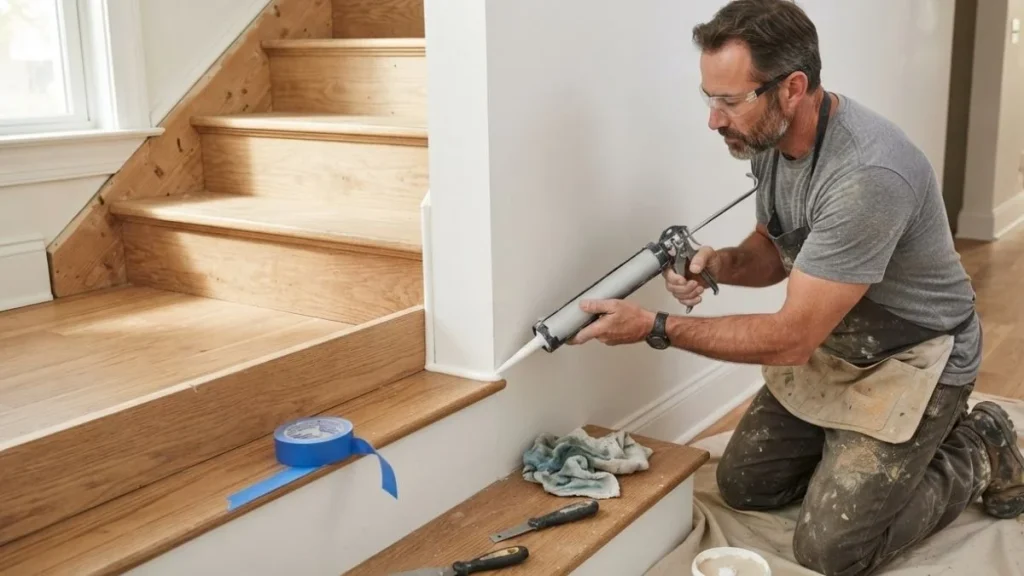
Step 2: Caulk Every Gap
Once the drywall is finished and primed, go back and caulk any gaps between the wall and the stair structure. Use a high-quality paintable latex caulk. Apply it in a single, controlled bead, tool it smooth with a wet finger, and allow it to dry fully before painting.
Step 3: Choose the Right Paint
Not all paints are equal when it comes to a high-traffic staircase wall. Choose a semi-gloss or satin finish — these hold up to scuffs and can be wiped clean. Flat paints show every mark and are much harder to clean. If your walls are a lighter color, consider a washable formula designed for high-traffic areas.
Step 4: Protect the Wall
Even with great paint, a bare drywall surface will eventually show wear. Consider applying a clear scuff-resistant wall coating, or add a subtle chair rail or half-wall panel to protect the lower portion of the wall where contact is most frequent.
Cost Comparison: With vs. Without a Skirt Board
One of the reasons homeowners consider skipping the skirt board is cost. Here’s how the numbers typically break down:
Skirt Board Installation Cost:
- Materials (MDF or wood): $2–$8 per linear foot
- Labor: $150–$400 depending on stair length and complexity
- Routed/custom skirt boards: $500–$900+ for full staircase
Savings From Skipping It:
- Typical savings: $300–$700 on materials and labor
- Less trim to paint and maintain over time
The Trade-Off:
Without a skirt board, your drywall is more vulnerable. Budget for more frequent wall touch-ups and repainting — typically every 3–5 years in high-traffic homes versus every 7–10 years with a skirt board in place. Over the long run, the savings may be smaller than they initially appear.
You May Read Also: Gap Between Stair Tread and Riser
Conclusion
A staircase without a skirt board is not inherently a design mistake — but it’s also not automatically a good idea. The outcome depends almost entirely on two things: whether it fits your home’s design style, and how well the wall is finished.
If you have a modern, minimalist, or contemporary home and you’re willing to invest in proper wall finishing, caulking, and quality paint, skipping the skirt board can give your staircase a clean, architectural look that feels very intentional and current.
If your home leans traditional, or if the rest of your trim work is detailed and heavy, leaving out the skirt board will likely create a visual inconsistency that stands out for the wrong reasons.
The smartest approach? Look at your home as a whole before making the decision. If the trimless look fits, commit to it fully and execute it properly. If it doesn’t fit, a well-installed skirt board is still one of the most affordable ways to give your staircase a polished, finished appearance that stands the test of time.