
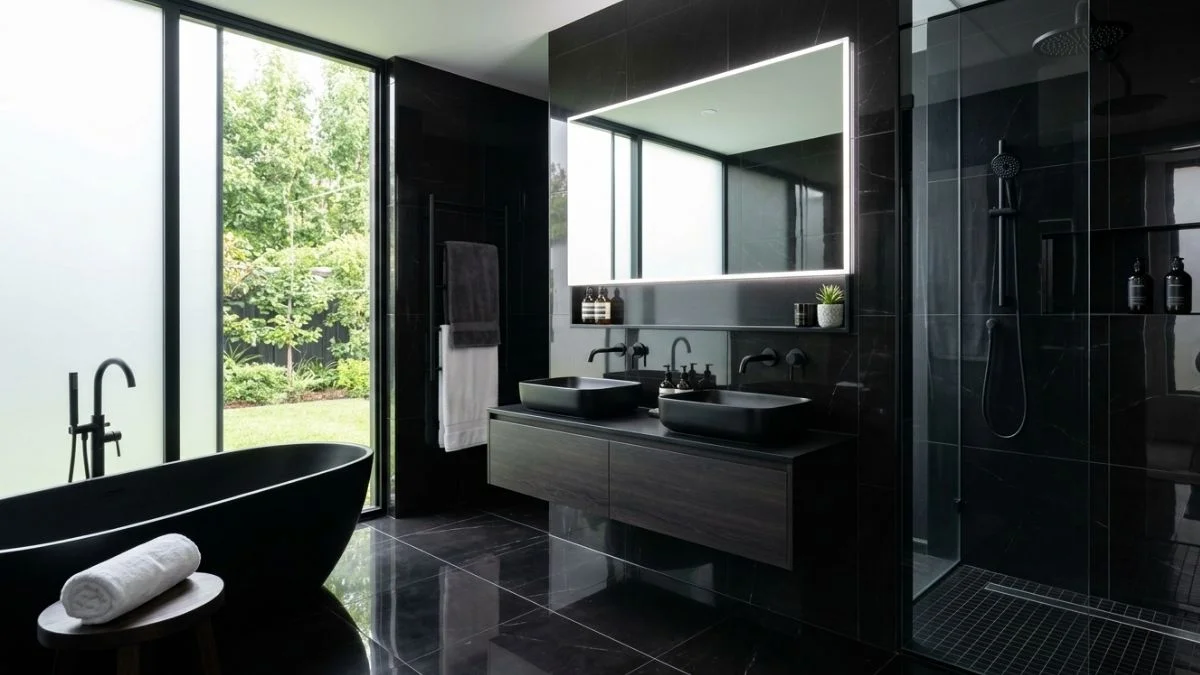
Black bathroom tiles look sharp, modern, and luxurious — right up until you clean them. Then suddenly every water spot, soap smear, and cleaning product residue shows up like it’s been waiting to embarrass you. If you’ve ever mopped your black tile floor only to find it looks worse than before, you’re not doing it wrong — you’re just using the wrong method.
The good news is that cleaning black bathroom tiles the right way isn’t complicated. It just takes the right products, the right technique, and a bit of consistency. This guide walks you through everything — from everyday maintenance to deep cleaning stubborn stains — so your black tiles stay looking as good as the day they were installed.
Why Black Bathroom Tiles Are So Hard to Keep Clean
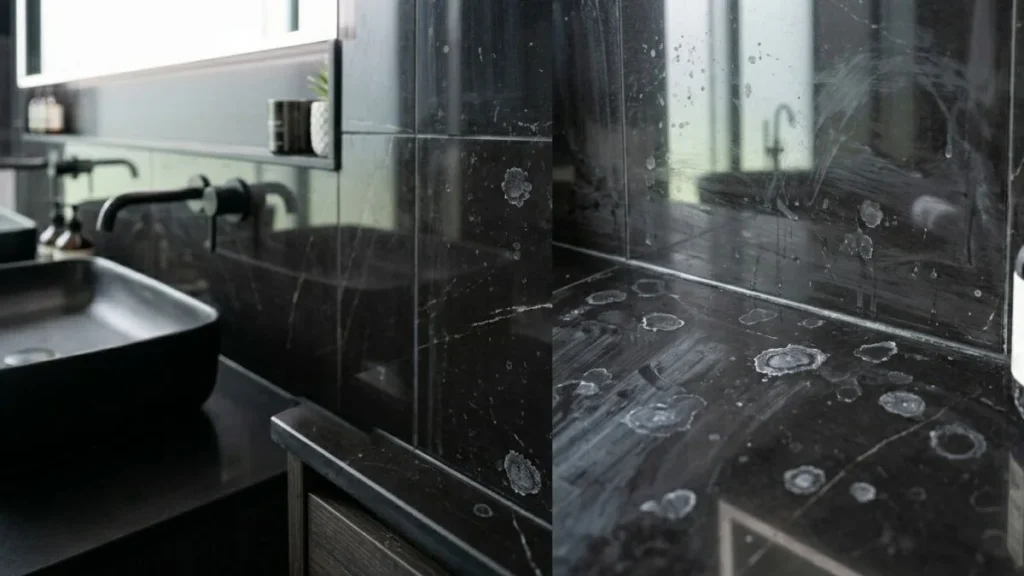
Black tiles aren’t actually harder to clean than light-colored tiles — they’re just less forgiving. Every bit of residue, every water drop, and every smudge shows up in sharp contrast against the dark surface. Light tiles hide these things naturally. Black tiles amplify them.
There are three main reasons black tiles look dirty even after cleaning. First, hard water is a major culprit. Tap water contains minerals like calcium and magnesium. When water evaporates on a dark tile surface, those minerals stay behind as white or chalky spots. On white tiles, this is barely noticeable. On black tiles, it’s impossible to miss.
Second, soap scum builds up fast. Bar soap, shampoo, and body wash leave behind a filmy residue that sits on the tile surface. Most people don’t rinse thoroughly enough after cleaning, which means a thin layer of soap residue stays behind — and dries into a visible haze.
Third, the wrong cleaning products make things worse. Many standard bathroom cleaners contain bleach, ammonia, or alkaline compounds that leave a white film on dark tile surfaces. Even some “all-purpose” cleaners cause streaking on black tiles if they aren’t rinsed off properly.
What You’ll Need Before You Start

Using the right tools and products makes a bigger difference than most people realize. You don’t need an expensive cleaning kit — just the right ones.
Best cleaning products for black bathroom tiles
| Product type | Best for | Notes |
| pH-neutral tile cleaner | Everyday cleaning | Won’t leave residue or damage finish |
| White vinegar (diluted) | Hard water stains | Safe on ceramic/porcelain only — not stone |
| Dish soap + warm water | Light soap scum | Gentle and inexpensive option |
| Hydrogen peroxide (3%) | Mold and mildew on grout | Dilute 1:1 with water before use |
| Baking soda paste | Stubborn grout stains | Mix with water to a thick consistency |
Tools that won’t scratch the surface
- Microfiber cloths — the single most important tool for streak-free results
- Soft-bristle brush or old toothbrush — for grout lines
- Squeegee — essential for wall tiles and shower panels after every use
- Spray bottle — for controlled product application without over-saturating
- Flat microfiber mop — for black floor tiles (far better than a traditional string mop)
What to avoid completely
- Abrasive scrubbing pads or steel wool — these scratch the tile surface
- Bleach or ammonia-based cleaners — leave visible white residue
- Paper towels — they smear instead of absorbing, causing streaks
- Vinegar on natural stone tiles (marble, slate, travertine) — the acid etches the surface permanently
- Too much of any cleaning product — more is not better with black tiles
How to Clean Black Bathroom Tiles Step by Step

This five-step process works for both floor tiles and wall tiles. The key is to follow the order — skipping steps is where most people go wrong.
Remove loose dirt and dust first
Before using any liquid cleaner, dry sweep or vacuum the tile surface. This removes loose dirt, dust, and hair. If you skip this step and go straight to a wet cleaner, you’ll just spread the dirt around and create a muddy film that’s even harder to clean. On floors, use a dry microfiber mop or a vacuum. On walls and shower tiles, a dry cloth wipe-down works fine.
Apply the cleaning solution sparingly
Less product means less residue. Spray your cleaner lightly and evenly — you want the surface damp, not soaked. Let the solution sit for one to two minutes to break down soap scum and mineral deposits before you start scrubbing. This short dwell time does most of the work for you.
Scrub gently in small sections
Use a damp microfiber cloth and work in small sections — roughly 30 x 30 cm at a time. Scrub in circular motions and avoid letting the cleaner dry on the tile surface before rinsing. For grout lines, use a soft-bristle brush and work along the grout rather than across the tiles.
Rinse thoroughly with clean water
This is the most skipped step — and it’s the biggest cause of residue and streaking. After scrubbing, rinse the tile with a clean damp cloth or low-pressure water. Change your rinse water frequently. Any remaining cleaning product that isn’t fully rinsed off will dry into a visible haze. Rinse twice if in doubt.
Dry and buff immediately
Don’t leave the tiles to air dry. Pick up a clean, dry microfiber cloth and buff the surface immediately after rinsing. Use circular motions to lift any remaining moisture and residue. For vertical surfaces like shower walls, a squeegee works faster and more effectively than a cloth. Buffing is what gives black tiles their clean, sharp finish.
How to Clean Black Tile Grout Without Making It Worse

Grout is one of the trickiest parts of cleaning a black tile bathroom. If you have light-colored grout with dark tiles, the contrast makes even minor discoloration stand out. If you have dark grout, mold and mildew can hide in it for longer than you’d expect — and then spread fast.
Best methods for grout cleaning
For general grout discoloration, make a thick paste using baking soda and a small amount of water. Apply it to the grout lines with an old toothbrush, scrub gently in short back-and-forth strokes, and let it sit for five minutes before rinsing. This works well for surface staining without damaging the grout itself.
For mold and mildew, dilute hydrogen peroxide (3%) with an equal amount of water, spray it onto the affected grout, and leave it for ten minutes. Then scrub with a soft brush and rinse well. Hydrogen peroxide kills mold spores rather than just bleaching them, making it a more effective long-term solution than bleach.
How to prevent grout problems long-term
- Seal your grout once or twice a year — this dramatically reduces how much moisture and grime it absorbs
- Keep the bathroom well-ventilated during and after showers to reduce moisture buildup
- Do a light grout brush clean weekly — it takes two minutes and prevents major buildup
- Fix any cracked or crumbling grout promptly — damaged grout absorbs moisture and mold much faster
Recommended: How To Clean Floor Tile Grout Without Scrubbing
Cleaning Black Floor Tiles vs. Black Wall Tiles
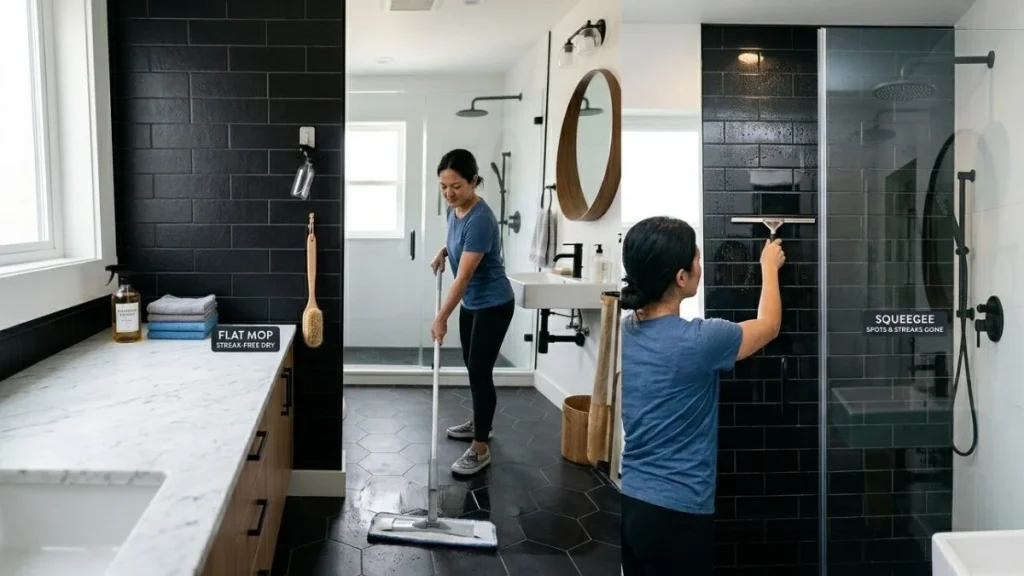
Floor tiles and wall tiles have different challenges, and the cleaning approach should reflect that.
Black floor tile cleaning
Floor tiles see foot traffic, tracked-in dirt, cleaning product buildup, and more physical wear than wall tiles. The biggest mistake people make when cleaning black floor tiles is using a traditional string mop with too much water. String mops spread dirty water around and push soap residue into grout lines, leaving a dull film behind.
Instead, use a flat microfiber mop that’s barely damp — wring it out thoroughly before each pass. Work in sections, rinse the mop head frequently, and go over the floor with a clean dry cloth or mop pass at the end to remove any remaining moisture. This “damp mop, dry finish” method gives black floor tiles a noticeably cleaner result.
Black wall and shower tile cleaning
Shower walls deal with constant soap scum and hard water exposure. The single most effective habit you can build is using a squeegee on the shower walls after every use — it takes about 20 seconds and removes the majority of the water and soap residue before it has a chance to dry and harden. Over time, this habit alone dramatically reduces how often you need to deep clean your shower tiles.
For harder soap scum buildup on wall tiles, apply a diluted dish soap solution, let it sit for a few minutes, then scrub gently with a soft cloth and rinse thoroughly. Follow up with a squeegee and then a dry buff for a streak-free finish.
How to Remove Stubborn Stains from Black Bathroom Tiles

Hard water stains
Mix equal parts white vinegar and water in a spray bottle. Apply it to the affected area and let it sit for five to ten minutes — the mild acid in the vinegar dissolves the mineral deposits. Then scrub gently with a microfiber cloth and rinse thoroughly. Never use vinegar on natural stone tiles like marble, slate, or travertine — it will permanently etch the surface.
Soap scum buildup
Mix a small amount of dish soap with warm water to create a light lather. Apply it to the soap scum, let it sit for two to three minutes, then scrub with a non-abrasive cloth. Rinse well and buff dry. For heavy buildup, a commercial soap scum remover that’s labeled safe for dark or glazed tiles will be more effective than a DIY solution.
Mold and mildew
Spray a diluted hydrogen peroxide solution directly onto the moldy area, leave it for ten minutes, then scrub and rinse. For heavy mold that has spread into grout or behind caulk, it may be time to call a professional — surface mold is manageable at home, but deep mold behind tiles is a different problem entirely and usually requires recaulking or regrouting at minimum.
Keeping Black Bathroom Tiles Clean Longer — Maintenance Routine
Daily habits (less than 2 minutes)
- Squeegee shower walls after every use
- Quick wipe of basin tiles with a dry cloth
- Use a shower spray product after bathing to prevent soap scum buildup
Weekly cleaning routine
- Light clean with a pH-neutral tile cleaner
- Brush grout lines with a soft brush
- Rinse and dry buff all tile surfaces
- Wipe down faucets and fixtures to prevent water stain transfer to tiles
Monthly deep clean checklist
- Full grout cleaning with baking soda paste or hydrogen peroxide
- Hard water stain treatment with diluted vinegar (ceramic/porcelain only)
- Check and re-seal grout if needed
- Inspect caulk lines around the bath and shower for mold or cracking
- Apply tile polish or sealant for added protection and shine
Conclusion
Black bathroom tiles add a modern, elegant look, but they need proper care to stay clean and streak-free. As explained in this guide on how to clean black tiles bathroom, the main issue is not heavy dirt but visible streaks, water spots, and soap residue that easily stand out on dark surfaces.
To maintain their shine, it’s important to use the right cleaning method. Mild soap solutions, microfiber cloths, and proper rinsing help prevent residue buildup. Drying the surface after cleaning is especially important to avoid water marks and dullness.
For deeper stains like hard water marks or soap scum, safe solutions such as vinegar water or baking soda can be used occasionally. However, harsh chemicals and abrasive tools should always be avoided as they can damage the tile finish.
Regular maintenance, such as light weekly cleaning and wiping after showers, keeps the tiles looking fresh for longer. With simple habits and the correct technique, black bathroom tiles can easily stay glossy, clean, and visually appealing without much effort.