

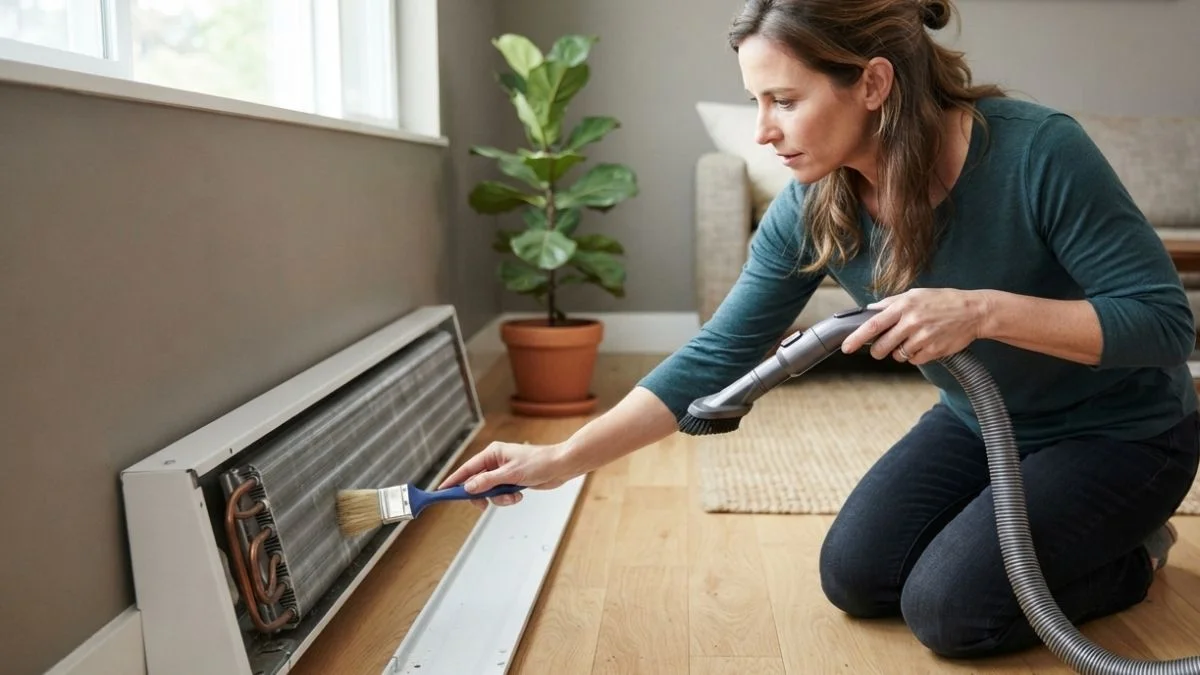
Baseboard heaters are one of those things most homeowners completely forget about — until the heat kicks on in October and the whole house smells like something is burning. That smell? It’s dust. And it’s been sitting on your heating fins since last winter.
Cleaning your baseboard heaters isn’t complicated, but it does require the right approach. Do it wrong and you’ll bend the fins, reduce airflow, and end up with a heater that works harder but heats less. Do it right and you’ll notice warmer rooms, lower energy bills, and a system that lasts years longer.
This guide walks you through everything — the right tools, the exact steps, and the mistakes most people make along the way.
Why Cleaning Your Baseboard Heaters Actually Matters

Most homeowners treat baseboard heater cleaning as optional. It isn’t.
When dust, pet hair, and debris build up inside your baseboard heater, they clog the fins — the thin metal blades responsible for releasing heat into the room. When those fins are blocked, warm air can’t circulate properly. Your thermostat keeps calling for heat, the unit keeps running, and your energy bill keeps climbing — all because of a layer of dust you could remove in 20 minutes.
The Hidden Cost of Dirty Baseboard Heaters
Here’s something most homeowners don’t realize: a dirty baseboard heater can lose up to 25% of its heating efficiency. That means your system is working a quarter harder than it needs to, every single day of the heating season. Over a full winter, that adds up to a noticeable difference on your utility bill.
Beyond efficiency, there’s comfort. Clogged fins create uneven heat distribution. One side of the room feels warm while the other stays cold. You turn the thermostat up, the room still doesn’t feel right, and you can’t figure out why. Nine times out of ten, a thorough cleaning fixes it completely.
Is It a Safety Concern?
Yes — in some cases, it genuinely is. Heavy accumulations of dust, pet hair, and lint sitting against a heating element create a real fire risk. Electric baseboard heaters run hot enough to ignite debris that’s packed tightly around the element. This is especially true in homes with pets, where fur wraps around fins and builds up quickly.
It’s not something to panic about, but it is a reason to take annual cleaning seriously rather than skipping it year after year.
How Often Should You Clean Baseboard Heaters?
| Household Type | Recommended Cleaning Frequency |
| Average home, no pets | Once a year (before heating season) |
| Home with pets | Every 6 months |
| Allergy sufferers | Every 3–6 months |
| High-traffic areas | Light dusting monthly |
Types of Baseboard Heaters — Know Before You Clean

Before you pick up a vacuum, you need to know which type of baseboard heater you have. The cleaning process is similar for both, but the safety steps are different.
Electric Baseboard Heaters
Electric baseboard heaters use a resistance heating element — similar to what’s inside a toaster — to generate heat. Air flows in from the bottom, passes over the heated element and fins, and rises out through the top. Because the element gets extremely hot during operation, it must be completely off and fully cooled before you touch anything inside.
Key parts to know: the outer cover, the metal fins, and the heating element itself.
Hot Water (Hydronic) Baseboard Heaters
Hydronic baseboard heaters work differently. Hot water from your boiler flows through a copper pipe inside the unit. That pipe is surrounded by aluminum fins, which radiate heat into the room. The cleaning process is nearly identical to electric units, but you’re waiting for a pipe full of hot water to cool down rather than an electric element.
Key parts: the outer cover, the copper pipe, and the aluminum fins surrounding it.
Knowing which type you have matters mostly for safety. Never clean either type while it’s running or warm.
How to Clean Baseboard Heating Step by Step
Turn Off the Heat and Let It Cool Completely
This is non-negotiable. For electric baseboard heaters, turn off the thermostat and switch off the circuit breaker for that unit. For hot water systems, turn off the boiler or set the thermostat all the way down and wait at least 30 to 60 minutes before touching anything.
Cleaning a warm unit doesn’t just risk burns — it can warp the fins and damage the element if water or cleaning solution contacts a hot surface.
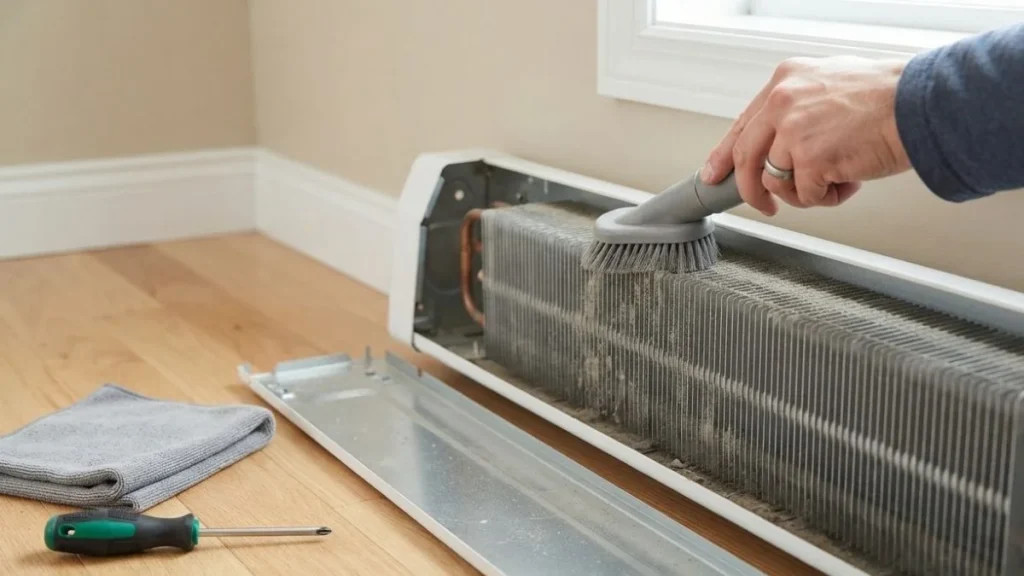
Remove the Baseboard Heater Cover
Most baseboard heater covers either snap off or lift straight up. Some models have small screws at each end. Remove them carefully and set the cover aside on a clean surface. Don’t force it — if it feels stuck, check for hidden screws before applying pressure.
Handle the cover gently. Thin metal covers dent easily, and a damaged cover won’t sit flush when you reinstall it.
Vacuum Loose Dust and Debris
Attach the brush tool to your vacuum and work from top to bottom along the fins and element. Use slow, deliberate strokes. Don’t jam the nozzle between the fins — let the suction do the work.
Pay extra attention to the ends of the unit where debris tends to pile up, and run the crevice tool along the floor inside the housing where dust settles. If you have pets, expect to find clumps of fur wrapped around the lower fins. Take your time here — rushing leads to bent fins.
Deep Clean the Fins
After vacuuming, use a soft-bristle brush or an old paintbrush to dislodge dust that’s packed between the fins. Always brush in the direction the fins run — never sideways across them. Aluminum fins are thin and bend surprisingly easily.
If you have compressed air, use short bursts to blow out stubborn debris. Hold the can upright to avoid spraying liquid propellant onto the element. Work from one end of the unit to the other in a consistent direction so you’re not just redistributing the dust.
Wipe Down the Cover and Housing
While the cover is off, wipe it down with a damp microfiber cloth and a small amount of mild dish soap. Clean the inside of the housing as well — the back panel and floor of the unit collect dust that never gets disturbed during normal operation.
Dry everything thoroughly before putting it back together. For metal covers, this is also a good time to check for rust spots. Light surface rust can be treated with a rust-inhibiting spray paint rated for high-heat surfaces.
Straighten Any Bent Fins
Bent fins are more common than most people realize — they get damaged during installation, previous cleaning attempts, or just from objects bumping into the unit over the years. Even a few bent fins in the middle of a unit can noticeably disrupt airflow.
A fin comb is the right tool for this job. It’s a small plastic or metal comb with different tooth spacings to match different fin densities. Slide it gently along the fins to straighten them back into alignment. If you don’t have a fin comb, a flat butter knife or thin flathead screwdriver can work in a pinch — use light pressure and move slowly.
Reinstall the Cover and Test
Snap or screw the cover back into place and make sure it sits flush along its entire length. A cover that’s even slightly misaligned will rattle when the unit heats up, which is annoying and can also restrict airflow.
Turn the heat back on and let it run for a few minutes. You may notice a faint dust smell during the first cycle — that’s normal and will clear quickly. Listen for rattling or unusual sounds. If you hear any, turn the unit off and check that the cover is seated properly before running it again.
Special Situations and Pro Tips

Cleaning Baseboard Heaters When You Have Pets
Pet hair is genuinely the biggest challenge with baseboard heater maintenance. It wraps tightly around fins, resists vacuuming, and builds up fast. A useful trick: put on a rubber glove and rub your hand along the fins before vacuuming. The static grabs the hair and pulls it away from the fins so the vacuum can pick it up cleanly.
During heavy shedding seasons, a quick monthly dusting — just a light pass with the vacuum brush — prevents the kind of buildup that requires a full deep clean.
Dealing with Mold or Mildew Around Baseboard Heaters
If you notice discoloration or a musty smell near your baseboard heaters, the issue is usually moisture — not the heater itself. Baseboard heaters placed on exterior walls in humid climates can experience condensation issues, and that moisture encourages mold growth in the surrounding wall and floor area.
Wipe the affected surfaces with a cloth dampened with diluted white vinegar. If the mold is behind the unit or on the wall surface, you may need to pull the unit out slightly to treat it. Persistent mold issues near heating units are worth a call to a professional — it can signal a larger moisture problem in the wall.
Furniture Placement Around Baseboard Heaters
One of the most common reasons baseboard heaters underperform has nothing to do with dust — it’s furniture blocking the airflow. Sofas, beds, and curtains placed too close to baseboard heaters trap heat at floor level and prevent it from circulating through the room.
Keep at least 6 to 12 inches of clearance in front of every baseboard heater in your home. It makes a bigger difference than most people expect.
Common Mistakes to Avoid
Cleaning baseboard heaters is straightforward, but these mistakes are worth calling out because they come up repeatedly:
- Cleaning while the unit is still warm — always wait for a full cool-down, no exceptions
- Using too much water — damp cloths only, and keep moisture away from electric elements entirely
- Brushing across the fins instead of with them — this is how fins get bent during cleaning
- Skipping the cover — a dusty cover recontaminates clean fins the moment you turn the heat on
- Forgetting the floor inside the housing — dust on the floor of the unit gets blown straight back onto the fins
How Clean Baseboard Heaters Improve Energy Efficiency
There’s a direct, measurable relationship between clean fins and heating performance. Fins are designed to maximize surface area so heat transfers from the element to the surrounding air as efficiently as possible. When those fins are coated in dust, that layer of insulation works against you — it traps heat in the element instead of releasing it into the room.
A clean baseboard heater reaches your target temperature faster, cycles off sooner, and runs less overall. That’s less wear on the system and a lower energy bill. For a whole-house heating system, regular cleaning across all units can produce meaningful savings over a full heating season.
Beyond cleaning, a few other habits help your baseboard heaters run at peak efficiency — keeping furniture clear, sealing drafts near exterior walls where heaters are typically .
Read Also: Air Lock in Hot Water Baseboard
Conclusion
Cleaning your baseboard heaters isn’t a big job — but it’s one of those small maintenance tasks that pays off in ways you’ll actually notice. Warmer rooms, lower energy bills, and a heating system that doesn’t fill your house with the smell of burning dust every October.
Once a year before the heating season starts is all it takes for most homes. If you have pets, bump that up to twice a year. Either way, the whole process takes under 30 minutes per room, and everything you need is probably already in your cleaning supplies closet.
Make it a seasonal habit, and your baseboard heaters will run better — and last longer — than those of most homeowners who never think about it at all.


