

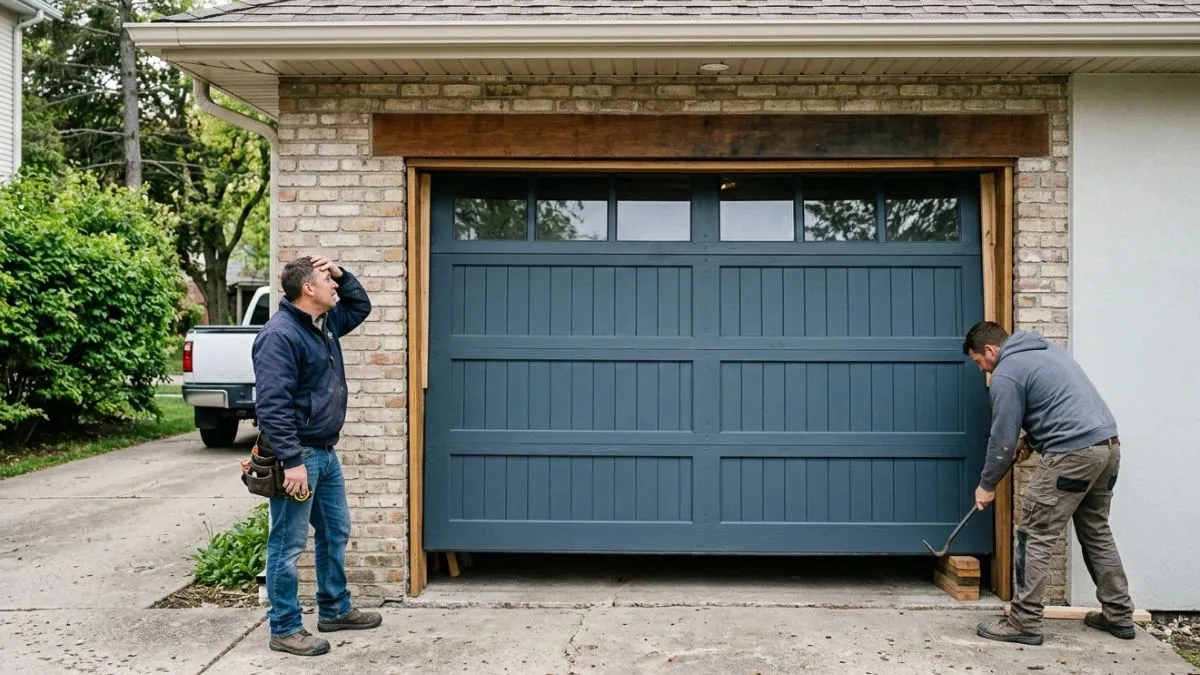
Is your garage door too tall for the opening? This can be a frustrating problem that affects your daily routine.
When your door doesn’t fit properly, it can cause damage, make your garage less secure, and even waste energy. But don’t worry—there are simple solutions you can try right away. You’ll discover why this happens and what steps you can take to fix it quickly.
Causes Of Oversized Garage Doors
Garage doors that are too tall for their openings cause many problems. These oversized doors do not fit properly, leading to issues such as difficulty closing, damage to the door or frame, and poor insulation. Understanding the causes of oversized garage doors helps prevent these problems and ensures smooth operation. Several factors contribute to a garage door being too tall for its opening.
Measuring Errors
One of the most common causes of an oversized garage door is measuring errors. Accurate measurements are crucial before ordering or installing a garage door. Small mistakes can lead to a door that is too tall for the opening.
Typical measuring errors include:
- Incorrect height measurement: Measuring from the wrong points, such as from the floor instead of the threshold.
- Not accounting for floor slope: A sloped floor can affect the actual opening height.
- Ignoring clearance space: Failing to leave extra space for the door tracks and hardware.
- Using outdated or inconsistent units: Mixing inches with centimeters without proper conversion.
| Measurement | Description | Recommended Action |
| Opening Height | Distance from floor to top of the opening | Measure at multiple points, use the smallest value |
| Opening Width | Distance between the side jambs | Measure at top, middle, and bottom |
| Headroom | Space above the opening to ceiling | Ensure enough clearance for door and hardware |
Double-checking measurements before ordering avoids costly mistakes. Using a tape measure carefully and recording the data clearly helps installers choose the correct door size.
Custom Door Specifications
Custom garage doors sometimes cause sizing issues. Unlike standard doors, custom doors are built to specific dimensions based on customer requests or architectural needs. Sometimes, these specifications lead to a door that is taller than the opening.
Reasons for oversized custom doors include:
- Design changes: Clients may request taller doors for aesthetic or functional reasons.
- Incorrect communication: Misunderstandings between customers and manufacturers about exact sizes.
- Manufacturing tolerance: Small variations during production can increase door height beyond expectations.
- Unrealistic specifications: Custom doors designed without considering the garage frame limits.
Aftermarket Modifications
Aftermarket modifications often cause garage doors to become too tall for their openings. These changes happen after the original door installation and may not consider the opening size carefully.
Common aftermarket modifications that increase door height include:
- Adding extra panels: Stacking additional door panels to increase height.
- Replacing sections: Swapping parts for taller sections without adjusting the frame.
- Installing new hardware: Using tracks or rollers designed for taller doors without modifying the opening.
- Raising the door frame: Structural changes that affect door height but do not match door size.
Problems From Excess Height
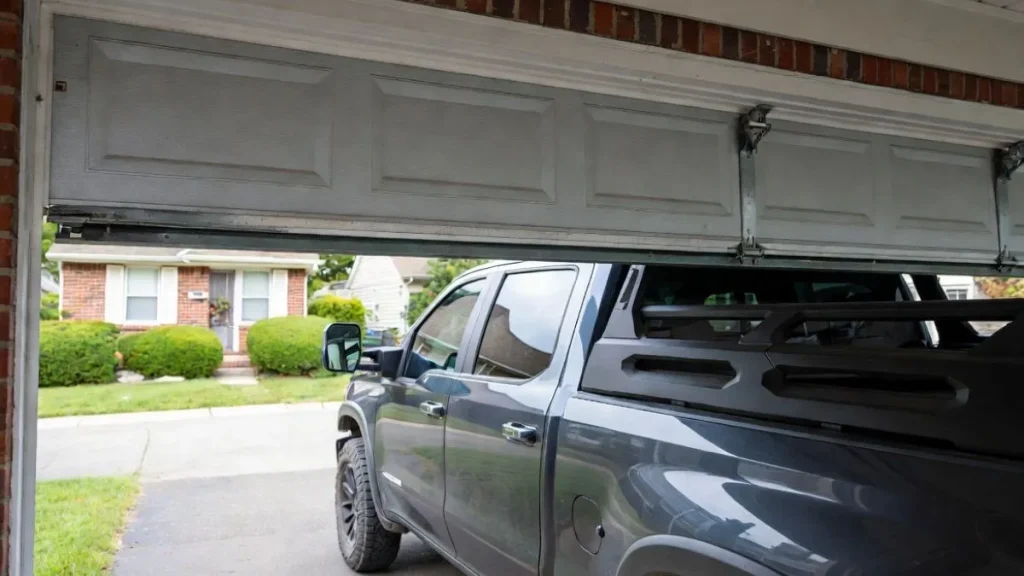
Garage doors that are too tall for their openings cause several problems. Excess height affects how the door functions and the overall safety of your garage. It can also strain the building structure, leading to costly repairs. Understanding these issues helps in choosing the right door size and avoiding future trouble.
Operational Issues
When a garage door is too tall, it often fails to open or close properly. The extra height can cause the door to hit the frame or ceiling, stopping it mid-motion. This interrupts daily use and may damage the door or opener.
- Door jamming: The door can get stuck during movement.
- Motor strain: The opener works harder, reducing its lifespan.
- Misalignment: Tracks may bend or become loose.
- Increased noise: Doors may squeak or grind.
Regular checks and proper measurements prevent these issues. A door too tall for the opening is not just inconvenient, but also costly in repairs.
Safety Concerns
Excess height in garage doors creates safety risks. The door may fall or close unexpectedly. This can hurt people or damage vehicles and property.
Common safety problems include:
- Door falls: Improper fit may cause sudden drops.
- Pinch points: Gaps can trap fingers or hands.
- Obstructed sensors: Safety sensors may not work correctly.
- Emergency release issues: Hard to operate in emergencies.
Structural Stress
A garage door that is too tall adds strain on the building structure. The frame and walls may weaken over time. This leads to cracks, warping, or even collapse in severe cases.
Key structural problems caused by excess height:
- Frame bending: Door weight pulls on side frames unevenly.
- Wall cracks: Pressure from the door stresses nearby walls.
- Ceiling damage: Door may hit or press against overhead beams.
- Foundation shift: Extra load affects the foundation stability.
Adjusting Garage Door Height
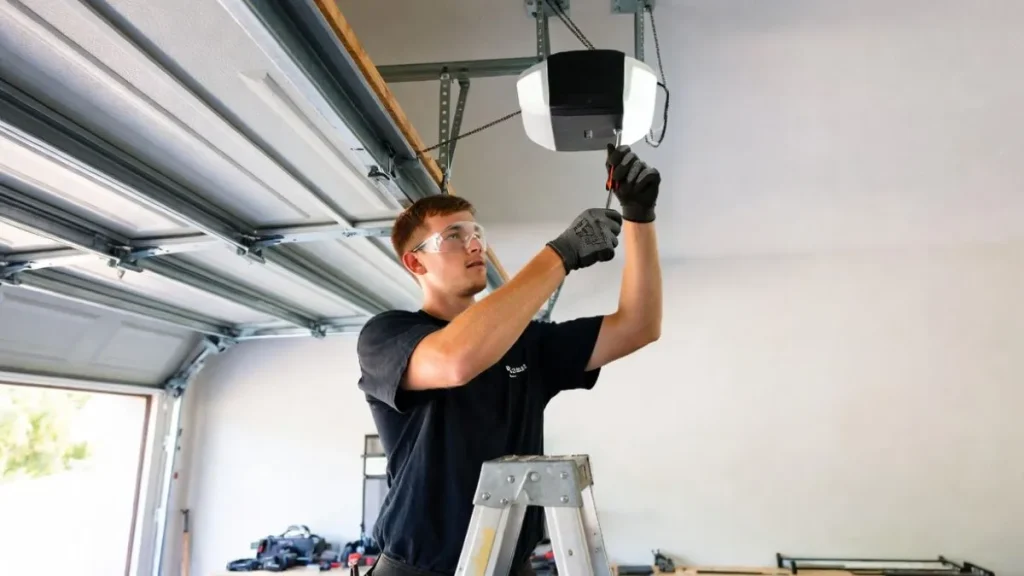
Garage doors that are too tall for their openings cause problems. They may not close or open properly, leading to security and functionality issues. Adjusting garage door height fixes these problems and ensures smooth operation. This process involves careful steps to match the door size with the opening. Proper adjustment improves safety and extends the door’s lifespan.
Professional Assessment
Start with a professional assessment to understand the exact problem. Experts measure the door and opening size precisely. They check:
- Height and width of the garage door
- Dimensions of the garage opening
- Condition of door panels and frame
- Track alignment and hardware status
This assessment identifies if the door is indeed too tall or if other issues exist. Professionals also determine if trimming or hardware changes are necessary. They use special tools for accurate measurement and safety checks.
Trimming Door Panels
Trimming door panels is a common way to reduce door height. This step involves cutting the bottom panels to fit the garage opening better. Follow these tips for a safe trim:
- Use proper tools like a saw designed for the door material
- Measure twice before cutting
- Cut slowly to avoid damaging the panel
- Seal edges after trimming to prevent weather damage
Not all doors can be trimmed. Steel and aluminum doors are easier to cut than wood or insulated ones. Some panels contain insulation or wiring, so check before cutting.
Modifying Track And Hardware
Sometimes, modifying the track and hardware is necessary to fit a tall door. Tracks guide the door as it opens and closes. Adjusting their position or length can create more space.
Key hardware parts to check and adjust:
- Vertical and horizontal tracks
- Rollers and hinges
- Springs and cables
- Track brackets and fasteners
Common modifications include:
- Lowering the tracks to allow a taller door
- Replacing short tracks with longer ones
- Adjusting spring tension to match new door height
- Adding or moving brackets to support the door
Alternative Solutions
When a garage door is too tall for its opening, it creates problems with operation and security. This issue needs prompt attention to avoid damage or inconvenience. Several alternative solutions can solve this problem without major construction work. Choosing the right fix depends on budget, door type, and garage structure.
Replacing With Correct Size
One straightforward solution is to replace the garage door with one that fits the opening perfectly. A door too tall will not close properly or may get stuck. Replacing it ensures smooth operation and better security.
Steps to replace with the correct size:
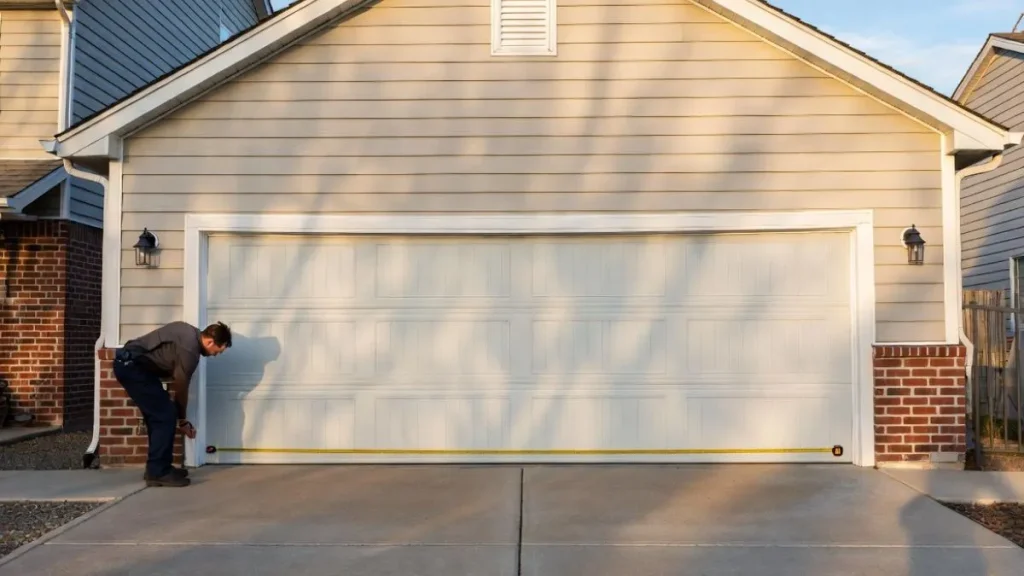
- Measure the height and width of the garage opening accurately.
- Choose a door that matches these dimensions exactly.
- Consider standard sizes available to reduce cost and installation time.
- Hire a professional to remove the old door and install the new one safely.
Installing A New Garage Door System
Sometimes, the garage door system itself may not fit the opening well. Installing a new system tailored to the garage size offers a complete fix. This involves changing both the door and the hardware.
Key components of a new garage door system:
- Door panels sized to the opening.
- Tracks adjusted for the door height.
- Springs and cables designed for the new door weight.
- Automatic openers compatible with the door size.
Advantages of a new system installation include:
- Custom fit for smooth operation.
- Modern technology for easier use.
- Enhanced safety features.
- Potential energy savings with insulated doors.
Using A Different Door Type
Changing the type of garage door can solve the height problem creatively. Some door styles fit better in tight spaces or unusual openings.
Common door types to consider:
- Roll-up Doors: These coil up into a compact space, needing less height clearance.
- Sliding Doors: These move sideways and do not require vertical space.
- Sectional Doors: These fold into sections, allowing flexible height use.
Benefits of switching door types:
- Maximizes garage space.
- Allows custom sizing options.
- Offers different aesthetic choices.
Comparison of door types by height requirements:
| Door Type | Vertical Height Needed | Space Efficiency |
| Roll-up | Low | High |
| Sliding | None (moves sideways) | Moderate |
| Sectional | Medium | High |
Choosing a different door type provides flexibility and can prevent the problem of a door being too tall.
Recommended Read: Garage Door Concrete Threshold Repair
Conclusion
A garage door that is too tall can cause many problems. It may not open or close properly. Fixing the height is important for safety and ease. You can measure the space and adjust the door size. Sometimes, professional help is needed to solve the issue.
Keeping your garage door at the right height saves time and money. Take action early to avoid bigger troubles. A well-fitted door works smoothly every day. Don’t ignore the problem—small changes make a big difference.