

A hole in your garage wall looks alarming, but most drywall damage — whether from a swinging door, a misplaced ladder, or years of wear — is straightforward to fix hole in garage wall yourself in a single afternoon.
The real pain is not knowing whether this is a quick patch job or something that requires a contractor, especially when contractor quotes for minor drywall work routinely run $150–$300.
This guide walks you through exactly what to buy, how to apply it, and what to avoid so your repair holds and looks clean.
What Type of Hole Do You Have — and Which Method Fixes It?
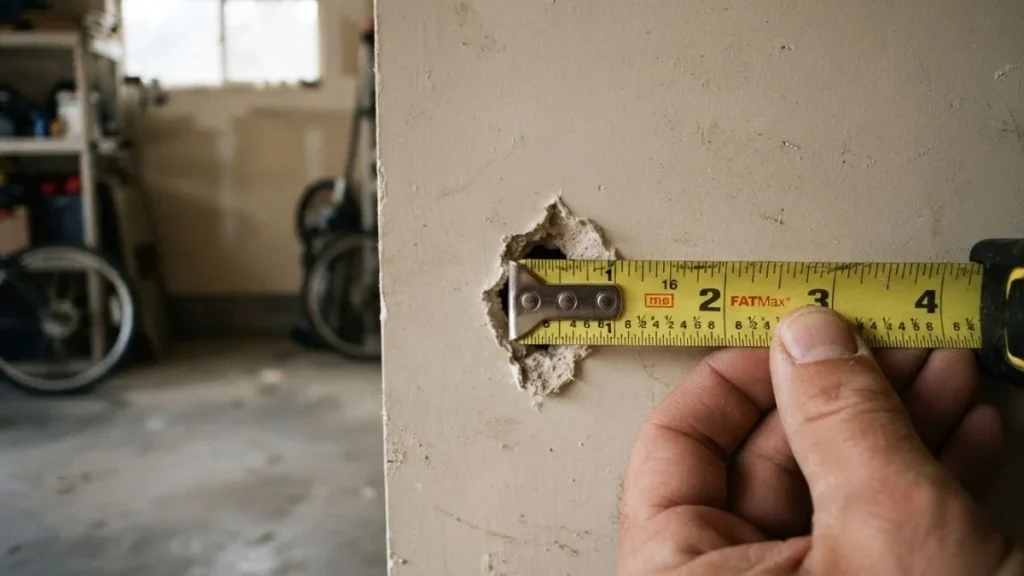
The repair method depends entirely on hole size. Using the wrong approach wastes time and materials, so measure before you buy anything.
Small Holes: Under 6 Inches
This covers most impact damage — a doorknob punch-through, a screw that pulled out badly, or a dent from sports equipment. A self-adhesive mesh patch handles these cleanly.
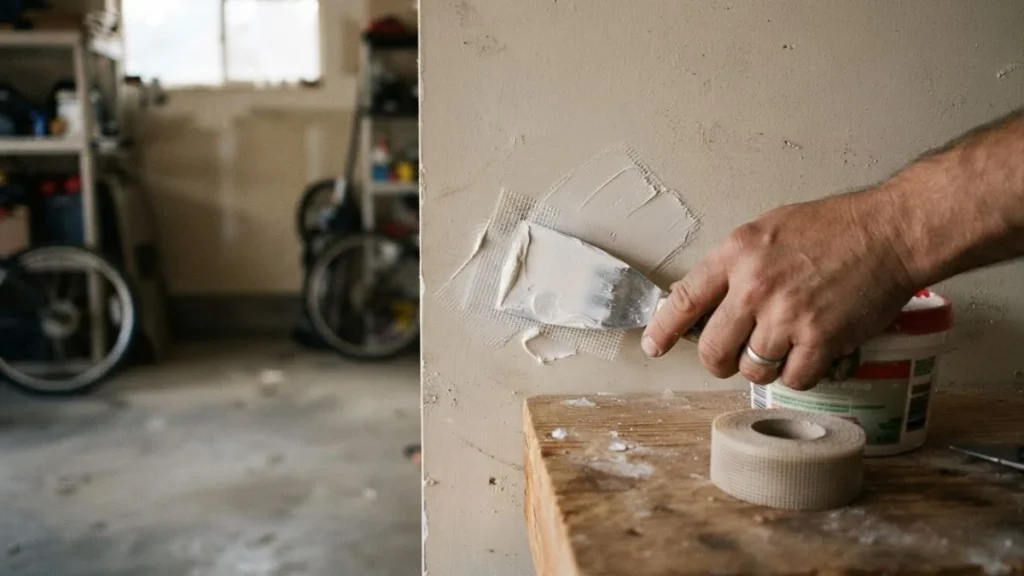
The process is simple: peel the mesh patch backing, center it over the hole, press it flat, then apply lightweight joint compound over it with a 6-inch putty knife. DAP and 3M both make reliable self-adhesive mesh patches available at Home Depot and Lowe’s. Lightweight joint compound — not spackle, which shrinks on larger repairs — sets in roughly 24 hours per manufacturer specs. Plan for 2–3 thin coats, sanding lightly between each.
Medium Holes: 6–12 Inches
A drywall repair kit is the right tool here. These kits include a backer panel or California patch method, which gives the compound something rigid to grip. You will cut the damaged area into a clean square, attach the backer, cut a matching drywall piece, tape the seams with mesh tape, and apply 3 coats of finishing compound.
This method takes a full weekend — one day for patching, one day for final sanding and finishing. Skill level and garage wall repair cost both step up here, but it remains DIY-able for most homeowners.
Large Holes and Structural Damage: Over 12 Inches
Holes over 12 inches typically require replacing a full drywall section between studs. That is still doable with moderate skill, but stop and assess first.
Horizontal cracks running more than 12 inches, soft or crumbling drywall edges, or visible moisture staining are not drywall problems — they signal foundation settling or water intrusion. Those require a contractor, not a patch kit.
Step-by-Step Drywall Patching Process
Follow these steps in order. Skipping prep or rushing drying time causes compound to crack and peel within weeks.
Prep and First Coat
Start by clearing the hole edges. Use a utility knife to trim away any torn paper or crumbling gypsum until you have a clean, firm perimeter. Wipe the area with a dry cloth to remove dust — joint compound bonds poorly to loose debris.
For small holes, peel and press the self-adhesive mesh patch centered over the opening, pressing firmly at the edges. Load a 6-inch putty knife with lightweight joint compound and spread a thin first coat across the mesh in smooth, overlapping strokes. Aim for roughly 1/8-inch thickness. Thin coats dry faster and crack less than thick ones. Let this coat dry fully — at least 24 hours in a garage environment where airflow and humidity vary more than inside the house.
Sanding and Final Coats
Once the first coat is dry, sand lightly with 120-grit sandpaper to knock down ridges. Apply a second coat, feathering the edges 2–3 inches beyond the patch boundary so the repair blends into the surrounding wall. After that coat dries, move to 150-grit, then finish with 220-grit for a smooth surface. The final coat should be thin enough that you can almost see the mesh through it before sanding.
Texture and Paint Matching
Garage walls are usually smooth or lightly textured. Run your hand across the existing wall and identify what you are matching — smooth, orange peel, or knockdown are the most common finishes.
For orange peel or knockdown texture, Homax makes aerosol texture sprays designed for drywall texture matching. Practice on cardboard first to dial in the spray distance and pattern before touching the wall. Let texture dry completely, then prime the patch before painting. Take a chip of the original paint to a Home Depot or Lowe’s paint counter for a color match — painting over an unprimed patch almost always shows through.
Tools, Materials, and What It All Costs
Getting the right materials before you start saves a second trip to the store mid-repair. Here is exactly what you need and what to expect to spend.
Essential Kit Contents
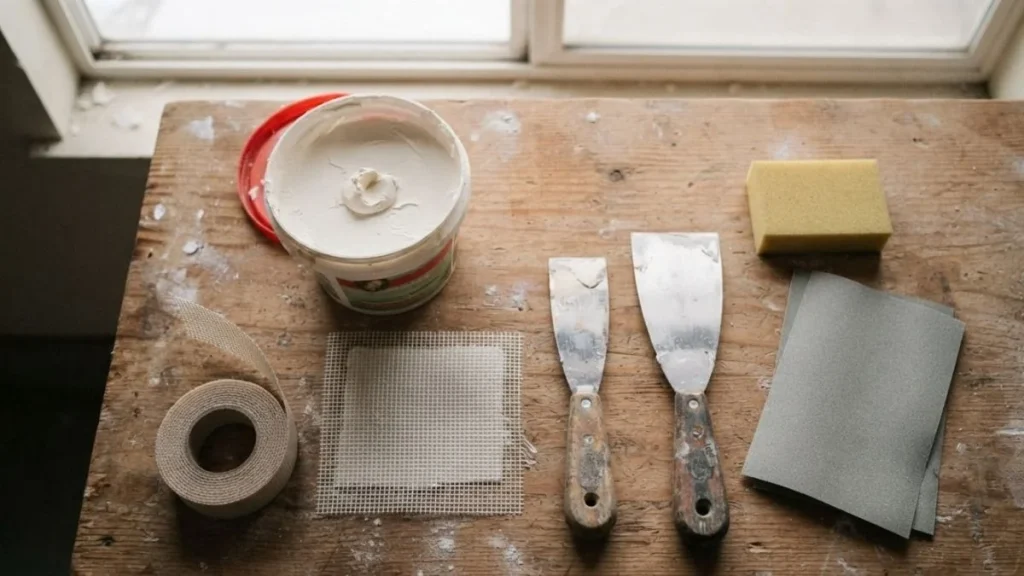
For small-to-medium garage wall patching, gather these before starting:
- Self-adhesive mesh patch (4×4 inch for small holes, 8×8 inch for medium)
- Lightweight joint compound — DAP Drydex or USG Sheetrock All Purpose are reliable options
- A 2-inch putty knife for tight corners and a 6-inch knife for broad feathering
- Sandpaper in 120, 150, and 220 grit
- Drywall primer (Zinsser or Sherwin-Williams ProMar work well)
- Matching paint — one quart covers most patch zones
Budget Breakdown
| Repair Type | DIY Cost | Professional Estimate |
|---|---|---|
| Small hole (under 6 in) | $15–$35 | $150–$200 |
| Medium hole (6–12 in) | $40–$80 | $200–$350 |
| Large section replacement | $80–$150 | $400–$700+ |
DIY drywall repair kit bundles from 3M or DAP typically run $20–$45 and include mesh patch, compound, and a putty knife — a solid starting point for first-timers.
Common Mistakes to Avoid
These four errors account for most failed drywall repairs:
- Skipping primer — Unpainted joint compound absorbs paint unevenly, leaving a dull spot even after two coats.
- Applying compound too thick — One heavy coat cracks as it dries. Three thin coats always outperform one thick one.
- Sanding before fully dry — Wet compound tears instead of sands, creating gouges that need refilling. Confirm dryness by color — compound turns from dark gray to uniform white when ready.
- Skipping the texture test spray — Applying aerosol texture directly to the wall without a cardboard test almost always results in a mismatch that requires sanding down and starting over.
Read Also: Matching Drywall Texture After Repair
Frequently Asked Questions
How much does it cost to repair a garage wall?
DIY materials for a small hole run $15–$35, while medium holes cost $40–$80 in materials. Hiring a contractor for the same repairs typically costs $150–$350 for small-to-medium damage and $400–$700 or more for large section replacements, making DIY the clear cost winner for straightforward impact damage.
How long does joint compound take to dry?
Lightweight joint compound takes approximately 24 hours per coat to dry fully under normal conditions — longer in a garage where humidity and airflow vary seasonally. Never sand or recoat before the compound turns uniformly white, which signals complete dryness rather than just surface hardening.
What is the difference between spackle and joint compound?
Spackle is a premixed filler designed for small nail holes and minor surface imperfections — it dries fast but shrinks on anything larger than about 2 inches. Joint compound, sometimes called mud, stays workable longer, bonds to mesh tape, and builds up cleanly across multiple coats, making it the right choice for any repair larger than a nail hole.
Can I fix a garage wall hole if I have never done drywall work before?
Yes — small holes under 6 inches are genuinely beginner-friendly using a self-adhesive mesh patch and lightweight joint compound. The texture and paint matching steps require the most patience, but neither demands specialized skill, only careful prep and enough drying time between coats.
Get Your Garage Wall Repair Right the First Time
The single factor that separates a lasting drywall repair from one that cracks and shows within months is patience between coats — thin layers, full drying time, and proper primer before paint. Measure your hole today, pick the matching method from this guide, and buy only what that specific repair requires. A $25 mesh patch kit from Home Depot handles most garage wall holes most homeowners will ever face.