

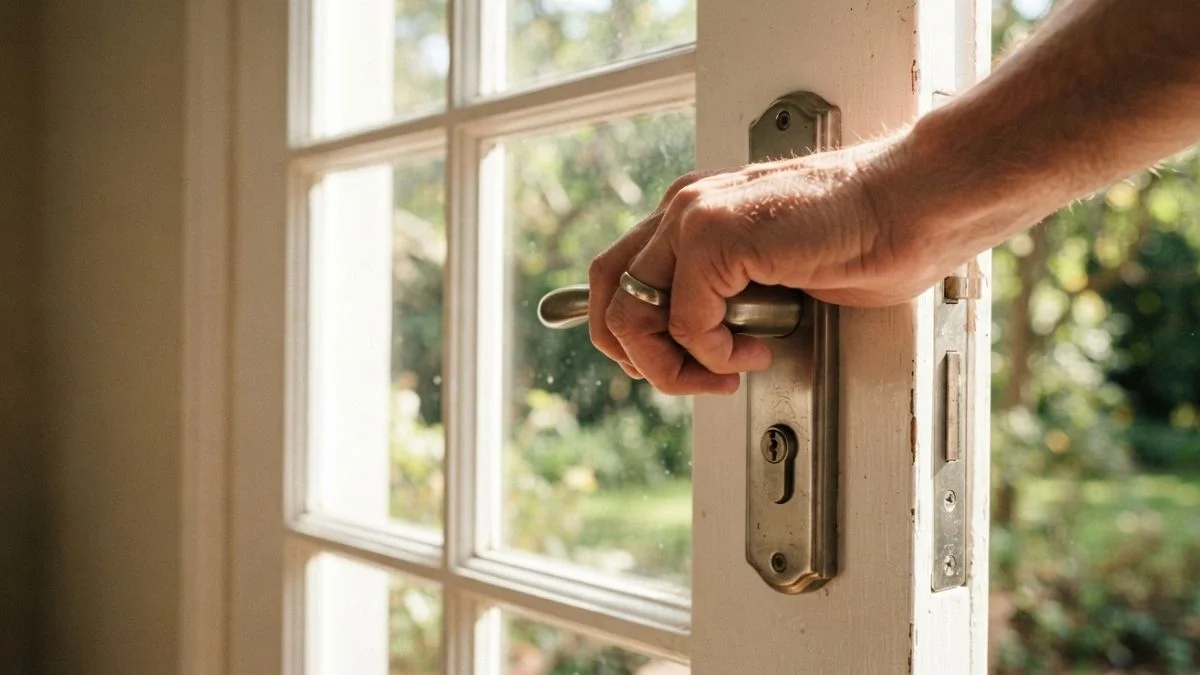
A jammed French door lock is rarely a locksmith emergency — most causes come down to three fixable problems: misaligned strike plates, worn multipoint lock mechanisms, or debris in the latch housing.
The frustrating part is not knowing which problem you have before spending money on a replacement part or a service call.
Follow these 5 diagnostic and repair steps to identify the exact cause of your lock failure and fix it yourself — with clear markers for when the job requires a licensed locksmith or door technician instead.
Why French Door Locks Fail: 4 Common Problems Explained
Most French door lock failures trace back to one of four causes. Identifying yours before buying parts saves both time and money.
Jammed or Stuck Locks
Dirt, dried lubricant, and paint overspray are the most common culprits inside a jammed latch mechanism. Moisture accelerates the problem — rust or corrosion inside the latch housing can seize the mechanism entirely, especially on exterior doors in humid climates. Locks that worked fine last season but suddenly feel stiff usually have lubricant that has dried and hardened into a binding residue rather than a protective film.
Misaligned Locks (Door Sagging)
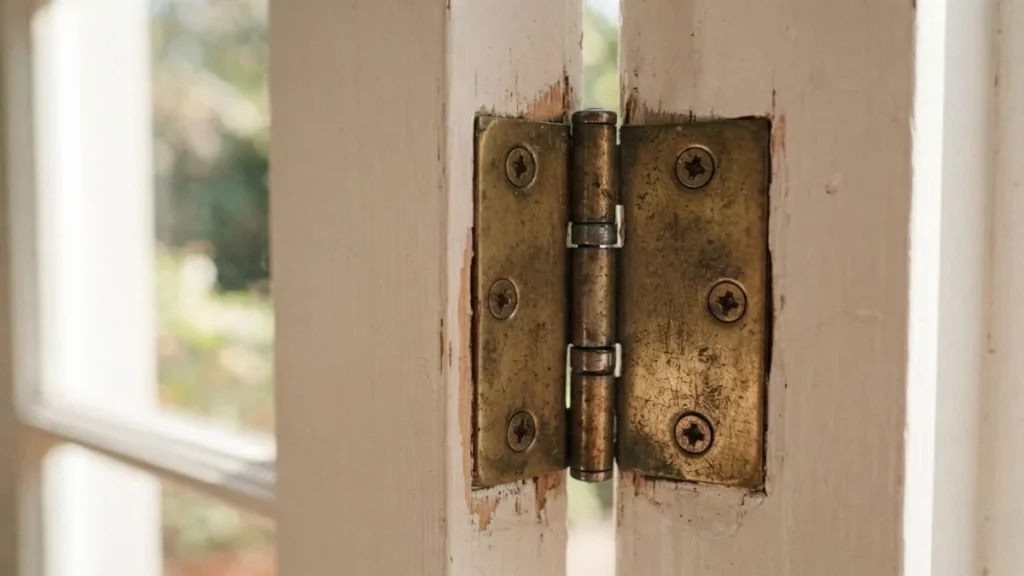
Hinge settling is the leading cause of French door lock misalignment. When hinge fasteners loosen over time, the active door drops slightly — enough that the latch no longer lines up with the strike plate opening. Frame warping from seasonal moisture changes or minor foundation shifts compounds this. The result is a latch that catches the edge of the strike plate instead of engaging it cleanly, producing that grinding or sticking sensation on every close.
Broken Latch or Lock Pins
Multipoint locks and mortise lock components wear down through thousands of open-and-close cycles. Metal fatigue causes lock pins and latch springs to lose tension gradually. A single forced locking attempt — pushing the door hard before it is fully closed — can snap a weakened pin immediately.
Handle Won’t Turn or Locks Stiffly
A handle that turns hard or not at all usually points to a bound internal pin or a broken lever spring. On French doors with a multipoint locking system, a misaligned astragal — the vertical strip between the two door panels — can prevent the locking points from traveling their full range, making the handle feel stiff even when the lock itself is undamaged.
Diagnose Your Lock Issue: Quick Flowchart Approach
Before touching any hardware, spend five minutes on this diagnostic sequence. It tells you exactly which of the 5 repair steps applies to your situation.

Check Door Alignment and Hinges
Start with the door itself, not the lock. Open the door fully and look at the top corner of the active panel — a visible gap between the door and the frame at the top latch-side corner confirms the door is sagging. Next, grab each hinge and try to move it by hand. Any play indicates loose or stripped fasteners. Check the hinge screws: if they spin without biting, the holes are stripped and need longer screws or wood filler before any lock adjustment will hold. Andersen and Jeld-Wen both document hinge torque specifications in their installation guides, which are available as PDFs on their support pages — worth checking if your doors are still under warranty.
Inspect Latch Engagement and Lock Pins
With the door open, press the latch bolt by hand and release it. It should spring back immediately and fully. A slow return or no return means the latch mechanism is either gunked up or has a broken internal spring. Close the door slowly and watch where the latch meets the strike plate — if it catches the edge rather than entering the pocket cleanly, you have a latch engagement problem caused by misalignment. Listen for grinding during this test. Grinding points to debris or corrosion inside the latch housing; a sharp click or clunk suggests a broken lock pin.
Identify Manufacturer and Lock Type
Knowing your lock type determines which parts and methods apply. Check the edge of the door panel — most manufacturers stamp a model number or brand mark on the latch faceplate. Mortise locks sit inside a deep rectangular pocket cut into the door edge and use a single bolt. Multipoint locks run a vertical rod system that engages 3 or more points along the door frame and threshold simultaneously. If your door has a handle that lifts rather than simply turns, it is almost certainly a multipoint system. Record the OEM part number from the jamb or faceplate before ordering any replacement component — generic parts frequently cause fitment problems on branded systems from manufacturers like Pella, Andersen, or Jeld-Wen.
DIY Repair Solutions: 5-Step Process
Work through these steps in order. Each step builds on the previous one, and stopping early is the most common reason a repair fails.
Step 1: Clean and Lubricate the Latch Mechanism
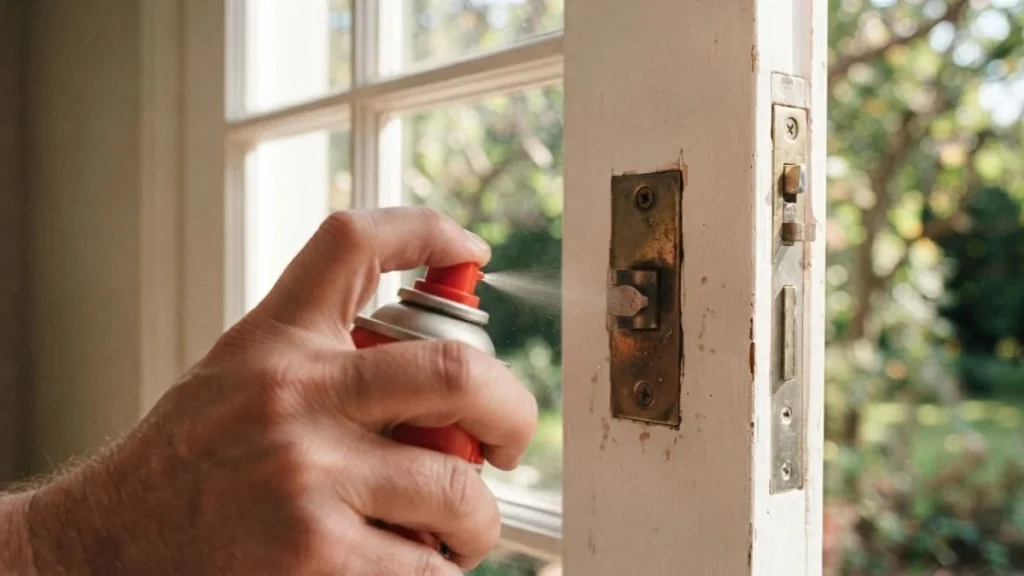
Use a stiff-bristled brush to clear debris, paint flakes, and dried lubricant from the latch face and housing. Then apply a silicone-based lubricant — Blaster Silicone or DuPont Teflon Silicone Lubricant are reliable options. Avoid WD-40 as a primary lubricant; it displaces moisture effectively but evaporates quickly and leaves residue that attracts dirt. Cycle the lock 10-15 times to work the lubricant into the mechanism fully, then wipe any excess from the latch face.
Step 2: Adjust Hinges for Alignment
Loosen hinge screws slightly — enough to allow micro-movement, not enough to remove them. If the door sags at the handle side, place a thin metal shim behind the lower hinge leaf to push that corner outward and upward. Recheck latch engagement after each small adjustment before tightening. Tighten screws gradually in a cross pattern to avoid pulling the hinge plate out of square.
Step 3: Test and Adjust Latch Engagement
Rub a pencil along the latch bolt face, then close the door once. The graphite mark left on the strike plate shows exactly where contact is happening. If the mark sits above or below the strike plate pocket, loosen the strike plate screws and shift the plate to match. A latch that catches the strike plate edge — rather than entering the pocket cleanly — will continue to wear and eventually fail.
Step 4: Inspect the Threshold and Astragal
Check the threshold — the horizontal strip at the door base — for warping or separation from the subfloor. A warped threshold prevents the bottom locking point on a multipoint system from seating correctly. Inspect the astragal for bending or lateral shift; even a 3-4mm displacement can block the locking rods from traveling their full range. Caulk any visible gaps between the door frame and surrounding wall to stop moisture from accelerating future warping.
Step 5: Know When to Stop DIY
Stop and call a licensed locksmith or door technician if any of the following are true:
- The lock still sticks after cleaning, lubrication, and hinge adjustment
- A lock pin or latch component is visibly broken and requires mortise lock disassembly
- The door frame or threshold shows structural damage — soft wood, rot, or visible separation
- The door is under manufacturer warranty, since DIY repairs can void coverage on brands like Andersen, Pella, and Jeld-Wen
Forcing a repair past these points risks damaging the door panel itself, which is significantly more expensive than the lock.
Manufacturer-Specific Solutions and Replacement Parts
Generic replacement parts cause more failed repairs than almost any other mistake in French door lock repair. Matching the part to the manufacturer and model is not optional.
Andersen and Jeld-Wen Lock Issues
Andersen French doors manufactured before 2010 commonly develop latch mechanism failures due to a zinc alloy latch bolt that corrodes faster than later stainless steel versions. Andersen’s customer support line and their online parts portal (andersenwindows.com/support) can identify the correct replacement by door series — the 400 Series and E-Series have different latch assemblies that are not interchangeable. Jeld-Wen doors frequently show multipoint lock rod failures after 8-10 years of use, particularly in climates with significant temperature swings. Jeld-Wen covers defective locking hardware under their limited lifetime warranty on the door unit, but only when the original purchaser can produce proof of purchase. Contact their warranty department before ordering any replacement part.
Finding Correct Replacement Parts
The model and serial number for most French door systems are stamped on a label inside the hinge jamb — the vertical frame strip where the hinges mount. Photograph this label before ordering anything. OEM parts from the original manufacturer guarantee fitment and preserve warranty coverage. Aftermarket multipoint lock kits from suppliers like Tru-Bore or Hoppe are compatible with a wide range of systems and cost 30-50% less than OEM, but verify compatibility using the rod spacing measurement — the distance between each locking point — before purchasing. For isolated failures, a French door lock pin replacement kit is significantly cheaper than replacing the full locking mechanism and is appropriate when the housing itself is undamaged.
You May Also Like: How to Fix Gap at Bottom of French Doors
Lock Repair or Replacement: Make the Right Call
Most jammed French door locks respond to cleaning, lubrication, and hinge adjustment — structural damage, broken internal components, and warranty-covered defects are the only clear cases where professional replacement is the smarter investment. Start with Step 1 of this guide today, and if the lock still binds after completing all 5 steps, photograph the latch faceplate model number and contact either your door manufacturer’s warranty line or a licensed locksmith from the Associated Locksmiths of America (ALOA) directory at aloa.org.