

That small rectangular or circular opening in your fireplace floor is not a flaw — it’s a deliberate feature built into fireplaces for over a century.
If you’ve recently moved into a pre-1980s home and spotted a hole in the fireplace floor, it’s easy to assume something is broken or missing. Most homeowners have never seen one before and can’t find a straight answer online.
By the end of this article, you’ll know exactly what it is, why it’s there, and what — if anything — you need to do about it.
Ash Pits: Definition and How They Work

What an Ash Pit Is
An ash pit is a sealed chamber built directly beneath the firebox floor, designed to collect ash and debris from wood-burning fires. The firebox floor opening — often called an ash dump door — is a small, hinged metal plate that sits flush with the hearth. Pushing it open lets ash fall through into the pit below. This was a standard feature in masonry fireplaces built through the mid-20th century, and it’s still included in many traditionally built fireplaces today.
The Ash Journey: Firebox to Basement
Here’s how the system works. After a fire burns down, ash sits on the firebox floor. The homeowner pushes the ash dump door open with a poker or brush handle and sweeps the ash through the opening. That ash falls into the ash pit chamber, which sits inside the chimney foundation. Access to that collected ash happens through a separate cleanout door — typically a small metal door in the basement or crawlspace wall at the base of the chimney. From there, ash is scooped out and disposed of. The design keeps the active firebox clear without requiring a full vacuuming after every fire.
Why Older Homes Have Them
Wood-burning fireplaces were the primary heating source in American homes through the mid-1900s, making efficient ash removal a practical necessity. Ash pit systems were especially common in the Northeast and Midwest, where homes burned wood or coal through long winters. Once electric and gas heating became standard after the 1950s, new fireplace construction gradually dropped the feature — which is why it surprises so many buyers of older homes today.
Identifying an Ash Pit vs. Other Fireplace Holes
Visual and Location Clues
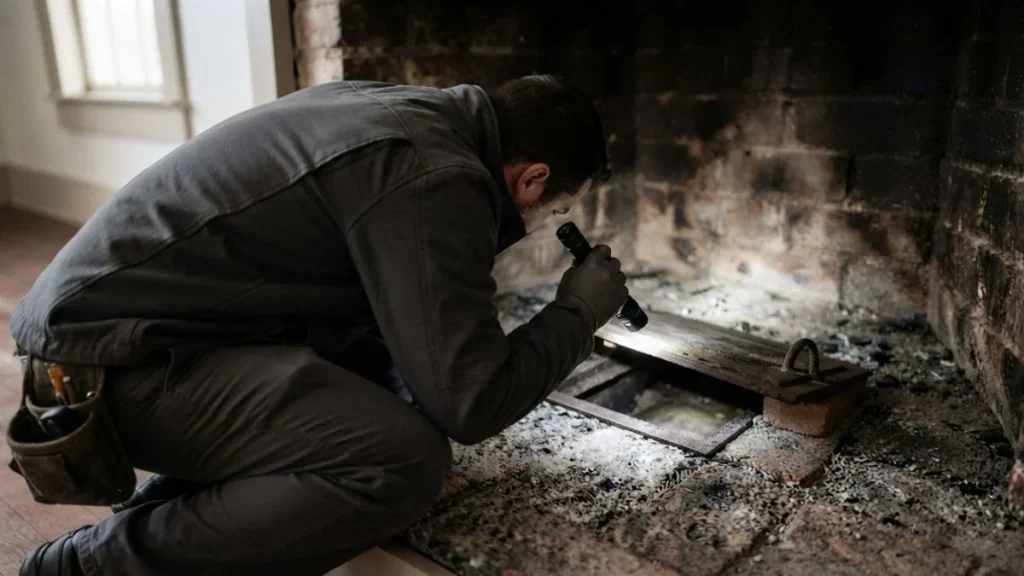
An ash pit opening sits centered in the firebox floor, directly on the hearth surface. It’s typically square or rectangular, anywhere from 4 to 12 inches wide, and framed in cast iron or steel. Many have a hinged metal plate — the ash dump door — that sits flush with the floor and pivots downward when pressed. If you see a small metal-framed opening in the middle of your firebox floor, that’s almost certainly an ash pit.
Other openings in fireplace anatomy serve completely different functions. Fresh air vents appear on the exterior foundation wall, low to the ground, and supply combustion air to the firebox — they’re not in the floor itself. The damper sits well above the firebox, inside the throat of the chimney, and controls airflow and draft. Neither one looks or behaves like a firebox floor opening.
The Cleanout Door Confusion
Here’s where many homeowners get turned around. The ash pit system actually has two separate access points — one at the top, one at the bottom. The ash dump door is the opening in the firebox floor itself. The fireplace cleanout door is a separate hinged metal door, usually located in the basement or on the exterior of the chimney foundation, used to remove accumulated ash from below.
Not every older home has both components intact. Some have a firebox floor opening with no visible dump door — the original hardware may have been removed or corroded away. Others have a basement cleanout door but a sealed or tiled-over floor opening upstairs. If you’re unsure what you’re looking at, a certified chimney sweep can identify the full ash removal system in a single inspection visit.
Safety, Sealing, and When to Act

Open Ash Pit Risks
An uncovered firebox floor opening is not a fire hazard on its own, but it does create 3 real problems worth addressing. First, an unsealed ash pit connects the firebox directly to the chimney foundation and often the basement — a clear entry path for rodents and insects. Second, an open pit allows conditioned air to escape and cold basement air to enter, which reduces energy efficiency noticeably in winter. Third, some jurisdictions require ash pit openings to have functional covers under local building codes, so an open or missing ash dump door could create a compliance issue if you sell the home.
Cover and Sealing Options
Replacing or adding an ash dump door is the most straightforward fix. Cast-iron replacement dump doors are widely available from fireplace supply retailers like Rutland Products and Woodford Manufacturing, typically priced between $15 and $60 depending on size and material. Installation requires matching the frame dimensions to your existing firebox floor opening — most are 4×8 inches or 5×8 inches. For a permanent seal, a mason can mortar a steel plate or firebrick directly over the opening, which makes sense if the fireplace has been converted to gas or is no longer in active use.
When Professional Help Is Needed
Call a certified chimney sweep — look for CSIA-certified professionals through the Chimney Safety Institute of America — if you notice structural cracking around the firebox floor, smell persistent odors from the pit, or haven’t had the chimney inspected in over a year. A licensed mason is the right call if you need permanent sealing or see deteriorating mortar around the chimney foundation. According to the National Fire Protection Association, chimney systems should be inspected at least once per year regardless of use frequency.
Read Also: Square Hole in Basement Floor
Next Steps: Use or Seal It
That hole in your fireplace floor is a functional ash pit — a deliberate, century-old design feature, not a defect. If the dump door is missing or the pit hasn’t been inspected, schedule a CSIA-certified chimney sweep before your next fire season to confirm the system is clean, intact, and code-compliant. From there, you can decide with confidence whether to use it, cover it, or seal it permanently.