

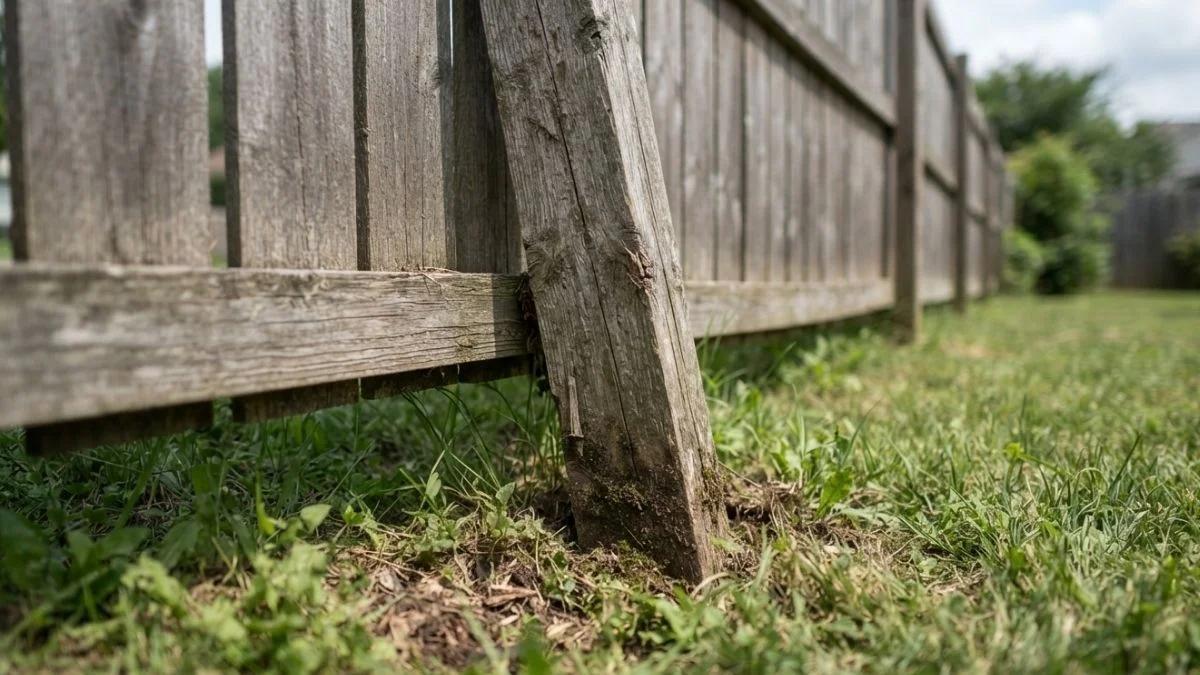
A wobbly fence post repair done without removing the post can cost under $20 and take less than an hour — compared to the $200–$400 a contractor typically charges per post replacement.
Most homeowners discover the wobble only after the post has already compromised the fence panels, and then face an unclear choice between expensive professional replacement and a DIY fix they’re not sure will hold.
This guide covers 5 ranked repair methods — ordered by speed, cost, and long-term durability — so you can pick the right fix for your specific post condition and get a stable fence today.
Why Your Fence Post Wobbles: Diagnosis Before Method Selection
Choosing the wrong repair method wastes time and money. A post wobbling from frost heave needs a different fix than one sitting in soft soil or one with rot at the base.
Common Causes
Soil settling and ground movement happen gradually over months or years. As the soil around the post compresses unevenly, lateral movement increases until the post shifts noticeably.
Frost heave is the most destructive cause in cold climates. Freeze-thaw cycles expand and contract soil repeatedly, pushing posts upward and breaking their concrete collars. This is the leading cause of wobbling fence posts in USDA hardiness zones 5 and colder.
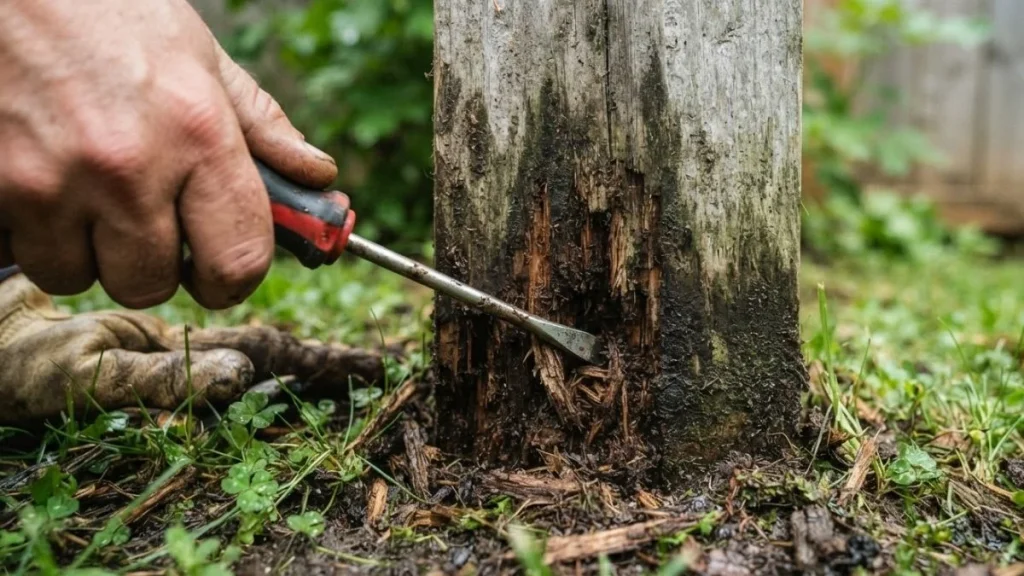
Wood rot and post deterioration concentrate at the soil line, where moisture, oxygen, and bacteria meet. A post can look structurally solid above ground while being completely compromised below it.
Shallow installation depth is a common DIY mistake. Posts set less than one-third of their total length underground lack the anchoring needed to resist wind load and fence weight.
Lateral stress from wind pressure, heavy fence panels, or soil settlement puts continuous force on the post base — accelerating any existing weakness.
Assessing Your Situation Before Choosing a Method
Before selecting a repair, check these 5 factors:
- Post condition: Probe the base with a screwdriver. If it sinks more than half an inch, rot is present and structural stability is compromised.
- Wobble severity: Minor movement under hand pressure differs from a visible lean — the latter signals deeper soil or anchoring failure.
- Soil type: Sandy or soft soil requires expanding foam or ground spikes for reanchoring. Clay-heavy soil holds compacted gravel well.
- Climate: In freeze-thaw zones, concrete fence post repair alone often fails. Flexible repair systems or adjustable fence post repair kits handle seasonal movement better.
- Budget and time: Fence post shims and repair brackets take under 30 minutes. Concrete or foam solutions need 24–48 hours of cure time.
Method 1: Expanding Foam Stabilization
Expanding foam stabilization is the fastest fence post repair without removing the post — most applications take under 10 minutes and reach full structural strength within 15 minutes.
How It Works
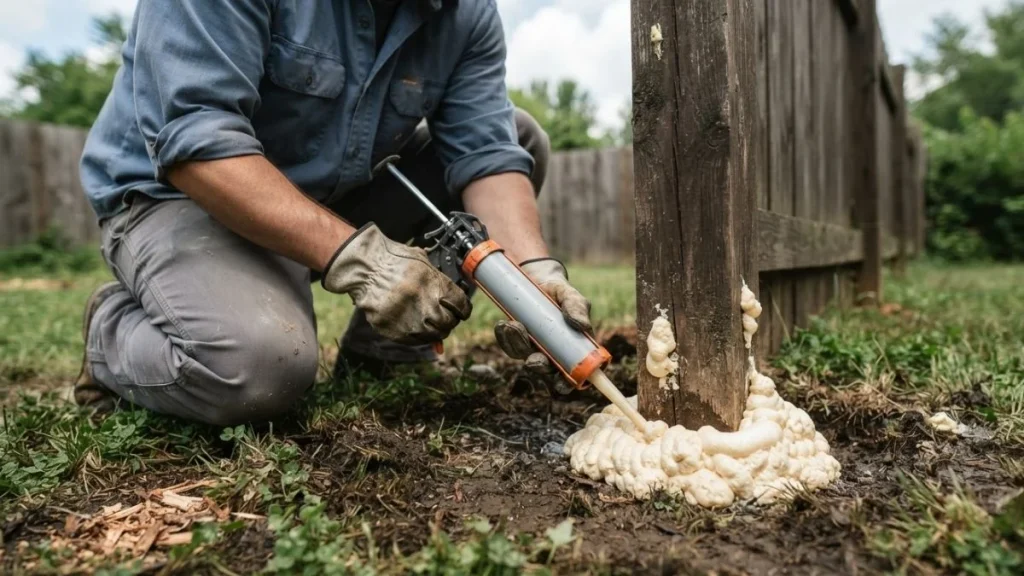
Expanding polyurethane foam fills the voids around the post base underground, then cures into a rigid mass that resists lateral movement. Unlike concrete, it weighs about 1/50th as much and won’t crack during frost heave cycles because it bonds to both the post and surrounding soil rather than forming a brittle collar.
Sika PostFix is the most widely referenced product for this application, stocked at Home Depot and endorsed by fence manufacturers for new and repair installations. According to Sika’s product specifications, PostFix expands to fill a 10-inch diameter hole around a standard 4×4 post and reaches working strength in 3–7 minutes at 70°F.
Application Process
- Excavate or probe around the post base to expose 2–4 inches of the underground section.
- Clear loose soil and debris from around the post perimeter.
- Insert the Sika PostFix cartridge into the hole at the base.
- Activate the foam per manufacturer instructions — it expands outward and downward automatically.
- Hold the post plumb (perfectly vertical) for 3–5 minutes while the foam sets.
- Allow 15–30 minutes before applying any load or reattaching fence panels.
Durability and Long-Term Performance
Properly applied expanding foam fence post stabilization lasts 5–10 years in most climates. It handles freeze-thaw cycles better than concrete because its slight flexibility absorbs soil movement rather than cracking under it.
The primary risk is moisture infiltration if the foam doesn’t fully seal around the post — partial fills degrade faster. In consistently wet or soft soil conditions, foam alone may need supplementing with ground spikes for adequate fence post anchoring.
Cost runs $15–$25 per post, making it 85–90% cheaper than professional concrete fence post repair or full replacement.
Method 2: Concrete Augmentation
Concrete augmentation stabilizes a wobbly fence post by adding fresh concrete around the existing base — no removal required, and no need to disturb the fence panels above.
When and How to Apply
This method works best when the original post has no rot, the wobble is caused by soil settlement or insufficient initial anchoring, and you have 24–48 hours before the repair needs to bear full load.
Here’s the problem: most homeowners dig too shallow. For concrete fence post repair to hold, you need to excavate at least 6 inches down around the post base and wide enough to pour a 4–6 inch concrete collar.
Follow these steps:
- Dig around the post base to a depth of 6–8 inches, removing loose or saturated soil completely.
- Check the post for rot by probing with a screwdriver — if it sinks easily, concrete won’t save a deteriorating post.
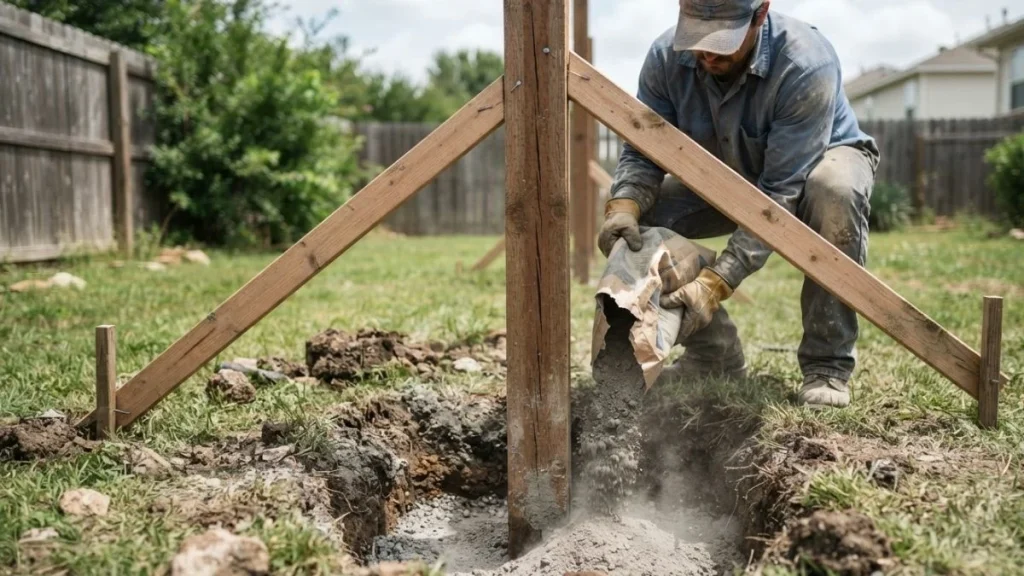
- Brace the post plumb using two diagonal 2×4 braces staked into the ground.
- Mix Quikrete Fast-Setting Concrete or equivalent — one 50lb bag typically handles one standard 4×4 post.
- Pour dry mix directly into the hole (fast-set products don’t require pre-mixing) and add water per bag instructions.
- Crown the concrete slightly above grade to shed water away from the post base.
- Keep braces in place for 24 hours minimum; full cure takes 48–72 hours.
In soft soil, compact a 3-inch gravel layer at the hole bottom before pouring — this improves drainage and reduces post deterioration from moisture retention.
Durability and Maintenance
Concrete augmentation typically lasts 5–10 years depending on climate and soil conditions. In freeze-thaw zones, the concrete collar is vulnerable — repeated frost heave cycles crack the collar and gradually worsen lateral movement rather than preventing it.
Inspect augmented posts every spring. Look for visible cracking in the concrete crown, renewed wobble under hand pressure, or soil pulling away from the collar edge — all signs that the collar has shifted and needs attention.
Method 3: Repair Brackets and Adjustable Kits
Fence post repair brackets fix a leaning or loose post without any digging, concrete, or foam — making them the fastest surface-level solution for wobbling fence posts with intact bases.
How Bracket Systems Work
Adjustable fence post repair kits use heavy-gauge metal sleeves or clamp-style brackets that attach directly to the existing post at or just above ground level. The bracket drives into the soil alongside the post or wraps around it, transferring lateral load from the weakened post base into undisturbed ground nearby.
Most residential-grade repair brackets carry load ratings of 400–700 lbs of lateral force — sufficient for standard 6-foot privacy fence panels in moderate wind zones. Products like the Oz-Post Repair Post and Simpson Strong-Tie ABA post base brackets are stocked at Home Depot and Lowe’s, and both use hot-dip galvanized steel that resists rust in ground-contact applications.
Installation Speed and Adjustment Range
A typical adjustable fence post repair kit installs in 15–30 minutes with basic tools — a hammer, drill, and wrench.
The process:
- Position the bracket sleeve flush against the post base at ground level.
- Drive the ground spike or anchor plate into the soil using a sledgehammer or driving tool.
- Slide the post into or against the bracket and align it plumb.
- Tighten the clamping bolts to the manufacturer’s torque specification — typically 25–35 ft-lbs for galvanized hardware.
- Recheck plumb and make lateral adjustments before final tightening.
Steel brackets offer the highest load capacity. Stainless steel resists corrosion better in coastal or high-humidity climates. Galvanized is the standard choice for inland residential use and costs 30–40% less than stainless.
The result? Brackets remain visible at the post base, which some homeowners find unattractive. Painting or staining the bracket to match the fence reduces visual impact significantly.
Method 4: Shims, Ground Spikes, and Quick Anchors
Shims and ground spikes are the lowest-cost wobbly fence post repair options — best suited for minor movement rather than structural lean, and deployable in under 20 minutes with no mixing or curing required.
Shim Techniques for Minor Wobble
Fence post shims work by wedging dense material into the gap between the post base and surrounding soil or concrete collar, eliminating the small movement that causes wobble. This method addresses how to tighten a loose fence post when the post itself is structurally sound but has simply shifted slightly in its footing.
Use hardwood shims or composite plastic shims — never untreated softwood, which absorbs moisture and accelerates post deterioration at the soil line. Cedar and pressure-treated pine shims handle ground contact well. Drive 2–4 shims evenly around the post perimeter using a hammer, alternating sides to keep the post centered and plumb.
Shims work best when wobble is less than half an inch of lateral movement in any direction. Beyond that threshold, the gap is too large for shims to provide reliable structural stability.
Ground Spike and Auger Anchor Systems
Auger-style ground spikes twist directly into the soil alongside the post, then connect to it via a bracket or clamp — no excavation needed. The helical (spiral) design bites into undisturbed soil below the frost line in most residential applications, giving the post a new anchoring point independent of the original footing.
In soft soil conditions, auger anchors outperform shims significantly. A single 24-inch auger anchor driven 18 inches into the ground beside a wobbling post resists 300–500 lbs of lateral force depending on soil density.
The result? Ground spikes cost $10–$30 each and install faster than any other method — making them ideal for fence post repair without removing the post when time and budget are the primary constraints.
Quick Fix Versus Long-Term Solutions: Matching Method to Need
Not every wobbly fence post needs a permanent repair — and not every permanent repair actually addresses the root cause. Matching the method to the timeline and conditions saves money and prevents repeat failures.
Timeline Expectations and Durability Trade-offs
| Method | Expected Lifespan | Avg. Cost Per Post | Best For |
|---|---|---|---|
| Shims | 3–12 months | $2–$8 | Minor movement, sound post |
| Ground spikes | 2–5 years | $10–$30 | Soft soil, fast install |
| Repair brackets | 5–10 years | $25–$60 | Surface repair, no digging |
| Expanding foam | 5–10 years | $15–$25 | Voids, frost heave zones |
| Concrete augmentation | 7–15 years | $8–$20 | Stable soil, no rot present |
Shims and ground spikes are triage solutions — they stabilize wobbly fence posts quickly but don’t address soil settlement or post deterioration. If your fence post has wobbled twice in three years, a surface-only fix will fail again.
Cost per year of functionality tells the real story. A $60 repair bracket lasting 8 years costs $7.50/year. A $5 shim job lasting 4 months costs $15/year — three times more expensive over time.
Soft Soil and High-Moisture Regions: Root Cause Solutions
Fence post repair without removing the post only works long-term if the surrounding soil can actually hold the repair. In soft, sandy, or consistently wet soil, no surface fix creates lasting structural stability without addressing drainage first.
Here’s what actually works in problem soil:
- Improve drainage by digging a 6-inch gravel bed beneath the post base — this prevents moisture accumulation that accelerates post deterioration and softens the surrounding soil.
- Amend clay-heavy soil with coarse sand and gravel backfill to reduce expansion and contraction during wet and dry cycles.
- Combine methods in freeze-thaw zones — expanding foam paired with a repair bracket handles both frost heave and lateral movement better than either method alone.
- Extend anchoring depth using 24-inch auger ground spikes when soil above 12 inches is consistently saturated.
In USDA zones 4 and colder, frost heave is a recurring structural threat. Concrete alone fails repeatedly in these regions — flexible foam or bracket systems that tolerate seasonal movement outperform rigid solutions every time.
Read Also: How to Attach 4×4 Post to Existing Deck for Roof
Next Steps: Your Repair Timeline
The right wobbly fence post repair isn’t the most expensive one — it’s the one matched to your soil conditions, climate zone, and how long you need it to last. Start by probing your post base with a screwdriver today: if it’s solid, pick any method from the table in section 7 based on your budget and timeline; if it sinks, prioritize a bracket or foam solution that doesn’t rely on the deteriorated wood for structural strength. Most repairs on this list cost under $60 and finish in an afternoon.


