
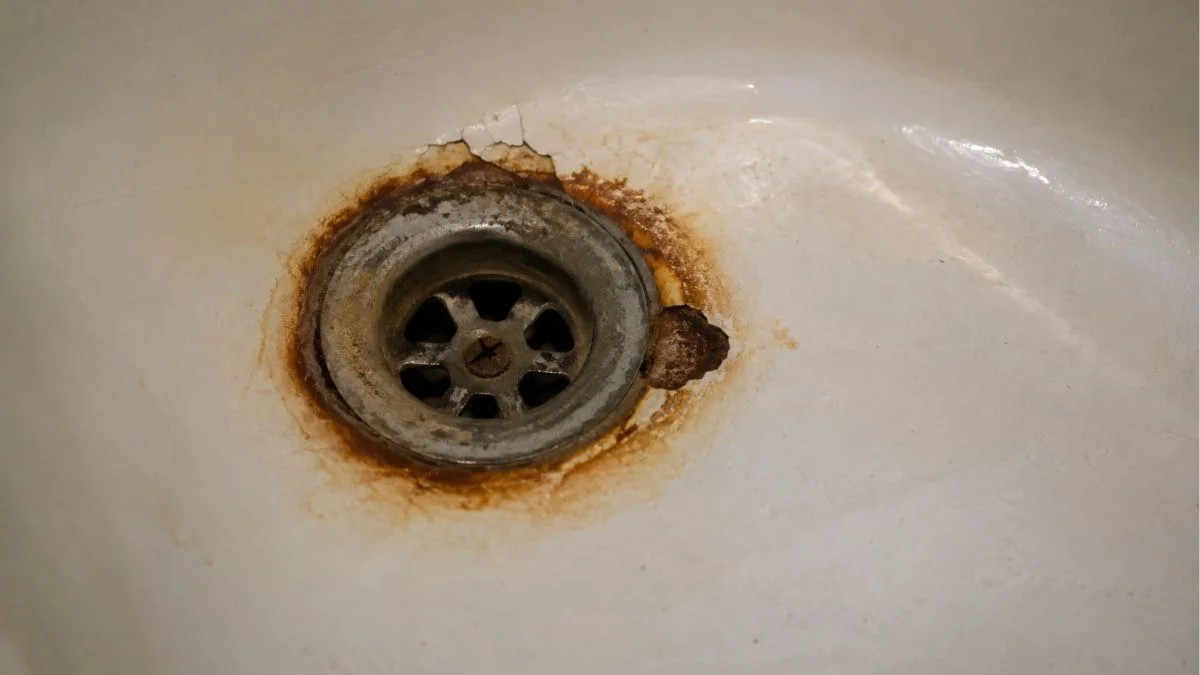
A rust hole around a bathtub drain is one of the most deceptive plumbing problems a homeowner faces — small on the surface, but capable of causing hundreds of dollars in subfloor water damage if left untreated.
For owners of cast iron or steel tubs, the deterioration often appears gradually: a reddish ring around the drain that eventually becomes a gap where water escapes below the tub instead of through it.
This guide breaks down the real costs, step-by-step repair methods, and honest timelines for both DIY bathtub drain rust hole repair and professional solutions — so you can make the right call for your budget and skill level.
Why Bathtub Drains Rust: Root Causes
Rust doesn’t appear overnight. It builds through repeated exposure to moisture, minerals, and electrochemical reactions — and the drain area takes the worst of it.

Cast Iron and Steel Are Inherently Vulnerable at the Drain Interface
Cast iron bathtubs corrode when their protective enamel coating chips or wears thin, exposing bare metal to standing water. The drain interface is the highest-risk zone because water pools there constantly. Steel tubs face the same risk but corrode faster — steel lacks the thermal mass of cast iron, which causes more condensation to form on the tub’s underside, accelerating deterioration from below.
Galvanic corrosion is a specific threat here. This occurs when two dissimilar metals — such as a brass drain flange and a cast iron tub body — contact each other in the presence of water, creating a small electrical current that eats away at the weaker metal.
Hard Water and Chemical Exposure Speed Up the Damage
Hard water deposits calcium and magnesium minerals directly onto the drain rim. These minerals trap moisture against the metal surface, preventing it from drying between uses. Harsh chemical drain cleaners compound the problem by stripping away any remaining epoxy coating or factory sealant.
Acrylic Tubs Are a Different Case
Acrylic and fiberglass tubs don’t rust — but their drain flanges are typically metal, meaning corrosion still occurs at the connection point. A bathtub fiberglass repair kit addresses cracking around the drain, not true rust damage. Structural drain replacement is often necessary when corrosion reaches the subfloor level.
DIY Repair Methods: From Surface Prep to Permanent Patches
Skipping surface preparation is the single biggest reason DIY rust repairs fail within months. Clean, bare metal is non-negotiable before any patch material goes down.

Surface Preparation and Rust Removal
Start with a wire wheel attachment on an angle grinder to remove loose rust flakes and scale. Follow with sandpaper, moving from 60-grit to 150-grit to create a smooth, slightly rough surface that patch compounds can bond to. This progression matters — coarse grit removes deterioration, fine grit opens the metal pores for adhesion.
Chemical rust converters like Rust-Oleum Rust Reformer are a legitimate alternative to mechanical removal, especially in tight spaces near the drain flange where a grinder won’t fit. They chemically react with iron oxide and harden it into a stable black primer layer. The trade-off: they require 24 hours of drying time and don’t work well on heavily pitted surfaces.
Repair Application by Hole Size
Small holes under 1 inch respond well to a two-part epoxy patching compound such as J-B Weld KwikWeld. Mix, press firmly into the hole, and allow 6 hours of cure time before sanding flush. This is a permanent repair when surface prep is done correctly.
Medium damage between 1 and 3 inches requires a fiberglass repair kit — the mesh backing distributes load across the weakened area. Apply resin in thin layers, letting each layer cure fully before adding the next.
Rust stains without structural holes need only a waterproofing sealant like Rust-Oleum Tub & Tile coating after thorough metal etching and cleaning — no patching required.
Temporary vs Permanent Solutions: Lifespan and Cost Breakdown
Not every rust repair needs to last decades — but you need to know exactly what you’re getting before you commit to a method.

Quick-Fix Patches: 6–12 Month Durability
Plumber’s epoxy putty and hydraulic cement are the fastest options, costing $8–$15 per application. Products like Oatey Fix-It Stick press directly into small holes without mixing tools. These are honest temporary repairs — they slow water intrusion but won’t stop ongoing corrosion beneath the patch. Expect to reapply annually.
Mid-Term Solutions: 1–3 Year Lifespan
Combining a two-part epoxy compound with a waterproofing topcoat extends repair life significantly. Apply J-B Weld or a similar structural epoxy as the base patch, then seal the entire drain perimeter with a rubberized waterproofing coating. Total material cost runs $25–$60. This approach works well for cast iron bathtub rust repair where the surrounding metal is still structurally sound.
Full Drain Replacement: The Permanent Fix
A complete drain assembly replacement, including removing the corroded flange and installing a new drain body, costs $150–$400 with professional labor. This is the only genuinely permanent solution when corrosion has compromised the drain throat itself.
When to Stop DIYing and Call a Professional
Call a licensed plumber immediately if any of these conditions apply:
- The rust hole exceeds 3 inches in diameter
- The subfloor beneath the tub shows soft spots or water staining
- Drain overflow rust damage has spread to adjacent wall framing
- The tub shifts or flexes noticeably when you step in
Structural damage beyond the tub surface requires professional assessment — no patch compound changes that reality.
Repair Products, Tools, and Hidden Costs
The cheapest repair kit isn’t always the most economical choice — a $12 patch that fails in 4 months costs more over time than a $55 epoxy system done once correctly.
Bathtub Repair Kit Comparison
Three products consistently perform well for drain rust hole patching:
- Rust-Oleum Tub & Tile Repair Kit — best for surface rust and cosmetic restoration; includes filler and topcoat; difficulty rating 2/5
- J-B Weld KwikWeld Steel Reinforced Epoxy — best for structural holes under 1 inch; permanent bond strength of 3,127 PSI; difficulty rating 3/5
- Bondo Fiberglass Repair Kit — best for medium damage 1–3 inches; includes mesh, resin, and hardener; difficulty rating 4/5
Tool Checklist and Rental Economics
A complete DIY tool setup requires:
- Angle grinder with wire wheel attachment ($45–$80 to purchase; $15/day to rent)
- Sandpaper set, 60 and 150-grit ($6)
- Chemical rust converter ($12)
- Mixing sticks, gloves, safety glasses ($8)
Renting an angle grinder makes sense for a single repair. Purchase only if you maintain a clawfoot tub or multiple cast iron fixtures regularly.
Full Cost and Time Comparison
| Method | Material Cost | Labor Cost | Total Estimate | Time Required | Lifespan |
|---|---|---|---|---|---|
| Quick patch (epoxy putty) | $8–$15 | $0 | $8–$15 | 30–45 min | 6–12 months |
| Mid-term epoxy + sealant | $25–$60 | $0 | $25–$60 | 2–3 hours | 1–3 years |
| Professional drain repair | $20–$50 | $130–$300 | $150–$350 | N/A | 3–7 years |
| Full drain replacement | $40–$80 | $150–$350 | $190–$430 | N/A | Permanent |
Hidden costs to budget for: subfloor inspection ($75–$150), mold remediation if water damage existed ($200–$500), and tub resurfacing if surrounding enamel needs waterproofing restoration ($300–$600).
Recommended: Bathtub Rust Hole Repair
Frequently Asked Questions
Can a rust hole be permanently repaired at home?
A hole under 1 inch can be permanently sealed at home using a structural epoxy like J-B Weld, provided the surrounding metal is sound and surface preparation is done correctly. Holes exceeding 3 inches, or any rust damage that has reached the subfloor, require professional drain replacement.
Why does rust keep returning around the drain?
Rust returns when the underlying cause — trapped moisture, chipped enamel, or galvanic corrosion between dissimilar metals — is never addressed. Patching over active corrosion without removing all deteriorated metal and sealing the area with a waterproofing epoxy coating guarantees the problem reappears within months.
Is bathing in a rusty tub safe for health?
Rust itself, which is iron oxide, is not acutely toxic in the small amounts contact with tub water would produce. The real health risk comes from mold and bacteria that colonize the damp, porous areas around a corroded drain — these thrive in the same conditions that accelerate cast iron deterioration and can cause respiratory irritation with prolonged exposure.
How long does a DIY rust patch take to cure before the tub can be used?
Epoxy putty quick fixes cure in 1–2 hours, while two-part structural epoxies like J-B Weld require a full 15–24 hours before water exposure. Rushing this step is the most common reason DIY bathtub drain rust repairs fail prematurely.
Knowing When to Call a Professional
A rust hole around your bathtub drain is a manageable DIY repair when it’s caught early and confined to the tub surface — but once water has reached the subfloor, no patch compound substitutes for a licensed plumber’s structural assessment. Start today by pressing firmly on the floor directly beneath your tub’s drain end: if it flexes, feels soft, or shows any discoloration, call a licensed plumber before attempting any surface repair. If the floor is solid, measure the hole, pick the right product from the comparison table in section 5, and begin surface prep this weekend.