
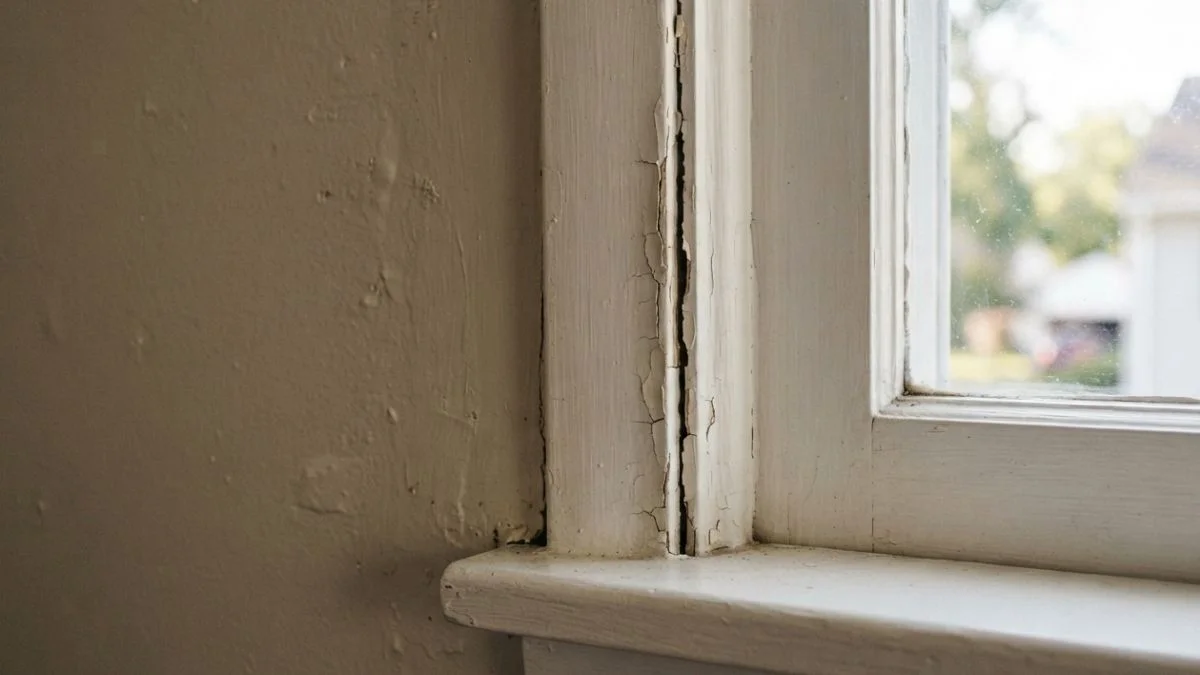
A gap between your window frame and the surrounding wall is one of the most visible signs that something in your home has shifted — and it can mean anything from a minor caulk failure to active foundation movement.
The real problem is not knowing which one you’re dealing with. Water intrusion, structural stress, and energy loss all start the same way: a gap you almost dismissed as cosmetic.
This article gives you a clear diagnostic framework to assess the severity of your window frame separating from wall, identify the likely cause, and know whether this is a weekend fix or a call-a-professional-today situation.
What Causes Window Frame Separation
Three distinct problems produce window frame gaps — and each one demands a different response.
Foundation Settlement and Structural Movement
Every house settles after construction. The question is whether that settlement is uniform and gradual, or uneven and ongoing. When soil conditions shift — due to poor drainage, clay soil expansion, or a dropping water table — one section of the foundation can drop or tilt independently of the rest. That movement travels up through the wall framing and pulls the window casing away from the surrounding drywall or trim.
The clearest indicator of a structural cause: more than one window separating in the same area of the house, especially if doors in that zone are also sticking or misaligned.
Moisture and Material Deterioration
Wood expands when it absorbs moisture and contracts when it dries out. Over years of seasonal cycling, this repeated movement breaks down caulk seals and weatherstripping, leaving visible gaps between the frame and wall. In humid climates, water infiltration can soften the wood frame itself, accelerating the gap widening significantly.
This cause typically produces gaps that appear or worsen in spring, after wet winters or heavy rain seasons.
Installation and Flashing Failures
A window installed without proper shimming sits unevenly in the rough opening from day one. Missing or deteriorated flashing allows water behind the frame, which rots the structural support and widens the gap between drywall and window frame over time. Drywall installed flush against the window casing — with no allowance for natural movement — also cracks and separates as the house dries and shifts in its first few years.
How to Inspect Your Window Frame Separation
Before calling anyone or buying materials, spend 20 minutes doing a structured inspection. What you find determines everything that follows.
Five-Point Severity Scoring System
Rate your situation using this scale:
| Level | What You See | What It Means |
|---|---|---|
| 1–2 | Hairline gap, no moisture, stable for years | Cosmetic — caulk or trim repair only |
| 3 | Small gap with minor water staining, weatherstripping worn | Moisture risk — seal and monitor |
| 4 | Multiple windows affected, cracks in drywall nearby, doors sticking | Structural concern — get a professional assessment |
| 5 | Active water intrusion, visible rot, soft wood, large gap | Immediate professional evaluation required |
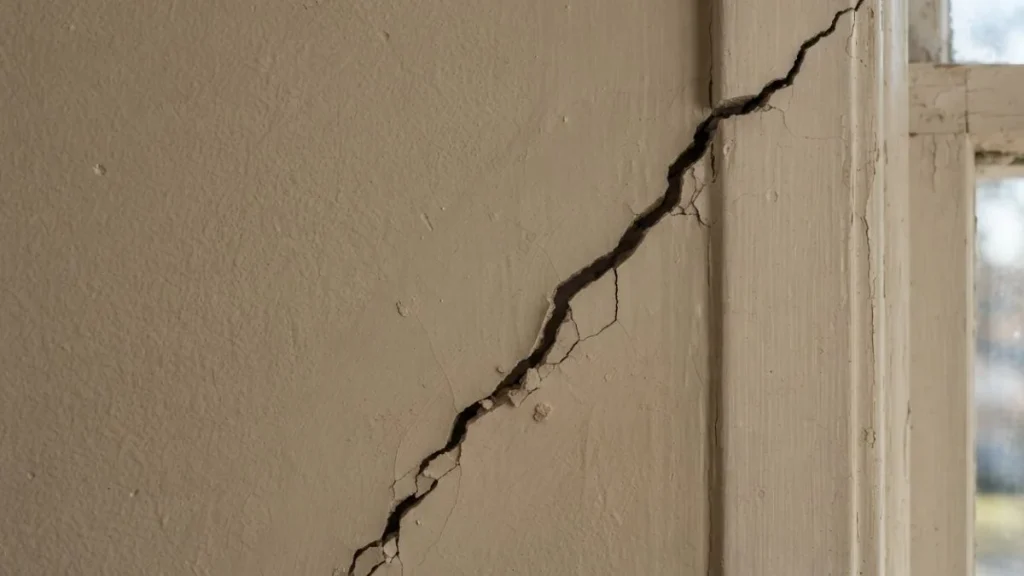
A Level 1-2 finding is common in homes older than 20 years and rarely indicates anything serious. A Level 4 or 5 finding — especially when window frame casing separation appears alongside diagonal cracks running from door or window corners — points to foundation settlement or active structural movement.
What to Measure and Document
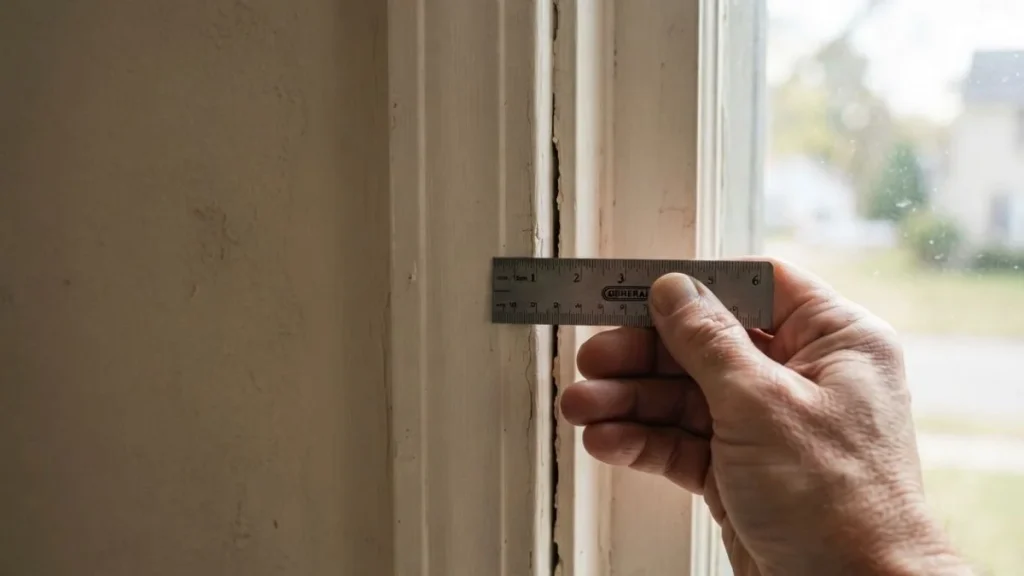
Measure the gap width in millimeters at each corner and along the midpoint of the frame. Corner gaps are more significant than uniform gaps along a straight edge — corners concentrate structural stress. Note whether the gap is consistent year-round or appears seasonally, which helps distinguish moisture-driven wood movement from foundation settlement.
Check for soft wood by pressing firmly along the sill and frame edges with your thumb. Soft spots indicate moisture infiltration and possible rot beneath the surface. Photograph every affected window with a ruler in frame, and date each photo. Revisiting these images in 60 to 90 days tells you whether the separation is active or stable — that single data point significantly changes your repair decision.
Climate and Material Factors
Where you live and what your frames are made of directly shape how quickly separation develops — and which fix will actually hold.

Regional Environmental Effects
In cold climates — think Minnesota, upstate New York, or southern Canada — freeze-thaw cycles are a primary driver of window trim separation. Water seeps into small gaps, freezes, expands, and physically forces the frame further from the wall. Each winter cycle widens the gap incrementally.
High humidity regions like the Gulf Coast accelerate wood swelling and can cause vinyl frames to expand beyond their designed tolerance. Dry climates like Arizona or New Mexico produce the opposite problem: wood shrinks as it loses moisture, pulling away from caulk seals and creating gaps that worsen every summer.
Soil composition matters just as much. Clay-heavy soils — common across the Midwest and Southeast — expand when wet and contract when dry, creating seasonal foundation movement that registers as recurring window casing separation even when the windows themselves are in good condition.
Frame Material Implications
Wood frames carry the highest separation risk. They absorb moisture, swell, contract, and deteriorate at the contact point with drywall faster than any other material. Without consistent sealing and painting, weathering accelerates the gap between the wood frame and surrounding wall.
Vinyl frames handle moisture far better and expand and contract more uniformly, but they are not immune — improper installation without adequate shimming still produces separation over time.
Aluminum frames conduct temperature extremes efficiently, which creates a condensation problem at the frame edge. That condensation drives moisture infiltration into the surrounding drywall, softening the wall material and producing a gap that looks like a framing failure but originates from thermal transfer.
When to DIY vs. Call a Professional
The separation severity score from your inspection maps directly to your next action. Here is how to match the finding to the right response.
Quick Fixes for Cosmetic and Moisture-Risk Cases
A Level 1-3 gap — no rot, no structural symptoms, no active water intrusion — is a legitimate DIY repair. Use a paintable polyurethane or silicone-latex blend caulk, such as DAP Alex Flex or GE Sealants Advanced Silicone, for gaps up to 6mm. Clean the gap completely before applying, removing all old caulk and debris, then apply in a single continuous bead and tool it smooth within 60 seconds.
Weatherstripping replacement costs between $10 and $40 in materials and takes under an hour per window. Foam tape works for low-traffic frames; V-strip or door sweep-style weatherstripping lasts significantly longer on windows that open frequently.
Done correctly, these repairs stop moisture infiltration before it softens the surrounding drywall and turns a $30 fix into a $1,500 problem.
When Professional Evaluation Is Required
Three symptoms together — window frame casing separation, diagonal cracks running from window or door corners, and sticking or misaligned doors — indicate structural movement, not a caulking problem. Applying caulk over an active foundation issue masks the symptom and delays a repair that only becomes more expensive with time.
In this case, contact a structural engineer before calling a window contractor. A window company will replace the frame; an engineer will tell you whether the frame is the problem or a consequence of something larger beneath it.
Cost ranges by scenario:
- DIY caulk and weatherstripping repair: $20–$50 in materials
- Professional window resealing or recaulking: $300–$800
- Full window frame replacement: $1,500 or more per window
- Foundation assessment by a structural engineer: $300–$700 for the evaluation alone
Recommended: Filling Gaps Around Window Frames
FAQ
Is window frame separation always a sign of foundation problems?
No. Most cases of window frame separation result from caulk failure, weatherstripping deterioration, or seasonal wood movement — not foundation problems. Foundation settlement is the likely cause only when multiple windows separate simultaneously, especially alongside sticking doors or diagonal drywall cracks.
Can seasonal weather cause window frames to separate temporarily?
Yes. Wood frames absorb moisture in humid seasons and shrink in dry ones, which opens and closes gaps on a predictable seasonal cycle. If a gap appears in summer or winter and closes in the opposite season, moisture-driven material movement is almost certainly the cause — not structural damage.
How do I know if the gap is getting worse or staying stable?
Photograph the gap with a ruler in frame and date the image. Repeat the same photo every 30 to 60 days. A gap that widens measurably over two to three months is active and needs professional evaluation; a gap that holds the same width across seasons is stable and can be addressed with caulk or trim repair.
Know When to Stop Watching and Start Acting
The gap between your window frame and wall is either a $30 caulk repair or an early warning sign of foundation movement — and the difference comes down to what else is happening in the same area of your home. Start today by scoring every affected window using the five-point severity scale in this article, photographing each gap with a ruler, and checking the nearest doors for sticking or misalignment. If you find a Level 4 or 5 pattern, contact a structural engineer before touching the frame.