


A sewer smell in bathroom sink when running water is not random — running water is the exact trigger that exposes a broken seal, blocked vent, or dry trap in your drain system.
The odor is more than an inconvenience. Sewer gas contains hydrogen sulfide, which the EPA classifies as a toxic air contaminant at elevated concentrations, making a fast diagnosis a genuine health priority.
This article identifies the 5 most likely causes of that sewage odor and gives you a clear, step-by-step path to fix each one yourself — or know exactly when to call a licensed plumber.
How P-Trap and Ventilation Work Together
Your bathroom sink’s drain system has exactly 2 components designed to keep sewer gas out of your home: the p-trap and the vent pipe. When either one fails, running water can push foul-smelling air backward into your bathroom.

What the P-Trap Actually Does
The p-trap is the curved pipe section directly below your sink drain — shaped like an upside-down P. It holds a small reservoir of standing water at all times. That water plug is the only physical barrier between your bathroom air and the sewer gas ventilation pathway below.
Under normal conditions, this drain trap mechanism works passively. No moving parts, no maintenance required. But if the water evaporates (from a rarely used sink), or the trap develops a crack, that barrier disappears entirely — and hydrogen sulfide, methane, and other sewer gases flow freely upward.
Why Running Water Makes the Smell Worse
Here’s the problem. Running water creates a brief pressure drop in the drain line. That drop can pull the p-trap water seal thin, or — if a vent pipe blockage is already restricting airflow — create a vacuum effect that actively sucks gas backward through the trap.
A properly functioning plumbing venting system equalizes that pressure by pulling fresh air down through a roof vent pipe, preventing any backward siphon. When leaves, bird nests, or ice block that vent, the pressure has nowhere to go except through your sink drain.
The result? Even a healthy p-trap can fail temporarily every time you turn on the faucet.
5 Causes of Sewer Smell When Running Water
Each cause produces a slightly different odor pattern and affects different fixtures. Matching your situation to the right cause saves hours of guesswork.

1. Dry or Failing P-Trap
A p-trap loses its water seal through simple evaporation — typically within 3 to 5 weeks in a sink that sees no use. Guest bathrooms and basement sinks are the most common offenders. Once dry, the drain trap mechanism offers zero resistance to sewer gas ventilation pushing upward. Biofilm bacteria buildup also accelerates in dry pipe sections, adding a secondary odor source on top of the raw sewage smell.
2. Vent Pipe Blockage or Improper Venting
The International Residential Code requires a vent pipe within 42 inches of every P-trap (for 1.25-inch drain pipe). When leaves, bird nests, or seasonal ice dams block that vent, pressure imbalances force sewer gas backward through every connected drain. Vent pipe blockage bathroom odor tends to affect multiple fixtures simultaneously — a useful diagnostic clue.
3. Biofilm and Organic Buildup
Soap scum, hair, and toothpaste residue layer onto pipe walls over months, forming a biofilm bacteria buildup colony. Anaerobic bacteria — those that thrive without oxygen — consume that organic matter and excrete hydrogen sulfide gas, the compound responsible for the classic rotten-egg smell. The narrowed pipe also traps pressure, making drain odor elimination harder without physical cleaning.
4. Corroded Anode Rod Producing Sulfur Odor
Water heater anode rods — typically magnesium or aluminum — react with naturally occurring sulfur bacteria in some municipal water supplies. The corroded anode rod sulfur smell differs from raw sewage odor: it’s sharper, more chemical, and appears primarily when running hot water. Cold-water-only fixtures will smell fine if this is the cause.
5. Cracks or Damage in the Main Sewer Line
A cracked sewer line allows ground gases to enter the drain system at the source. This is the least common cause but the most serious. Odor from a damaged line typically affects the entire home, not just one sink, and no amount of drain cleaning sewer smell removal will resolve it. A licensed plumber using a sewer video inspection camera is the only reliable diagnostic tool here.
Diagnostic Steps to Identify Your Specific Problem
Narrowing down the cause takes less than 10 minutes if you ask the right questions in the right order. Work through these 4 checks before touching any pipes or products.
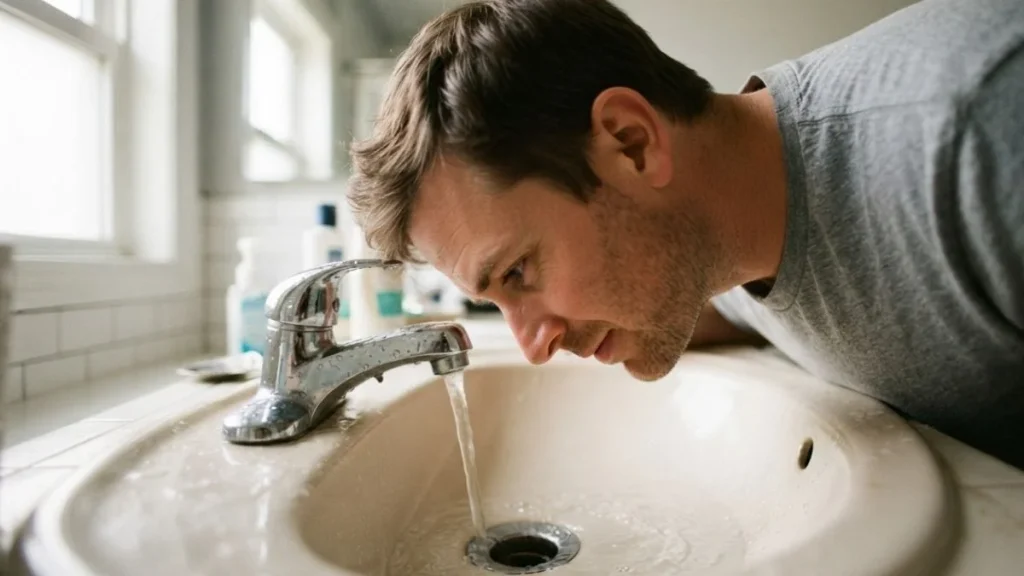
Check 1: How Many Fixtures Are Affected?
Run water at every sink, tub, and toilet in the house. If the sewer smell appears at only one bathroom sink, the problem is almost certainly local — a dry p-trap, biofilm bacteria buildup, or isolated drain trap mechanism failure. If multiple fixtures smell simultaneously, suspect a vent pipe blockage bathroom odor or a main sewer line problem. That pattern shift is the single most useful diagnostic data point you have.
Check 2: What Does the Odor Actually Smell Like?
| Smell Type | Most Likely Cause |
|---|---|
| Rotten egg / sulfur | Corroded anode rod or biofilm bacteria buildup |
| Raw sewage | Dry p-trap or cracked sewer line |
| Musty / mildew | Biofilm bathroom drain buildup, not sewer gas |
Check 3: When Does the Smell Appear?
Odor only when water runs points directly to a pressure-driven sewer gas ventilation problem — a blocked vent or compromised drain trap mechanism. A constant smell that persists even when no water is running suggests a dry p-trap or a cracked pipe with no water seal at all.
Check 4: Is the Drain Running Slowly?
Slow drainage combined with odor almost always means biofilm bathroom drain buildup is partially blocking the pipe. Drain cleaning sewer smell removal — physical or chemical — is the correct first step. No slowdown with strong odor shifts suspicion back toward venting or the p-trap water seal.
DIY Fixes You Can Try First
All 5 fixes below require no special plumbing skills and cost under $20 in materials. Work through them in order — each one addresses a progressively less common cause.
Fix 1: Refill a Dry P-Trap (2 Minutes)
Run the cold tap for 30 full seconds in any sink that sits unused for weeks at a time. That’s enough to refill the drain trap mechanism and restore the water seal. For guest bathrooms or basement sinks, set a monthly calendar reminder to run both the hot and cold taps briefly. A tablespoon of cooking oil poured down the drain after refilling slows future evaporation by floating on top of the water seal.
Fix 2: Flush Out Biofilm Buildup (15 Minutes)
Pour one cup of baking soda directly into the drain, followed immediately by one cup of white vinegar. Let the fizzing reaction work for 15 minutes, then flush with a full kettle of near-boiling water. This combination breaks down the top layer of biofilm bacteria buildup without damaging PVC pipes. For persistent biofilm bathroom drain buildup, an enzymatic drain cleaner like Bio-Clean or Green Gobbler works deeper into the pipe wall over 24 to 48 hours.
Fix 3: Clean the Pop-Up Stopper and Overflow Plate
Pull out the pop-up stopper — it usually lifts straight out or unclips — and scrub it with an old toothbrush and dish soap. The overflow plate (the small oval hole near the top of the basin) collects the same biofilm bacteria buildup and is almost always ignored. A bottle brush soaked in diluted bleach clears it in under 2 minutes.
Fix 4: Inspect the Roof Vent Pipe
From the ground, look for visible debris at the top of your roof vent stack. If you’re comfortable on a ladder, remove any leaves, nesting material, or ice buildup by hand or with a garden hose. Clearing a vent pipe blockage bathroom odor source at the roof restores proper sewer gas ventilation to the entire plumbing venting system instantly.
Fix 5: Check Under the Sink for Visible Damage
Open the cabinet and visually inspect the p-trap and connecting pipes for cracks, loose slip-joint nuts, or corrosion. A p-trap air bridge — a gap where two pipe sections meet improperly — lets sewer gas bypass the water seal entirely. Hand-tighten any loose connections. Replace a cracked p-trap section; the part costs $5 to $12 at any hardware store and swaps out without tools beyond a pair of slip-joint pliers.
Keep Drains Healthy Year-Round
Prevention costs less than 30 minutes per year and eliminates the majority of recurring sewer smell complaints before they start. These 4 habits address every common cause covered in this article.
Monthly: Hot Water Flush
Once a month, run the hottest tap water available down every bathroom sink drain for 60 seconds. Hot water softens and dislodges early-stage biofilm bacteria buildup before it hardens into the thick, anaerobic colonies that produce hydrogen sulfide. This single habit handles most routine drain odor elimination without any products. For sinks with a history of odor, follow the hot water flush with a half-cup of baking soda left overnight — no rinsing needed.
Weekly: Hair Trap and Pop-Up Maintenance
Install a mesh hair trap — TubShroom and OXO Good Grips both make sink-compatible versions for under $15 — and empty it after every shower or shaving session. Hair is the primary structural scaffold that biofilm bathroom drain buildup organizes around. Remove it before it reaches the pipe and the bacterial colony never forms. Clean the pop-up stopper with dish soap every 2 weeks to prevent the same buildup at the drain throat.
Annual: Professional Drain Cleaning
If your household has experienced recurring sewer odors more than twice in a single year, schedule a professional hydro-jetting service. Hydro-jetting uses pressurized water at 1,500 to 4,000 PSI to scour pipe walls clean — far beyond what any enzymatic product achieves. Most licensed plumbers recommend this every 1 to 2 years for older homes with cast-iron drain lines.
Seasonal: Vent Pipe Inspection
Check your roof vent stack openings each spring and fall. Spring inspection catches bird nests built during winter; fall inspection removes leaf accumulation before winter ice dams form and seal the opening entirely. A blocked vent pipe forces sewer gas ventilation backward through every connected drain trap mechanism in the house — a problem that seasonal clearing prevents completely. If roof access is unsafe, a plumber can run a drain camera up the vent stack from inside for under $150 in most markets.
Read Also: Toilet Water Supply Line Through Floor
Stop Wasting Time Troubleshooting — Know When to Call
Most sewer smell problems trace back to a dry p-trap or biofilm buildup — both fully fixable in under 20 minutes without a plumber. Start with Fix 1 and Fix 2 from the DIY section above, and if the odor persists across multiple fixtures or returns within 48 hours after cleaning, call a licensed plumber and request a sewer video inspection — that single step diagnoses every cause this article covers, including cracked lines and failed venting, in one visit.


