


When hot water not coming out of kitchen faucet is your only problem — every other tap in the house works fine — the cause is almost always isolated to that one fixture or its supply line.
The frustration is real: you need hot water to cook, clean, and sanitize, and the uncertainty of not knowing whether you’re facing a $10 fix or a $300 plumber visit makes it worse.
This guide walks you through 5 specific, hands-on fixes you can diagnose and attempt yourself before making that call.
Is the Problem Kitchen-Only or System-Wide?
Before touching anything under the sink, spend two minutes checking other fixtures. This single step cuts your diagnosis time in half.
Test Hot Water at Other Fixtures
Turn on hot water at the bathroom sink, shower, and laundry room faucet — one at a time. If hot water flows normally at all three, the problem is definitively kitchen-only. If those fixtures also run cold, you’re dealing with a water heater malfunction or a main supply failure, and the fixes in this article won’t apply.
When the cold water side of your kitchen faucet works fine but hot water doesn’t, that’s a strong diagnostic signal. The cold and hot supply lines are separate runs from different sources. A cold-side-working, hot-side-dead result means the failure lives somewhere between your water heater and that specific faucet.
What Kitchen-Only Hot Water Loss Indicates
A kitchen-only failure narrows the culprit to 3 likely locations:
- The hot water shut-off valve under the sink (partially or fully closed)
- The hot water supply line running to the kitchen (kinked, blocked, or frozen in exterior wall runs)
- The faucet cartridge inside the handle (worn, mineral-clogged, or seized)
Low hot water pressure at the kitchen faucet only — rather than a complete shutoff — often points to mineral buildup inside the supply line or a partially closed isolation valve. Complete loss with no trickle typically means a seized cartridge or a fully closed valve.
Either way, no hot water at the kitchen sink but everywhere else means the water heater is almost certainly fine.
Check the Hot Water Shut-Off Valve Under the Sink
The hot water shut-off valve under the sink is the fastest fix to rule out — it takes 30 seconds to check and costs nothing.
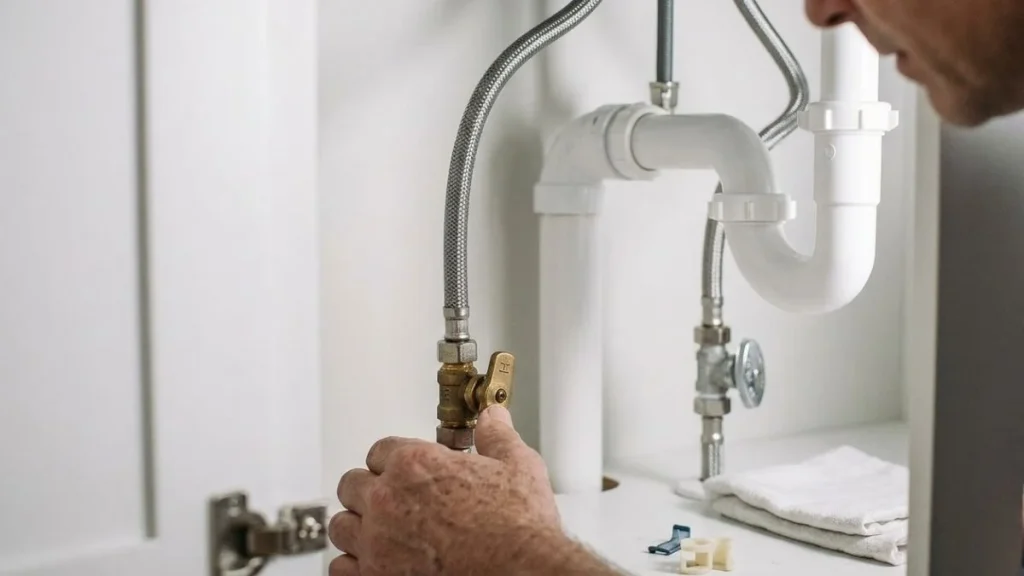
Locating and Inspecting the Valve
Open the cabinet beneath your kitchen sink. You’ll see 2 supply lines running up to the faucet, each with a small valve — called an isolation valve — where the line meets the wall or floor. The hot water valve is on the right side when facing the cabinet.
Check the valve handle position:
- Parallel to the pipe — valve is fully open, water flows normally
- Perpendicular to the pipe — valve is fully or partially closed, restricting or blocking hot water flow
A valve that’s even 20-30 degrees off parallel can cause low hot water pressure at the kitchen faucet only, or cut flow entirely. Someone cleaning under the sink, storing items, or doing unrelated repairs may have nudged it without realizing. Turn it firmly counterclockwise until it sits parallel to the pipe, then test the faucet immediately.
Why Hot Water Valves Fail Faster Than Cold
Hot-side isolation valves take more punishment than cold-side ones. Repeated heat cycling — water temperatures swinging between 120°F and ambient — degrades rubber seals inside the valve body over 5 to 10 years. Mineral buildup from hard water accelerates this on the hot side, because heat causes dissolved minerals to precipitate and coat internal components faster.
A valve that feels stiff, leaks at the stem, or won’t turn smoothly is failing. Replacement costs $8–$25 for the part and roughly $75–$150 in labor if you hire a plumber — making this a worthwhile DIY fix before calling anyone.
Clean or Replace the Aerator (Easiest First Fix)
A clogged aerator is the single most common cause of low hot water pressure at the kitchen faucet only — and it’s a fix most homeowners can complete in under 10 minutes.

What the Aerator Does and Why It Clogs
The aerator is a small mesh screen screwed onto the tip of your faucet spout. Its job is to mix air into the water stream, reducing splash and controlling flow rate. The EPA sets standard kitchen faucet flow at 2.2 gallons per minute — the aerator is what regulates that.
Here’s the problem. Hot water carries dissolved minerals — primarily calcium and magnesium — that precipitate out of solution when water cools or slows. The aerator screen is exactly where water slows down, making it a collection point for mineral buildup. In hard water areas like Phoenix, Las Vegas, or Indianapolis, aerators can clog completely within 6–12 months.
How to Clean or Replace It
Follow these steps:
- Wrap the aerator with a cloth to protect the finish, then unscrew it counterclockwise using pliers or by hand.
- Disassemble the aerator — it contains a housing, mesh screen, and rubber washer.
- Inspect the screen for white, gray, or rust-colored mineral deposits.
- Soak all components in undiluted white vinegar for 4–8 hours, or overnight for heavy buildup.
- Scrub with an old toothbrush, rinse thoroughly, and reassemble.
If the mesh is physically damaged or the deposits won’t dissolve, replace the aerator entirely. Replacement aerators from Moen, Delta, or Kohler cost $5–$15 at any hardware store and are model-specific — check your faucet brand before buying.
When Internal Faucet Parts Fail
If the shut-off valve is fully open and the aerator is clean, the problem is almost certainly inside the faucet itself — specifically the faucet cartridge.
Identifying Cartridge or Valve Failure
The cartridge is a replaceable internal component that controls water flow and temperature by mixing hot and cold supply lines in precise proportions. When it fails, the pressure balance between the two sides breaks down — which is why the cold water side keeps working normally while hot water stops completely.
Watch for these specific symptoms:
- The hot water handle feels stiff, grinds, or requires excessive force to turn
- Water dribbles from the handle base or spout rather than flowing cleanly
- Turning the handle to full hot produces little or no flow change
- The faucet worked fine until a sudden, complete hot water loss — no gradual decline
Diagnosis Before Replacement
Before buying parts, remove the cartridge and inspect it directly. Shut off both supply valves under the sink first. Pull the handle, remove the decorative cap, unscrew the handle screw, and slide the cartridge straight out — the exact method varies slightly by brand.
Look for visible mineral crust coating the cartridge ports, hairline cracks in the plastic body, or a worn rubber seal. Any of these causes blocked or restricted hot water flow.
Cartridges are brand- and model-specific. Check the faucet base or underside for a stamped model number, then cross-reference it:
- Delta cartridges: $15–$35, widely available at Home Depot
- Moen cartridges: $20–$40, Moen offers free replacements under their lifetime warranty
- Kohler cartridges: $25–$50, available through Kohler directly or at Lowe’s
If the faucet is over 15 years old and cartridge replacement costs exceed $50 in parts alone, full faucet replacement — typically $150–$400 installed — is the more cost-effective long-term decision.
Read Also: Low Water Pressure in Kitchen Sink After Replacing Water Heater
Quick Wins If You Need Hot Water Today
Most kitchen-only hot water failures trace back to one of three things: a closed shut-off valve, a clogged aerator, or a failed cartridge — all fixable same-day with parts from any hardware store. Start under the sink right now: check that the hot-side isolation valve handle runs parallel to the pipe, and if it does, unscrew the aerator and inspect it for mineral deposits before scheduling any plumber visit.