
You’re doing your regular cleaning, move a rug, or rearrange some furniture — and there they are. Small holes in your hardwood floor that weren’t there before (or at least, you never noticed them). Your first reaction is probably a mix of confusion and concern. Are they dangerous? Did something eat through your floor? Or are they just cosmetic damage from years of wear?
Here’s the truth: small holes in hardwood floors are more common than most homeowners realize. And while some are completely harmless, others can signal a serious problem that needs immediate attention. The key is knowing the difference — and acting on it the right way.
This guide walks you through every possible cause of small holes in hardwood floors, how to identify what you’re dealing with, and exactly how to fix them — from simple DIY repairs to knowing when to call a professional.
What Are Those Small Holes in Your Hardwood Floor?
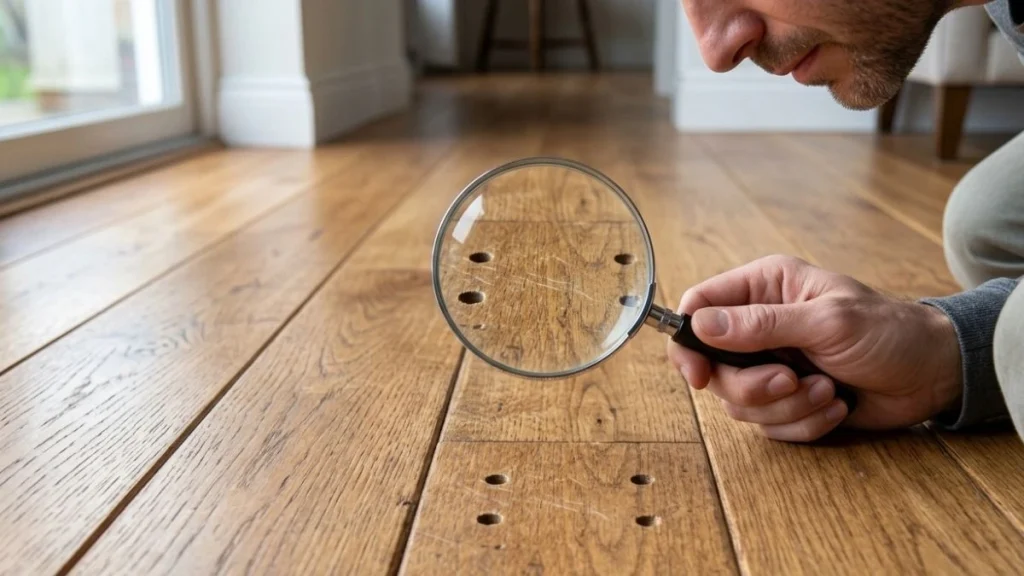
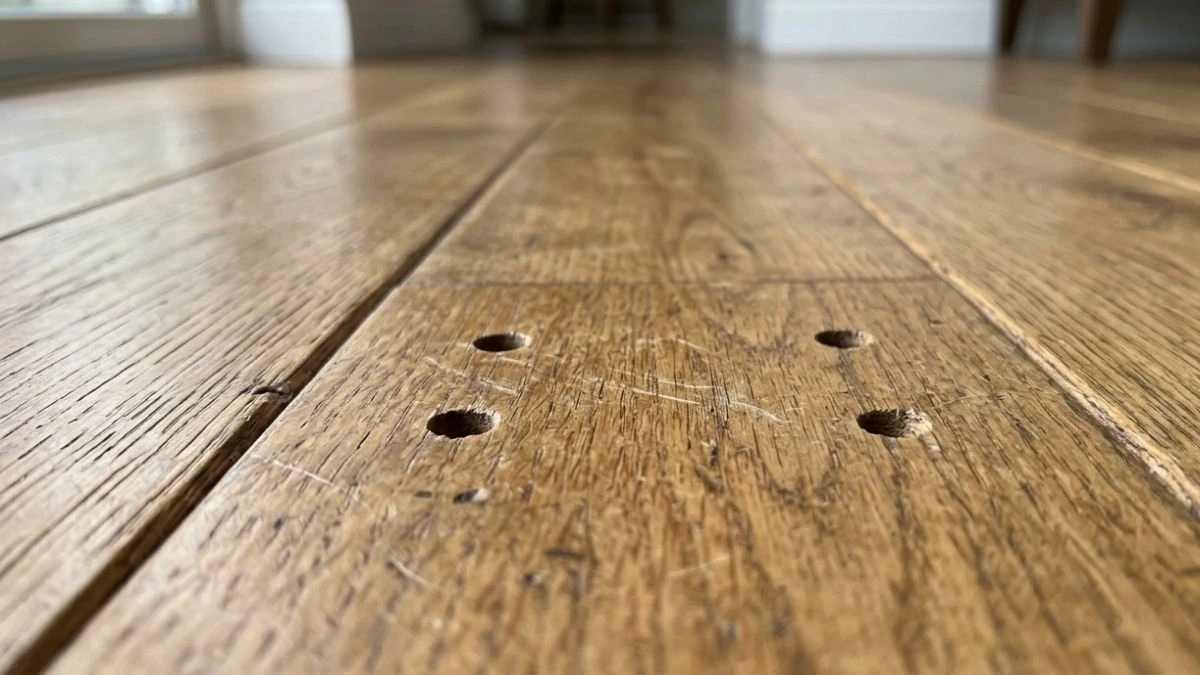
Small holes in hardwood floors can vary quite a bit in appearance. Some are perfectly round and tiny — almost like a pinhole. Others are irregular, jagged, or clustered together. Some go just a millimeter deep into the surface finish, while others penetrate through the entire board. The size, shape, location, and pattern of the holes are your biggest clues about what’s causing them.
Most homeowners notice these holes after removing an area rug, pulling up old carpet, or simply getting down close to the floor during a deep clean. In many cases, the holes were always there — just hidden. But in other cases, they appear suddenly, which usually points to an active problem like a pest infestation.
Before you grab a tube of wood filler and start patching, it’s worth taking five minutes to inspect the holes properly. Repairing beetle damage without treating the infestation first, for example, is a complete waste of time and money. The holes will just come back.
How to Tell the Difference Between Cosmetic and Structural Damage
Not every hole in your hardwood floor is a cause for alarm. Here’s a quick way to categorize what you’re seeing:
- Cosmetic damage — Shallow holes that only affect the surface or finish layer. These don’t compromise the structural integrity of the board and are easy to repair with wood filler or putty.
- Structural damage — Holes that go deep into or through the board, often caused by pests or severe impact. These may require board replacement rather than simple filling.
- Active damage — Holes that are new, spreading, or accompanied by sawdust, live insects, or soft/hollow wood around them. This needs professional attention before any repair work begins.
7 Common Causes of Small Holes in Hardwood Floors
1. Wood-Boring Beetle Infestation
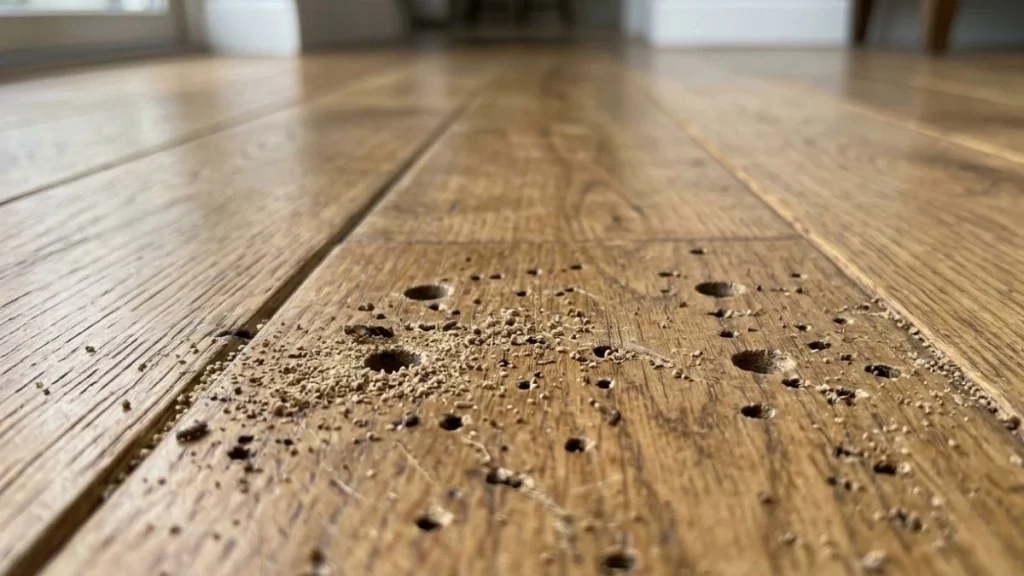
This is the most alarming cause — and unfortunately, one of the most common in older homes. Wood-boring beetles lay their eggs inside hardwood, and when the larvae hatch, they tunnel through the wood for months or even years before emerging as adults. Those tiny exit holes you see on the surface? That’s where the adult beetles bored their way out.
The holes are typically very small — between 1mm and 3mm in diameter — and almost perfectly round. The most common culprits are Powderpost beetles, Deathwatch beetles, and Old House Borers. One of the clearest signs of an active infestation is fine powdery sawdust (called frass) either inside the holes or scattered around them on the floor surface.
Signs you have a beetle problem:
- Multiple small, round holes clustered in the same area
- Fine powder or sawdust near or around the holes
- Holes appearing in new locations over time
- Soft or crumbling wood around the holes
Beetle damage is serious because it can spread to other wood structures in your home — joists, subfloor, baseboards, and furniture. If you suspect beetles, contact a licensed pest control professional before doing any floor repairs.
2. Old Nail or Staple Holes
This is one of the most harmless causes on this list. If you’ve recently removed carpet, an area rug with a tack strip, or old underlayment, there’s a good chance those small holes you’re seeing are just leftover nail or staple holes from the previous installation. They’re typically shallow, evenly spaced, and follow a pattern along the edges of the room or in straight lines across the floor.
These holes are purely cosmetic and are one of the easiest repairs a homeowner can do.
3. Termite Damage
Termites are even more destructive than beetles, though their holes look slightly different. Drywood termites create small kick-out holes (about 1mm wide) that they use to push out their fecal pellets. Subterranean termites, on the other hand, rarely create visible surface holes — their damage is usually discovered under the floor or inside walls.
If you notice small holes accompanied by tiny pellet-like droppings nearby, call a pest control professional immediately. Termite damage spreads fast and can compromise the structural integrity of your entire floor system.
4. Wood Shrinkage and Natural Gaps
Hardwood is a natural material that expands and contracts with changes in indoor humidity. During dry winter months, wood boards shrink and can develop small gaps or splits — especially at the ends of boards or around natural knots. These aren’t exactly “holes” in the traditional sense, but they can look like them and cause homeowners concern.
The fix here is often as simple as maintaining proper indoor humidity levels (between 35% and 55%) rather than filling every little gap with putty.
5. Knots Falling Out of the Wood
Lower-grade hardwood flooring often contains natural wood knots. Over time — especially in older floors — these knots can dry out, loosen, and eventually fall out, leaving behind an irregularly shaped hole. Unlike beetle holes, knot holes are larger, not perfectly round, and have rough, uneven edges.
6. Impact Damage
Dropped tools, heavy furniture legs, and even high-heeled shoes can punch small holes or deep dents into hardwood floors. These are usually isolated incidents — a single hole in one spot rather than a pattern — and are almost always cosmetic in nature.
7. Failed Previous Repairs or Old Installations
Sometimes the “holes” you find are actually old screw holes, failed wood filler patches that have shrunk and fallen out, or old floor vent cutouts. These are common in homes that have been renovated multiple times over the years.
How to Identify the Cause Before You Start Any Repair
Before you buy a single product or pick up a putty knife, spend a few minutes doing a proper inspection. You’ll save yourself time, money, and the frustration of fixing the wrong problem.
What to look for:
- Hole shape — Round and clean = likely beetle. Irregular and rough = knot or impact. Evenly spaced = nail/staple holes.
- Hole size — Pinhole size (1–3mm) strongly suggests insects. Larger holes point to knots, impact, or old hardware.
- Sawdust or frass — Any fine powder near the holes is a red flag for active pest activity.
- Pattern — Clustered or spreading holes = pest damage. Random single holes = impact or old repairs.
- Wood condition — Press gently around the hole. Soft, crumbling, or hollow-sounding wood means structural damage.
If you notice any signs of active pest damage, stop and call a pest control professional first. Repairing the holes without eliminating the source of the problem is a temporary fix at best.
How to Fix Small Holes in Hardwood Floors
Once you’ve identified the cause and ruled out any active pest activity, it’s time to repair. Here’s a breakdown of the most effective methods based on the type of hole.
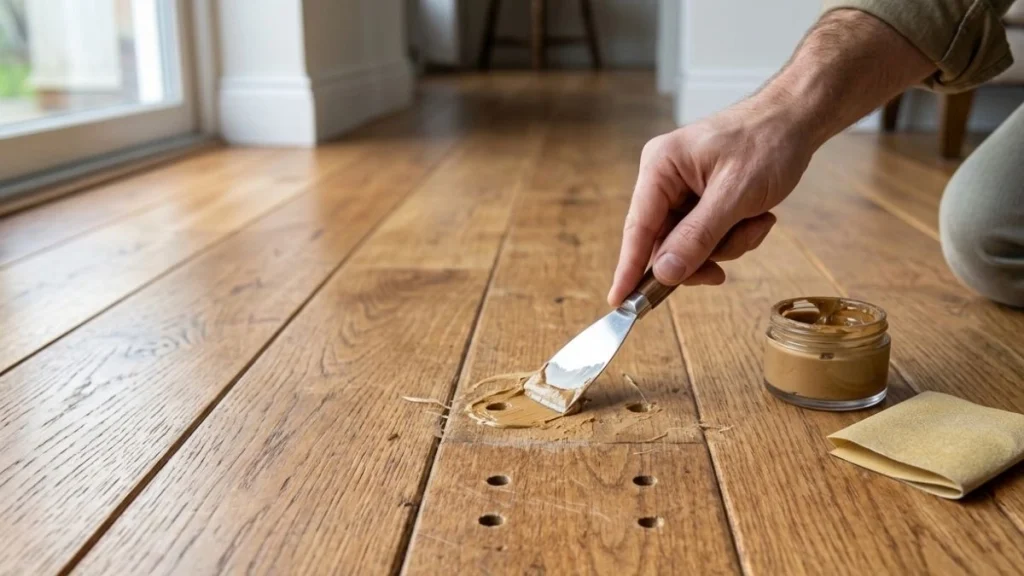
Tools and Materials You’ll Need
| Item | Purpose |
| Color-matched wood filler or putty | Fill small to medium holes |
| Epoxy wood filler | Fill deep or structural holes |
| Fine-grit sandpaper (120–220 grit) | Smooth the repair flush |
| Putty knife or plastic scraper | Apply and level the filler |
| Stain marker or touch-up pen | Blend color after repair |
| Polyurethane finish or floor wax | Seal and protect the repair |
Using Wood Filler for Small Surface Holes
This is the go-to method for nail holes, small impact holes, and minor cosmetic damage.
Step-by-step:
- Clean the hole and the area around it with a dry cloth. Remove any dust or loose debris.
- Choose a wood filler that closely matches your floor’s stain color. Test it in a hidden area first.
- Press the filler into the hole using a putty knife, slightly overfilling it.
- Allow it to dry completely — this usually takes 2 to 4 hours depending on the product.
- Once dry, sand the repaired area flush with the surrounding floor using 120-grit sandpaper, finishing with 220-grit for smoothness.
- Apply a matching stain if the filler color is slightly off.
- Seal with a coat of polyurethane or floor wax to protect the repair.
Choosing the right filler:
- Latex-based fillers — Best for small, shallow holes. Easy to work with, water-cleanup, and available in many colors.
- Solvent-based fillers — Better adhesion and more durable. Good for medium-depth holes.
- Epoxy-based fillers — The strongest option. Best for deep holes or structural voids.
Fixing Nail and Staple Holes
If any nails or staples are still sticking up, use a nail set and hammer to tap them below the surface first. Then apply a small amount of color-matched wood putty, let it dry, sand flush, and touch up with a stain pen if needed. These repairs take less than 30 minutes and are nearly invisible when done right.
Repairing Knot Holes
Knot holes are larger and often have loose, crumbling edges. Clean out any debris thoroughly before filling. Use an epoxy wood filler for best results — it won’t shrink over time the way latex fillers can. For deep knot holes, build up the fill in two or three thin layers rather than one thick application, allowing each layer to dry before adding the next. Sand smooth, stain, and finish.
Replacing a Damaged Board
Sometimes a hole is too deep, too large, or part of extensive damage that makes filling impractical. In these cases, replacing the individual board is the right call. This is a more advanced repair that involves carefully removing the damaged board without disturbing the surrounding flooring, cutting a replacement board to size, and securing and finishing it to match the existing floor. If you’re not confident doing this yourself, hiring a flooring professional is money well spent.
How to Make the Repair Nearly Invisible
The biggest challenge with hardwood floor repairs isn’t filling the hole — it’s making the repair blend in. Here are some pro tips:
- Always test your filler color in an inconspicuous spot before applying it to a visible area
- Use a stain pen or artist’s brush with wood stain to add grain lines over the dried filler
- Feather the finish coat outward from the repair so there’s no sharp edge
- Matte or satin finishes are more forgiving than high-gloss when it comes to hiding repairs
How to Prevent Small Holes in Hardwood Floors
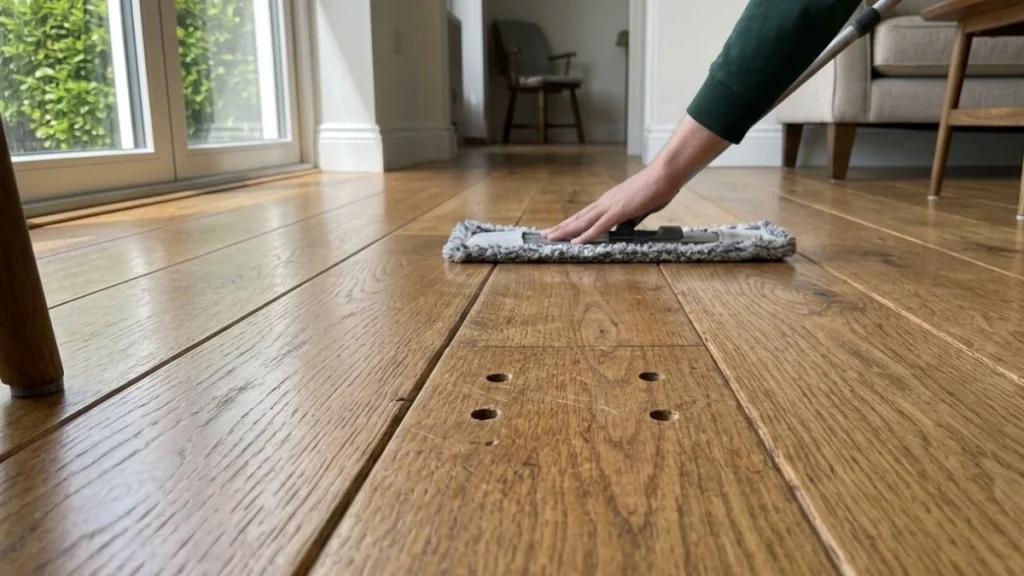
Repairs are necessary when damage has already happened — but prevention is always the smarter long-term strategy.
- Schedule annual pest inspections if you live in an older home or a region with high beetle or termite activity
- Keep indoor humidity between 35% and 55% year-round using a humidifier in winter and a dehumidifier in summer
- Use felt pads under all furniture legs to prevent impact damage
- Avoid walking on hardwood floors in high-heeled shoes
- Place area rugs in high-traffic zones to reduce surface wear
- Seal any cracks in your home’s foundation or exterior walls to reduce pest entry points
- Apply a quality floor finish or wax every 1–2 years to keep the surface strong and protected
You May Like Also: How to Fix Large Hardwood Floor Holes
Conclusion
Small holes in your hardwood floor might seem like a minor annoyance, but they’re worth taking seriously. Whether it’s an old nail hole from a previous carpet installation or the early signs of a wood-boring beetle infestation, the cause determines the solution — and acting early almost always saves you money in the long run.
Take the time to inspect the holes carefully before reaching for the filler. Identify the cause, address any underlying pest issues first if needed, and then choose the right repair method for the job. With the right approach, most small holes in hardwood floors can be repaired so well that you’ll forget they were ever there.
If you’re unsure what’s causing the damage or the holes keep coming back, don’t guess — bring in a flooring professional or pest inspector for a proper assessment. Your hardwood floor is an investment worth protecting.