

When it comes to your home’s exterior, every detail matters—including how your windows line up with your siding. You might be wondering: should windows be flush with siding, or is it better to have them set back a bit?
This small decision can affect your home’s look, energy efficiency, and even maintenance needs. If you want your house to look sharp and stay protected from the elements, understanding the best way to install your windows is key. Keep reading, and you’ll discover what works best for your home and why it matters more than you might think.
Benefits Of Flush Windows
Windows flush with siding create a clean, modern look for any home. This design means the window frame sits level with the outer wall surface. It offers many benefits that improve the home’s appearance and function. Flush windows blend smoothly with siding, making the building look neat and tidy. They help protect the house better from rain and wind. Also, they make cleaning and repairs easier.
Improved Aesthetics
Flush windows create a sleek and simple look. The window frame does not stick out, which gives the wall a smooth surface. This design suits modern homes and adds a fresh style to older houses.
- Smooth wall surface: No parts of the window stick out.
- Clean lines: Makes the home look well kept and stylish.
- Better integration: Windows blend well with many siding types.
- More light reflection: Flush windows help bounce natural light inside.
This design also allows for more options with siding materials. Whether using wood, vinyl, or fiber cement, the flush fit looks neat. The overall effect is a home that feels bright and inviting.
Enhanced Weather Protection
Flush windows help keep water and air out better than windows that stick out. Because the window is level with the siding, rainwater flows down the wall smoothly. This reduces the chance of water getting inside.
Benefits for weather protection include:
- Less water damage: Flush design stops water from pooling near windows.
- Better wind resistance: No gaps or spaces for wind to push through.
- Improved insulation: Helps keep warm or cool air inside the home.
- Reduced drafts: Tight fit lowers air leaks around windows.
Proper sealing and flashing are important to keep weather out. Flush windows make it easier to add these protective layers. This helps homes stay dry and comfortable in all weather.
Easier Maintenance
Cleaning and fixing flush windows is often simpler than other styles. Since the window frame is level with the siding, there are fewer edges to trap dirt or debris.
Maintenance advantages include:
- Easy cleaning: Smooth surfaces wipe down quickly without many crevices.
- Less paint peeling: Flush windows reduce exposed edges where paint can chip.
- Simple repairs: Damaged siding or window parts can be replaced without removing big sections.
- Long-lasting look: Regular upkeep keeps the flush fit looking new.
Homeowners spend less time and effort keeping flush windows in good shape. This saves money on repairs and improves the home’s appearance over time.
Drawbacks Of Flush Windows
Flush windows sit level with the siding on a building. This style can look clean and simple. But it has some problems. Many people do not know the risks of flush windows. These issues can affect the home’s look and function. It is important to understand the drawbacks before choosing flush windows.
Water Damage Risk
Flush windows can let water get inside the walls easier. Without a proper overlap, rainwater may seep behind the siding. This can cause wood rot and mold growth. The risk of leaks is higher with flush windows. Proper sealing is harder to do on these windows.
Reduced Insulation
Windows not sticking out from the siding can lower insulation. Air gaps around the window may be smaller or missing. This makes it easier for heat to escape in winter. Cooling costs may rise in summer because of poor sealing. Overall energy efficiency of the home can drop.
Harder Maintenance
Cleaning and repairing flush windows is more difficult. Dirt and debris can build up around the window edges. Painting or replacing trim may be tricky because of tight spaces. This can increase maintenance time and cost over the years.
Limited Style Options
Flush windows offer fewer design choices. They do not allow for decorative trims or shutters easily. The house may look plain or less inviting. Some homeowners prefer windows that stand out for a better look.
Alternatives To Flush Installation
Windows can be set in different ways with siding. One choice is to make the window flush with the siding. This means the window and siding are on the same flat level. But there are other options that change how the window looks and works. These options can add style and help with weather problems. The choice depends on the home style and personal taste.
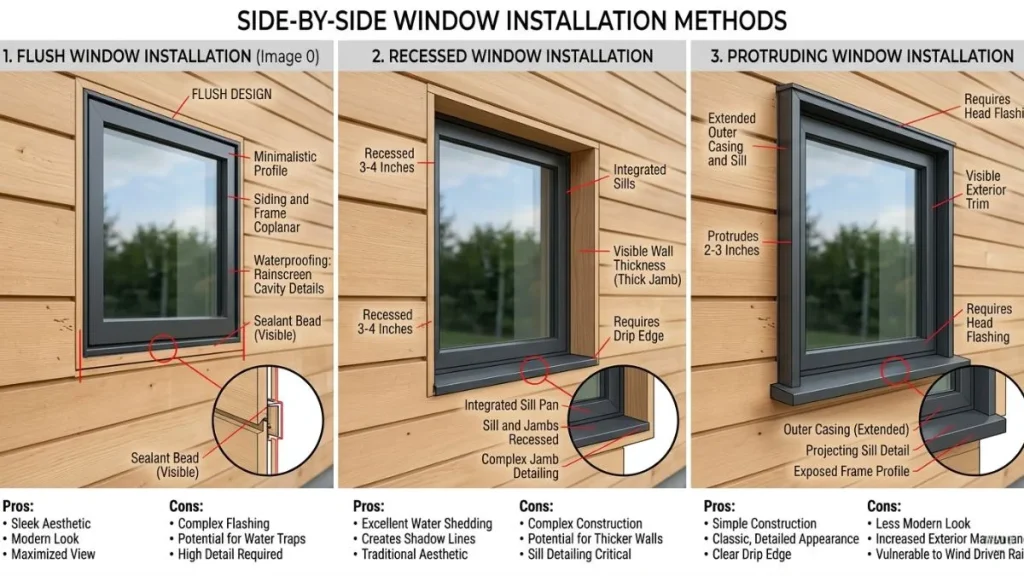
Recessed Windows
Recessed windows sit back from the siding line. They are placed deeper inside the wall. This creates a shadow around the window. It gives the home a classic look. The depth can be small or large. This choice helps protect the window from rain and sun.
Benefits of recessed windows:
- Better protection from weather elements.
- More shade which can lower cooling costs.
- Stronger walls around the window area.
- Visual depth adds interest to the house.
One downside is the window might bring less light inside. Also, the inside window sill can be deeper. This style fits well with traditional homes.
Projected Windows
Projected windows stick out past the siding. They create a small ledge or box outside the wall. This style adds space inside the home. It also lets in more light from different angles. Projected windows can be simple or decorative.
Common types of projected windows:
| Type | Description | Benefit |
| Bay Window | Three windows forming a curved space. | Increases room size and light. |
| Bowed Window | Multiple windows in a gentle curve. | Offers panoramic views. |
| Box Window | Box-shaped window that projects outward. | Simple design, adds light and space. |
Projected windows may need more maintenance. The outer parts can collect dirt and water. Good sealing is needed to stop leaks.
Combination Styles
Some homes mix recessed and projected windows. This creates a unique look and different light effects. Combination styles can be customized to fit the home’s shape and style.
Advantages of combination styles include:
- More design options to match home style.
- Better control of light and air flow.
- Improved curb appeal with varied shapes.
Designers can use different trims, colors, and materials. This helps windows stand out or blend in. Combination styles work well on modern or eclectic homes. They add personality and charm to the building.
Read Also: Window Sticks Out Past Siding
Factors Influencing Window Placement
Windows can be placed either flush with the siding or set back slightly. This choice affects the home’s look, energy use, and maintenance. Many things decide the best position for windows. These include style, weather, and how the siding is made.
Home Style And Appearance
Window placement changes the house’s look a lot. Flush windows give a clean, smooth surface. This works well with modern or simple designs.
Windows set back from siding add depth and shadow. This suits classic or traditional homes. The choice depends on the style you want to show.
Weather Protection
Windows set back can protect from rain and wind better. The siding helps shield the window edges. This can stop water from getting inside.
Flush windows might need extra sealing to keep water out. Good installation is very important to avoid leaks.
Energy Efficiency
Placement affects how well windows keep heat inside. Windows set back may have better insulation around edges. This helps in cold or hot climates.
Flush windows can also be energy efficient if sealed well. The key is using good materials and installation.
Maintenance And Cleaning
- Flush windows are easier to clean. No deep edges where dirt can build up.
- Windows set back can trap dust and leaves. This means more cleaning work.
- Both types need regular checks for damage and seal quality.
Siding Material And Thickness
| Siding Type | Effect on Window Placement |
| Vinyl Siding | Often allows flush mounting due to thin panels. |
| Wood Siding | May require windows set back for better sealing. |
| Fiber Cement | Usually thicker, windows set back preferred for protection. |
| Stucco | Windows often flush or slightly set back for style. |
Installation Best Practices

Installing windows flush with siding affects the look and function of a home. It changes how water moves, how air flows, and how siding fits. Proper installation keeps the house safe from damage and helps it last longer.
Understanding Flush Window Installation
Flush installation means windows sit level with siding. The window frame does not stick out or go inside the wall. This creates a smooth, flat surface outside.
Benefits include:
- Cleaner look on the outside
- Less space for dirt to collect
- Easier to install some types of siding
Drawbacks include:
- Possible water runoff problems if not sealed well
- More skill needed to avoid leaks
- May limit window trim options
Waterproofing And Sealing Tips
Proper sealing is key to prevent water damage. Water can get in if gaps exist between siding and window frame. Use these steps for good waterproofing:
- Apply a waterproof membrane or flashing around the window.
- Seal all edges with high-quality caulk.
- Use drip edges to guide water away from the window.
- Check seals regularly and fix cracks quickly.
Choosing The Right Siding Material
Some siding materials work better with flush windows. Consider these common options:
| Siding Type | Flush Window Suitability | Notes |
| Vinyl | Good | Easy to install flush; flexible with trims |
| Wood | Moderate | Needs careful sealing to avoid rot |
| Fiber Cement | Good | Durable and stable; requires precise cutting |
| Stucco | Poor | Not ideal for flush windows; hard to seal |
Trimming And Finishing Around Flush Windows
Trims help cover gaps and improve looks. For flush windows, choose trim styles that fit tightly and direct water away.
- Use drip caps above windows to stop water flow.
- Install side and bottom trims with overlaps.
- Paint or seal trims to protect from weather.
Common Mistakes To Avoid
Watch out for these errors during installation:
- Not sealing edges well enough
- Installing siding too tight against windows
- Ignoring flashing or waterproof layers
- Using wrong siding type for flush installation
Conclusion
Choosing whether windows should be flush with siding depends on your home’s style. Flush windows offer a clean, modern look and can improve energy efficiency. They also make cleaning easier and help prevent water damage. Some people prefer windows that stand out for a classic feel.
Think about your house’s design and what fits best. Careful planning ensures your windows look good and work well. In the end, the right choice adds value and comfort to your home.