


Have you noticed air slipping through the hole around your air conditioner in the wall? That gap isn’t just an eyesore—it can let in hot air, dust, and pests, making your home less comfortable and driving up your energy bills.
Sealing that hole properly can save you money and keep your space cool and clean. You’ll discover simple, effective ways to seal the air conditioner hole in your wall—no expert skills needed. Keep reading to learn how to protect your home and boost your AC’s efficiency today.
Preparing The Area
Before sealing the air conditioner hole in the wall, preparing the area is crucial. This step ensures the sealant sticks well and lasts long. Proper preparation helps avoid air leaks and water damage. It makes the sealing process easier and more effective. Take time to clean, remove old sealant, and check the hole for any damage. These tasks create a strong base for the new sealant and improve the overall finish.
Cleaning The Hole
Start by cleaning the hole thoroughly. Dirt, dust, and debris can stop the sealant from sticking properly. Use a brush or vacuum to remove loose particles. Wipe the area with a damp cloth to get rid of fine dust and grime.
- Use a stiff-bristled brush to scrub around the hole edges.
- Vacuum inside the hole to remove any loose debris.
- Wipe the surface with a damp cloth and let it dry fully.
Cleaning also helps spot any problems like cracks or gaps around the hole. Avoid using harsh chemicals, as they can damage the wall or affect the sealant. Water and mild soap work best for cleaning. Let the area dry completely before moving to the next step. Moisture can cause the sealant to peel off or not stick well.
Removing Old Sealant
Old sealant around the hole can prevent a good seal. Remove all the old caulk or putty before applying new material. Use a putty knife or scraper to lift and peel off the old sealant gently. Avoid damaging the wall surface during this process.
- Scrape off loose and cracked sealant carefully.
- Use a sealant remover gel if the old sealant is hard to remove.
- Wipe the area clean with a cloth after removing the sealant.
Check for any residue left behind and remove it completely. Residue can stop new sealant from bonding well. Removing old sealant also prevents mold and mildew buildup. Dispose of the removed material safely. Work slowly and patiently to avoid damaging the wall or the hole.
Checking For Damage
Look closely at the hole and surrounding wall for damage. Cracks, holes, or rot can cause air leaks and water problems. Inspect these key areas:
| Area | What to Check | Signs of Damage |
| Wall around the hole | Cracks, gaps, loose material | Crumbled plaster, separation, holes |
| Inside the hole | Wood rot, mold, water stains | Soft spots, discoloration, musty smell |
| Sealant area | Old sealant condition | Cracks, peeling, brittleness |
Fix small cracks with filler or patching compound before sealing. Replace any rotten wood or severely damaged parts. Use a mold cleaner if you spot mold. Dry the area fully before sealing. Checking for damage prevents future problems and keeps your wall strong.
Sealing Small Gaps
Sealing small gaps around the air conditioner hole in your wall is important. These tiny openings let air escape, which wastes energy and lets dust and insects inside. Fixing these gaps improves your home’s comfort and lowers your energy bills. Small gaps are easier to seal than large holes, but they still need the right materials and methods.
Using Caulk Or Foam
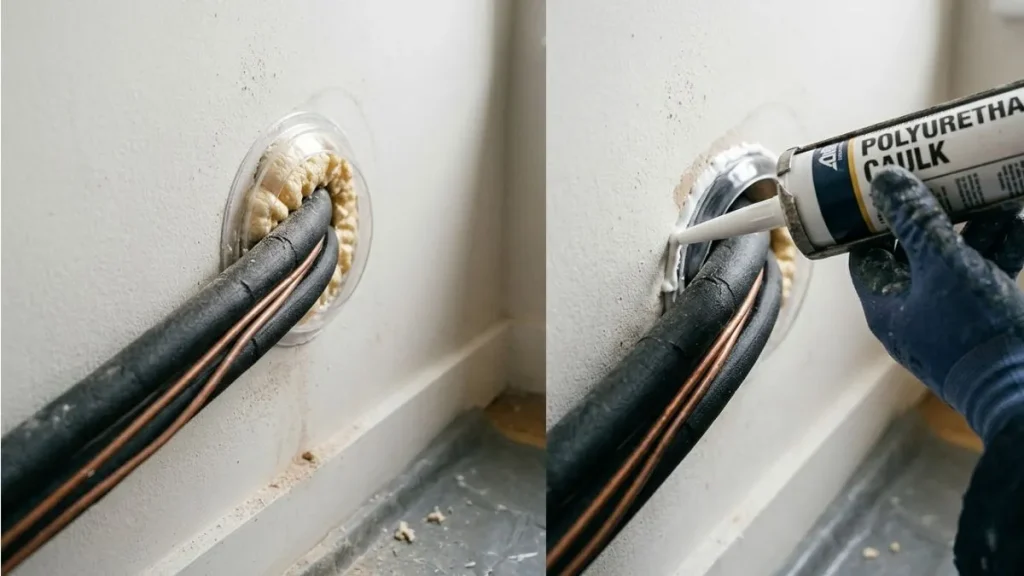
Caulk and foam are perfect for filling small gaps around your air conditioner hole. They create a tight seal that stops air leaks and keeps moisture out. Choose the right product based on the gap size and location.
- Caulk: Ideal for thin, narrow cracks up to 1/4 inch wide.
- Expanding foam: Best for gaps up to 1 inch wide, especially irregular shapes.
Steps to apply caulk or foam:
- Clean the area around the gap. Remove dust and old sealant.
- Cut the tip of the caulk tube or foam can for controlled flow.
- Apply caulk smoothly along the crack or spray foam gently into the gap.
- Use a putty knife or your finger to smooth caulk and ensure good contact.
- Allow it to dry completely. Drying time varies: caulk usually takes 24 hours, foam may take 1 hour.
Tip: Use paintable caulk if you want to match the wall color after sealing.
Applying Weatherstripping
Weatherstripping is another easy way to seal small gaps around your air conditioner hole. It works by creating a soft barrier that blocks air and dust. This method is reusable and easy to install without special tools.
Types of weatherstripping suitable for AC holes:
- Foam tape: Sticks well and compresses to fill small gaps.
- Rubber or vinyl strips: Durable and resistant to moisture.
Steps to apply weatherstripping:
- Measure the edges of the air conditioner hole.
- Cut the weatherstripping to the right length.
- Clean the surface to help it stick better.
- Peel off the backing and press the strip firmly along the gap.
- Check for any loose ends or missed spots and press again.
Note: Weatherstripping works best on smooth, clean surfaces to ensure a tight seal.
Sealing Larger Holes
Sealing larger holes around an air conditioner installation is important to keep your home energy efficient and free from pests. Large gaps let air escape, causing higher energy bills and making rooms uncomfortable. These holes also allow dust and insects inside. Fixing bigger holes takes more care and different materials than small cracks.
Installing Backer Rod
A backer rod is a foam material used to fill wide gaps before sealing. It provides a base for sealants and helps reduce the amount of sealant needed. This method works well for holes wider than 1/4 inch but not too deep. The backer rod pushes into the hole and supports the sealant on top, making the seal stronger and more flexible.
- Choose the right size: Pick a backer rod slightly wider than the hole.
- Clean the hole: Remove dust and debris for better adhesion.
- Insert the backer rod: Press it into the hole using a tool or your finger.
- Apply sealant: Use silicone or acrylic sealant over the backer rod.
- Smooth the surface: Use a putty knife or your finger for an even finish.
This method prevents sealant from sinking too deep and cracking over time. It also saves material and improves insulation. Backer rods come in various sizes and are easy to cut with scissors. Use them for gaps around window AC units or through-wall installations.
Using Expanding Foam
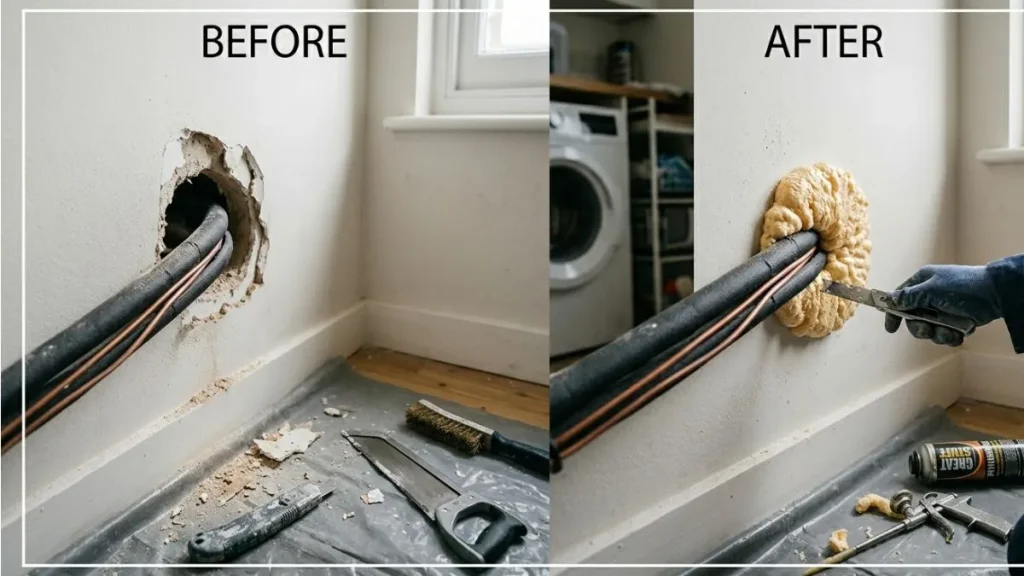
Expanding foam is ideal for sealing larger, irregular holes around air conditioner pipes or units. It expands to fill the hole completely, creating a tight barrier against air and pests. This foam hardens quickly and can be trimmed to fit flush with the wall surface.
- Prepare the area: Remove loose debris and cover nearby surfaces to avoid mess.
- Shake the can well: Follow the instructions on the foam can.
- Insert the nozzle: Place it into the hole and spray foam slowly.
- Fill partially: Fill about 50% of the hole as foam will expand.
- Wait to dry: Let foam cure for at least 8 hours.
- Trim excess: Use a utility knife to cut off hardened foam flush with the wall.
Expanding foam provides excellent insulation but is not paintable without a topcoat. You may want to cover it with mortar or patch for a clean finish. Avoid overfilling, as foam can expand beyond the hole and create pressure on the wall.
Applying Mortar Or Patch
Mortar or patching compound works well to seal large holes in masonry or concrete walls. It creates a strong and durable surface that matches the wall texture. This method is common for holes left after removing old AC units or installing new through-wall models.
- Clean the hole: Remove loose material and dust.
- Mix mortar or patch: Follow package instructions to get the right consistency.
- Apply in layers: Use a trowel to fill the hole gradually.
- Smooth the surface: Level the patch with the wall for a neat look.
- Let dry completely: Drying time depends on the product, usually 24-48 hours.
- Paint if needed: Match wall color for a seamless finish.
Applying mortar or patch creates a solid barrier against air leaks. Use it for visible holes or when a neat appearance matters. It can be combined with backer rods or foam for extra insulation and support.
Finishing Touches
After sealing the air conditioner hole in the wall, the finishing touches make a big difference. These final steps improve the look and function of the repair. A smooth sealant, a neat paint job, and testing for air leaks ensure the job lasts long and looks clean. These steps help keep your home energy efficient and comfortable.
Smoothing The Sealant
Smoothing the sealant is key to a clean and strong finish. Right after applying the sealant, use a wet finger or a caulking tool to smooth it out. This removes air bubbles and gaps that can let air or moisture through.
- Work quickly: Sealant dries fast. Smooth it before it sets.
- Use water or a smoothing agent: A little water on your finger helps create a smooth surface.
- Check for gaps: Look closely to spot any holes or thin spots in the seal.
Use a damp cloth to clean off extra sealant from the wall edges. This keeps the area tidy and ready for painting. A smooth sealant also makes the repair less visible and protects against water damage.
Painting Over The Repair
Painting over the sealed hole helps it blend with the wall. It also protects the sealant and wall from dirt and moisture. Use paint that matches the wall color for the best look.
Steps for painting:
- Wait until the sealant is fully dry. This can take 24 hours or more.
- Lightly sand the sealed area to smooth it more.
- Apply a primer if the sealant color contrasts with the wall.
- Use a small brush or roller to paint over the repair.
- Apply 2 coats of paint for even coverage.
Painting not only improves appearance but also adds a layer of protection. It helps keep the sealant from cracking and prevents dirt buildup.
Testing For Air Leaks
Testing for air leaks confirms the seal is tight. This step helps keep your home insulated and reduces energy costs. Small leaks can let hot or cold air escape, making your AC work harder.
Here’s how to test for leaks:
- Visual check: Look for cracks or gaps around the seal.
- Use a candle or incense stick: Hold near the seal. Watch for flickering flame or smoke movement.
- Feel for drafts: Run your hand slowly around the area to sense cold or warm air.
- Use a thermal camera: It shows temperature differences on the wall surface.
If you find leaks, apply more sealant and smooth it again. Repeat the testing until no leaks remain. A well-sealed hole keeps your home comfortable and cuts energy waste.
You May Read Also: Air Conditioning Working Downstairs But Not Upstairs
Conclusion
Sealing the air conditioner hole in your wall saves energy and stops bugs. Use the right materials for a tight, lasting seal. Check your work to avoid drafts or leaks. A well-sealed hole keeps your home comfortable year-round. Small steps make a big difference in your cooling system.
Keep your space cool and your bills low. Take your time and follow each step carefully. You will enjoy a quieter, more efficient home.