
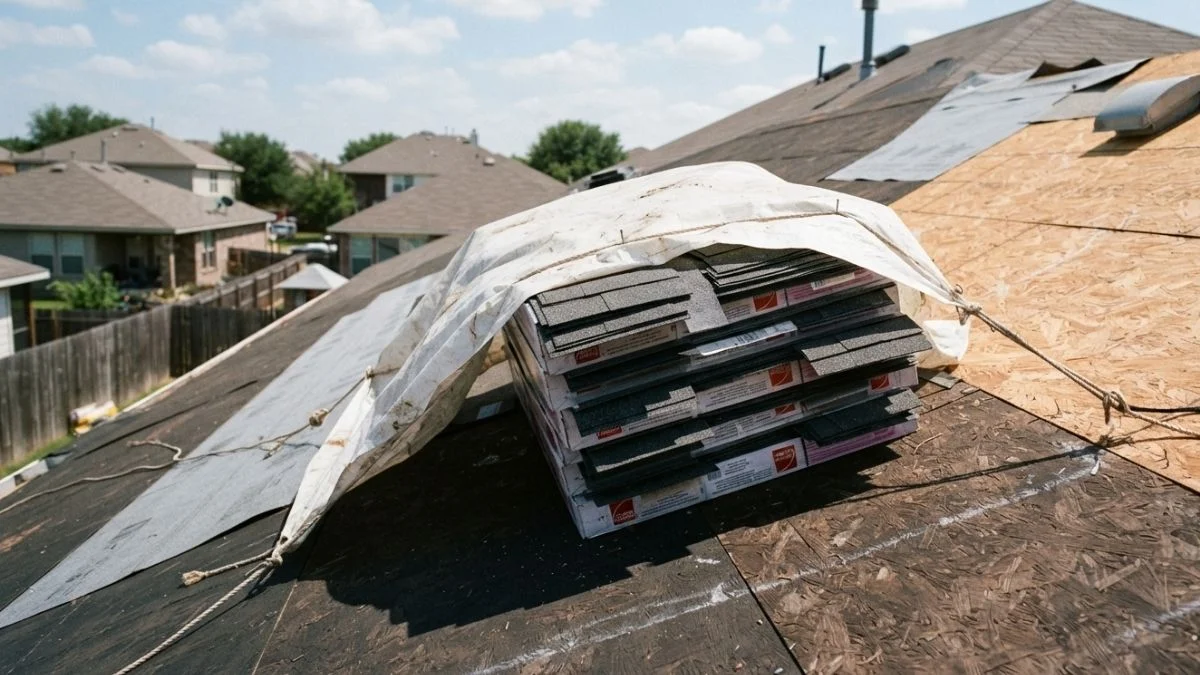
Most shingle manufacturers, including those following ARMA (Asphalt Roofing Manufacturers Association) guidelines, recommend storing bundles on a roof for no more than a few days — but the real answer depends heavily on temperature, humidity, and direct sun exposure.
The problem is that most homeowners and contractors treat rooftop shingle storage as a non-issue, not realizing that heat, moisture, and uneven load can silently damage materials before a single nail goes in.
This guide gives you a clear risk-escalation framework and practical decision rules so you know exactly when to act — and when waiting becomes costly.
Safe Duration Guidelines by Risk Level
Asphalt shingle storage duration on a rooftop is not purely a time question — it’s a risk accumulation question. Every day a bundle sits exposed, it absorbs UV radiation, thermal stress, and moisture. The timeline below gives you a working framework based on environmental load, not just calendar days.
Ideal Installation Window: 3–7 Days After Delivery
This is the sweet spot. Shingles arrive from the factory with sealant strips that are pliable, adhesive, and ready to bond. Installing within 3–7 days means the bitumen hasn’t experienced meaningful thermal cycling, the sealant adhesive breakdown process hasn’t started, and bundle weight distribution on the roof deck remains a manageable short-term load.
In practice, most professional roofing crews schedule delivery the day before or morning of installation for exactly this reason.
Acceptable Extended Storage: 2–4 Weeks
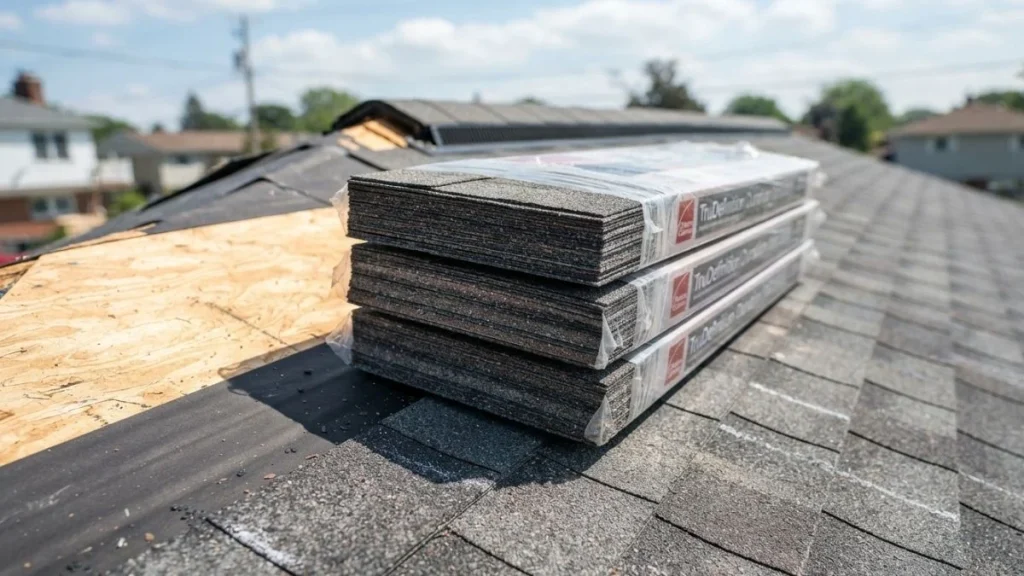
With proper roof shingle bundle stacking — laid flat, not standing on edge, covered with breathable tarps — moderate-climate storage up to 4 weeks is generally manageable. Temperatures staying below 90°F and humidity under 70% are the key thresholds. Above those numbers, the timeline compresses fast.
Keep bundles away from roof valleys where water pools, and check weekly for tarp slippage or moisture accumulation underneath.
High-Risk Threshold: Beyond 4 Weeks
This is where shingle deterioration timeline becomes a real cost problem. UV exposure degradation attacks the granule bond. Repeated heat cycles above 140°F — common on dark-colored roofs in summer — accelerate bitumen softening and sealant breakdown. Moisture absorption risk increases with every rain event, and once water infiltrates the bundle, warping and delamination follow quickly.
Beyond 4 weeks, inspect every bundle individually before installation and expect to discard a measurable percentage.
Factors Controlling Your Timeline

The safe asphalt shingle storage duration on a rooftop isn’t fixed — it shrinks or expands based on three environmental forces working simultaneously. Understanding each one helps you make smarter decisions when a project gets delayed.
Temperature and UV Exposure
Bitumen, the petroleum-based binder in asphalt shingles, begins softening measurably at sustained temperatures above 120°F. Dark rooftops in direct summer sun regularly reach 150–170°F on the surface — well past that threshold. At those temperatures, thermal stress on materials accelerates sealant adhesive breakdown, causes granules to loosen from the mat, and can cause shingles in the bottom layers of a stack to fuse together under bundle weight distribution pressure.
UV exposure degradation compounds the problem. Even at moderate temperatures, direct sunlight breaks down the polymer modifiers in the sealant strip within weeks, reducing the shingle’s ability to self-seal after installation.
Humidity and Moisture Conditions
Moisture absorption risk is highest when bundles sit through repeated wet-dry cycles. After 2 or more weeks of wet exposure, the fiberglass mat at the core of each shingle can begin to weaken, and mold growth becomes a real concern in shaded or poorly ventilated roof sections. Shingle sealant breakdown accelerates when moisture gets between layers, as water acts as a lubricant that prevents the adhesive strips from making full contact during installation.
Seasonal and Climate Context
In Phoenix or Houston summers, the safe window for rooftop storage compresses to under a week without protective covering. In Seattle or Minneapolis in October, that window can extend to 3–4 weeks because lower temperatures reduce thermal stress and UV intensity drops significantly. Rain events in any climate require immediate tarp coverage — wet bundles left uncovered overnight lose meaningful adhesive strength. Adjust your project schedule to your specific climate, not a generic national average.
Stacking Rules and Weight Distribution

Improper roof shingle bundle stacking causes two distinct problems: physical damage to the shingles themselves, and structural stress on the roof deck below. Both are preventable with simple placement rules.
Maximum Stack Height: 3 Bundles
Three bundles per stack is the standard upper limit recommended by most shingle manufacturers. A single bundle of three-tab or architectural shingles weighs between 60–80 lbs. Stack four or more, and the bottom bundle absorbs compressive pressure that permanently deforms the shingles, embeds granules into the sealant strip, and accelerates sealant adhesive breakdown before installation even begins.
Keep stacks flat and level. Never stand bundles on edge — this concentrates the entire weight on a narrow contact point and causes the mat layers to separate under thermal stress.
Placement Strategy: Ridge and Hip Areas
Bundle weight distribution across the roof deck matters as much as stack height. Place bundles over the ridge or hip areas where rafters converge and structural support is greatest. Avoid centering heavy stacks between rafters, where the sheathing spans unsupported — standard 7/16-inch OSB sheathing has limited point-load tolerance, and concentrated weight causes deflection or, in worse cases, cracking.
Slope Angle and Gravity Stress
Roof pitch amplifies the lateral force on every bundle. On a 6:12 pitch or steeper, unsecured stacks will shift, slide, or tip — creating both a safety hazard and uneven bundle weight distribution that crushes lower layers. Use roofing brackets or temporary toe boards to brace stacks on any slope above 4:12. On steep roofs, smaller stacks of 2 bundles reduce slide risk and make handling safer for one-person crews.
Signs Bundles Have Deteriorated
Knowing where you are on the shingle deterioration timeline matters, but a physical inspection always overrides a calendar. Before installing any bundle that has sat on the roof longer than a week, check for these specific damage indicators.
Visual Damage Indicators
Pull a shingle from the middle of the stack — the top and bottom layers mask what’s happening to the most compressed materials. Look for warped or cupped edges, which signal thermal stress cycling has permanently deformed the fiberglass mat. Cracked or crushed tabs indicate excessive bundle weight distribution pressure from overstacking. Separated layers, where individual shingles have partially fused then pulled apart, are a sign of heat-induced adhesion followed by thermal contraction — a textbook outcome of prolonged UV exposure degradation on unprotected bundles.
Sealant Adhesive Failure
The sealant strip runs along the bottom third of each shingle face. It should appear as a continuous, slightly tacky dark band. If the strip looks dry, cracked, or shows gaps, shingle sealant breakdown has already occurred. Curling at the shingle edges — even slight upward cupping — indicates the mat has lost dimensional stability, which means the shingle will not lay flat or seal properly after installation. These shingles will fail wind uplift tests and void most manufacturer warranties.
Moisture and Mold Damage
Soft spots anywhere on a shingle surface indicate moisture absorption has compromised the fiberglass mat beneath the granule layer. Dark staining that wipes off as a powdery residue is efflorescence from mineral migration. Black or green spotting with a musty smell is active mold — bundles showing this level of weather damage are not salvageable and must be discarded entirely. Installing moldy shingles traps biological growth under the roof system, creating a long-term indoor air quality problem.
Protective Measures to Extend Storage
Leaving bundles exposed on a roof is the fastest way to compress your safe storage window. The right protective measures can extend asphalt shingle storage duration by 1–2 weeks without meaningful deterioration — but only if applied correctly from day one.
Tarping: UV and Rain Protection
A heavy-duty polyethylene tarp rated at 6 mil or thicker blocks the UV exposure degradation that attacks sealant strips and granule bonds within days of direct sun exposure. Secure tarps at all four corners and weight the edges — loose tarps that flap in wind create abrasion damage across the granule surface, accelerating the shingle deterioration timeline rather than slowing it.
Use white or silver tarps where possible. Dark tarps absorb solar radiation and can raise surface temperatures underneath by 20–30°F, which defeats the purpose entirely.
Ventilation Gaps: Controlling Heat and Condensation
Laying a tarp flat against the bundle stack traps heat and moisture underneath — the two primary drivers of sealant adhesive breakdown and moisture absorption risk. Prop the tarp using wood scraps or PVC pipe to create a 3–4 inch air gap between the covering and the top bundle. This allows heat to escape and prevents condensation from forming on the underside of the tarp during overnight temperature drops.
Ground Storage: The Best Option for Delays Beyond 3 Weeks
Here’s the clearest rule for extended project delays: get the bundles off the roof. A covered shed, garage, or even a shaded area with pallets for ground clearance offers dramatically better conditions than any rooftop setup. Ground storage eliminates thermal stress on materials from roof surface heat, removes bundle weight distribution load from the deck, and gives you a controlled environment where you can monitor moisture absorption risk directly. If indoor storage isn’t available, a rented storage container positioned out of direct sun is a worthwhile investment compared to replacing damaged materials.
When to Replace vs. Install Damaged Bundles
The instinct to install questionable shingles to avoid replacement costs is understandable — but it’s a false economy. A bundle that costs $35–$50 to replace is far cheaper than a warranty-voided roof that fails within 5 years and requires full labor rework.
Document Everything From Delivery Forward
Photograph every pallet on arrival before the delivery crew leaves. Capture bundle condition, stack configuration, and any existing damage to packaging. Then photograph weekly during storage, noting tarp condition, stack height, and any visible weather damage to bundles. This documentation creates a clear timeline if a manufacturer warranty claim becomes necessary — most major manufacturers like GAF, Owens Corning, and CertainTeed require evidence that materials were stored correctly to honor defect claims.
The Decision Framework: Install or Replace
Use this as your baseline:
- Minor surface scuffing or granule loss on edges — acceptable for installation in non-visible roof sections
- Slight discoloration without soft spots — monitor closely but generally installable
- Sealant strip dry, cracked, or missing sections — replace; shingle sealant breakdown at this level means the shingle cannot self-seal and will fail wind uplift requirements
- Warped, cupped, or curled shingles — replace; thermal stress on materials has permanently deformed the mat
- Soft texture, dark spotting, or mold growth — replace immediately; moisture absorption risk has compromised structural integrity
Weighing Replacement Cost Against Long-Term Risk
A deteriorated shingle that passes visual inspection on the ground can still underperform once installed — losing granules faster, lifting in moderate wind, or allowing water infiltration at seams. Factor in your local climate severity, roof pitch, and remaining warranty period before deciding. In high-wind zones or coastal environments, the threshold for replacement should be stricter than in mild inland climates.
Recommended Read: How to Stack Shingles on a Roof
FAQ
Is it safe to stack 4+ bundles on a roof?
No. Most manufacturers cap stack height at 3 bundles. A fourth bundle adds compressive pressure that crushes the bottom layer, embeds granules into the sealant strip, and can concentrate enough point load on the roof deck to deflect or crack OSB sheathing between rafters.
Can wet shingle bundles be installed immediately after rain exposure?
Not without inspection first. Surface moisture evaporates quickly and doesn’t automatically disqualify a bundle, but shingles that absorbed water through damaged packaging or prolonged wet exposure need to dry completely — typically 24–48 hours — before installation. Installing wet shingles traps moisture under the roof system and promotes mold growth.
What does the manufacturer warranty cover for extended roof storage?
Most manufacturer warranties from GAF, Owens Corning, and CertainTeed explicitly exclude damage resulting from improper storage. If bundles sat uncovered in extreme heat or rain for weeks before installation, any resulting failures — sealant adhesion loss, granule shedding, premature cracking — will likely be denied. Proper documentation of storage conditions is your only leverage in a disputed claim.
Making the Right Call for Your Project
Rooftop shingle storage is a risk management problem, not a scheduling convenience — every day past delivery adds environmental stress that compounds silently until installation reveals the damage. Start your project timeline by working backward from your installation date, and schedule delivery no more than 3 days out whenever your climate or season creates heat, humidity, or rain exposure risk. If delays push beyond 2 weeks, move bundles to covered ground storage immediately.