


A gap between stair tread and riser is one of the most common cosmetic issues in residential staircases — and in most cases, it is a normal result of wood movement, not a structural failure.
The real problem is not knowing which gaps are safe to leave alone, which ones violate IRC stair code, and which repair material will actually hold long-term without cracking, shrinking, or making things worse.
This guide walks you through diagnosing the cause, checking your stair against current International Residential Code standards, and choosing the right fix for your specific gap size, material, and budget.
Why Gaps Form (And When They’re Normal)
Most gaps in a stair assembly are not signs of failure — they are predictable results of how wood behaves and how stairs are built.
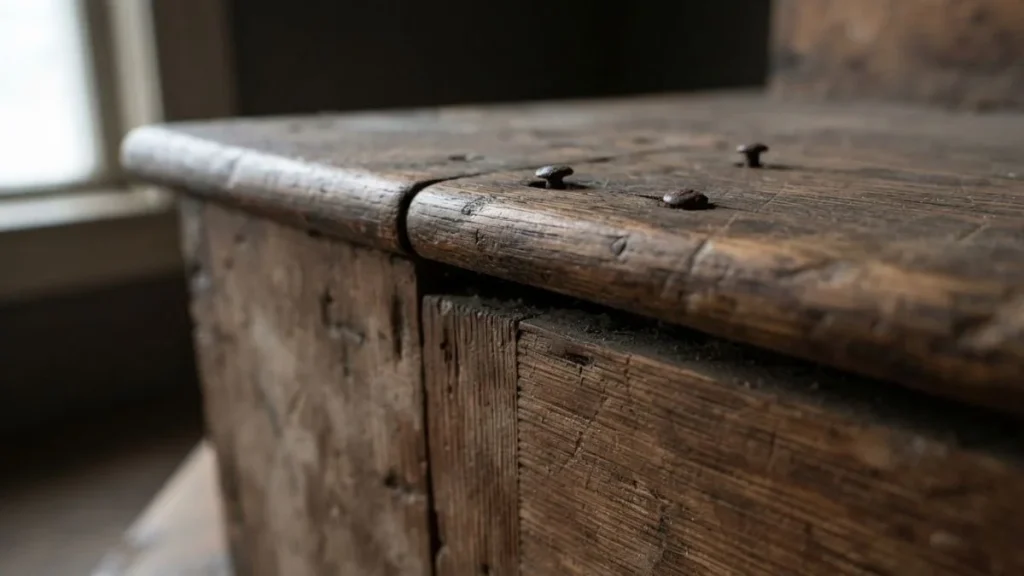
Wood Movement and Settling
Solid wood expands and contracts with every seasonal humidity shift. A stair tread made from Douglas fir or Southern yellow pine can move 1/8 inch or more across its width between a dry winter and a humid summer. That movement opens the tread-riser joint, and it can close again months later without any intervention.
Building codes acknowledge this reality. The IRC allows a vertical gap of up to 4 inches in residential stairs (measured to restrict foot passage), so small cosmetic gaps along the tread-riser joint are not automatically a code violation. In older homes, structural settling adds another variable — the stringer (the diagonal side board supporting each tread) shifts gradually, pulling joints apart over years.
Assembly Mechanics and Installation Variance
Foot traffic applies repeated load to every tread, and that load flexes the stringer slightly with each step. Over time, this flex loosens the original fastening — especially in nail-only assemblies, where the nails slowly back out. Screwed assemblies hold longer, but no fastener is permanent under constant cyclic stress.
Prefab stair units built to manufacturing tolerances often arrive with tighter fits than site-built stairs, but they are no more immune to gap formation once installed in a conditioned space where humidity fluctuates.
Here’s the practical takeaway: a gap that opened gradually over one to two years is almost always a wood movement issue, not a structural one.
Safety and Code Compliance
Not every gap is a code violation, but some are — and confusing the two leads to either unnecessary panic or a genuine safety hazard left unaddressed.
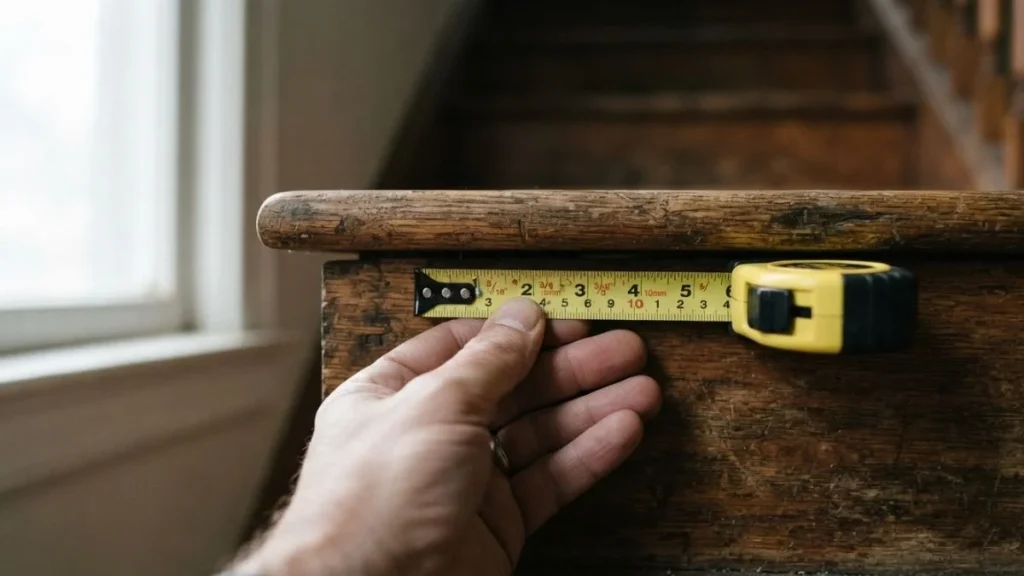
Acceptable Gap Sizing Under IBC/IRC
The International Residential Code sets two key stair standards that relate directly to gaps. First, open risers (fully absent risers) must not allow a 4-inch sphere to pass through — this is the “4-inch sphere rule,” designed to prevent a child’s foot from slipping through and causing a fall. Second, riser height must remain consistent across the entire flight, with no single riser varying more than 3/8 inch from the others.
That 3/8-inch figure is the practical threshold most inspectors apply to tread-riser joint gaps as well. A gap at or under 3/8 inch on a closed-riser stair is generally considered cosmetic. Beyond that, it warrants closer evaluation. Note that local jurisdictions — including many California, New York, and Texas municipalities — enforce their own amendments to the IRC, so always verify with your local building department before assuming the national standard applies.
When to Call a Professional vs. DIY
Use this decision framework:
- Call a structural engineer or licensed contractor if gaps exceed 1/2 inch on multiple steps, if gaps are uneven across the flight (suggesting differential settling), or if the stringer shows visible cracking or separation from the wall.
- Proceed with DIY gap sealing if the stair feels solid underfoot, gaps are consistent and under 3/8 inch, and the issue is purely cosmetic.
Cosmetic gaps on stable stairs are safe candidates for caulking or stair tread gap filler material — no permit required in most jurisdictions for like-for-like cosmetic repairs.
Caulking: The Primary Fix
For most homeowners, caulking the tread-riser joint is the fastest, lowest-cost repair that delivers a clean, lasting result — provided you choose the right material and apply it correctly.
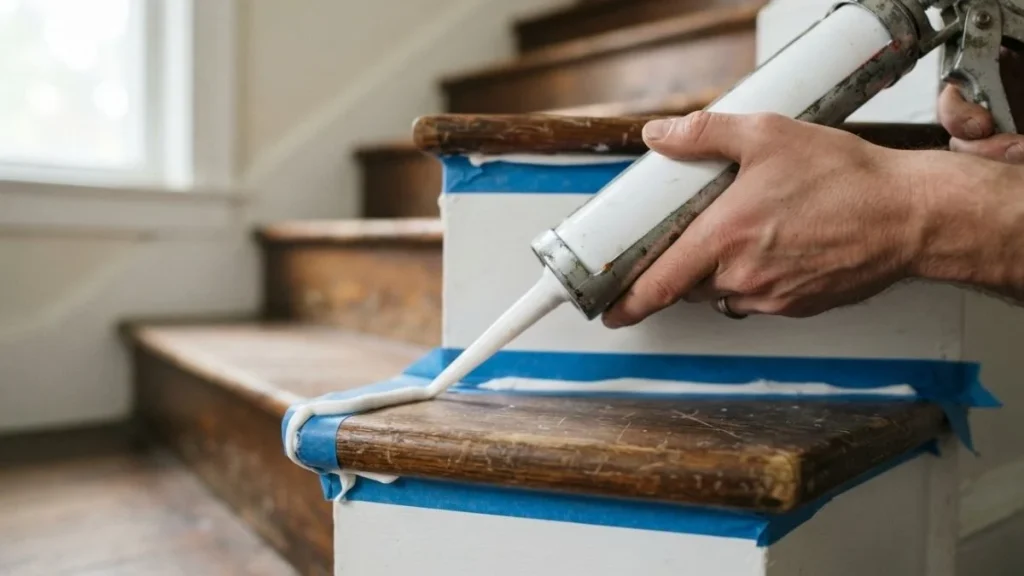
Material Selection and Performance
| Material | Durability | Paintable | Best For | Avg. Cost |
|---|---|---|---|---|
| Latex/Acrylic | 3–5 years | Yes | Interior, painted stairs | $4–$8/tube |
| Silicone | 10–20 years | No | Moisture-prone areas | $6–$12/tube |
| Urethane | 10–15 years | Yes | High-flex joints, wood stairs | $10–$18/tube |
Urethane caulk — products like Sika 1a or Tremco Dymonic — bonds aggressively to wood and handles the stair assembly movement that reopens latex beads within a season. Silicone stays flexible indefinitely but resists paint permanently, making it a poor choice for stained or painted risers.
Step-by-Step Caulking Process
- Vacuum all debris from the joint, then wipe with a damp cloth and allow to dry completely — at least one hour.
- Apply painter’s tape along both the tread edge and riser face to protect the surrounding wood.
- Cut the caulk tube at a 45-degree angle sized to match your gap width.
- Apply a steady, slightly overfilled bead in one continuous pass along the full joint.
- Smooth immediately with a wet finger or a caulk finishing tool.
- Pull the tape off while the caulk is still wet — before any skin forms on the surface.
- Allow full cure: 24 hours minimum for latex, 48 hours for urethane.
When Caulking Is Not Recommended
Caulk fills gaps — it does not bridge structural voids or support load. For gaps wider than 3/4 inch, wooden wedges or shims must go in first to provide backing before any stair riser caulking technique will hold. If the gap is actively widening month over month, seal nothing until the root cause — settling foundation, damaged stringer, or moisture intrusion — is resolved. On commercial or high-traffic stairs, caulk alone lacks the mechanical reinforcement required by code.
You May Read Also: Replacing Stair Treads Built into Stringer
FAQ
Is it normal to have a gap between stair treads and risers?
Yes. Wood stairs develop gaps naturally as lumber expands and contracts with seasonal humidity changes. A gap that appeared gradually over months — especially in a home less than 20 years old — is almost always normal wood movement, not structural damage.
What is the maximum acceptable gap according to building code?
The IRC uses a 3/8-inch riser height variance threshold and a 4-inch sphere rule for open risers. In practice, most inspectors treat any tread-riser joint gap under 3/8 inch as cosmetic. Gaps beyond that threshold warrant evaluation, and local codes may set stricter limits than the national IRC standard.
Should I caulk the gap or use wooden shims instead?
Use caulk for gaps under 3/4 inch on stable, solid stairs — a urethane or acrylic product handles normal tread-riser joint movement without cracking. For gaps wider than 3/4 inch, insert wooden wedges or shims first to provide solid backing, then caulk over the top for a finished seal.
Can a gap between the stair tread and riser cause squeaking?
Yes. Squeaks occur when two wood surfaces rub against each other under load — a loose tread-riser joint is one of the most common causes. Sealing the joint with urethane caulk eliminates the movement that creates the squeak, making gap sealing an effective stair squeak prevention method as well.
Your Next Step: Assess, Plan, Execute
The single factor that determines whether a gap between stair tread and riser needs professional intervention or a $10 tube of urethane caulk is gap size combined with whether the stair feels structurally solid underfoot. Today, measure every gap on your staircase with a tape measure, press firmly on each tread to check for flex or movement, and use the 3/8-inch threshold from this guide to decide whether you are looking at a cosmetic fix or a call to a licensed contractor.