

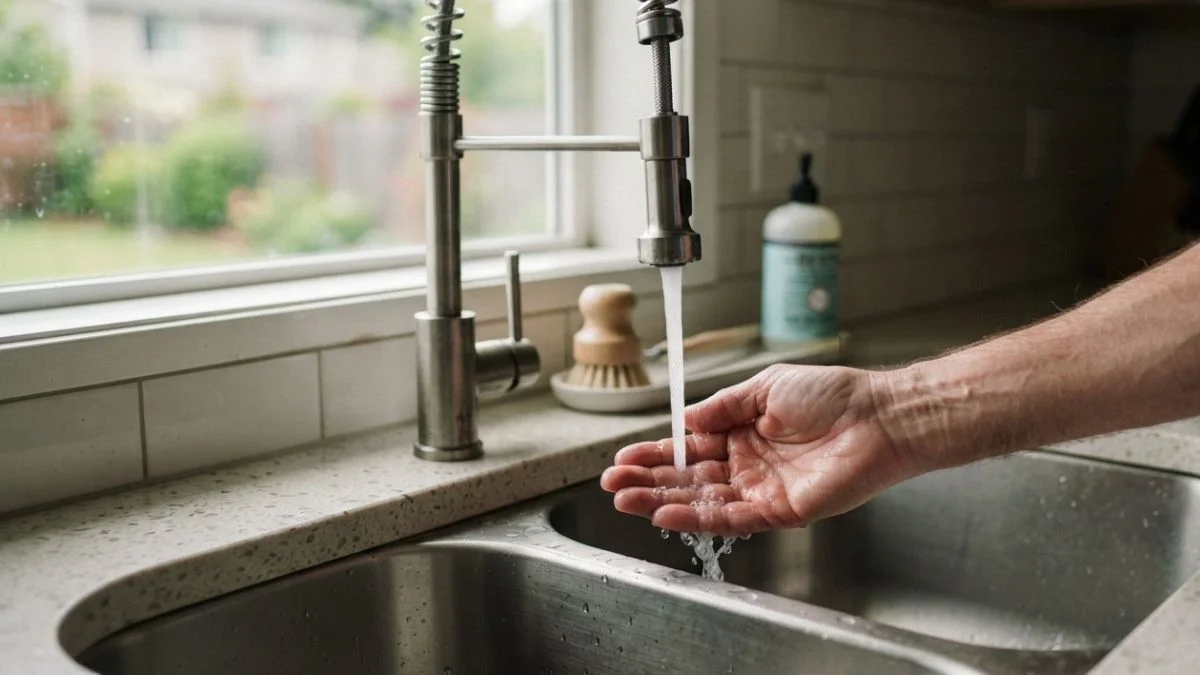
Hot water in the bathroom but not kitchen is one of the most common selective plumbing complaints homeowners report — and in most cases, a single faulty component is the cause.
The frustrating part is that your water heater is clearly working, which means the problem lives somewhere between the heater and your kitchen faucet, and pinpointing it without a system feels impossible.
This guide walks you through a logical, room-by-room diagnostic process so you can identify the exact cause — and either fix it yourself or walk into a plumber consultation already knowing what you need.
Most Common Causes
Selective hot water loss — where one room gets hot water and another doesn’t — almost always traces back to one of five components. Here they are, ranked from most to least likely.

1. Clogged Faucet Aerator (Most Common)
The aerator is the small mesh screen screwed onto the tip of your faucet. Mineral deposits, sediment, and debris collect in it over time and restrict flow — and because hot water carries more dissolved minerals than cold, the hot side clogs first and faster.
This aerator blockage accounts for roughly 85% of single-fixture hot water loss cases. Unscrew the aerator by hand or with pliers, rinse it under cold water, and soak it in white vinegar for 30 minutes. If hot water returns after reinstalling it, you found your problem.
2. Anti-Scald Valve Set Too Restrictive
An anti-scald device — also called a thermostatic mixing valve or tempering valve — blends cold water into the hot supply to cap the maximum delivery temperature, typically at 120°F per International Plumbing Code (IPC) guidelines. Kitchen faucets sometimes have a separate anti-scald valve adjustment that gets bumped during installation or renovation, cutting hot water flow to near zero.
3. Faulty Faucet Cartridge
The cartridge inside your kitchen faucet controls the mix of hot and cold water. A worn or cracked cartridge — such as a Moen 1225 cartridge in single-handle faucets — can physically block the hot water channel while leaving cold flow unaffected.
4. Water Heater Flow Sensor Problem
Some tankless water heaters use a flow sensor to detect when hot water is being demanded. A water heater flow sensor problem can cause selective shutoff — the unit activates for high-flow fixtures like showers but fails to trigger for lower-flow kitchen taps.
5. Pressure-Balancing Valve Malfunction
A pressure-balancing valve equalizes hot and cold supply pressure. If the cold pressure feeding your kitchen is higher than normal, the valve can close the hot side entirely, producing a mixing valve malfunction symptom that looks identical to a plumbing blockage.
Diagnosing Your Specific Problem
Work through these steps in order. Each one either confirms or eliminates a cause before you move to the next.
Step 1: Map Which Fixtures Have Hot Water
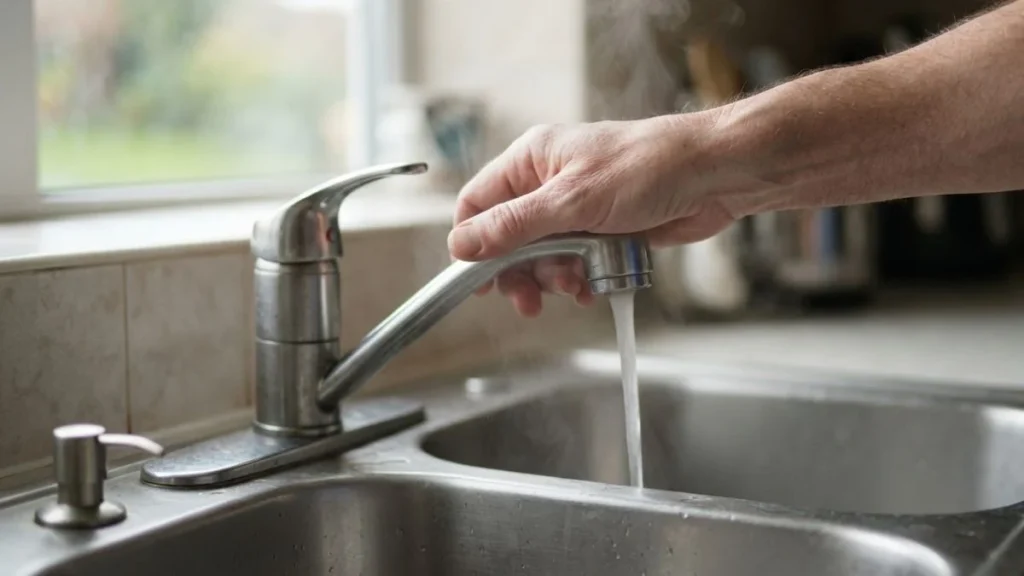
Turn on every hot water tap in the house and note exactly where heat is present and where it isn’t. If all bathroom fixtures work but no kitchen fixtures deliver hot water, the problem is downstream of the main hot water line — likely at the kitchen faucet itself. If only one bathroom fixture works, the problem is fixture-specific, not room-specific.
Also note the time delay before hot water arrives at your kitchen sink. A delay longer than 2 minutes suggests a hot water circulation issue rather than a blockage.
Step 2: Test Pressure and Flow Rate
At your kitchen faucet, run cold water and note the pressure, then switch to hot. A dramatic drop in hot water pressure points directly to an aerator blockage or cartridge restriction. If bathroom pressure is strong on both hot and cold, the water distribution system feeding those fixtures is fine — the fault is isolated to the kitchen supply line or fixture components.
Step 3: Inspect and Clean Kitchen Faucet Components
Unscrew the aerator from the faucet tip. Look for white or brown mineral crust, sand, or debris in the mesh screen. Soak the aerator in undiluted white vinegar for 30–60 minutes, then rinse and reinstall. Next, pull the faucet cartridge — on Moen single-handle faucets, this is typically the 1225 or 1222 cartridge — and inspect it for corrosion, cracks, or visible debris blocking the hot water port.
Step 4: Check Anti-Scald Device Settings
The anti-scald valve on a kitchen line is usually located under the sink or directly behind the faucet body. Most are factory-set to limit output to 120°F, per IPC standards. If someone adjusted it too far during installation, it can restrict hot water flow to a trickle. Check your faucet manufacturer’s documentation — Delta, Moen, and Kohler all publish adjustment guides online — to identify the correct tool and setting for your specific model.
DIY Fixes Worth Attempting First
These repairs are ranked by cost and complexity. Start at the top — most homeowners resolve the problem before reaching the bottom of this list.

Fix 1: Clean the Aerator (~$0, 15 Minutes)
This is the highest-probability fix for kitchen faucet no hot water troubleshooting. Unscrew the aerator counterclockwise by hand or with a cloth-wrapped pair of pliers. Soak it in white vinegar for 30–60 minutes to dissolve mineral deposits, scrub with an old toothbrush, rinse thoroughly, and reinstall. If the mesh screen is visibly deteriorated, a replacement aerator costs $3–5 at any hardware store and is universal for standard faucet threads.
Fix 2: Adjust the Anti-Scald Valve
Locate the anti-scald valve or thermostatic mixing valve under your kitchen sink or inside the faucet body. On Delta faucets, a plastic adjustment ring sits beneath the handle cap. On Moen models, anti-scald valve adjustment requires removing the handle and rotating a limit stop ring clockwise to allow higher hot water flow. Always consult your faucet’s installation guide before adjusting — setting it too high removes the scald protection the anti-scalding device is designed to provide.
Fix 3: Flush the Hot Water Line
Close the cold supply valve under the sink and open the hot supply valve fully. Turn on the kitchen hot tap and let it run for 3–5 minutes. This can dislodge sediment sitting in the hot water line that’s causing selective hot water loss in that room without affecting other fixtures.
Fix 4: Replace the Faucet Cartridge (~$15–30)
If cleaning didn’t restore flow, the faucet cartridge is likely cracked or worn. The Moen 1225 cartridge and Moen 1222 cartridge are direct pull-out replacements requiring no tools beyond pliers. Kohler’s K-7344 valve cartridge and Delta’s RP46074 cartridge follow similar swap-out processes. Match the cartridge to your faucet model number, which is usually stamped on the faucet body or listed in the original documentation.
When Professional Help Is Necessary
Three situations move this problem beyond DIY territory. Recognizing them early saves you from wasted repairs and potential water damage.
Water Heater Flow Sensor Failure
Tankless water heaters from brands like Rinnai, Navien, and Rheem use a flow sensor to detect demand and activate the heating element. A water heater flow sensor problem produces an inconsistent pattern — hot water reaches high-flow fixtures like showers but cuts out at lower-flow kitchen taps where the sensor threshold isn’t triggered. This isn’t a component a homeowner can inspect visually. A licensed service technician with manufacturer diagnostic tools is required to test sensor output and replace the part, which typically costs $200–400 including labor.
In-Wall Mixing Valve Malfunction
When the thermostatic mixing valve is integrated into the wall plumbing — common in homes built after 2000 that use manifold plumbing systems — mixing valve malfunction symptoms require opening the wall to access. Water pressure affecting water heater activation, erratic temperature output, and complete hot water loss at multiple kitchen fixtures simultaneously all point here. This is licensed plumber territory, with repair costs typically ranging from $300–600 depending on valve location and access difficulty.
Multi-Fixture or Whole-System Hot Water Loss
If hot water circulation fails across more than one room simultaneously, the problem has moved upstream to the main distribution system or the water heater itself. At this scale, a professional diagnostic visit — typically $150–300 — is the correct first step, not further DIY attempts.
Here’s the practical math: aerator cleaning costs $0 and 15 minutes. If that doesn’t work, a $150 diagnostic call identifies the exact problem before you spend money on the wrong parts.
You May Read Also: How To Check Hot Water Heater Thermostat
Frequently Asked Questions
Can a clogged aerator completely block hot water?
Yes. A heavily mineralized aerator mesh can reduce hot water flow to zero while leaving cold flow unaffected, because hot water deposits calcium and magnesium scale faster than cold. Removing and soaking the aerator in white vinegar for 30–60 minutes resolves most cases.
How do I know if my anti-scald valve is broken?
The clearest sign is hot water that runs lukewarm or cold at one fixture while other fixtures in the home deliver full heat. If adjusting the limit stop ring on your faucet’s anti-scald valve — per the manufacturer’s instructions — produces no change in temperature, the valve or cartridge needs replacement.
What is the difference between a mixing valve and an anti-scald valve?
A mixing valve is a broad term for any device that blends hot and cold water to reach a target temperature. An anti-scald valve is a specific type of mixing valve — either a thermostatic mixing valve or a pressure-balancing valve — engineered specifically to prevent output temperatures from exceeding a safe limit, typically 120°F per IPC standards.
Next Steps If DIY Doesn’t Work
In the majority of cases, hot water in the bathroom but not kitchen traces back to a clogged aerator or restricted cartridge — both fixable in under 30 minutes with no special tools. If cleaning the aerator and inspecting the cartridge don’t restore flow, photograph the aerator debris, note the pressure difference between your hot and cold kitchen taps, and bring that information to a licensed plumber — it cuts diagnostic time and reduces your service bill.